
Current Affairs
Small boat Channel crossings predate Brexit referendum, contrary to Liberal Democrat claim
A Liberal Democrat home affairs spokesperson incorrectly stated that ‘not a single small boat crossed the Channel’ before the 2016 Brexit vote. The article

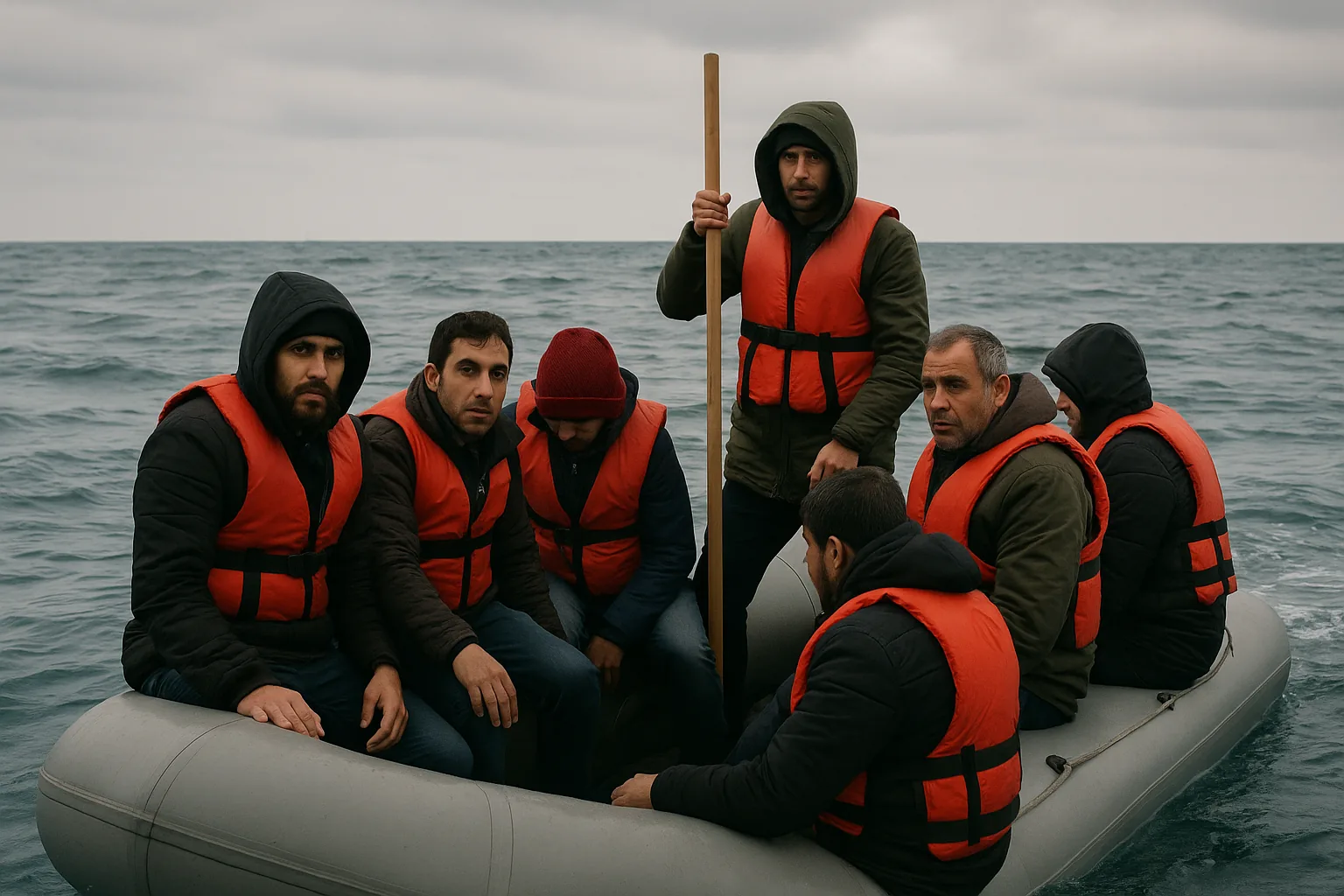
The debate over small boat channel crossings has become one of the most politically charged subjects in British public life, with parties across the spectrum competing to frame the issue in ways that serve their electoral interests. Against that backdrop, a claim made at the Liberal Democrat conference by Max Wilkinson, the party’s home affairs spokesperson, has drawn formal scrutiny from fact-checkers — and the verdict is unambiguous. Wilkinson stated that “not a single small boat crossed the Channel” before the Brexit referendum of June 2016. That statement is false, and understanding precisely why it is false matters both for the integrity of political debate and for any serious attempt to grapple with a genuinely complex policy problem.
The Claim and Who Made It
Max Wilkinson, serving as the Liberal Democrat home affairs spokesperson, told the Liberal Democrat conference that “not a single small boat crossed the Channel” before the Brexit referendum. The claim was made in the context of a broader political argument linking the rise in Channel crossings to the consequences of Britain’s departure from the European Union. Full Fact, the UK’s leading independent fact-checking organisation, subsequently published a detailed assessment of the claim, finding it to be false. Full Fact’s verdict is available at fullfact.org.
The political logic behind Wilkinson’s framing is not difficult to reconstruct. The Liberal Democrats have consistently positioned themselves as the most explicitly pro-European party in Westminster, and attributing the small boats crisis entirely to Brexit is rhetorically convenient. But rhetorical convenience and factual accuracy are different things, and in this case the gap between them is substantial. The BBC was already reporting on small boat crossings in 2014 — two full years before British voters went to the polls on EU membership. That single data point is enough to collapse the claim entirely.
What the Evidence Shows About Small Boat Channel Crossings Before 2016
The core factual problem with Wilkinson’s statement is straightforward: there are documented examples of clandestine migration by small boat across the English Channel before the June 2016 referendum. This is not a matter of interpretation or statistical framing — it is a matter of documented record. Journalists, including those at the BBC, were covering the phenomenon of small boat channel crossings as early as 2014, meaning the activity was sufficiently visible and significant to attract mainstream media attention well before the Brexit vote took place.
The claim that “not a single” crossing occurred is an absolute statement. Absolute statements carry a particular burden of proof: a single verified counterexample is sufficient to disprove them. In this case, multiple counterexamples exist. The crossings of this period were smaller in scale than the numbers recorded in subsequent years, and they did not yet dominate the political agenda in the way they would after 2018 and especially after 2021. But smaller scale is categorically different from non-existent. Conflating the two is a significant factual error, regardless of the political point being made.
It is also worth noting the broader migration picture of that era. In the years before the Brexit referendum, the UK was returning more people than it was receiving via irregular Channel crossings — but in relatively small numbers in both directions. The system, imperfect as it was, was operating in a different equilibrium than the one that exists today. That context is relevant to any honest discussion of the policy trajectory, but it does not support the claim that crossings were absent before 2016.
The Role of Brexit in the Subsequent Rise of Small Boat Channel Crossings
Acknowledging that Wilkinson’s claim is false does not require dismissing the genuine policy changes that followed the Brexit referendum. The two things can — and must — be held separately. Brexit did introduce structural changes to the UK’s immigration enforcement framework that are relevant to understanding why small boat channel crossings increased so dramatically in the years after 2016.
One of the most significant changes was the UK’s formal exit from the Dublin III regulation. Under Dublin III, the UK had a legal mechanism to return asylum seekers to the first EU member state through which they had passed — typically France, Belgium, or another continental country. Once the UK left the EU and ceased to be bound by Dublin III, that returns mechanism ceased to operate. The practical effect was that people who reached the UK by small boat could no longer be routinely returned to EU countries under that framework. This created a changed incentive structure for those considering the crossing.
Additionally, Brexit affected the UK’s access to shared European databases, including fingerprint records. Loss of access to fingerprint database systems has been identified as a factor that complicated the UK’s ability to identify individuals who had previously registered in other EU countries — information that would have been directly relevant to Dublin III return decisions. These are concrete, documented consequences of Brexit that affected the management of irregular migration.
After the 2016 referendum, arrivals via small boat began to outpace removals, a shift that represents a meaningful change in the operational reality facing Border Force and the Home Office. That trajectory is real and significant. But the trajectory begins from a non-zero baseline — from a situation in which crossings were already occurring, not from a situation of complete absence as Wilkinson claimed.
The honest version of the Liberal Democrat argument, had it been made accurately, might have been: Brexit worsened the management of a problem that already existed. That is a defensible position, supported by the evidence around Dublin III and database access. What is not defensible is the claim that the problem began with Brexit, or that no crossings occurred before the referendum. The facts do not support that version of events.
Why False Claims About Small Boat Channel Crossings Cause Real Harm
Political misinformation about migration is not a victimless category of error. When public figures make false claims about the origins or scale of small boat channel crossings, they distort the policy debate in ways that make good policy harder to design and harder to defend. If the problem is falsely attributed entirely to Brexit, then the solutions proposed will be shaped by that false diagnosis — and they will be less effective as a result.
Consider the structural factors that researchers and analysts have consistently identified as driving irregular Channel crossings: instability and conflict in origin countries, the absence of viable legal routes to the UK, the activities of people-smuggling networks, the geographic reality of the English Channel as a relatively narrow crossing point, and the UK’s labour market and diaspora communities that make it an attractive destination. None of these factors were created by Brexit, and none of them would disappear if Brexit were somehow reversed. A policy debate grounded in the false premise that Brexit is the sole cause of the problem is a debate that will systematically underweight these other factors.
There is also a democratic cost. Voters who hear Wilkinson’s claim and believe it will form a distorted picture of recent history. They may conclude that the pre-referendum period was one of orderly, well-managed Channel crossings — a golden era of border control — when in fact irregular crossings were already occurring, the returns system was functioning but imperfectly, and the structural pressures that would later drive the surge in numbers were already building. Accurate historical memory is a precondition for accurate policy judgement.
Furthermore, the claim places the Liberal Democrats in an awkward position with respect to their own credibility on immigration. A party that wants to be taken seriously on home affairs policy cannot afford to have its spokesperson making statements that are demonstrably false about a well-documented factual record. The fact that Full Fact found it necessary to publish a formal rebuttal is itself a measure of the gap between the claim and the evidence.
How This Claim Fits a Wider Pattern of Migration Misinformation
Wilkinson’s claim did not emerge in isolation. It reflects a broader pattern in which small boat channel crossings are instrumentalised by politicians across the political spectrum — each party reaching for the framing that most suits its narrative. On the right, the crossings have sometimes been characterised in ways that exaggerate the security threat or misrepresent the legal status of those making the journey. On the left and among pro-European parties, there has been a recurring temptation to attribute the entire phenomenon to Brexit, erasing the pre-referendum history and the multi-causal complexity of irregular migration.
Both tendencies distort the public understanding of what is genuinely a serious and complicated policy challenge. Small boat channel crossings have increased significantly over the last decade — that is verified and uncontested. The reasons for that increase are multiple and interacting: they include post-Brexit changes to the returns framework, but also global displacement trends, the evolution of smuggling networks, and policy decisions made by successive UK governments of different political colours. No single factor, and certainly not a single referendum result, explains the full picture.
Fact-checking organisations like Full Fact perform a vital function in this environment. By tracing claims back to primary sources and documented evidence, they provide a check on the natural tendency of political actors to simplify and exaggerate. The fact that Wilkinson’s claim was checked and found false is not a partisan point — it is an application of the same standard that should be applied to every party and every spokesperson making empirical claims about migration data.
The record on small boat channel crossings before June 2016 is not ambiguous. The BBC was reporting on the phenomenon in 2014. Documented examples of clandestine migration by small boat predate the referendum. The claim that “not a single small boat crossed the Channel” before that vote is false, and it was identified as false by an independent fact-checker with access to the relevant evidence. Political debate about how Brexit affected the subsequent trajectory of crossings is entirely legitimate — but that debate must begin from an accurate account of what was happening before 2016, not from a version of history that has been edited to suit a particular argument. Max Wilkinson’s claim fails that basic test of factual accuracy, and the Liberal Democrats would serve both the public and their own credibility better by correcting the record.
This article was produced with AI assistance and reviewed editorially.

Trump Claims U.S. Has ‘Best Poverty Numbers Ever’ in September 2026

Satire Article About Kamala Harris’s Campaign Debt Spread as Fact on Social Media in 2026

AI-Generated Video of Pro-Palestine UK Rally Spreads with SynthID Watermark Visible

Alleged October 1, 2026 Trucker Strike: No Evidence Found
