
Current Affairs
Trump’s ’60 Minutes’ Post-Election Interview: Claims Fact-Checked
Trump’s November 2025 60 Minutes interview contained at least 18 false claims about grocery prices, the 2020 election, and Iran, according to fact-checkers.

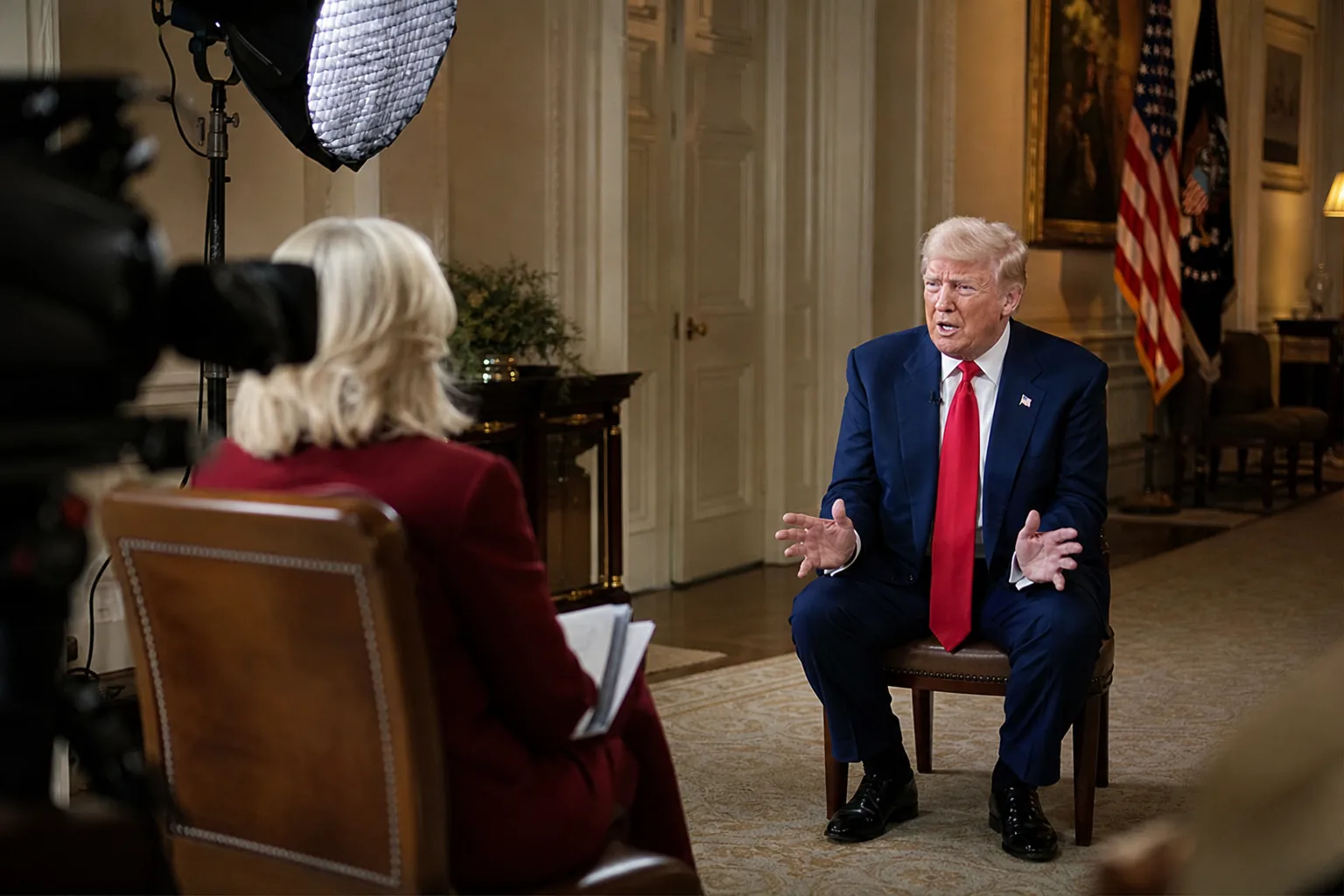
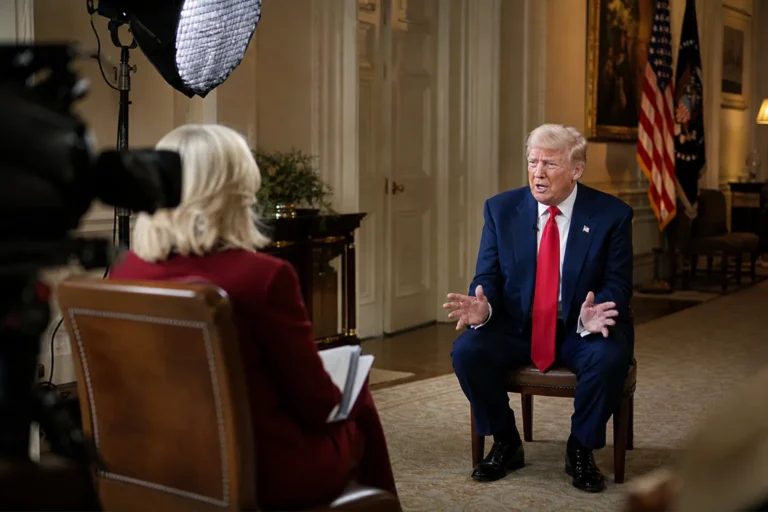
When Donald Trump sat down with CBS’s 60 Minutes in November 2025 for a wide-ranging post-election interview, the broadcast immediately became a focal point for journalists and fact-checkers across the political spectrum. A thorough Trump 60 Minutes interview fact check reveals a pattern of statements that diverged significantly from verifiable data — with at least three major independent organizations publishing detailed analyses within hours of the broadcast. Understanding exactly what was said, what was false, and what context was missing is essential for anyone trying to make sense of the coverage that followed.
The Interview That Broke a Year-Long Silence With CBS
The November 2025 broadcast was notable before a single question was asked. It marked Trump’s first appearance on CBS’s 60 Minutes following a period in which he had sued the network and subsequently extracted a settlement. That backstory shaped the atmosphere of the interview and gave the exchange an unusual tension: a sitting president returning to a news program he had publicly accused of bias, now in a position of renewed political strength after a post-election period that had consolidated his standing.
The interview was conducted by CBS correspondent Norah O’Donnell and broadcast on approximately November 3, 2025, based on the publication dates of contemporaneous fact-check articles from CNN and other outlets. The timing — coming in the immediate aftermath of an election cycle — meant that Trump’s statements carried particular weight, as they represented an early articulation of his second-term priorities and his account of recent history.
Three major fact-checking organizations — FactCheck.org, CNN, and PolitiFact — each published independent analyses of the interview. Their findings were consistent in scope: the interview contained a substantial number of claims that did not hold up to scrutiny.
At Least 18 False Claims: What the Fact-Checkers Found
According to CNN’s fact-check, Trump made at least 18 false claims during the course of the interview. That figure alone places the broadcast among the more heavily scrutinized presidential media appearances in recent memory. The sheer volume of inaccuracies flagged by a single outlet — and corroborated in substance by two others — is significant, because it suggests the errors were not isolated slips but a recurring feature of Trump’s responses across multiple topics.
Among the most clearly documented examples was Trump’s claim that grocery prices “are down.” This assertion was challenged in real time by O’Donnell herself, who informed Trump during the interview that grocery prices are, in fact, up. The exchange was striking because it occurred on camera: a presidential claim was directly contradicted by the interviewer with publicly available economic data, and Trump did not revise his position. CNN’s fact-checkers confirmed that O’Donnell’s correction was accurate — consumer grocery prices have not declined in the period Trump appeared to be referencing.
→ Read also: Trump's Statements and Social Media Posts: Fact-Check Update
Trump also repeated the claim that the 2020 presidential election was stolen from him — a statement that has been examined and rejected by courts, election officials, and independent investigators across multiple jurisdictions over the past several years. Its reappearance in the November 2025 interview demonstrated that this claim remains a consistent element of Trump’s public narrative, despite the absence of supporting evidence. FactCheck.org’s full analysis of the interview provides a detailed accounting of this and other statements made during the broadcast.
Why the 60 Minutes Fact Check Matters Beyond the Headlines
A careful Trump 60 Minutes interview fact check is not simply an exercise in cataloguing errors. It serves a broader function: helping audiences understand the difference between a president’s stated account of reality and what verifiable sources actually show. In an environment where interview clips circulate rapidly on social media — often stripped of the surrounding exchange — the full context of what was said, and how it was challenged, can be lost entirely.
The grocery prices moment is a useful illustration. In isolation, a short clip of Trump saying prices are down might circulate as a straightforward presidential statement. Viewed in full, however, it includes O’Donnell’s on-air correction, which changes the meaning of the exchange entirely. The claim was not simply made and left unchallenged — it was contested with factual information in the moment. Audiences who only saw the clipped version would have received an incomplete picture.
This dynamic — selective circulation of partial quotes that omit corrective context — is one of the central concerns that fact-checkers flag when covering high-profile interviews. It is not unique to this broadcast, but the volume of claims involved in the November 2025 60 Minutes interview makes it a particularly clear example of why full-context viewing matters.
The 2020 Election Claim: A Persistent False Narrative
The reappearance of the stolen-election claim in a November 2025 broadcast deserves specific attention. By this point, the claim had been examined in more than 60 court cases, rejected by Republican-appointed judges and Democratic-appointed judges alike, and investigated by state election officials — including Republicans — in the states where Trump alleged fraud. No court, audit, or official investigation produced findings that supported the claim that the 2020 election was stolen.
Trump’s repetition of the claim on 60 Minutes, more than five years after the 2020 election and in the context of a post-election interview following his return to power, is therefore not a new allegation subject to fresh evaluation. It is the continuation of a claim that has been repeatedly and conclusively examined. CNN’s fact-check categorized it as false, consistent with the findings of every major independent review of the 2020 election results.
→ Read also: Unverified Claims About Trump Administration Actions Circulate on Social Media
The significance of the claim appearing in this interview is partly contextual: a president asserting that his previous loss was illegitimate, while now holding office again, has implications for how voters and institutions interpret his relationship to electoral processes. Fact-checkers are careful to document the claim’s falsity without speculating about intent or motivation — the record speaks to what the evidence shows, not to why the claim continues to be made.
What Remains Unverified
It is worth being explicit about the limits of what can be confirmed from the available fact-check sources. Some summaries of the interview have referenced specific claims about Iran, U.S. military casualties, and nuclear weapons policy. While these topics may have been raised during the broadcast, the verified fact-check sources available for this analysis — CNN, FactCheck.org, and PolitiFact — do not provide sufficient detail about those specific claims to allow for responsible reporting of their content or accuracy. Responsible journalism requires acknowledging those gaps rather than filling them with inference.
Similarly, while PolitiFact’s published analysis is referenced as a source, the specific details of their findings beyond the general scope of the interview are not fully available in the verified record used here. What is confirmed is that three independent organizations each found the interview to contain significant inaccuracies, and that the examples most thoroughly documented in available sources relate to grocery prices and the 2020 election claim.
How to Evaluate Interview Fact-Checks Responsibly
For readers trying to assess the reliability of any Trump 60 Minutes interview fact check, a few principles are worth keeping in mind. First, check whether the fact-checking organization links to primary sources — official data, court records, government statistics — rather than relying on other news articles. Second, look for whether the full context of a statement is included, not just the portion that appears most striking. Third, note whether the fact-checker distinguishes between claims that are clearly false, claims that are misleading due to missing context, and claims that are genuinely contested among experts.
In this case, the grocery prices claim falls into the clearly false category: O’Donnell’s correction was grounded in publicly available consumer price data, and no credible source supports the assertion that grocery prices have fallen. The 2020 election claim is similarly well-documented as false across an extensive body of judicial and investigative findings. These are not close calls requiring careful weighing of competing interpretations — they are statements that do not match the available evidence.
The November 2025 60 Minutes interview stands as a significant case study in the challenges of real-time political journalism: a high-stakes broadcast, an interviewer willing to push back on the record, and a subsequent information environment in which clips and characterizations spread faster than full transcripts. The documented record — at least 18 false claims, two specific examples confirmed by multiple independent sources, and a broadcast that was itself the product of an unusual legal and institutional history — gives audiences a solid foundation for evaluating what was said and what it means.
This article was produced with AI assistance and reviewed editorially.

Trump’s ’60 Minutes’ Post-Election Interview: Claims Fact-Checked

Claims About Abdul El-Sayed’s Background Check and Senate Eligibility: What the Record Shows

Voting Machine Claims After 2026 Midterms Lack Evidence of Election Fraud

AI-Generated Images Linking Trump, Epstein, and Beyoncé Circulate Online Without Verification
