
Information
Edited images falsely linked Paris unrest to refugee issues
A woman’s pro-refugee protest photo was digitally composited onto Paris supermarket footage to falsely link immigration activism to October 2026 looting, spreading withou

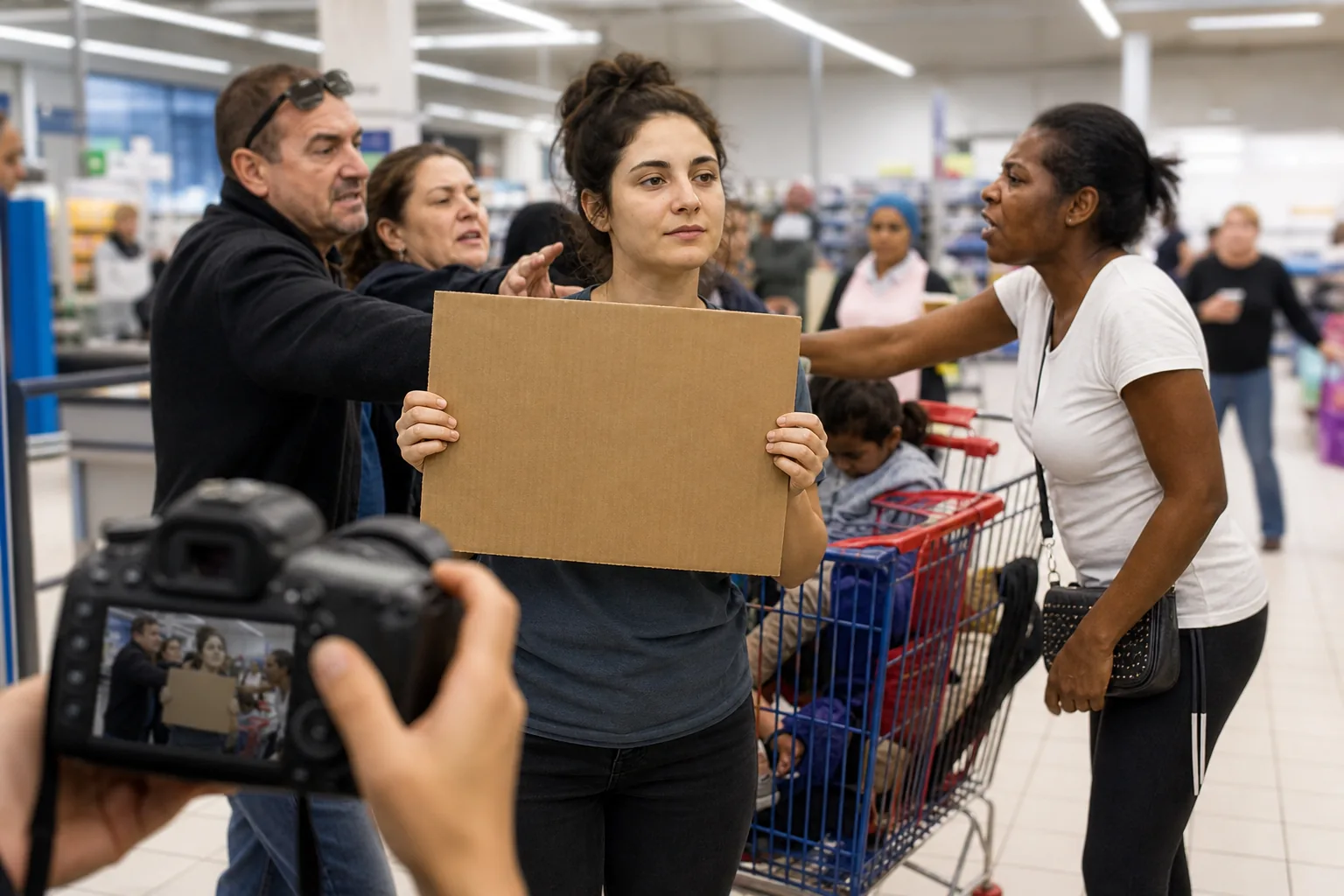
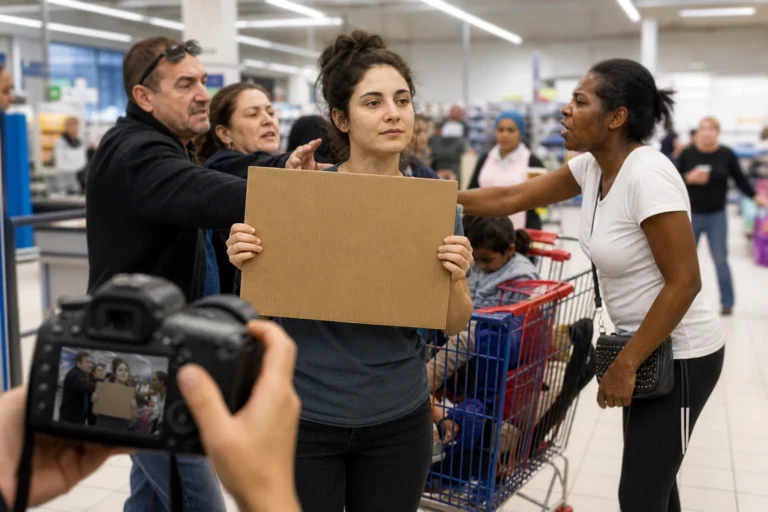
When street violence follows political unrest, the information environment around it rarely stays clean for long. In the days after France’s nationwide cost-of-living protests on 17 October 2026 spilled into looting and arson, a manipulated image began circulating on social media that illustrates precisely how edited photos misinformation works in practice: a pro-refugee protest photograph was edited to show a woman allegedly confronting Paris looters, falsely stitching together two unrelated moments to construct a politically charged narrative that neither image, on its own, could support.
What the protests were actually about
France’s 17 October 2026 protests were driven by soaring consumer prices. Demonstrators gathered in cities across the country to demand government action on the cost of living, a grievance that had been building for months. According to AFP Fact Check, the protests eventually spilled over into street violence. French authorities and police were unambiguous about who they held responsible: not immigrants, but “insurrectionist elements from radical far-left groups, joined by numerous criminals,” according to reporting by TRT World. No official body linked immigration to the rioting. That official position, however, did not prevent a wave of anti-immigrant framing from spreading rapidly online in the protests’ aftermath.
Far-right accounts and nationalist commentators moved quickly to allege that migrants were behind the looting and arson. Old images — photographs with no connection to October 2026 — were shared as if they depicted the current unrest, often accompanied by warnings about the dangers of “allowing too many immigrants” into France. This pattern of recycled imagery is a well-documented feature of post-protest misinformation, but the composite image involving the pro-refugee sign went a step further: it did not merely misdate an authentic photograph. It created a new, fabricated one.
How edited photos misinformation constructed a false narrative
The specific manipulation at the centre of this fact-check involves a photograph that originated in a pro-refugee protest context. According to Reuters, the image was edited to show a woman who allegedly confronted Paris looters during the October 2026 unrest. Social media users then cited the edited photograph as visual evidence supporting the broader narrative that pro-immigration sentiment was somehow connected to — or complicit in — the disorder on French streets.
The mechanism here is worth examining carefully, because it is more sophisticated than simply posting an old photograph with a new caption. Compositing — placing a figure or element from one image into another — allows the creator to imply a physical presence and a causal relationship that never existed. A woman holding a sign at a peaceful demonstration appears, in the manipulated version, to inhabit the same time and space as a supermarket incident during a night of unrest. The sign’s message, whatever its original context, is reframed as a kind of ideological endorsement of chaos. None of that framing reflects reality. The two images came from entirely separate events, yet the composite presented them as a single, coherent scene.
→ Read also: AI-Generated and Manipulated Images Spread Across Social Media During Paris Riots and European Protests
What makes this category of edited photos misinformation particularly effective is that it exploits the default assumption most viewers bring to photographs: that a photo shows something that actually happened, in the way it appears to have happened. Composites defeat that assumption without announcing themselves. There is no obvious seam, no obvious anachronism — just an image that looks like evidence and functions as propaganda.
The broader campaign of false imagery after October 2026
The composite photograph did not appear in a vacuum. AFP Fact Check confirmed that multiple old images were falsely shared in the days following the protests, all framed to suggest that immigration was the root cause of the violence. This is a recognisable playbook: a genuine crisis event creates demand for explanatory images, and bad-faith actors supply images — authentic or manipulated — that fit a pre-existing ideological frame.
In this case, the frame was anti-immigrant sentiment, and the supply of false or misleading images was abundant. Far-right accounts and nationalist commentators, according to TRT World, led much of this push, alleging migrant involvement despite the explicit statements of French authorities to the contrary. The edited pro-refugee protest photo fit neatly into that campaign: it appeared to show a named ideological position — welcoming refugees — being enacted in a context of disorder, implying that the two things were linked.
They were not. French authorities attributed the violence to far-left insurrectionist elements and criminals, not to immigrants or refugee advocates. The woman in the original protest photograph had no documented connection to the October 2026 unrest whatsoever. Her image was used without her apparent knowledge or consent to make an argument she had no part in making.
Why image manipulation is harder to correct than text misinformation
Text-based false claims can be addressed with a direct quotation from a primary source. Image-based claims are more resistant to correction for several reasons. First, the emotional and cognitive impact of a photograph tends to be faster and more lasting than that of a written statement — viewers process images before they read captions, and the impression an image creates can persist even after a correction is read. Second, composite images are shared as screenshots, which strips metadata that might otherwise reveal editing. Third, the correction — “this image was manipulated” — requires the viewer to un-see something they have already seen and accepted.
→ Read also: AI-Generated Images Spread Misinformation About French Riots
This is why the Reuters and AFP investigations into the edited photos misinformation surrounding the October 2026 protests matter beyond the immediate news cycle. Documenting the manipulation, tracing the original source images, and establishing that they came from unrelated contexts are the steps that make a correction credible. Without that work, a denial is just another claim competing with the image itself — and the image, for most viewers, wins.
Social media platforms have faced repeated criticism for the speed at which composite and recycled images spread compared to the speed at which corrections reach the same audiences. In the October 2026 case, the manipulated image circulated widely before fact-checkers published their findings, meaning a substantial share of the people who encountered the false version never encountered the correction. That asymmetry is not unique to France or to this event; it is a structural feature of how viral misinformation operates.
What verified evidence shows — and what it does not
It is important to be precise about what the available verified evidence establishes. Reuters confirmed that a pro-refugee protest photo was edited to place a woman in the context of the Paris looting. AFP confirmed that old images were falsely circulated as depictions of the October 2026 protests. TRT World confirmed that French authorities explicitly rejected the claim that immigrants were responsible for the violence, attributing it instead to far-left insurrectionist elements and criminals.
What the evidence does not establish is the precise technical process by which the composite was assembled, the exact platforms where it spread most widely, or the verified identity of whoever created the original manipulation. Those details remain unverified. What is established is sufficient to reach a clear verdict: the image misrepresents both the woman depicted and the nature of the October 2026 unrest, and it does so through deliberate digital manipulation rather than error or misidentification.
The October 2026 protests in France were a response to economic hardship. The violence that accompanied them was attributed by French authorities to specific political and criminal actors. The edited photograph that circulated in their wake was not a document of those events — it was a fabrication designed to redirect public anger toward a different target entirely. Recognising that distinction, and understanding the specific techniques that make such fabrications persuasive, remains one of the most practical skills any news consumer can develop in an environment where edited photos misinformation continues to spread faster than the corrections that follow it.
This article was produced with AI assistance and reviewed editorially.

Trump’s ’60 Minutes’ Post-Election Interview: Claims Fact-Checked

Claims About Abdul El-Sayed’s Background Check and Senate Eligibility: What the Record Shows

Voting Machine Claims After 2026 Midterms Lack Evidence of Election Fraud

AI-Generated Images Linking Trump, Epstein, and Beyoncé Circulate Online Without Verification
