
Current Affairs
AI-Generated Images Show Trump Comforting Mullin’s Son
President Trump posted AI-generated images claiming to show him comforting Markwayne Mullin’s son after a brain injury. The images are fabricated and contradict Mullin’s

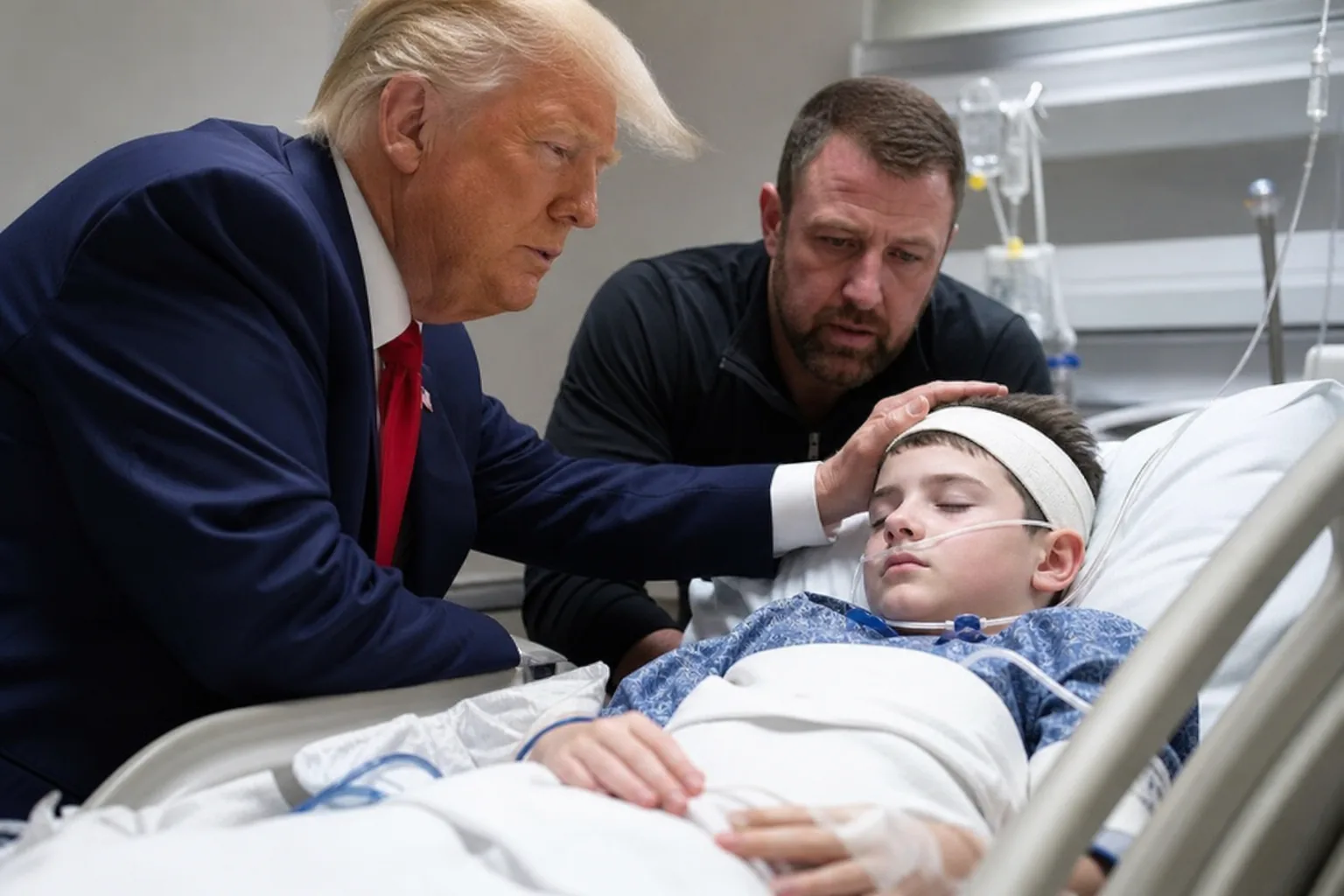
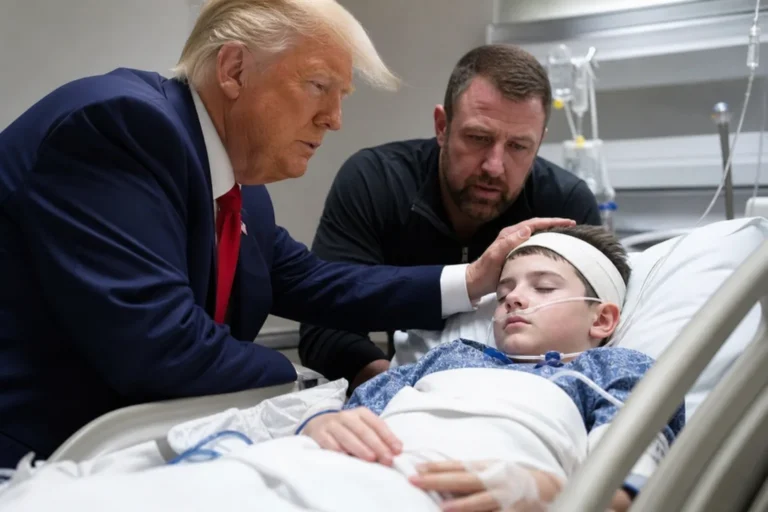
On November 16, 2026, President Donald Trump posted a series of AI-generated images to his social media account depicting himself cradling and comforting Jim Mullin, the teenage son of Markwayne Mullin, the current U.S. Secretary of Homeland Security. The images are fabricated. While Jim Mullin did suffer a real brain injury approximately six years ago, and while Markwayne Mullin testified about that painful family experience during a Senate hearing earlier in 2026, the photographs showing Trump’s personal involvement are not real — and at least one specific claim Trump attached to the images directly contradicts what Mullin himself told Congress under oath. The episode is a textbook case of how AI-generated images of Trump and Mullin’s son can blur the boundary between genuine political sympathy and manufactured narrative.
What Trump Posted and Why It Raised Immediate Questions
The images Trump shared on Saturday, November 16, 2026, showed him in what appeared to be an intimate, emotional setting with a young boy identified as Jim Mullin, who is 15 years old. In the accompanying text, Trump claimed that he had personally flown Jim to a rehabilitation center aboard his private aircraft. The post was framed as a testament to Trump’s personal generosity and his close bond with Mullin, who now serves as Secretary of Homeland Security in the Trump administration.
Several elements of the post attracted scrutiny almost immediately. Observers noted that the boy depicted in the images does not resemble Jim Mullin at the time of his injury — a discrepancy that, combined with the uncanny visual quality typical of AI-generated imagery, prompted fact-checkers and digital analysts to examine the photographs more closely. The conclusion reached by multiple outlets was unambiguous: the images are AI-generated and do not depict a real event.
Critically, the claim that Trump flew Jim to rehabilitation in his private plane is not corroborated by Mullin’s own congressional testimony. According to reporting by Snopes and other outlets that reviewed the Senate hearing record, Mullin testified that his family drove Jim to the rehabilitation center — not that Trump arranged or funded any private air transport. The gap between Trump’s post and Mullin’s sworn account is not a matter of interpretation; it is a direct factual contradiction.
The Real Story Behind Jim Mullin’s Brain Injury
The underlying event that Trump’s post references is genuine and serious. Jim Mullin suffered a brain injury as a teenager, an experience his father, Markwayne Mullin, described publicly during a Senate hearing earlier in 2026. The injury occurred approximately six years ago, meaning Jim was significantly younger at the time than he is today at 15. The hearing testimony was an emotional and candid account of a family navigating a traumatic medical crisis, and it was widely covered at the time as an example of Mullin speaking personally about a difficult chapter in his family’s life.
That testimony is the factual foundation on which Trump’s post was constructed. The details of Jim’s injury, the rehabilitation process, and the family’s ordeal are real. What is not real is any photographic documentation of Trump’s personal involvement in that period, nor is there verified evidence supporting the specific claim that Trump arranged private air transport for Jim. Mullin’s own words to Congress describe a family that drove their son to receive care — a grounded, human account that stands in contrast to the more dramatic narrative Trump’s AI-generated imagery attempts to tell.
→ Read also: AI-Generated Images Circulated Showing Trump Fainting After Midterm Elections
It is worth being precise about what the verified record does and does not establish. The Senate hearing where Mullin spoke about Jim’s injury is confirmed as having taken place in 2026, but the specific date of that hearing is not confirmed in the available sourcing. Similarly, while multiple reports describe the images as AI-generated based on visual analysis and the mismatch between the depicted child and known photographs of Jim, the technical methodology behind any formal AI-detection process has not been independently detailed in the sources reviewed for this article.
AI-Generated Images, Trump, and Mullin’s Son: A Pattern of Fabricated Sympathy
The use of AI-generated images to depict political figures in emotionally resonant scenarios has become an increasingly documented phenomenon in American political communication. This particular case — AI-generated images of Trump with Mullin’s son — is notable for several reasons that go beyond the standard concerns about deepfakes or visual misinformation.
First, the subject of the fabricated imagery is a minor. Jim Mullin is 15 years old. The creation and circulation of AI-generated images depicting a real child — even in a sympathetic context — raises distinct ethical and legal questions that differ from cases involving adult public figures. The child depicted in the images did not consent to their creation or distribution, and his family has not, based on available reporting, publicly endorsed the post or its claims.
Second, the imagery is tied to a real medical trauma. Brain injuries carry lasting physical, psychological, and social consequences for survivors and their families. Attaching fabricated imagery to a genuine medical crisis risks distorting public understanding of what the family actually experienced and can feel exploitative to those who lived through the real event. Markwayne Mullin’s Senate testimony was a voluntary act of public disclosure; the AI-generated images are an unsolicited overlay onto that disclosure.
Third, the post includes a specific false claim — that Trump flew Jim to rehabilitation — that is directly contradicted by Mullin’s own testimony. This moves the episode beyond the category of mere aesthetic fabrication into the territory of disinformation: a false statement of fact presented as a real memory, illustrated with synthetic imagery designed to make it appear credible. The combination of fabricated visuals and a falsified narrative is more potent than either element alone.
For a broader understanding of how AI-generated media is assessed and documented, the Snopes fact-check published on November 16, 2026 provides a detailed review of the claim and its sourcing.
→ Read also: AI-Generated and Manipulated Images Circulate as Authentic Election and Political Content
Why Fabricated Imagery Attached to Real Events Is Especially Difficult to Counter
One of the persistent challenges in addressing AI-generated imagery is that fabrications built around real events are significantly harder for audiences to dismiss than wholly invented scenarios. When a post references a genuine Senate hearing, a real injury, and a real family, it acquires a layer of plausibility that purely fictional content lacks. Readers who are aware that Jim Mullin was injured, and that his father spoke about it publicly, may find the fabricated images easier to accept — particularly if they encounter them without prior context.
This is the mechanism at work in the Trump post. The factual scaffolding is real: the injury happened, the testimony occurred, the family’s ordeal was genuine. The fabricated elements — the images themselves and the claim about private air transport — are layered onto that real foundation in a way that makes the entire package feel more credible than it is. Fact-checkers and media literacy educators consistently identify this hybrid structure, mixing verified facts with fabricated details, as among the most effective and most difficult to counter forms of misinformation.
It also places Markwayne Mullin in an uncomfortable position. As Secretary of Homeland Security and a close political ally of Trump, Mullin has not, based on available reporting, publicly contradicted the post. Yet his own congressional testimony stands as a direct rebuttal to at least one of its central claims. The record he created under oath — that his family drove Jim to rehabilitation — is now publicly juxtaposed with a presidential social media post asserting the opposite.
What the Evidence Establishes and What Remains Open
To summarize the verified record clearly: Trump posted AI-generated images on November 16, 2026, depicting himself with Jim Mullin, who is 15 years old and who suffered a real brain injury approximately six years ago. The images are fabricated and the boy depicted does not resemble Jim at the time of his injury. Trump’s accompanying claim that he flew Jim to rehabilitation in his private aircraft is contradicted by Mullin’s own Senate testimony, in which he described his family driving Jim to receive care. The Senate hearing at which Mullin testified took place earlier in 2026; the specific date is not confirmed in available sourcing.
What cannot be established from the available evidence includes the precise platform on which Trump posted the images, the specific date of Mullin’s Senate hearing, and the technical details of any formal AI-detection analysis applied to the photographs. These gaps do not affect the core finding — the images are fabricated and the private-plane claim is contradicted by primary-source testimony — but they are noted here in the interest of precision.
The episode underscores a challenge that public figures, fact-checkers, and audiences will continue to face: when AI-generated imagery is attached to real events involving real families, the work of separating fact from fabrication requires careful attention to primary sources — including, in this case, the words a father spoke under oath about one of the hardest experiences of his life.
This article was produced with AI assistance and reviewed editorially.

Trump’s ’60 Minutes’ Post-Election Interview: Claims Fact-Checked

Claims About Abdul El-Sayed’s Background Check and Senate Eligibility: What the Record Shows

Voting Machine Claims After 2026 Midterms Lack Evidence of Election Fraud

AI-Generated Images Linking Trump, Epstein, and Beyoncé Circulate Online Without Verification
