
Current Affairs
False rumors about US election security and voting procedures persist
Election misinformation about voting continues spreading despite official explanations. Learn how false claims about noncitizens, poll workers, and vote counts circulate.

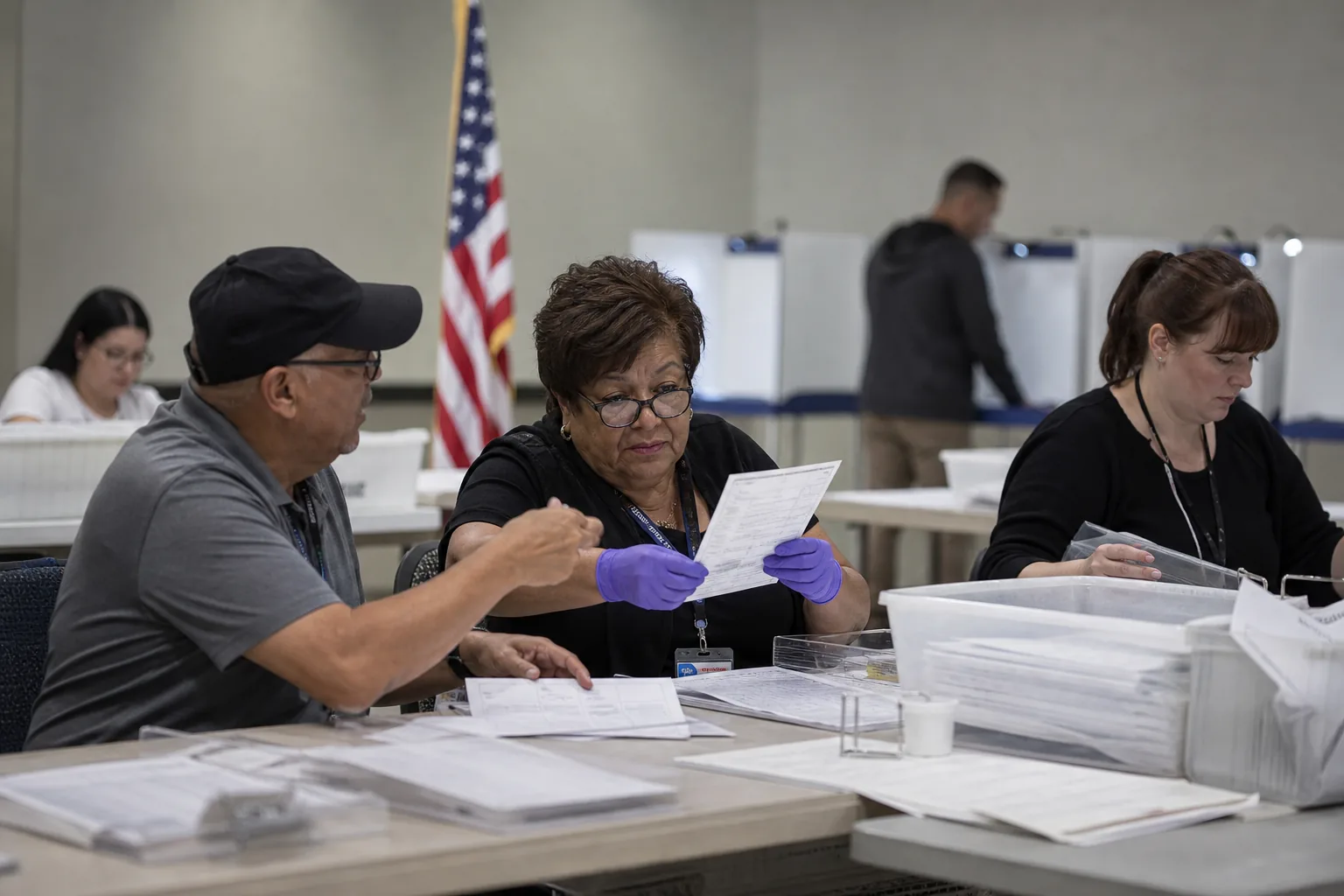
In the weeks leading up to the 2026 midterm elections, a familiar wave of election misinformation about voting has swept across social media platforms, group chats, and partisan websites. Claims about noncitizens flooding polling places, poll workers secretly invalidating ballots, and suspicious overnight vote-count surges have circulated widely — and persistently — despite clear, documented explanations from election authorities and fact-checkers. Understanding where these narratives come from, why they endure, and what the evidence actually shows is essential for any voter trying to separate procedure from propaganda.
A Landscape Shaped by Years of False Claims
The current environment of election misinformation did not emerge from nowhere. According to the Brennan Center for Justice, false information about elections has proliferated significantly since President Trump advanced the claim that the 2020 presidential election was stolen — a claim that courts, election officials, and independent auditors across the country have repeatedly rejected. The downstream effect has been substantial: the Brennan Center has found that more than one in four Americans believe the 2020 election was “rigged.” That level of public doubt creates fertile ground for new rumors to take root, because a significant portion of the electorate is already primed to distrust official results and procedures.
What makes the 2026 cycle particularly notable is the sheer volume and variety of claims in circulation. US News & World Report documented that false and misleading claims about voting were spreading online as voters cast their ballots in the 2026 midterms, with the pace accelerating in the final days before Election Day. The claims range from the specific and local — a punched hole in a ballot return envelope in Ventura County, California, presented as evidence of tampering — to the sweeping and systemic, such as assertions that noncitizens are voting in large numbers to swing outcomes.
Who Is Spreading Election Misinformation, and How
The actors behind this wave of voting misinformation span a wide spectrum. According to reporting by the BBC, hundreds of incidents involving purported voting irregularities are being collected and spread by individuals, as well as both independent and Republican-affiliated groups, with a smaller number of posts also originating from Democrats. This is not a monolithic, coordinated operation — it is a diffuse ecosystem of rumor, amplification, and motivated sharing.
Foreign interference adds another layer of complexity. The US government has alleged that foreign actors, including Russia, are actively spreading fake videos designed to undermine confidence in the electoral process. These videos, according to US officials, are capable of provoking doubt and eroding trust in institutions — a goal that does not require any single piece of content to go massively viral. Steady, low-level seeding of distrust can be just as damaging over time as a single high-profile incident.
At the domestic level, President Trump has spread false claims about ranked-choice voting systems, voting machines, vote counting, and past election results. The New York Times documented a pattern in which these claims misrepresent legitimate, legally established procedures. For example, Alaska voters approved a ranked-choice voting system through a 2020 ballot initiative — a democratic process that Trump has nonetheless characterized as suspect. Framing a voter-approved procedure as inherently corrupt is a recognizable tactic: it treats the outcome of democracy as evidence against democracy.
→ Read also: Dead Voters in US Elections: What the Research Actually Finds
The Noncitizen Voting Myth
Among the most persistent forms of election misinformation is the claim that noncitizens are voting in US federal elections in significant numbers, thereby distorting results. This narrative surfaces reliably before nearly every major election cycle and is regularly amplified by partisan social media accounts, viral posts, and, at times, prominent political figures.
The reality is that every state has systems in place specifically designed to prevent noncitizen participation in federal elections. Voter registration processes require attestation of citizenship, and providing false information on a registration form is a federal crime. Election officials across the country — including those in states led by both parties — have consistently reported that documented cases of noncitizen voting are exceedingly rare and are caught and referred for prosecution when they do occur. The American Bar Association has addressed the broader voter fraud myth, noting that large-scale fraudulent voting is not supported by evidence from election administrators or law enforcement records.
Despite this, the claim continues to circulate because it is emotionally resonant and difficult to disprove to someone who has already decided to distrust official sources. A denial from an election official can itself be reframed as part of a cover-up — a closed epistemic loop that makes the rumor nearly impervious to correction through normal channels.
How Ordinary Procedures Become “Evidence” of Fraud
One of the most instructive examples from the 2026 cycle involves ballot return envelopes in Ventura County, California. Images of these envelopes, which feature punched holes, circulated online with claims that the holes were evidence of election rigging — that votes were being voided or tampered with before counting. In fact, as fact-checkers confirmed, the holes are a standard feature of legitimate ballot return procedures in that jurisdiction, not a sign of manipulation. The envelopes function exactly as designed.
This pattern — a genuine, mundane feature of election administration being repackaged as sinister evidence — is one of the most common mechanisms by which voting misinformation spreads. It works because most voters are not familiar with the granular details of how ballots are processed, printed, transported, and counted. That knowledge gap is an opening for bad-faith actors to insert alarming interpretations of entirely routine events.
Vote-count “spikes” — moments during election night when large batches of ballots are reported simultaneously — follow a similar logic. These spikes are a normal consequence of how votes are tabulated: mail ballots, early votes, and in-person ballots are often processed in batches and reported together. A jurisdiction that finishes counting a large batch of mail ballots at midnight will show a sudden jump in one candidate’s total. This is not fraud; it is arithmetic. But presented without context on social media, a screenshot of a vote-count graph can look alarming to someone unfamiliar with the counting process.
→ Read also: False and Misleading Claims About US-Canada Relations Since Trump's 2024 Reelection
Why Corrections Struggle to Keep Pace
Fact-checking organizations, election officials, and journalists have worked steadily to address election misinformation and voting rumors in real time. The challenge is structural. A false claim can be created and shared in seconds; a thorough, sourced rebuttal takes time to research and write, and even then it reaches a different — often smaller — audience than the original claim. Platforms have experimented with labels, reduced amplification of flagged content, and partnerships with fact-checkers, but none of these interventions has proven comprehensively effective.
There is also the problem of motivated reasoning. Voters who have already concluded that elections are rigged are unlikely to update that belief based on an explanation from the same institutions they distrust. The Brennan Center’s finding that more than one in four Americans hold this view suggests the problem has moved well beyond the fringes of political opinion. It is now a mainstream belief for a substantial minority, which means corrections must work harder and reach further to have any measurable effect.
Election officials have responded by increasing transparency — publishing real-time data, offering public tours of counting facilities, and posting explanatory videos — but these efforts compete for attention in an information environment that rewards novelty and outrage over accuracy and process.
What Voters Can Do Before and After Casting a Ballot
Practical skepticism is the most reliable tool available to individual voters. Before sharing any claim about voting irregularities, it is worth asking: Does this come from an official election authority? Has a named, accountable journalist or fact-checking organization verified it? Is there a mundane procedural explanation that the post does not mention?
Official state and county election websites are primary sources for information about how ballots are processed, what poll workers are permitted to do, and how results are reported. These sites are not infallible, but they are accountable in ways that anonymous social media posts are not. Organizations such as the Brennan Center for Justice publish accessible, sourced guides to common election rumors — resources that are particularly useful in the days immediately before and after an election, when the volume of misleading content tends to peak.
The persistence of false rumors about US election security is not a sign that elections are broken — it is a sign that distrust, once seeded at scale, is extraordinarily difficult to uproot. What the evidence consistently shows is that the procedures being misrepresented as fraud are, in nearly every documented case, the ordinary machinery of democracy doing exactly what it is supposed to do. Recognizing that gap between perception and procedure is the first step toward a more accurate understanding of how American elections actually work.
This article was produced with AI assistance and reviewed editorially.

Trump’s ’60 Minutes’ Post-Election Interview: Claims Fact-Checked

Claims About Abdul El-Sayed’s Background Check and Senate Eligibility: What the Record Shows

Voting Machine Claims After 2026 Midterms Lack Evidence of Election Fraud

AI-Generated Images Linking Trump, Epstein, and Beyoncé Circulate Online Without Verification
