
Current Affairs
Unverified Claims About Zelenskyy’s Property Holdings and Diplomatic Contacts Spread on Social Media
Multiple fabricated stories about President Zelenskyy—including a fake $42M Canadian bunker purchase and edited diplomatic videos—continue spreading online. Fact-checkers

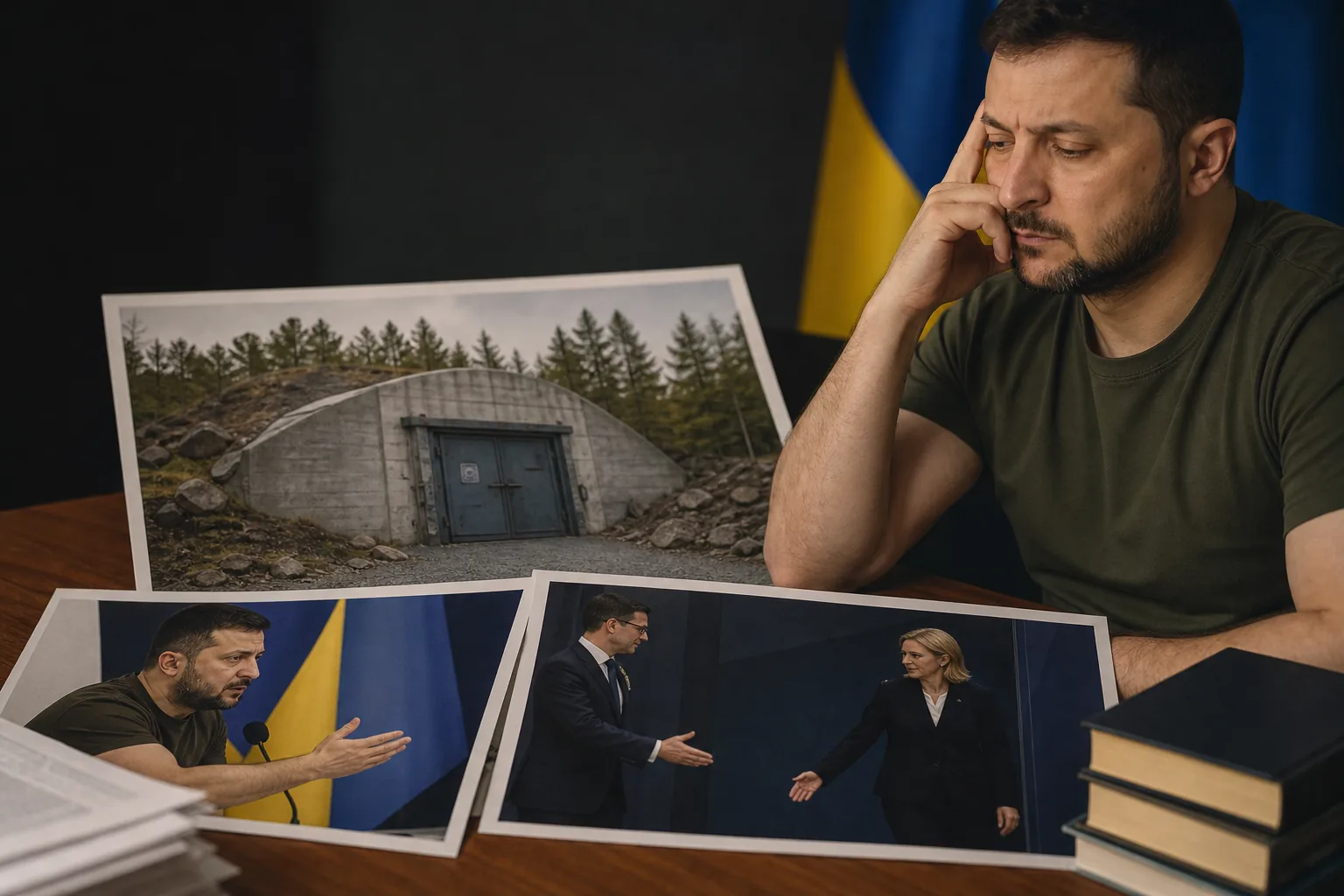
A recurring wave of Zelenskyy false claims disinformation continues to circulate across social media platforms and impostor news sites, targeting Ukrainian President Volodymyr Zelenskyy with fabricated stories about secret real estate purchases, manipulated diplomatic footage, and invented financial wrongdoing. Fact-checkers across Europe and North America have now documented at least 22 separate debunked claims about Zelenskyy acquiring property alone — a figure that underscores the sustained, systematic nature of the false information environment surrounding the Ukrainian head of state.
The Fake Toronto Sun Bunker Story
One of the more recent fabrications involves a fake article designed to look as though it was published by The Toronto Sun, a real Canadian newspaper. The article claimed that Zelenskyy had purchased a $42 million nuclear bunker in Canada. No such article exists in The Toronto Sun‘s actual archive. The fabrication is an example of what researchers call an impostor news site or brand impersonation tactic — creating content that mimics the visual identity and apparent credibility of a legitimate outlet to lend false authority to invented claims.
The CEDMO Hub, a Central European fact-checking and digital media observatory, documented this specific claim and noted it was the 22nd debunked claim about Zelenskyy purchasing property. That count alone is significant: it suggests not a random outbreak of misinformation but a sustained pattern of content production targeting the same subject with the same type of allegation. Each new fabricated property claim is structurally similar — a large dollar figure, a foreign country, and an implied narrative of corruption and personal enrichment during wartime.
The choice of Canada as the alleged location is consistent with a broader strategy in this category of disinformation. Claims have placed Zelenskyy’s supposed real estate holdings across multiple Western countries, making it difficult for any single national authority to issue a definitive blanket denial. By spreading the alleged locations across jurisdictions, the false narrative becomes harder to refute in a single, simple statement.
The Pattern of Property Disinformation
The bunker story does not stand alone. Snopes, the long-running US fact-checking organization, has rated as False a cluster of interconnected claims asserting that Zelenskyy owns 15 homes including a $35 million home in Florida, holds $1.2 billion in an overseas bank account, owns three private planes, and earns a monthly income of $11 million. Each of these figures has been checked against available public records and primary financial disclosures.
→ Read also: Fake Story Claims $140 Million Found at Ukrainian Official's Home; Mimics The New Voice of Ukraine
On the Florida property claim specifically, AFP Fact Check examined public property records and confirmed that Ukraine’s president does not own property in his name in Florida. Public records searches are among the most reliable tools available to fact-checkers for real estate claims, because property ownership in most US states is a matter of public record. The absence of any such record is meaningful, direct evidence against the claim — not merely an absence of proof in one direction.
Euronews has also reported on the recurring nature of these property allegations, noting that Zelenskyy has been “once again hit with false property empire allegations” — language that captures the repetitive, almost formulaic quality of this strand of disinformation. The allegations tend to resurface during moments of heightened political attention on Ukraine, including during aid debates in Western legislatures and around major diplomatic meetings.
Beyond property, the broader landscape of Zelenskyy false claims disinformation documented by Deutsche Welle includes fabricated stories about lavish shopping sprees and luxury yachts — narratives that share a common rhetorical purpose: to portray Zelenskyy as personally profiting from Western military and financial support while Ukrainian soldiers fight on the front lines. DW’s fact-checking team has identified these as part of a wider pattern of false news targeting Ukraine’s leadership.
The Edited Handshake Video
Separate from the property claims, an edited video spread online falsely depicting Sweden’s King Carl XVI Gustaf refusing to shake Zelenskyy’s hand. This type of manipulated media — altering or selectively cutting existing footage to reverse or misrepresent what actually happened during a real diplomatic encounter — is a distinct category of disinformation from the entirely fabricated news articles. It exploits real events and real people, making it harder for audiences to dismiss out of hand.
Diplomatic footage is particularly vulnerable to this form of manipulation because handshakes, pauses, and body language are inherently ambiguous when removed from context. A moment of hesitation, a camera cut, or a reordering of footage can be made to look like a snub, a rebuke, or a diplomatic incident where none occurred. Deutsche Welle documented this specific edited video as part of its broader fact-checking coverage of false news targeting Zelenskyy.
The use of manipulated video alongside fabricated text articles reflects a multi-format approach to spreading Zelenskyy false claims disinformation. Text-based fabrications target readers who engage with headlines and article summaries; video manipulations reach audiences who are more likely to trust visual evidence. Together, they create a more resilient false narrative — one that can survive the debunking of any single format because the other format continues to circulate.
→ Read also: Deepfake Video Compilation Falsely Depicts Ukrainian President Zelenskyy Belly Dancing
Why These Claims Keep Circulating
Understanding why this specific category of disinformation is so persistent requires looking at the underlying narrative it serves. Claims of personal enrichment by a wartime leader are designed to erode domestic and international support for that leader, and by extension for the country they lead. If audiences in Western Europe or North America come to believe — even vaguely — that Zelenskyy is personally benefiting from aid money, support for continued assistance to Ukraine becomes harder to sustain politically.
The New York Times Company has tracked false attributions to Zelenskyy specifically, documenting how fabricated quotes and statements are circulated under his name to create the impression of admissions or positions he has never actually taken. This adds another dimension to the disinformation landscape: it is not only about what Zelenskyy allegedly owns, but about what he allegedly says.
The Journal, an Irish fact-checking outlet, has examined multiple claims about Zelenskyy’s supposed property holdings in locations including Miami, Israel, and London, rating them as unsubstantiated or false. The geographic spread of these alleged holdings — across multiple continents and jurisdictions — is itself a feature of the disinformation strategy, not an accident. It makes comprehensive rebuttal logistically demanding and ensures that at least some version of the claim continues to feel plausible to audiences in any given country.
How Fact-Checkers Are Responding
The response from the fact-checking community has been consistent and cross-border. Organizations including CEDMO Hub, AFP Fact Check, Snopes, Deutsche Welle, Euronews, and The Journal have each independently examined specific claims and found them to be false or unsupported by evidence. The convergence of multiple independent organizations on the same verdict — using different methodologies, in different countries, with access to different primary sources — is itself a form of corroboration.
Readers encountering claims about Zelenskyy’s alleged wealth, property, or diplomatic behavior can consult CEDMO Hub’s running documentation of debunked property claims, which now numbers at least 22 separate instances. That resource illustrates both the volume of false content being produced and the sustained effort required to track and rebut it.
The tools most useful for evaluating these claims remain straightforward: public property records for real estate allegations, archived original footage for video manipulation claims, and direct comparison of alleged article text against the real publication’s archive for impostor news stories. None of these methods require specialized technical skills — they require only the time and discipline to check before sharing. The persistence of these fabrications after more than 22 documented debunkings suggests that the goal is not to convince careful readers, but to maintain a background level of doubt in audiences who encounter the claims without the accompanying fact-checks. Recognizing the pattern — the same narrative, the same structure, the same implausible figures — is itself a form of media literacy that makes each new iteration easier to identify.
This article was produced with AI assistance and reviewed editorially.

Trump’s ’60 Minutes’ Post-Election Interview: Claims Fact-Checked

Claims About Abdul El-Sayed’s Background Check and Senate Eligibility: What the Record Shows

Voting Machine Claims After 2026 Midterms Lack Evidence of Election Fraud

AI-Generated Images Linking Trump, Epstein, and Beyoncé Circulate Online Without Verification
