
Current Affairs
AI-Generated and Manipulated Images Circulate as Authentic Election and Political Content
AI-generated images and deepfake videos are circulating widely in the 2026 election cycle, with 69% of detected deepfake election content carrying no disclosure to voters

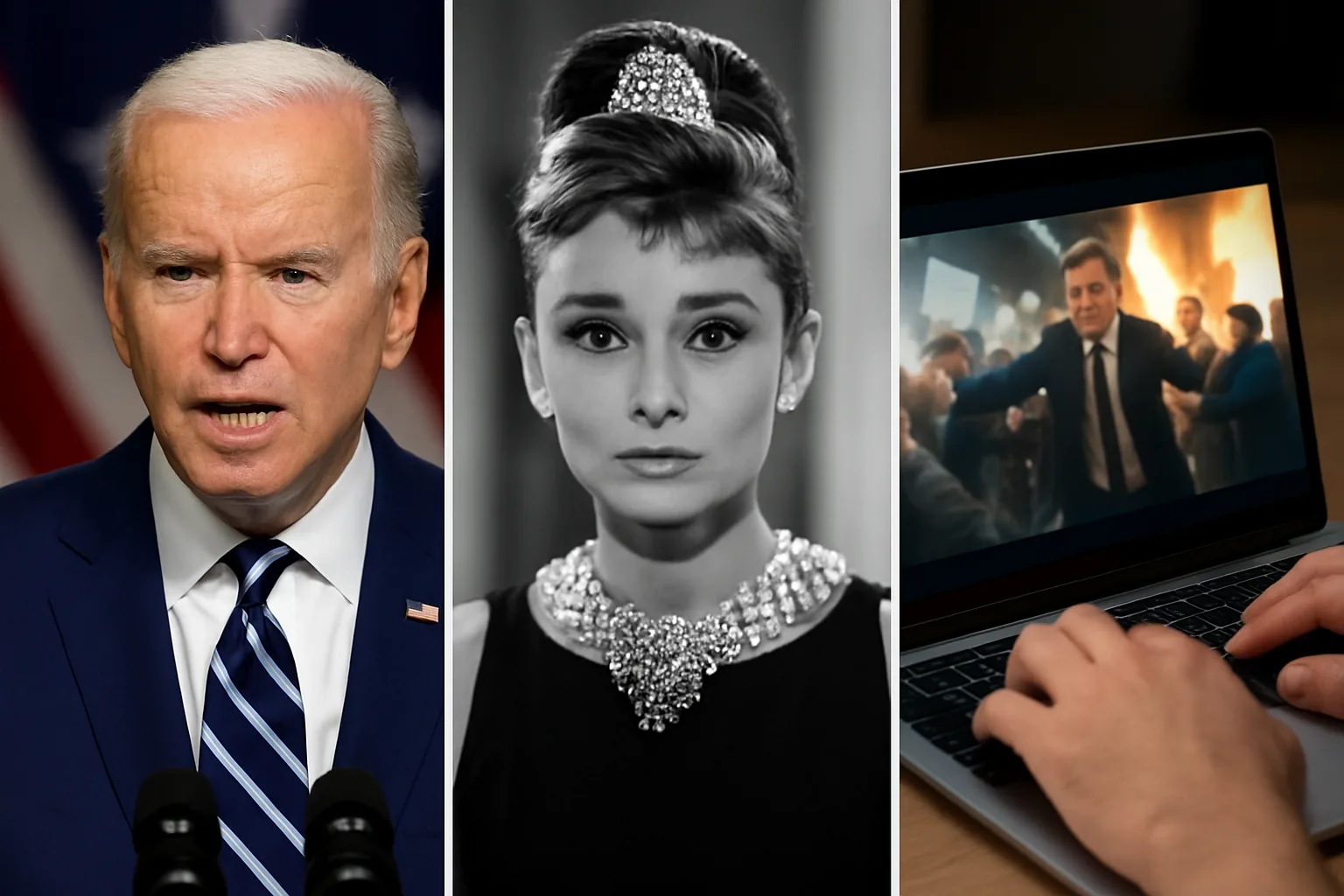
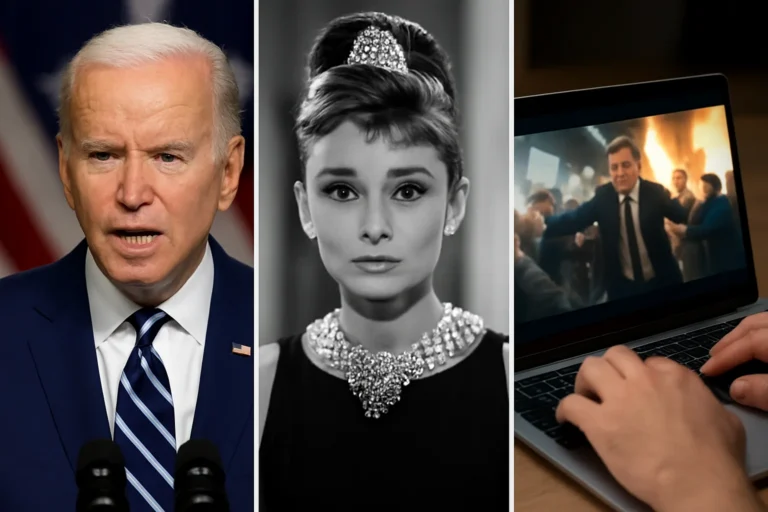
The 2026 U.S. election cycle has brought a striking new dimension to political disinformation: deepfake election content and AI-generated imagery are circulating at scale, often indistinguishable from authentic footage, and reaching millions of voters before corrections can catch up. What was a fringe concern just a few years ago has become a documented, measurable feature of modern campaigns — one that challenges not only voters’ ability to assess what is real, but also the regulatory frameworks designed to keep political speech honest.
The Scale of the Problem in 2026
The numbers emerging from this election cycle are striking in their specificity. Political campaigns have spent more than $16 million on TV ads that disclosed using AI-generated or manipulated images in 2026 alone, according to data reported by CNN. That figure covers only disclosed use — meaning campaigns that voluntarily or legally acknowledged the synthetic nature of their content. The undisclosed portion is almost certainly larger.
Research from the Wesleyan Media Project adds a sharper edge to that picture. Analysts identified 164 AI-generated ads in the 2026 election cycle — and found that 69% of them carried no disclosure whatsoever. Voters watching those ads had no indication that the images, voices, or scenarios they were seeing had been generated or substantially altered by artificial intelligence. That is not a marginal footnote; it means the majority of AI-produced political advertising in this cycle reached audiences without any label identifying it as synthetic.
These figures matter because they represent only what researchers could detect and categorise. The broader ecosystem of social media posts, forwarded videos, and viral images operating outside the formal ad-buy infrastructure is far harder to audit. Deepfake election content does not announce itself, and its most effective iterations are precisely those that look most credible.
How Campaigns Are Using Synthetic Media — and Why It Matters
Not all AI use in political advertising is deceptive in intent. Some campaigns disclose it openly, using generative tools to produce imagery more cheaply or quickly than traditional production allows. The line between legitimate creative use and manipulative fabrication, however, is not always clear — and that ambiguity is part of what makes regulation so difficult.
A concrete example from the current cycle illustrates the spectrum. Republican candidate Bruce Blayckman released an AI-generated video depicting New York Mayor Zohran Mamdani and Governor Kathy Hochul gardening together — a piece of political satire or attack content rendered through synthetic media. Whether such content crosses into harmful fabrication depends heavily on context: how realistic it appears, whether viewers can distinguish it from genuine footage, and whether it attributes false statements or actions to real people.
→ Read also: AI-Generated and Manipulated Videos Spread False Claims About Political Events and Figures
The Blayckman example is relatively benign in its imagery, but it points toward a more dangerous application of the same technology: videos or audio clips that put specific words, decisions, or behaviours into the mouths and bodies of real candidates and officials. Once that capability is normalised, the evidentiary bar for what voters will accept as real shifts in ways that are difficult to reverse.
The Robocall Precedent and the Danger of Synthetic Audio
Visual deepfakes attract the most attention, but synthetic audio has already demonstrated its capacity for direct electoral harm. During the 2024 election cycle, a robocall impersonating President Joe Biden was sent to more than 20,000 New Hampshire voters. The fabricated message falsely told recipients that voting in the primary would prevent them from voting in the general election — a straightforward attempt at voter suppression using a cloned voice.
This incident, documented by Temple University’s Institute for Law, Innovation and Technology, represents exactly the kind of harm that distinguishes synthetic media from ordinary political spin. Traditional disinformation requires voters to misinterpret or misremember something real. A convincing audio deepfake of a candidate or official requires no such cognitive step — it presents a fabricated reality with the full sensory credibility of an authentic recording. The New Hampshire robocall was eventually identified and reported, but not before reaching tens of thousands of people at a critical moment in the electoral calendar.
The episode also highlighted a gap in existing law. At the time, few states had specific statutes addressing AI-generated electoral content, and federal frameworks were not equipped to respond quickly. Legislative efforts have advanced since then, but the technology continues to outpace the regulatory response.
Why Deepfake Election Content Spreads So Effectively
Understanding why fabricated political media travels so far, so fast, requires looking at the structural features of the platforms that carry it. Social networks are optimised for engagement, and content that provokes strong emotional responses — outrage, fear, vindication — tends to spread faster than content that is accurate but mundane. Deepfake election content is frequently engineered to hit exactly those emotional registers: a candidate apparently committing violence, making a shocking statement, or being caught in a damaging moment.
By the time a fact-check is published, the original clip may have been viewed millions of times. Research into misinformation dynamics consistently finds that corrections reach a fraction of the audience that the original false content did, and that corrections can paradoxically reinforce the original claim in some audiences — a phenomenon sometimes called the backfire effect, though its scope is debated in the literature.
→ Read also: AI-Generated Deepfakes and Synthetic Media Drive Growing Share of Fact-Checking Workload
Platform design compounds the problem. Algorithmic recommendation systems surface content based on engagement signals rather than accuracy signals. A deepfake video that generates rapid sharing will be promoted to wider audiences before human or automated moderation can assess it. Even when platforms remove content, copies and re-uploads circulate in parallel, often faster than removal notices can follow.
The Regulatory Landscape and Its Gaps
The Brennan Center for Justice has tracked legislative efforts to regulate AI and synthetic media in the political arena, and the picture is one of uneven, fragmented progress. A number of states have enacted or proposed laws requiring disclosure when AI-generated content appears in political advertising. Some go further, prohibiting the use of deepfakes to misrepresent candidates within a defined window before an election.
Federal legislation has been slower to materialise. The challenges are partly constitutional — restrictions on political speech in the United States face a high legal bar — and partly technical. Defining what counts as an AI-generated image, at what threshold of manipulation a piece of content becomes synthetic, and how to enforce disclosure requirements across thousands of individual social media accounts are all genuinely difficult problems. You can require a campaign to disclose AI use in a paid TV ad; it is far harder to require the same of an anonymous account posting a manipulated video on a social platform.
Detection technology is advancing alongside generation technology, but the two are in a continuous arms race. Tools trained to identify AI-generated images can be fooled by newer generation models, and watermarking schemes — which embed invisible signals in synthetic content — depend on voluntary adoption by the platforms and tools that create the content in the first place. The Brennan Center’s analysis of deepfake regulation identifies these enforcement gaps as among the most pressing challenges facing policymakers heading into future election cycles.
What Voters and Journalists Can Do Now
While regulatory solutions develop, the burden of scepticism falls heavily on individual viewers and the journalists who cover political media. Several practical habits reduce the risk of being misled by deepfake election content:
- Check the source before sharing. A video or image circulating on social media without a link to an original, verifiable broadcast or official channel should be treated with caution regardless of how convincing it appears.
- Look for corroboration from established newsrooms. If a dramatic political event actually occurred, multiple credible outlets will be covering it. Absence of corroboration is a meaningful signal.
- Pay attention to visual and audio artefacts. Current AI generation tools often leave subtle signs: unnatural blinking patterns, inconsistent lighting on faces, audio that does not quite match lip movements, or background details that shift between frames. None of these tests is definitive, but they are worth applying.
- Use reverse image search tools to trace the origin of photographs and video stills. Many fabricated images are modifications of real photographs that can be traced to their original context.
- Treat emotional intensity as a flag, not a confirmation. Content designed to provoke strong reactions is more likely to have been engineered for that purpose — which does not make it false, but does make it worth scrutinising more carefully.
The Broader Stakes for Democratic Accountability
The proliferation of deepfake election content is not simply a technical problem or a media literacy problem. It is a challenge to the epistemic foundation on which democratic participation rests. Elections depend on voters being able to form judgements about candidates and events based on something approximating shared reality. When fabricated media can credibly simulate events that never happened, attribute statements to people who never made them, and circulate faster than corrections can follow, that shared reality becomes genuinely contested.
The 2024 Biden robocall and the 2026 ad-spend figures are not isolated incidents; they are data points in a trajectory. The tools for generating synthetic political content are becoming cheaper, more accessible, and more convincing with each passing year. The institutions — legal, journalistic, technical, and civic — tasked with maintaining the integrity of political information are under pressure to keep pace. Whether they do will shape not just the outcome of individual elections, but the long-term health of informed political participation itself. The challenge is urgent, the tools are evolving, and the window for establishing effective norms is narrowing with every cycle that passes without them.
This article was produced with AI assistance and reviewed editorially.

Political Ads in 2026 Midterms Contain False or Misleading Claims About Opponents

Trump Administration ‘Super Intelligence’ Accord Misspells ‘United States’ as ‘Unites States’

Trump Administration ‘Super Intelligence’ Accord Misspells ‘United States’ as ‘Unites States’

No Going Back PAC Ad Makes Misleading Claim About Roy Cooper and Rape Kits
