
Current Affairs
AI-Generated and Manipulated Images Spread Across Social Media
AI-generated and manipulated images spread widely in October 2026, from synthetic protest footage to doctored photos of public figures. Learn how detection tools expose t

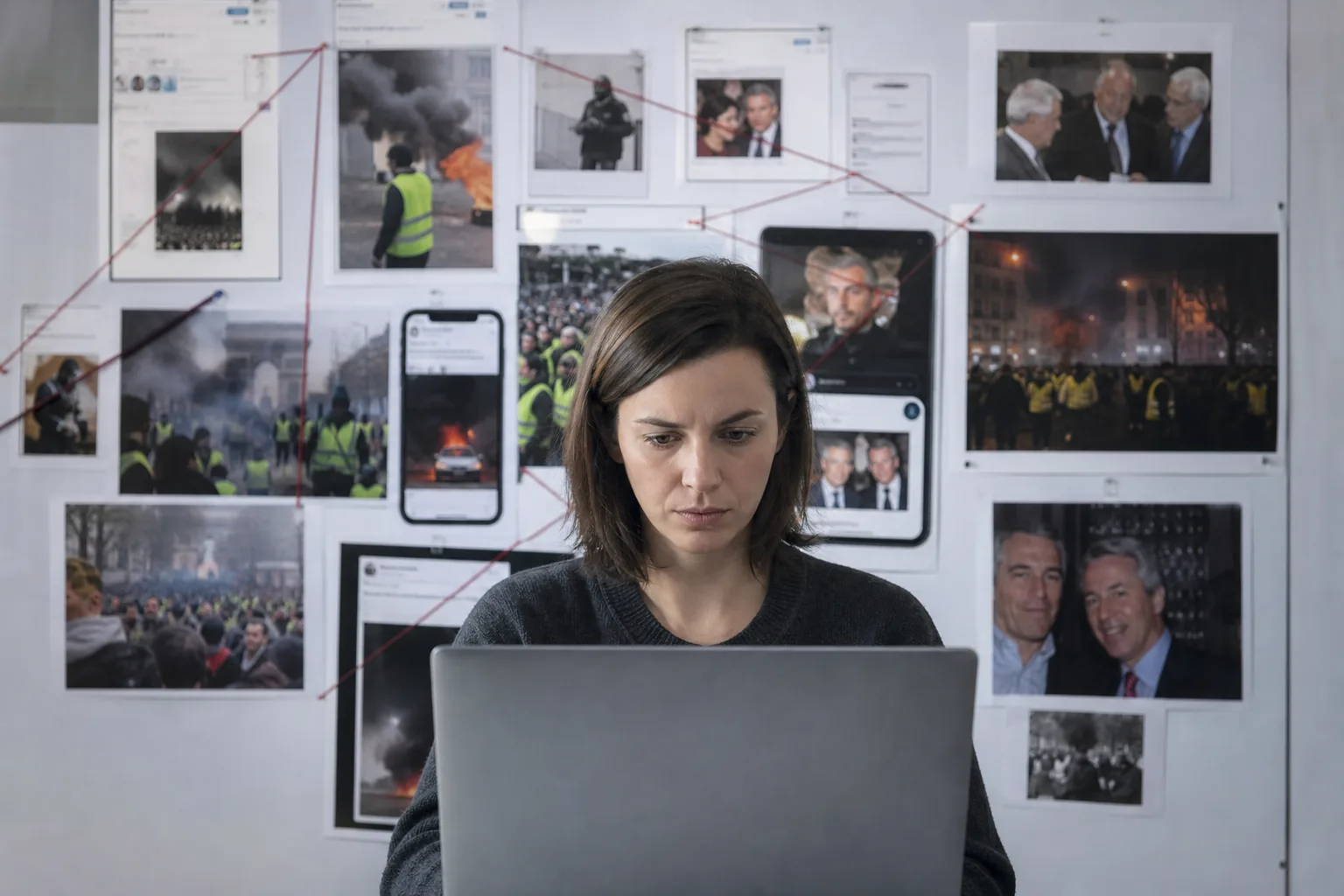
The proliferation of AI generated images misinformation across social media platforms has reached a point where ordinary users, journalists, and even trained researchers struggle to distinguish fabricated content from genuine footage. In October 2026, a fresh wave of manipulated visuals — ranging from synthetic protest scenes to doctored photographs placing public figures in compromising company — circulated widely online, prompting renewed concern about the integrity of visual information in the digital age. Understanding how this content is made, why it spreads, and what tools exist to detect it has never been more urgent.
How AI Tools Turn Fiction Into Convincing Visual “Fact”
Modern generative AI systems can produce photorealistic images, videos, and audio from a simple text prompt in seconds. The output can depict crowds, landscapes, public figures, and breaking-news scenes with a level of detail that makes them indistinguishable from genuine photographs to the untrained eye. AI tools can create realistic images that are entirely fabricated, tricking viewers into thinking they are real events — a capability that has moved from research laboratories into freely available consumer applications over the past few years.
The mechanics of image generation rely on diffusion models and generative adversarial networks, which learn from billions of real photographs to synthesise new ones. Because these models have been trained on authentic visual data, their outputs inherit the lighting, texture, and compositional cues that human perception associates with credibility. A synthetic protest scene, for example, will reproduce the blur of motion, the grain of a smartphone camera, and the chaos of a crowd in ways that feel intuitively real.
Video generation adds another layer of complexity. Short clips depicting events that never happened — ships in contested waterways, celebrities at private gatherings, politicians at staged meetings — can now be produced with consumer-grade tools. Metadata, which might once have revealed a file’s origin, can be stripped or spoofed. Detection therefore requires more than a quick visual scan; it demands forensic analysis of pixel-level artefacts, model-specific watermarks where they exist, and cross-referencing with verified source material.
Why AI-Generated Misinformation Spreads Faster Than Conventional Falsehoods
Research into the dynamics of online misinformation has produced a finding that should give pause to anyone who assumes that obviously false content will simply be ignored. According to work reviewed in the academic literature, AI-generated misinformation is more likely to go viral than conventional misinformation. This is not merely a function of how realistic the content looks; it also reflects the emotional and narrative qualities that AI-generated content tends to exhibit.
Studies indicate that AI-generated misinformation tends to be centred on entertaining content and exhibits more positive sentiment than conventional misinformation. This is counterintuitive: one might expect that alarming or outrage-inducing content would spread fastest. But content that feels engaging, novel, or even uplifting appears to lower the critical guard that users might otherwise apply. A dramatic sunset photograph, a heartwarming scene of community solidarity, or a visually striking protest image can accumulate thousands of shares before anyone thinks to question its authenticity.
→ Read also: AI-Generated Images and Deepfakes Circulating as News
The origin of this content also follows a pattern worth noting. Research suggests that AI-generated misinformation is more likely to originate from smaller user accounts rather than from large, established profiles. This makes intuitive sense: large accounts with significant followings have reputational stakes that make deliberate misinformation riskier. Smaller accounts, by contrast, can seed false content with lower visibility and lower accountability, relying on the network effect to carry it forward once initial engagement takes hold.
The Role of Fake Accounts in Amplifying Fabricated Images
The spread of synthetic visuals is not purely organic. Fake social media accounts using AI-generated images are involved in the spread of misinformation — a finding that points to a coordinated infrastructure beneath what might appear to be spontaneous viral moments. These accounts use AI-generated profile photographs, AI-written biographical details, and AI-produced content to simulate the appearance of real, engaged users.
The historical roots of this strategy are traceable. Li Bicheng, a Chinese computer scientist, published a paper in 2019 sketching a plan for using AI to flood the internet with fake social media accounts — an early blueprint for what has since become a practical capability accessible to a wide range of actors. The paper, discussed in analysis by RAND Corporation, illustrates how academic research into AI capabilities can foreshadow real-world manipulation at scale. The concept of synthetic personas operating as apparently authentic users has since moved from theoretical proposal to documented practice.
When fake accounts amplify fabricated images, the result is a self-reinforcing loop. A synthetic image is posted by a small account; fake amplifier accounts share it; the engagement signals cause platform algorithms to promote it further; real users encounter it in their feeds and, seeing apparent social proof in the form of likes and shares, are more likely to accept it as genuine. Breaking this loop requires intervention at multiple points — detection, labelling, and platform-level enforcement — none of which currently operates at the speed the content itself travels.
Detection Methods: What Actually Works
Identifying AI-generated images and videos requires a layered approach, because no single method is reliable across all content types and all generation tools. The most robust detection strategies combine several techniques.
- Watermarking and provenance signals: Some AI image generators embed invisible watermarks — such as SynthID, developed by Google DeepMind — directly into the pixel data of generated images. These watermarks survive common transformations like compression, cropping, and colour adjustment. When present, they provide strong evidence of synthetic origin. The limitation is that not all generators implement watermarking, and watermarks can sometimes be degraded or removed by sufficiently aggressive processing.
- Metadata analysis: Genuine photographs carry EXIF metadata recording the camera model, lens settings, GPS coordinates, and timestamp. AI-generated images typically lack this data or contain inconsistencies. Stripped metadata is not proof of fabrication on its own — many users remove EXIF data for privacy reasons — but combined with other signals it is informative.
- Reverse image search: Checking whether an image appears in earlier contexts, or whether its visual elements appear in stock photography or training datasets, can reveal recycled or composited content. An image claiming to show a current event but traced to a photograph taken years earlier is almost certainly being misrepresented.
- Pixel-level forensic analysis: AI-generated images often contain subtle artefacts invisible to casual inspection: inconsistent lighting across faces and backgrounds, anatomically improbable details in hands and teeth, unnatural repetition of textures, and blurring at object boundaries. Forensic tools trained to detect these patterns can flag suspicious content, though the arms race between generation and detection means these tools require constant updating.
- Contextual verification: Perhaps the most reliable method remains old-fashioned journalism — checking whether the claimed event is corroborated by other sources, whether the location matches geographic details in the image, and whether credible eyewitness accounts exist. No AI detector replaces the discipline of asking: what would have to be true for this image to be real, and is there evidence for any of it?
Platform Responsibility and the Limits of Automated Moderation
Social media platforms have invested substantially in automated systems to detect and label synthetic content, but the scale of the problem outpaces current capabilities. Billions of images and videos are uploaded every day across major platforms; even a small percentage of synthetic content represents an enormous absolute volume. Automated classifiers produce both false positives — flagging genuine content as synthetic — and false negatives — missing sophisticated fakes entirely.
→ Read also: AI-Generated and Fabricated Media Spreading as Legitimate News
Labelling policies vary considerably across platforms. Some require creators to disclose when content is AI-generated; others rely on post-hoc detection and retroactive labelling. Neither approach addresses the period between initial posting and eventual review, during which viral spread can already have occurred. The challenge is compounded by the fact that many users encounter content through screenshots, reposts, and messaging apps rather than directly on the originating platform, where any label would have been visible.
Regulatory frameworks are beginning to address these gaps. Legislation in several jurisdictions now requires disclosure of AI-generated content in political advertising, and broader content authenticity standards — such as those developed under the Coalition for Content Provenance and Authenticity — aim to attach verifiable origin data to digital media at the point of creation. These frameworks are still maturing, and enforcement remains inconsistent.
What Individuals Can Do Right Now
While systemic solutions develop, individual users are not without recourse. Healthy scepticism toward visually striking or emotionally charged content — particularly when it appears to document a breaking event — is the first line of defence. Before sharing an image or video, it is worth pausing to ask where it originated, whether it has been verified by a credible news organisation, and whether the details within the image are internally consistent.
Free reverse image search tools are accessible to anyone with a browser. Fact-checking organisations publish regular analyses of circulating fabrications. Browser extensions exist that can flag images associated with known misinformation campaigns. None of these tools is infallible, but used together they significantly raise the threshold for being deceived.
The deeper challenge is cultural rather than technical. AI generated images misinformation thrives in an environment where speed of sharing is rewarded and verification is seen as a barrier to participation. Reversing that incentive structure — making it normal to check before sharing, and socially costly to spread unverified content — requires a shift in how digital literacy is taught, practised, and valued. The technology to fabricate convincing visual falsehoods exists and is improving rapidly; the habits of mind needed to resist it are learnable, but they require deliberate cultivation at every level of society.
The current moment, with synthetic content circulating at scale and detection tools struggling to keep pace, is not a temporary disruption on the way to a stable equilibrium. It is the new baseline — one that demands sustained attention from platforms, regulators, educators, and every person who encounters an image online and decides, in a fraction of a second, whether to believe it and pass it on.
This article was produced with AI assistance and reviewed editorially.

Trump’s ’60 Minutes’ Post-Election Interview: Claims Fact-Checked

Claims About Abdul El-Sayed’s Background Check and Senate Eligibility: What the Record Shows

Voting Machine Claims After 2026 Midterms Lack Evidence of Election Fraud

AI-Generated Images Linking Trump, Epstein, and Beyoncé Circulate Online Without Verification
