
Current Affairs
Trump’s Statements and Social Media Posts: Fact-Check Update
Fact-checkers examine recent Trump statements and social media posts. A viral ballot-counting screenshot and Starlink claims are traced to fabricated or misattributed sou

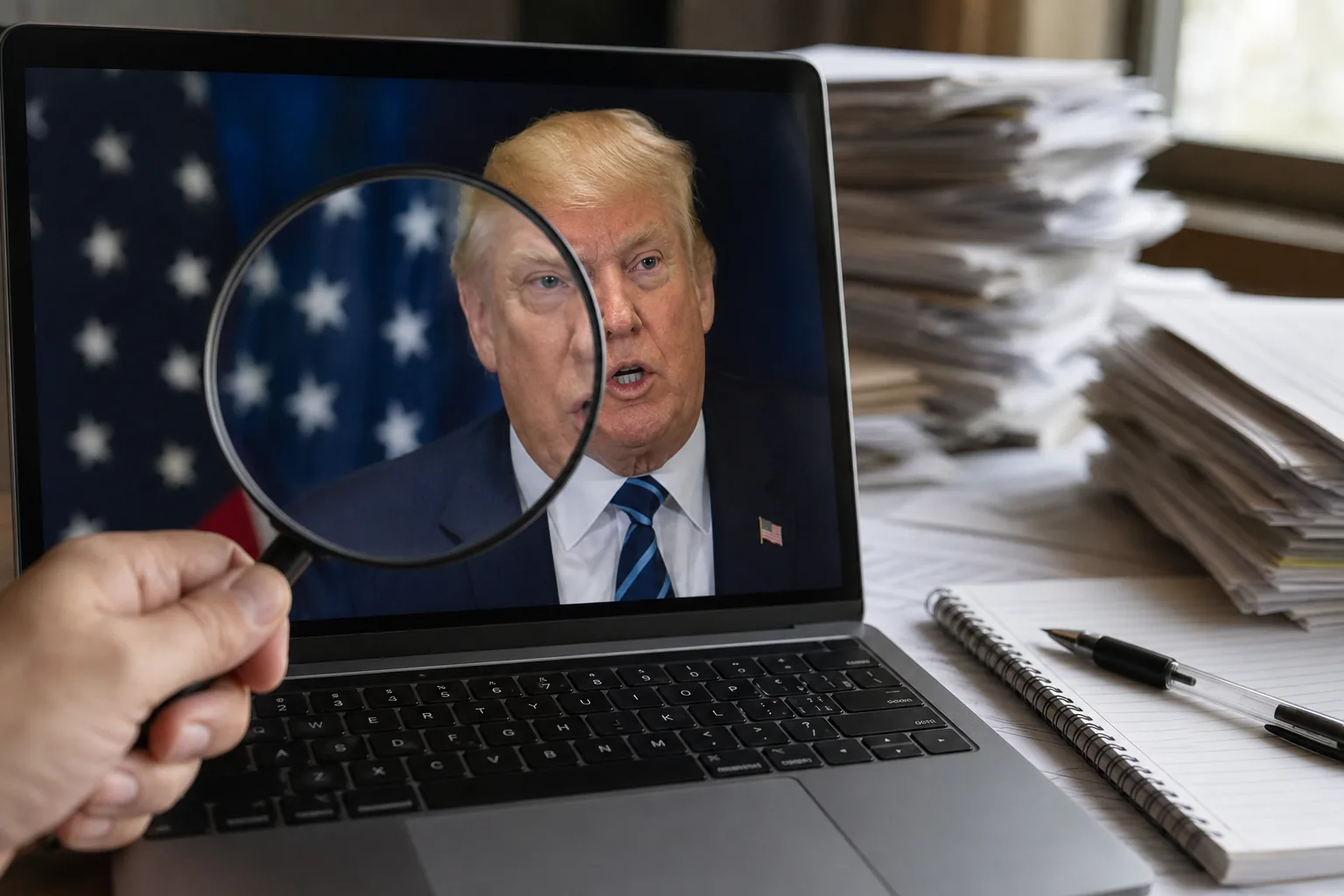
In the weeks surrounding the 2026 US midterm elections, fact-checkers across multiple organisations have been working overtime to assess claims attributed to former and current public figures — and nowhere has that scrutiny been more intense than on statements and alleged social media posts attributed to Donald Trump. A proper trump fact check in this environment is not a simple task: fabricated screenshots, satirical posts mistaken for genuine content, and decontextualised quotes are all circulating simultaneously, demanding careful verification before any verdict is reached.
The Ballot-Counting Screenshot That Was Never Real
One of the most widely shared pieces of alleged Trump content in late October 2026 was a screenshot purporting to show a Truth Social post from October 26, 2026, in which Trump supposedly wrote: “Why are we wasting time counting ballots? Everybody already knows the Republicans WON the 2026 midterms in a historic landslide! ALL 50 STATES!” The post spread rapidly across Facebook, X, and messaging apps, with many users treating it as genuine evidence of premature electioneering.
Verification by Full Fact found no evidence that Trump made any such post on his Truth Social account. The screenshot was traced to a satire account — content created to parody Trump’s communication style, not to report his actual words. Satire accounts frequently produce material that is visually indistinguishable from authentic posts, particularly when screenshots are cropped to remove platform labels or account verification cues.
AFP Fact Check independently examined two widely shared messages about the 2026 midterms and reached the same conclusion: both were fake. One of them was the purported premature declaration of victory — content that originated as satire but lost its satirical framing entirely as it travelled through social networks. AFP’s finding reinforces a broader pattern: bogus screenshots attributed to Trump circulate with notable regularity, and the midterm election period has intensified that trend significantly.
This case illustrates why the verification process for any alleged social media post must begin at the source account itself, not at the screenshot. Screenshots can be edited in seconds; the authoritative record is the post as it appears — or does not appear — on the platform where it is claimed to have been published.
→ Read also: Fake Screenshots and Misattributed Quotes Circulate as Trump Truth Social Posts
How Fabricated Screenshots Spread and Why They Are Convincing
Understanding why fake posts gain traction is essential to conducting a rigorous trump fact check. Several structural factors make fabricated screenshots particularly effective as misinformation:
- Visual authenticity: Social media platforms have consistent design languages. A screenshot that accurately replicates fonts, button placements, and layout elements looks credible at a glance, especially on a small mobile screen.
- Emotional resonance: Content that matches what an audience already believes about a public figure is processed less critically. A screenshot that sounds like Trump — in rhythm, vocabulary, and rhetorical escalation — bypasses scepticism more easily than one that seems out of character.
- Satire without labels: Satire accounts sometimes post content that is intended to be obviously exaggerated within its original context. Once that content is screenshotted and reshared without the account name or satirical framing, the exaggeration reads as authentic rather than comedic.
- Speed of sharing: In the hours immediately following an election or major political event, the pace of sharing outstrips the pace of verification. False content can reach millions of people before a single fact-checker has published a verdict.
Fact-checkers counter these dynamics by returning to primary sources: the actual account, the actual post history, and — where necessary — archived copies of pages at specific timestamps. The Full Fact analysis of the ballot-counting screenshot exemplifies this method, documenting not just that the post is absent from Trump’s account but explaining the satirical origin of the content.
Verified Statements From Trump’s September and October 2026 Record
While some claims attributed to Trump in this period are outright fabrications, others are genuine statements that have been subjected to independent scrutiny. TIME published a fact-check of statements Trump made during a September 28, 2026 interview conducted at the White House. The interview covered a range of policy and political topics, and TIME’s editorial team assessed specific factual claims within it against available evidence.
Separately, PolitiFact examined a statement Trump made on September 21, 2026, posted on X, relating to Roy Cooper and the federal response to Hurricane Helene. PolitiFact rated that statement False. The Hurricane Helene claim is a concrete example of the distinction between a fabricated statement — one Trump never made — and a verified statement that does not hold up to factual scrutiny. Both categories require fact-checking, but they require different investigative approaches: the first demands source authentication, the second demands evidence comparison.
It is important to note that aggregated accuracy metrics for Trump’s full October 2026 statement record — figures such as what percentage of his claims were rated true, false, or misleading — are not available from verified sources at the time of writing. Presenting such a figure without a verified source would itself be a form of misinformation, and this article does not do so. FactCheck.org maintains an ongoing profile of Trump’s statements, and readers seeking a comprehensive record should consult that resource directly.
→ Read also: Fabricated Screenshots and Fake Social Media Posts Attributed to Trump
Applying a Consistent Verification Method to Political Claims
A sound trump fact check — or any political fact check — follows the same sequence regardless of the subject. The method does not change based on who made the claim or which direction it cuts politically. The steps are:
- Identify the original source. Where was this claim first published or spoken? A screenshot is not a source; it is a representation of a source that must be independently confirmed.
- Check the primary record. For social media posts, this means visiting the account directly and searching its post history. For spoken statements, it means finding the original audio, video, or official transcript.
- Establish the date and context. A statement made in one context — a rally, an interview, a satirical parody account — carries different meaning and weight than the same words in another context.
- Compare against primary evidence. For factual claims about events, figures, or policies, the comparison point is official data, peer-reviewed research, or direct documentation — not other news articles, which may themselves contain errors.
- State uncertainty plainly. When evidence is insufficient to confirm or refute a claim, the honest verdict is unverifiable. Forcing a verdict where the evidence does not support one is itself a form of inaccuracy.
This framework applies symmetrically. The same rigour used to debunk a fabricated pro-Trump screenshot must be applied to claims that appear to damage Trump’s credibility. The goal is accuracy, not a particular outcome.
Why Election Periods Amplify Misinformation Risk
The 2026 midterm cycle has demonstrated, as previous election cycles have, that the volume of fabricated and misleading content rises sharply in the weeks immediately before and after voting. Several dynamics explain this pattern. Audiences are more emotionally engaged with political outcomes, which increases both the motivation to share content and the tendency to accept information that confirms existing expectations. The news cycle accelerates, creating gaps that unverified content can fill before journalists have time to report accurately.
Fact-checking organisations have adapted by publishing rapid-response assessments and maintaining running databases of checked claims. The AFP, Full Fact, PolitiFact, and FactCheck.org all publish verdicts on a rolling basis during election periods, and their archives are searchable by subject and date. Consulting those archives directly — rather than relying on social media summaries of fact-check findings — reduces the risk of encountering a misrepresentation of the fact-check itself, which is its own category of misinformation.
The ballot-counting screenshot attributed to Trump is a reminder that in a high-stakes political environment, the most viral content is not always the most accurate content — and that the distance between satire and misinformation can be as thin as a cropped image and a missing account label. Verification, conducted patiently and with reference to primary sources, remains the only reliable tool for navigating that gap.
This article was produced with AI assistance and reviewed editorially.

Trump’s ’60 Minutes’ Post-Election Interview: Claims Fact-Checked

Claims About Abdul El-Sayed’s Background Check and Senate Eligibility: What the Record Shows

Voting Machine Claims After 2026 Midterms Lack Evidence of Election Fraud

AI-Generated Images Linking Trump, Epstein, and Beyoncé Circulate Online Without Verification
