
Current Affairs
US Vote Against UN Women’s Equality Resolution: Fact-Check After Trump Withdrew from UN Women
The United States cast the sole opposing vote on a UN women’s equality resolution in July 2026, two months after withdrawing from UN Women’s Executive Board.

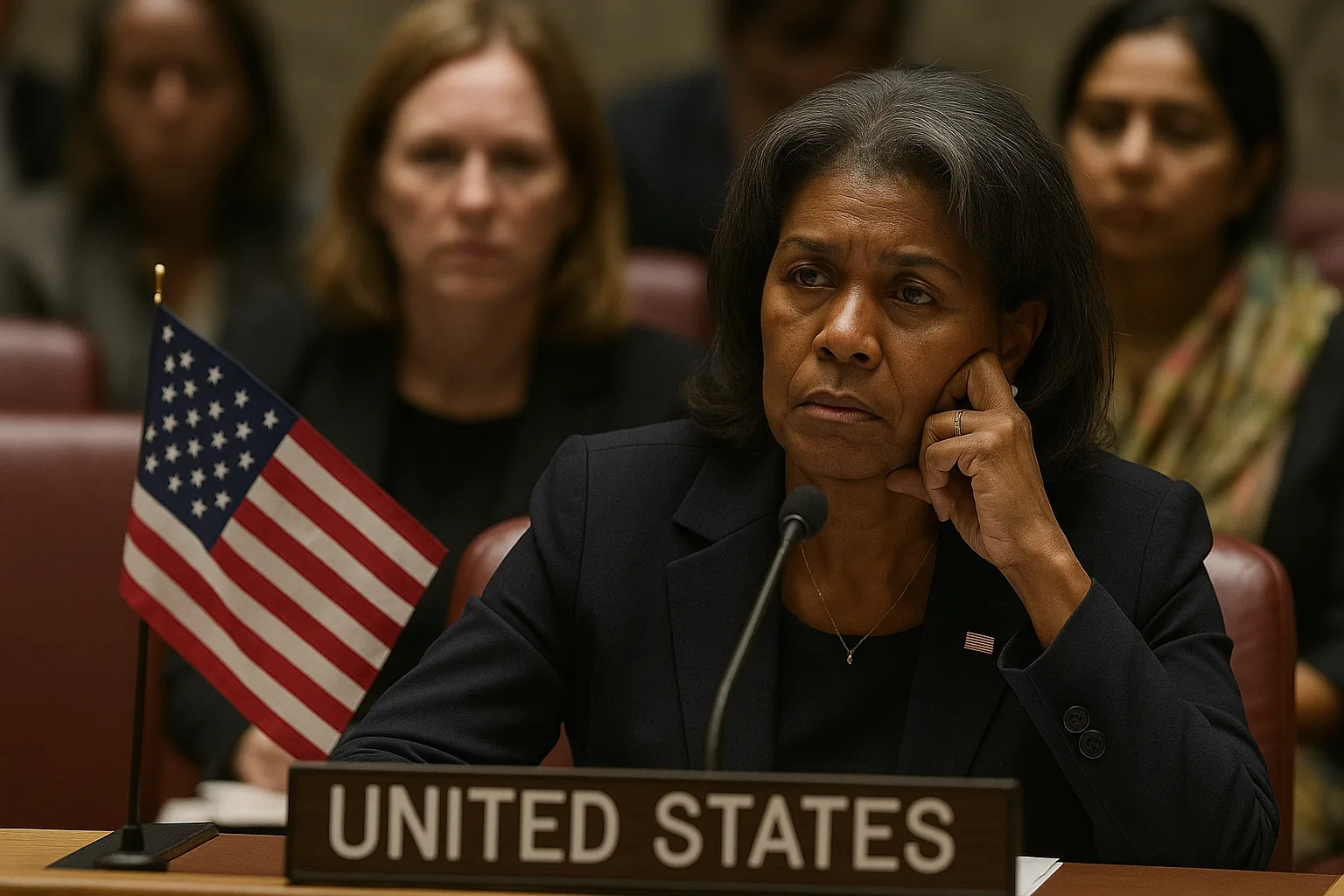
When the United Nations Commission on the Status of Women called a vote on a resolution promoting women’s equality in July 2026, the outcome produced a striking diplomatic image: a tally of 37 in favour, 1 against, and 6 abstentions. That single dissenting vote belonged to the United States. The result, confirmed by multiple independent sources, immediately circulated across social media platforms, prompting questions about whether the US was genuinely the only nation to vote against the measure and what the broader context of that decision was. This article fact-checks the US vote against UN women’s equality resolution, examines the diplomatic record, and places the outcome within the longer arc of American engagement — and disengagement — with multilateral gender-equality institutions.
What the Vote Actually Showed: The Diplomatic Record at the CSW
The vote took place at UN headquarters in New York, where the Commission on the Status of Women serves as the principal intergovernmental body dedicated to promoting gender equality and the empowerment of women. The resolution under consideration promoted women’s equality — a category of UN instrument that has historically commanded broad multilateral support, including from nations with widely varying domestic records on gender rights.
The final tally was unambiguous. Thirty-seven member states voted in favour of the resolution. One state — the United States — voted against it. Six nations abstained: Côte d’Ivoire, the Democratic Republic of Congo, Egypt, Mali, Mauritania, and Saudi Arabia. The abstaining group spans sub-Saharan Africa, North Africa, and the Arabian Peninsula, and several of those governments have faced criticism from international human rights bodies over domestic gender-equality policies. Yet even within that group, none chose to cast an outright opposing vote. The United States stood entirely alone in active opposition.
This level of diplomatic isolation is relatively rare in UN committee votes, where abstentions typically serve as a soft form of dissent that allows states to avoid the political cost of a direct “no.” An outright negative vote signals a categorical rejection of the resolution’s principles or operative language, not merely a procedural objection. The fact that no other member of the 44-seat body joined the US in opposing the measure underscores the degree to which Washington’s position diverged from the international consensus in July 2026.
The US Vote Against UN Women’s Equality Resolution in Context: February 2026 Withdrawal
The July 2026 vote did not occur in a vacuum. It came approximately two months after the United States withdrew from UN Women’s Executive Board in February 2026 — a decision that drew a formal statement from UN Women itself. That statement, published on the UN Women website, acknowledged the US departure and underscored the agency’s continued commitment to its mandate regardless of membership changes in its governing structure.
UN Women is the United Nations entity responsible for gender equality and the empowerment of women. Its Executive Board provides oversight, policy guidance, and financial direction. Withdrawal from that board is a significant step: it removes the departing nation from direct governance of the agency’s programming priorities and budget decisions. In practical terms, it also signals a political distancing from the institution’s core mission.
The sequence — withdrawal from the Executive Board in February, followed by a sole opposing vote on a women’s equality resolution in July — represents a coherent pattern of disengagement from multilateral gender-equality frameworks. Each step is individually documented and independently verifiable. Together, they describe a shift in US posture toward international institutions focused on women’s rights that is without recent precedent in American diplomatic history.
It is worth being precise about what is and is not verified regarding the February 2026 withdrawal. The UN Women statement confirms that the United States withdrew from the Executive Board. The statement does not enumerate every consequence of that withdrawal, and this article does not speculate about downstream effects that are not documented in primary sources.
How Fact-Checkers Approached the Claim
After the vote result began circulating on social media, several fact-checking and policy-monitoring organisations examined the underlying claim. The central assertion — that the US was the only nation to vote against the resolution — was confirmed by Health Policy Watch, which reported the precise breakdown of 37 in favour, 1 against, and 6 abstentions, and identified the six abstaining nations by name. CIVICUS LENS, a civil society monitoring platform, also covered the vote in the context of what it described as broader pressure on gender-equality frameworks at the UN. The Snopes fact-checking organisation published a dedicated article examining the claim.
The core numerical fact — 37-1-6 — is consistent across these independent sources. No credible source has disputed the vote tally or contested that the United States was the sole opposing vote. This is a case where the primary record (the official UN vote count) and the secondary reporting (multiple independent outlets) align without contradiction.
One claim that circulated alongside the vote story — that the Trump administration had eliminated US$60 billion in foreign aid — is not independently verified in the primary sources reviewed for this article and is therefore not presented here as established fact. Readers should treat that figure with appropriate caution until it is confirmed by primary documentation.
👉 Read also: U.S. Votes Against U.N. Women's Equality Resolution: Was America Alone?
Understanding the Commission on the Status of Women and Its Resolutions
To assess the significance of the vote, it helps to understand what the Commission on the Status of Women (CSW) is and how its resolutions function. Established in 1946, the CSW is a functional commission of the UN Economic and Social Council (ECOSOC). It meets annually, typically in New York, and produces agreed conclusions and resolutions that set normative standards for gender equality globally. Its membership rotates among UN member states, and its outputs — while not legally binding in the way that Security Council resolutions can be — carry significant political weight as expressions of international consensus.
Resolutions promoting women’s equality at the CSW have historically attracted near-unanimous support, with disagreements typically surfacing over specific language around reproductive rights, sexual orientation, or references to international humanitarian law. Even when such language-based disputes arise, the dissenting practice has generally been to seek amendments or to abstain, rather than to vote outright against a resolution framed around the broad principle of women’s equality.
The July 2026 vote therefore represents a departure from the pattern of US engagement at the CSW that stretched back decades. The United States had previously been one of the most consistent advocates for strong language on gender equality within the UN system, often pushing for more ambitious commitments rather than fewer. The shift to a sole opposing vote is therefore historically notable, not merely as a data point in the current administration’s foreign policy record but as a break from a long-standing bipartisan diplomatic tradition.
The Six Abstaining Nations: What Abstention Means in This Context
The six nations that abstained — Côte d’Ivoire, the Democratic Republic of Congo, Egypt, Mali, Mauritania, and Saudi Arabia — represent a geographically and politically diverse group. Several of them have domestic legal frameworks that restrict women’s rights in areas including marriage, inheritance, dress, and freedom of movement. Saudi Arabia, for example, has been a consistent focus of international human rights scrutiny regarding gender equality, even as it has undertaken some domestic reforms in recent years.
Yet the choice to abstain rather than vote against the resolution is diplomatically meaningful. Abstention in a UN committee vote is a recognised mechanism for expressing reservations without taking the more confrontational step of outright opposition. It allows a government to signal discomfort with specific provisions while avoiding the reputational and diplomatic costs of a direct “no” vote on a resolution framed around a broadly popular principle.
The fact that Saudi Arabia — a nation whose domestic gender-equality record has drawn sustained international criticism — chose to abstain rather than vote against the resolution, while the United States cast the sole opposing vote, is a striking illustration of how isolated Washington’s position was in the chamber. It does not, by itself, tell us why the US voted as it did; this article does not attribute motives. But it does accurately characterise the degree of diplomatic isolation the vote represents.
What Remains Unverified and Why Precision Matters
Responsible fact-checking requires being explicit about the limits of the available evidence. Several details connected to this story are not fully verified in primary sources and are therefore not stated as fact in this article.
The exact date in July 2026 when the vote occurred is not confirmed in the primary sources reviewed. Multiple sources indicate the vote took place approximately two months after the February 2026 withdrawal from UN Women’s Executive Board, which is consistent with a July 2026 timeframe, but a specific calendar date has not been independently confirmed and is not stated here.
Claims about specific dollar figures related to US foreign aid reductions — including a figure of US$60 billion cited in some social media posts — are not verified in the primary sources reviewed for this article. Readers should note that a claim appearing in a social media post or secondary commentary does not make it verified fact, and this article does not treat it as such.
These distinctions matter because the verified facts in this case are already significant on their own terms. The US was the only nation to vote against a UN women’s equality resolution at the CSW in July 2026. The vote was 37 in favour, 1 against, 6 abstentions. The US had withdrawn from UN Women’s Executive Board in February 2026. Those facts are confirmed by multiple independent sources and do not require embellishment or unverified additions to be newsworthy.
Verdict: What the Evidence Confirms
The claim that the United States was the only nation to vote against the UN women’s equality resolution at the Commission on the Status of Women in July 2026 is confirmed as accurate by multiple independent sources, including Health Policy Watch, CIVICUS LENS, and the UN Women statement regarding the February 2026 Executive Board withdrawal. The vote tally of 37-1-6 is consistent across all sources reviewed. No credible source disputes the core claim. The six abstaining nations are identified by name in primary reporting. The US vote against the UN women’s equality resolution stands as a documented and verifiable diplomatic event, placed in context by the prior withdrawal from UN Women’s Executive Board two months earlier.
The broader significance of this sequence — the withdrawal from the Executive Board followed by the sole opposing vote on a women’s equality resolution — is a matter of ongoing policy debate. This article does not evaluate that policy debate; it establishes what happened and confirms that the factual claims circulating about the vote are, in their core elements, accurate. What governments and citizens make of that record is a separate question, and one that falls outside the scope of fact-checking into the domain of political judgment.
This article was produced with AI assistance and reviewed editorially.

Trump Claims U.S. Has ‘Best Poverty Numbers Ever’ in September 2026

Satire Article About Kamala Harris’s Campaign Debt Spread as Fact on Social Media in 2026

AI-Generated Video of Pro-Palestine UK Rally Spreads with SynthID Watermark Visible

Alleged October 1, 2026 Trucker Strike: No Evidence Found
