
Current Affairs
U.S. Votes Against U.N. Women’s Equality Resolution: Was America Alone?
The U.S. voted against the UN women’s equality resolution at CSW70 on March 9, 2026 — the sole no vote in a 37-1-6 tally, breaking a 30-year consensus. Read the full breakdown of the vote, the U.S. objections, and what happens next.

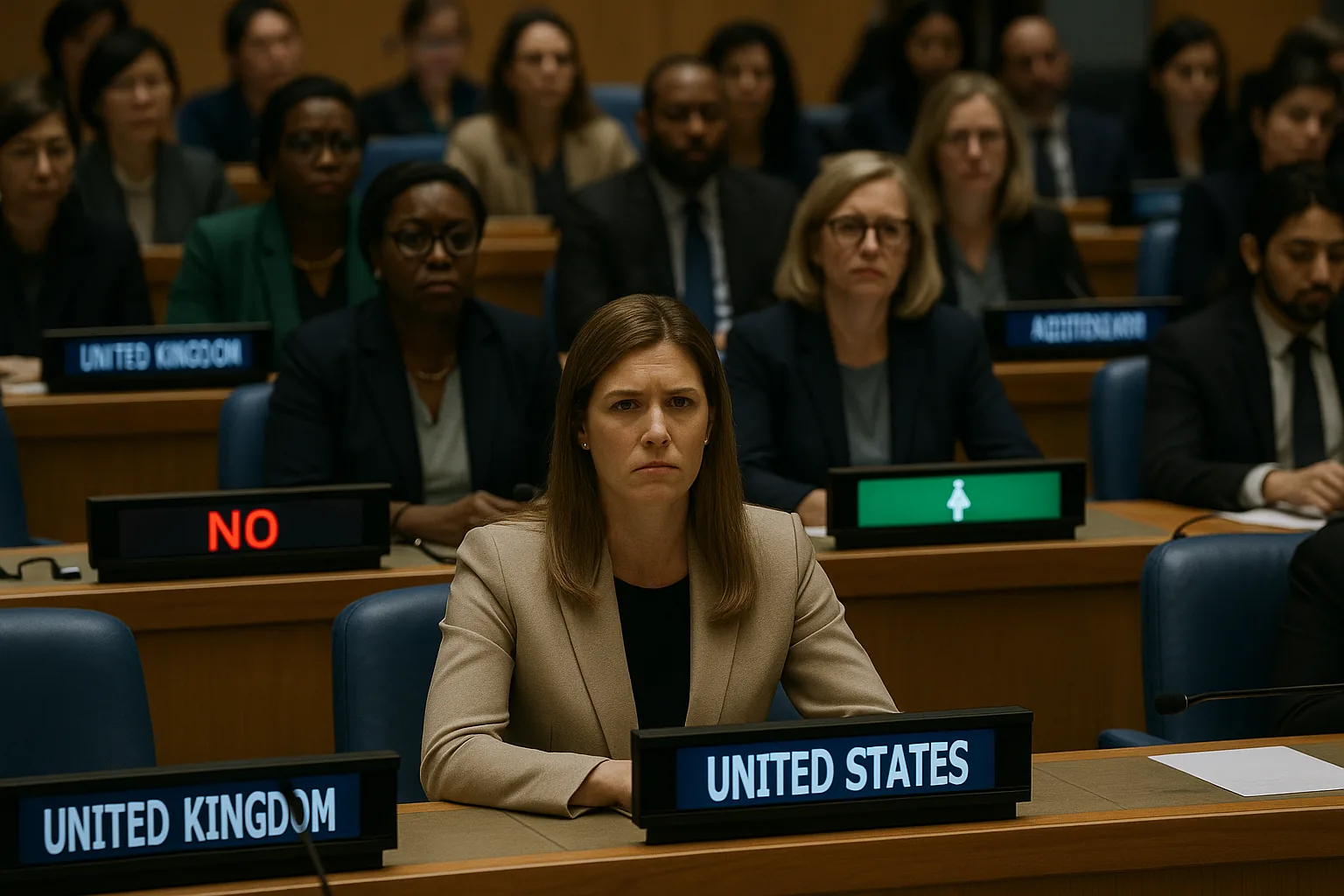
When the United Nations Commission on the Status of Women convened its 70th session in March 2026, few observers anticipated that the vote on its signature resolution would end with a single nation standing in outright opposition to the rest of the assembled body. Yet on March 9, 2026, that is precisely what happened: the U.S. voted against the U.N. women’s equality resolution, producing a final tally of 37 in favor, 1 against, and 6 abstentions — a result that shattered a consensus tradition stretching back three decades and drew immediate international attention to Washington’s evolving posture on gender policy at the multilateral level.
What the Resolution Actually Said
To understand the significance of the vote, it is important to understand what delegates were actually being asked to endorse. The CSW70 conference — the 70th session of the Commission on the Status of Women — was organized around the theme: “Ensuring and strengthening access to justice for all women and girls, including by promoting inclusive and equitable legal systems, eliminating discriminatory laws, policies and practices, and addressing structural barriers.” That theme shaped every negotiated paragraph of the final resolution.
The resolution addressed a broad range of issues connected to women’s legal standing around the world. It covered topics including access to legal representation, the elimination of laws that discriminate on the basis of sex, and the structural conditions — poverty, geographic isolation, social stigma — that prevent women and girls from accessing justice systems even when those systems nominally protect them. It also included language touching on reproductive rights, the governance of artificial intelligence in ways that affect women, and what the document framed as gender-based discrimination in legal and institutional settings.
These were not obscure or newly introduced concerns. The Commission on the Status of Women has been producing agreed conclusions and resolutions on women’s rights since its founding in 1946, and for the past 30 years those documents had been adopted by consensus — meaning no member state formally voted against them. The tradition of consensus at CSW is considered a diplomatic achievement in itself, reflecting the difficulty of reaching agreement across member states with deeply divergent legal, cultural, and religious frameworks. The fact that the March 9 vote broke that tradition was therefore not merely a procedural footnote; it was a substantive rupture in an institution that depends on broad buy-in to function.
The Full Vote Tally and Who Abstained
The final vote was 37 in favor, 1 against, and 6 abstentions. The United States cast the sole opposing vote. The six countries that abstained rather than voting yes were Côte d’Ivoire, the Democratic Republic of Congo, Egypt, Mali, Mauritania, and Saudi Arabia. Every other member of the 44-seat commission voted in favor of adopting the resolution.
It is worth examining what abstention means in this context. An abstention at the CSW is not a vote of support, but it is also not a vote of opposition. Countries that abstain are typically signaling reservations about specific language in a document without being willing to go so far as to vote against the whole resolution. In this case, the six abstaining nations have in previous sessions raised concerns about language related to sexual and reproductive health rights, and several of them have conservative religious or legal frameworks that complicate endorsement of certain gender-equality provisions. Their abstentions were consistent with positions they have taken in prior years.
What made the U.S. position categorically different is that Washington did not abstain — it voted no. A no vote signals that a country finds the document unacceptable in its entirety, or at least unacceptable enough that it cannot allow it to pass without a formal recorded objection. For the United States — historically one of the architects of the international women’s rights framework, and a country that has championed CSW resolutions through Democratic and Republican administrations alike — casting a no vote was an extraordinary departure from decades of practice.
Why the U.S. Voted Against the UN Women’s Equality Resolution
The official U.S. rationale for voting against the resolution centered on three areas of objection. According to reporting confirmed by Jurist, the U.S. delegation took issue with language in the resolution related to abortion rights, artificial intelligence regulation, and what the White House characterized as “gender ideology.”
The objection to abortion-related language reflects a domestic policy position that the current U.S. administration has applied consistently across international forums. The administration has reinstated and expanded the Mexico City Policy — which restricts U.S. foreign aid to organizations that provide or discuss abortion — and has signaled that it will oppose any multilateral language that could be read as affirming abortion as a component of women’s health or rights. At CSW70, the resolution’s references to reproductive health were apparently read by U.S. negotiators as crossing that line.
The objection to artificial intelligence regulation reflects a broader administration stance against what it views as premature or overreaching international governance frameworks for emerging technology. The resolution included provisions addressing how AI systems can encode and amplify gender bias — for example, in hiring algorithms, credit-scoring systems, or judicial risk-assessment tools — and called for regulatory approaches to mitigate those harms. The U.S. delegation appears to have viewed those provisions as incompatible with its preference for a lighter-touch approach to AI governance.
The third objection — to what the White House described as “gender ideology” — is the broadest and least precisely defined of the three. In practice, this objection has been applied in various international settings to language that recognizes gender identity as distinct from biological sex, or that uses terminology the administration considers ideologically loaded. Specific provisions of the resolution that referenced gender-based discrimination in terms the U.S. found objectionable appear to have triggered this concern.
Crucially, the U.S. did not simply vote no without attempting to change the document first. The delegation offered draft amendments to the resolution text that would have modified the language it found objectionable. Those amendments were rejected by delegates, leaving the U.S. in the position of either accepting a document it opposed or voting against it. Washington chose the latter.
How the U.S. Vote Fits Into a Broader Pattern
The March 9 vote did not occur in isolation. Approximately two months before the CSW70 vote, the United States withdrew from the U.N. gender equality organization — a move that had already signaled a significant shift in how the current administration views multilateral gender-policy institutions. That withdrawal, combined with the no vote at CSW70, forms a coherent pattern: the administration is not merely seeking to modify the terms of U.S. engagement with international women’s rights bodies, but is actively distancing itself from the institutional frameworks those bodies represent.
👉 Read also: US Vote Against UN Women's Equality Resolution: Fact-Check After Trump Withdrew from UN Women
This pattern has implications beyond the symbolic. The United States has historically been one of the largest financial contributors to U.N. agencies focused on gender equality, and its diplomatic weight has shaped the language of international agreements on women’s rights for decades. When the U.S. withdraws from organizations and votes against resolutions, it removes not only its financial contribution but also its negotiating presence — the ability to shape documents from the inside rather than opposing them from the outside.
For advocates of international women’s rights frameworks, the concern is that U.S. opposition creates space for other countries to push back against provisions they find inconvenient. If the world’s largest economy and a permanent member of the Security Council is on record opposing a resolution, it becomes harder for smaller nations to justify supporting it against domestic political pressure. The six abstentions at CSW70 may or may not have been influenced by the U.S. position, but the dynamic is one that observers of multilateral diplomacy take seriously.
The Significance of Breaking a 30-Year Consensus
The 30-year consensus tradition at the Commission on the Status of Women is not merely a procedural nicety. It reflects the genuine difficulty of building agreement across U.N. member states on questions of gender, law, and rights — areas where national legal systems, religious frameworks, and cultural norms diverge enormously. The fact that consensus was maintained for three decades, through multiple U.S. administrations of both parties, through periods of intense geopolitical tension, and through contentious debates over reproductive rights and LGBTQ+ inclusion, is a measure of how much diplomatic effort went into sustaining it.
Breaking that consensus carries costs that extend beyond the immediate vote. Future sessions of the CSW will now operate in an environment where the precedent of a no vote has been set. Countries that have previously been persuaded to accept compromise language — because the alternative was being the lone dissenter — now know that the United States has demonstrated willingness to stand alone. That changes the negotiating calculus for every delegation in the room.
It also changes the public narrative around the CSW. For 30 years, the commission could present its agreed conclusions as reflecting genuine global consensus on the direction of women’s rights. A resolution adopted 37-1 is still adopted, and it still carries weight as an expression of the international community’s stated commitments. But the unanimity that gave previous resolutions their moral authority — the sense that even nations with very different legal systems could find common ground on basic principles of women’s equality — is no longer intact.
What Happens After the Vote
The resolution was adopted despite U.S. opposition. A vote of 37 in favor is a clear majority on a 44-seat commission, and the document will proceed as the agreed output of CSW70. Member states that voted in favor are expected to use the resolution as a reference point in domestic policy discussions and in reporting to U.N. treaty bodies on their compliance with international women’s rights standards.
For the United States, the practical consequences of the no vote are limited in the short term. The U.S. is not bound by CSW resolutions in the way it would be bound by a ratified treaty, and the resolution does not create enforceable obligations. What it does create is a public record: the U.S. government is on record as the sole nation to vote against a resolution affirming women’s access to justice, at a session attended by representatives of governments spanning every region of the world.
Whether that record influences U.S. domestic politics, shapes the administration’s future engagement with multilateral institutions, or affects the willingness of other countries to work with Washington on gender-related issues in other forums remains to be seen. As of the March 9 vote, the United States holds a position of formal, recorded opposition to the international consensus on women’s equality — a position it held alone, with no other nation joining it on the opposing side of the tally.
Frequently Asked Questions
What was the final vote count when the U.S. voted against the UN women’s equality resolution?
The final tally was 37 in favor, 1 against, and 6 abstentions. The United States cast the only opposing vote. The six abstentions came from Côte d’Ivoire, the Democratic Republic of Congo, Egypt, Mali, Mauritania, and Saudi Arabia.
What were the U.S. stated reasons for voting against the resolution?
The U.S. delegation cited three objections: language related to abortion rights, provisions on artificial intelligence regulation, and text the administration characterized as promoting “gender ideology.” The U.S. first proposed amendments to address those concerns; when delegates rejected the amendments, the U.S. voted no.
Had the U.S. ever voted against a CSW resolution before?
No. The Commission on the Status of Women had maintained a consensus tradition for approximately 30 years, meaning no member state had formally voted against a resolution during that period. The March 9, 2026 vote broke that streak for the first time.
Is the resolution still binding after the U.S. voted against it?
CSW resolutions are not legally binding treaties. The resolution was adopted by a clear majority and stands as the agreed output of CSW70, but it does not create enforceable obligations for any member state, including those that voted in favor.
What other steps has the U.S. taken regarding UN gender equality bodies?
Approximately two months before the CSW70 vote, the United States withdrew from the U.N. gender equality organization. Together with the no vote, this forms a pattern of the current administration distancing itself from multilateral gender-policy institutions.
This article was produced with AI assistance and reviewed editorially.

Trump Claims U.S. Has ‘Best Poverty Numbers Ever’ in September 2026

Satire Article About Kamala Harris’s Campaign Debt Spread as Fact on Social Media in 2026

AI-Generated Video of Pro-Palestine UK Rally Spreads with SynthID Watermark Visible

Alleged October 1, 2026 Trucker Strike: No Evidence Found
