
Current Affairs
AI-Generated Images Spread Misinformation About French Riots
AI-fabricated images depicting French riots spread rapidly online in October 2026, including fake photos of an elderly couple robbed and protesters at the Eiffel Tower, r

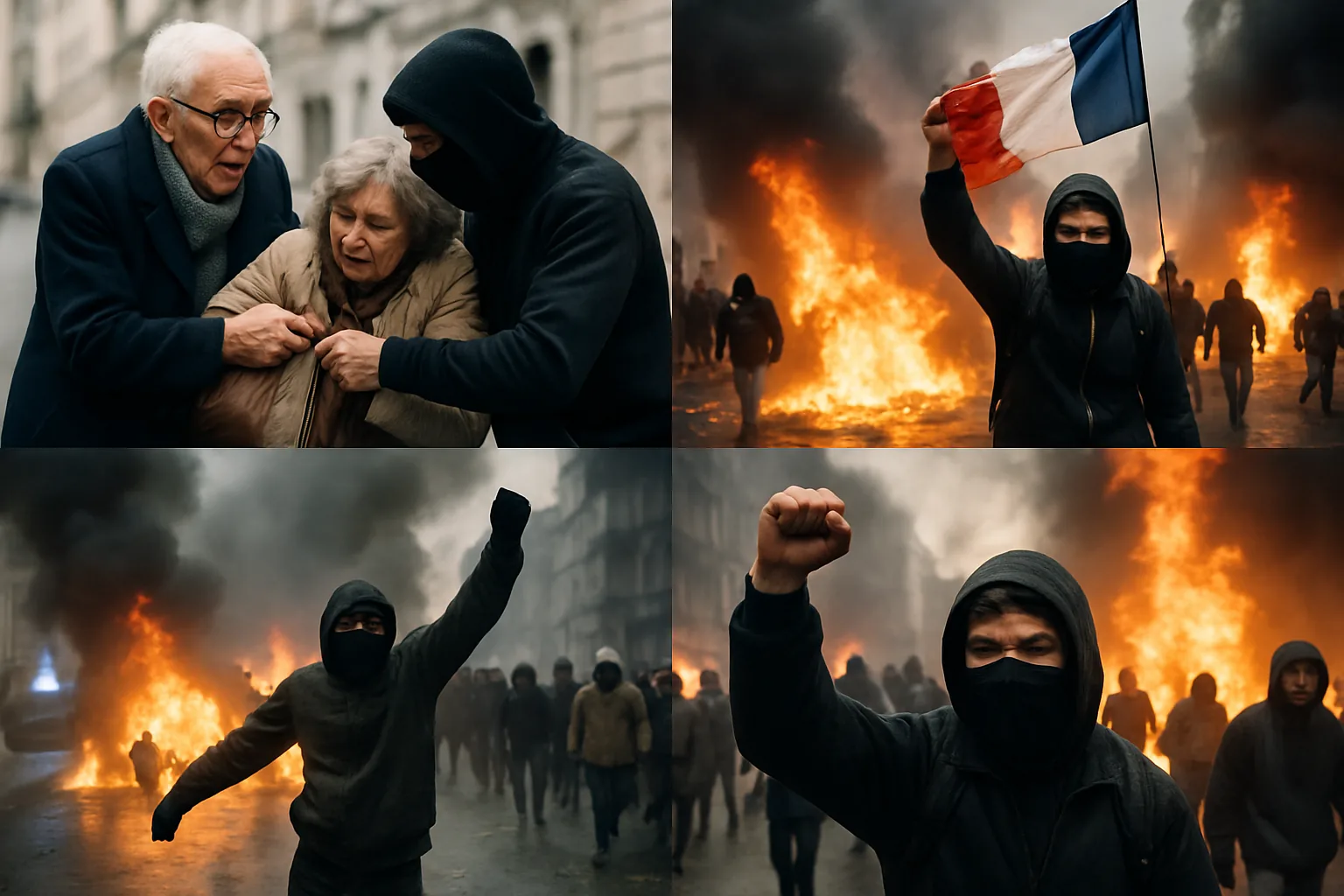
When riots broke out across France on 17 October 2026, the disorder on the streets was real. What followed online was something else entirely: a wave of AI generated images misinformation so convincing, and so rapidly amplified, that it reached not just ordinary social media users but, according to the French president himself, heads of government around the world. The episode is a sharp illustration of how synthetic media can outpace journalism, overwhelm official communications, and reshape political reality within hours of a genuine crisis.
What Actually Happened During the October Unrest
The riots that began on Saturday, 17 October 2026 were a genuine, documented event. Disorder spread across multiple French cities, prompting an urgent political response from the government and attracting intense international attention. That attention, however, quickly became entangled with fabricated content circulating alongside authentic footage — making it harder for audiences, and apparently for some foreign governments, to distinguish verified reporting from synthetic invention.
The genuine unrest created ideal conditions for misinformation to flourish. Chaotic events are difficult to document comprehensively in real time; official statements lag behind social media; and emotionally charged imagery spreads faster than fact-checking. Each of these factors was present in the hours and days after 17 October, and bad actors — whoever they were — appear to have exploited all of them.
The Fabricated Elderly Couple: A Case Study in Viral AI Imagery
The most widely circulated piece of fabricated content was a set of AI-generated photos falsely depicting an elderly couple in their eighties being stripped and robbed during the unrest. According to reporting by France 24, these images accumulated millions of views before significant fact-checking coverage appeared. The images were created using OpenAI tools, and the alleged assault they depicted remains entirely unverified — no official reports have confirmed that any such attack took place.
The images were compelling for a straightforward reason: they depicted recognisable human vulnerability. An elderly couple, visibly distressed, in a context of civil disorder — this is precisely the kind of scene that triggers strong emotional responses and encourages rapid sharing without verification. The fabricators, whoever they were, appear to have understood that emotionally resonant imagery travels faster than abstract claims.
France 24 Observers, the outlet’s dedicated verification unit, traced one version of the image to an AI photo montage originally published by a pro-Israel account. Far-right accounts on X (formerly Twitter) subsequently amplified the images to much larger audiences. This two-stage amplification — from a niche source to a mass audience via ideologically motivated intermediaries — is a pattern that researchers of online misinformation have documented repeatedly in other contexts. It allows content to gain apparent legitimacy through volume before any single authoritative debunking can take hold.
→ Read also: Eiffel Tower Protest Videos and Images Are AI-Generated Fakes
How AI Generation Creates Convincing but Detectable Fakes
Understanding why these images spread requires understanding both their strengths and their weaknesses as fabrications. Modern AI image generation tools — including those built on diffusion model architectures — can produce photorealistic scenes with plausible lighting, skin texture, and environmental detail. For a viewer scrolling quickly through a social media feed, the images can be indistinguishable from a genuine photograph taken on a smartphone.
At the same time, AI-generated images carry characteristic flaws that trained analysts and, increasingly, automated systems can identify. Hands with irregular finger counts, background text that dissolves into illegible patterns, inconsistent shadows, and subtle distortions in facial geometry are among the most common tells. Metadata anomalies — the absence of camera model information, for example, or the presence of generation timestamps — can also reveal synthetic origin to anyone who examines the file directly rather than simply viewing the image on screen.
The broader challenge is that the overwhelming majority of people who encounter viral images never perform this kind of examination. They see a compelling image in a high-volume context, they read the caption, and they share. The verification work happens downstream, after the damage is done. This asymmetry — between the speed of sharing and the speed of fact-checking — is the core structural problem that AI generated images misinformation exploits.
Macron’s Warning: When Misinformation Reaches Heads of State
Perhaps the most striking element of this episode was a statement by Emmanuel Macron, who said publicly that unnamed world leaders had been influenced by fake AI-generated videos about the riots. Macron also criticised named figures, including US President Donald Trump, for attempting to exploit the unrest for political advantage. The French president’s comments — themselves widely reported — underlined a point that tends to be treated as theoretical: that AI generated images misinformation does not only mislead ordinary citizens, but can shape the perceptions and statements of senior political actors with real policy consequences.
When a head of state feels compelled to address foreign leaders directly about the fabricated nature of content they appear to have accepted as genuine, the misinformation has already caused diplomatic harm. Corrections and clarifications issued after the fact rarely achieve the same reach as the original false content, and the impression created by the fake imagery may persist even after it has been debunked in the target audience’s mind.
The Amplification Ecosystem: How Fake Images Find Mass Audiences
The elderly couple images did not achieve millions of views through organic discovery. They moved through a specific amplification ecosystem: far-right accounts on X shared them with commentary that framed them as evidence of a broader narrative about civil disorder, immigration, and social breakdown in France. Pro-Israel accounts, according to France 24 Observers’ tracing, were involved in the initial publication of at least one version.
→ Read also: AI-Generated Fake Videos and Images Circulating in September 2026: Four Cases Identified
This points to a feature of contemporary AI generated images misinformation that distinguishes it from earlier forms of online fabrication: the content is often purpose-built to slot into pre-existing narrative frameworks. An AI image of an elderly couple being attacked does not need to be accompanied by a detailed false story; the image itself activates existing beliefs and anxieties in audiences already primed to receive it. The caption is almost secondary. This makes the content more durable — it does not depend on a specific factual claim that can be straightforwardly refuted, but on an emotional impression that persists even after the image is identified as synthetic.
What Verification Looks Like in Practice
The France 24 Observers investigation into these images demonstrates the kind of multi-step verification that effective debunking requires. Tracing an image back to its original publication source — rather than simply to the account that made it viral — is essential for understanding both the content’s origin and its intended audience. Identifying the tools used to generate it (in this case, OpenAI tools) helps establish the synthetic nature of the content with specificity rather than assertion. And confirming the absence of official records — no police reports, no hospital records, no witness accounts — for the alleged event depicted closes the loop on the factual claim embedded in the image.
Each of these steps takes time and expertise. Media literacy campaigns often encourage audiences to “check before you share,” but the practical barriers to doing so — particularly for content that appears during a fast-moving news event — are significant. The verification burden currently falls disproportionately on professional fact-checkers and journalists, whose output reaches a fraction of the audience that saw the original fabricated content.
Implications for Platform Responsibility and Policy
The October 2026 French riots episode arrives at a moment when regulatory and technical frameworks for addressing AI generated images misinformation are still developing. Proposals for mandatory watermarking of AI-generated content, stronger platform enforcement against synthetic media presented as authentic, and greater transparency from AI tool providers about how their systems are being used are all under active discussion in the European Union and elsewhere.
The practical question is whether any of these measures, even if implemented effectively, can close the gap between the speed of synthetic content production and the speed of detection and removal. The images depicting the elderly couple reached millions of viewers before verification teams had completed their work. In the current information environment, that gap may be the most important variable of all.
What the French riots case makes undeniably clear is that AI generated images misinformation is no longer a theoretical concern or an edge case: it is a routine feature of how major news events are perceived and discussed, and its effects extend from individual social media users all the way to the offices of heads of state. Addressing it effectively will require coordinated responses from platforms, regulators, journalists, and the companies whose tools are being used to create the content — responses that are, as of this writing, still catching up to the scale of the problem.
This article was produced with AI assistance and reviewed editorially.

Political Ads in 2026 Midterms Contain False or Misleading Claims About Opponents

Trump Administration ‘Super Intelligence’ Accord Misspells ‘United States’ as ‘Unites States’

Trump Administration ‘Super Intelligence’ Accord Misspells ‘United States’ as ‘Unites States’

No Going Back PAC Ad Makes Misleading Claim About Roy Cooper and Rape Kits
