
Information
Misleading Social Media Videos With False Captions Circulate Online
Every day, footage that has nothing to do with the event it purports to show spreads across social media feeds, gathering thousands of shares before anyone

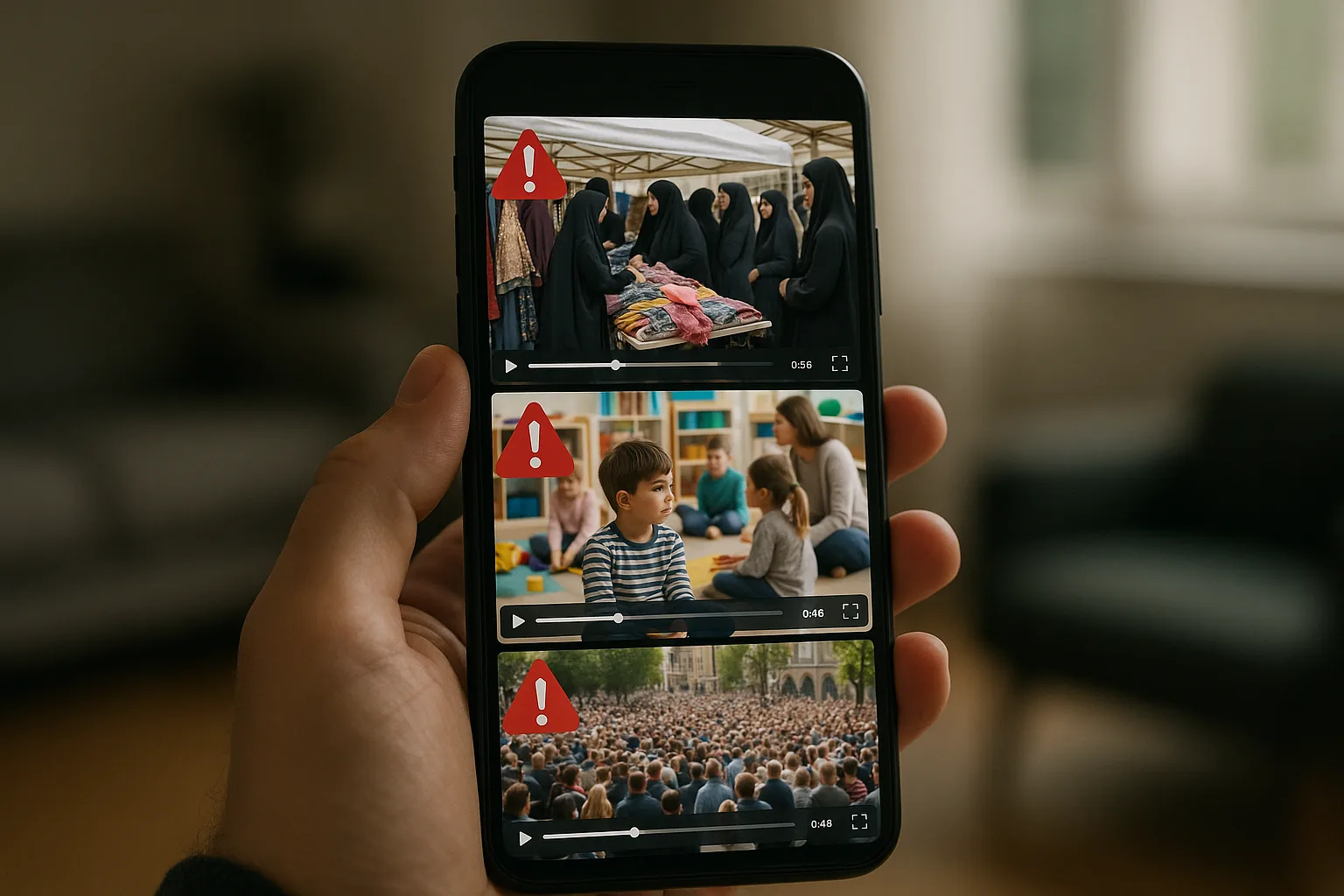
Every day, footage that has nothing to do with the event it purports to show spreads across social media feeds, gathering thousands of shares before anyone pauses to ask where it actually came from. Misleading social media videos — clips attached to false captions, wrong dates, or invented locations — are one of the most persistent and damaging forms of online misinformation circulating right now. Understanding how these misrepresentations work, why they spread so readily, and what practical steps any viewer can take to identify them is no longer a niche concern for journalists: it is a basic literacy skill for anyone who consumes news online.
How a Legitimate Video Becomes a False Claim
The mechanics of video miscaptioning are straightforward, which is part of why the problem is so durable. A genuine piece of footage — filmed at a real location, during a real event — is stripped of its original context and paired with a new caption that places it somewhere else, at a different time, or in a completely different situation. The video itself is not fabricated. It is the framing that lies.
This distinction matters enormously. When a viewer watches footage of a real crowd, a real street, or real people, the brain registers authenticity. The emotional response is real even when the claimed context is false. Fact-checking teams and media literacy organisations have consistently found that audiences are far more likely to share a video that triggers an emotional reaction than one that merely informs — and false captions are frequently written precisely to trigger that reaction.
Three broad categories of miscaptioning appear repeatedly across fact-checking case logs:
- Temporal displacement: Old footage is presented as current. A clip filmed months or years ago is reshared with a caption claiming it shows something happening today or last week.
- Geographic displacement: Footage from one country, city, or venue is labelled as depicting events in a completely different location.
- Subject misidentification: People, objects, or activities visible in a clip are described as something entirely different from what they actually are — a gathering for one purpose labelled as a gathering for another.
Often two or three of these errors appear together in a single post, compounding the difficulty of correction and widening the gap between the false impression and the truth.
Why Misleading Social Media Videos Spread So Fast
Platform architecture plays a central role. Short-form video formats reward speed and emotion over context. A caption is displayed before, during, and after a clip, anchoring interpretation before the viewer has processed what they are actually seeing. By the time a correction is issued — if one is issued at all — the original post may have been shared tens of thousands of times, and the correction will almost never reach the same audience.
Algorithmic amplification compounds the problem. Content that generates rapid engagement — comments, shares, reactions — is promoted to wider audiences regardless of its accuracy. A miscaptioned video that provokes outrage or fear will, under most current platform models, be shown to more people than a calm, sourced rebuttal. This is not a hypothetical dynamic: BBC News reporting on protest-related misinformation has documented how quickly misleading clips can travel across platforms before fact-checkers can respond.
Social trust networks accelerate spread further. When a video arrives via a friend, a family member, or a community group rather than an anonymous account, recipients apply less scrutiny. The implied endorsement of the sharer substitutes for verification. This is why the same miscaptioned clip can circulate in entirely different communities with entirely different audiences believing entirely different things about what they are watching.
→ Read also: Viral Videos Misidentify Crowds and Events Through Mislabeling and Old Footage
The Anatomy of a Miscaptioned Protest Video
Protest and civil unrest footage is particularly vulnerable to misuse. PEN America’s guidance on combating protest disinformation notes that not all videos and images shared on social media as depicting current protests are legitimate — some are miscaptioned or misidentified. The reasons are structural: protests generate large volumes of footage from multiple angles and devices, the footage is emotionally charged, and there is strong public appetite for real-time information that verification workflows cannot always satisfy.
A common pattern involves footage from a previous protest — sometimes months old, sometimes years old — being recirculated when a new protest occurs on a related theme. The old footage may show larger crowds, more dramatic scenes, or more conflict than the current event actually produced. Resharing it with a current date inflates the apparent scale or intensity of the new event. Viewers who remember the original footage, or who happen to live near the location shown, may recognise the discrepancy — but they represent a small fraction of the total audience.
Geographic misidentification follows a similar logic. Footage of a protest in one city, or even one country, can be relabelled as showing events in another place entirely. The visual content — crowds, police lines, placards — may be generic enough that the substitution is not immediately obvious to viewers unfamiliar with the actual location. Without visible landmarks, distinctive signage, or audible language clues, the false label goes unchallenged.
Subject misidentification — where a gathering for one purpose is described as something entirely different — is perhaps the most insidious variant, because it can attach a stigma or a political charge to people who had no involvement in the event the caption describes. The individuals filmed had no opportunity to consent to the false characterisation, and they have almost no practical recourse once the clip has spread widely.
What Verification Actually Looks Like
Professional fact-checkers use a set of techniques that any viewer can apply, at least in simplified form. The goal is always the same: find the earliest known instance of the footage and establish what it actually shows.
Reverse image and video search is the first tool. Uploading a still frame from a video to a reverse image search engine can surface earlier uses of the same footage, often with original captions or news coverage that establishes the true context. This single step resolves a significant proportion of temporal displacement cases.
Geolocation involves examining visual details within the footage — building shapes, street furniture, signage, vegetation, terrain — and cross-referencing them with satellite imagery or street-level mapping tools. A crowd scene that a caption places in one city may contain architectural or environmental details that place it definitively elsewhere.
Metadata examination, where available, can reveal when and where a video was recorded. However, metadata is easily stripped or altered, so its absence does not confirm anything and its presence requires corroboration.
→ Read also: Mislabeled and Recycled Videos Spread Online as Recent Events in September 2026
Source tracing means following the chain of shares back to the earliest available post. The original uploader, the platform on which the clip first appeared, and the caption used at that point are all valuable data. A clip that first appeared with an accurate caption and was later reshared with a false one is a different situation from a clip that was miscaptioned from the outset.
These techniques are documented in detail by organisations including First Draft, the Digital Verification Corps, and various national press associations. None of them require specialist software; most require only patience and a willingness to treat initial impressions as hypotheses rather than conclusions.
Recognising the Warning Signs Before Sharing
Formal verification is not always possible for an ordinary viewer, but a set of practical questions can significantly reduce the chance of spreading a miscaptioned clip.
- Does the caption include a specific date and location? If so, can those details be confirmed by a second, independent source?
- Where did this video first appear in your feed? Was it shared by a news organisation with a named journalist, or by an anonymous account with no prior history?
- Does the emotional charge of the caption match the visual content? Extreme claims paired with dramatic footage deserve proportionally more scrutiny, not less.
- Is the footage consistent with what you know about the claimed location? Visible landmarks, weather, crowd behaviour, and signage can all provide clues.
- Has any established fact-checking outlet addressed this clip? A quick search including the subject of the video and the word “fact-check” takes seconds and can surface existing verification work.
None of these questions guarantees a correct answer. But asking them introduces a pause between reception and sharing — and that pause is where misinformation loses a significant portion of its momentum.
The Broader Cost of Unchecked Circulation
The harm caused by misleading social media videos is not abstract. When footage of one event is presented as evidence of another, real people are misrepresented, real communities are stigmatised, and real policy debates are conducted on the basis of false information. Corrections, when they come, rarely travel as far or as fast as the original falsehood.
For journalists and newsrooms, the pressure to publish quickly during fast-moving events creates genuine vulnerability to miscaptioned footage. Verification workflows that are robust during normal news cycles can be compressed or bypassed when competition for audience attention is intense. The result is that professional media outlets occasionally amplify the same false clips that circulate in informal networks — lending them an appearance of credibility that makes subsequent correction more difficult.
For ordinary users, the cumulative effect of repeated exposure to misleading content is a gradual erosion of the ability to distinguish reliable from unreliable sources. When everything looks equally plausible and equally urgent, the cognitive tools needed to evaluate claims are progressively weakened. Media literacy education — teaching the verification habits described above as routine practice rather than specialist skill — is increasingly recognised as a necessary counterweight to this erosion.
The pattern of false captions attached to genuine footage is not new, and it will not be resolved by any single platform policy or fact-checking initiative. It persists because it exploits real features of human cognition, real incentive structures in platform design, and real gaps in the speed at which accurate information travels. Slowing down before sharing — treating every dramatic video as a question rather than an answer — remains the most reliable individual defence available, and it costs nothing but a moment’s attention.
This article was produced with AI assistance and reviewed editorially.

Political Ads in 2026 Midterms Contain False or Misleading Claims About Opponents

Trump Administration ‘Super Intelligence’ Accord Misspells ‘United States’ as ‘Unites States’

Trump Administration ‘Super Intelligence’ Accord Misspells ‘United States’ as ‘Unites States’

No Going Back PAC Ad Makes Misleading Claim About Roy Cooper and Rape Kits
