
Current Affairs
False Claims About Newsom, California Refineries, and US Gas Price Spike
California gas prices in 2026 average nearly $4.91 per gallon — almost 50% above the national average. We break down the verified causes: refinery closures, the Iran conflict, fuel blend rules, and taxes. No single factor tells the full story.

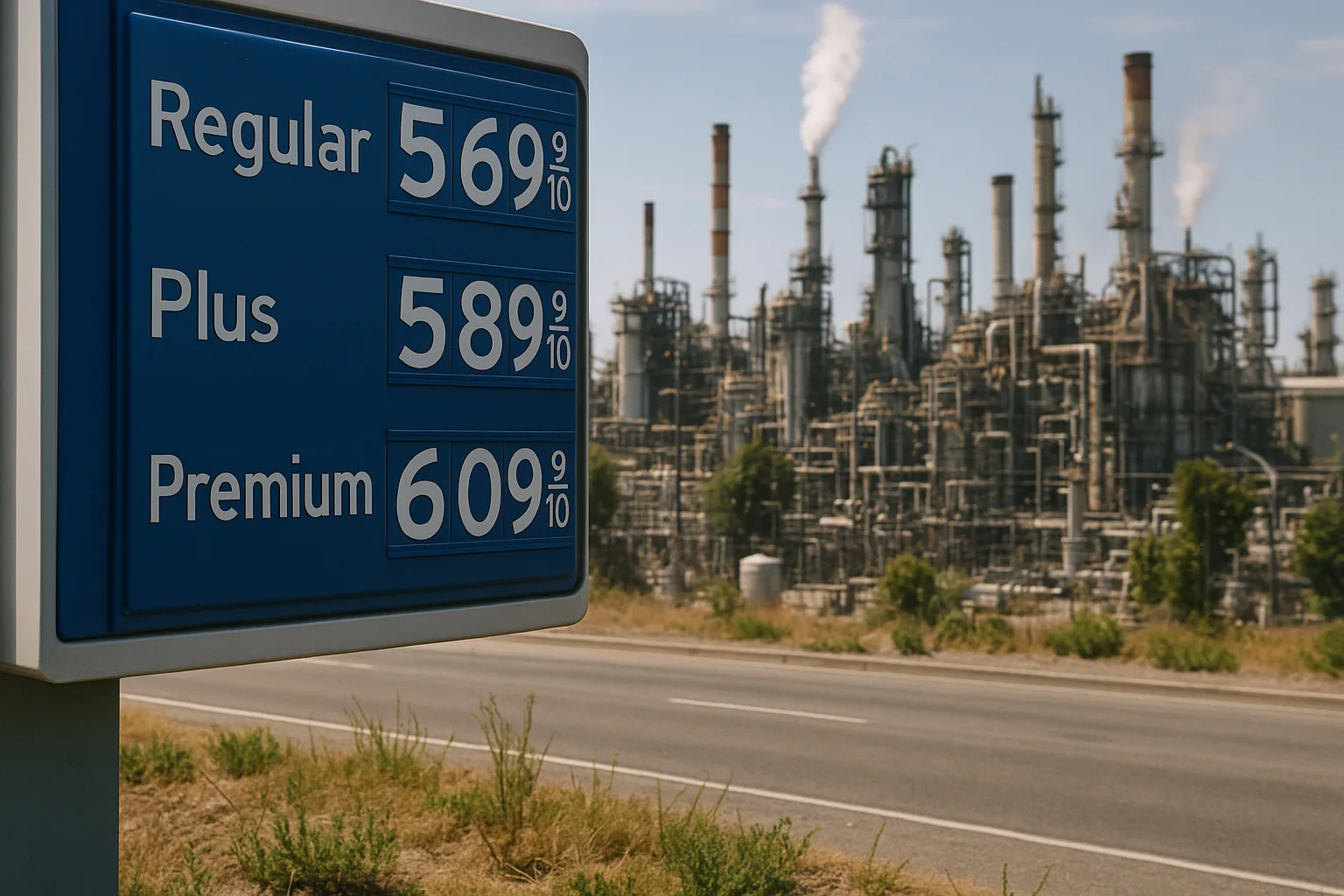
A wave of social media posts circulating in September 2026 has blamed California Governor Gavin Newsom‘s energy and refinery policies for a spike in gasoline prices felt across the United States — framing the closures of California refineries as the primary cause of pain at the pump nationwide. A Snopes fact-check published on September 25, 2026, examined those claims directly, tracing the causal chain behind california gas prices 2026 and finding that the picture is considerably more complicated than the viral posts suggest. The evidence points to multiple overlapping drivers, and the assertion that Newsom’s policies alone caused a national price spike does not hold up to scrutiny.
What Are California Gas Prices in 2026?
California gas prices in 2026 are significantly higher than the national average — and have been a flashpoint in both policy debates and viral misinformation. On March 6, 2026, California’s average gasoline price stood at $4.905 per gallon, while the national average was $3.320 per gallon, according to the Institute for Energy Research. That means California drivers were paying almost 50% more per gallon than the average American driver on that date.
That gap is not new, and it predates the specific refinery closures cited in 2026. California has historically paid a premium over the national average because of its unique fuel blend requirements, its relatively high state excise taxes on gasoline, its cap-and-trade program costs, and its geographic isolation from other refining hubs. The Center for Jobs and the Economy and the R Street Institute have both published analyses examining the structural factors behind California’s chronic premium, finding that regulatory costs — including low-carbon fuel standard compliance costs — contribute meaningfully to the gap. Those analyses do not, however, provide a precise quantified breakdown of how much each factor contributes, and the verified record does not support assigning a single dominant cause.
What the Viral Claims Actually Say
The posts in question attribute the 2026 US gasoline price surge squarely to Governor Newsom, arguing that his administration’s environmental and energy regulations drove major California refineries out of business and thereby tightened national fuel supply. The implication is that a single state governor’s policy choices cascaded into a crisis for American drivers everywhere. Some versions of the claim go further, dismissing any role played by geopolitical disruptions — specifically, the ongoing conflict involving Iran — as a distraction or excuse. Snopes, authored by Jordan Liles and published on September 25, 2026, investigated this claim and its components.
The appeal of the narrative is understandable. California has lost refining capacity. Gas prices are significantly higher in California than elsewhere. And Newsom has signed sweeping energy legislation. But connecting those facts into a single clean causal chain — Newsom’s rules caused closures, closures caused national prices to spike — requires steps the evidence does not fully support.
California’s Refining Capacity: A Real and Documented Decline
There is no dispute that California’s refining sector has contracted. According to data from Facts Per Gallon, California was on track to lose 18% of its refining capacity by Spring 2026 due to two major California refineries ceasing production. That is a substantial reduction for a state that already operates in a largely isolated fuel market — California’s unique blend requirements, designed to reduce smog, mean that gasoline produced elsewhere generally cannot simply be redirected to California pumps without reformulation.
The state’s dependence on imported oil compounds the problem. In 1988, California imported roughly 4.5% of all oil consumed in the state. By 2020, that figure had climbed to over 70%, according to reporting by the California Globe. That dramatic shift means California is now far more exposed to global supply disruptions than it was a generation ago — and far less able to buffer itself through domestic production when international markets tighten.
In September 2022, Governor Newsom signed what was described as a package of ‘sweeping legislation’ aimed at achieving statewide carbon neutrality. Critics argue that this regulatory environment, combined with earlier policies, made continued refinery operation in California economically unviable for some operators. Supporters of the legislation counter that refinery operators made their own business decisions. The verified facts in the public record do not definitively establish whether closures resulted from regulatory compulsion or market choices made in response to a changing energy landscape — and that distinction matters enormously for assigning blame.
Key Factors Driving California Gas Prices Higher in 2026
Understanding why California gas prices in 2026 are elevated requires looking at several distinct but interacting factors. No single cause fully explains the current price level.
1. Reduced In-State Refining Capacity
The loss of 18% of California’s refining capacity by Spring 2026 tightened local supply. Because California requires a specially formulated gasoline blend, fuel from other states cannot easily fill the gap. When local refinery output falls, the state must import more finished gasoline — typically at a premium.
2. Global Oil Market Disruption from the Iran Conflict
The Institute for Energy Research has stated that a conflict in Iran continues to disrupt the global oil market and is largely to blame for recent gas price increases in California. Global crude oil prices are the single largest input cost in retail gasoline, and any sustained disruption to Middle Eastern supply — or credible threat to shipping lanes — transmits rapidly into prices at pumps across the United States, including in California. The social media claims largely dismiss this factor. The evidence does not support that dismissal.
👉 Read also: Fabricated Screenshots and Fake News Stories Impersonating Real Outlets (September 2026)
3. California’s Structural Price Premium
Even before 2026’s specific disruptions, California drivers paid more than the national average. The state’s unique fuel blend mandate, relatively high excise taxes, cap-and-trade compliance costs, and geographic isolation from major refining hubs all contribute to a persistent baseline premium. When a global shock hits, California absorbs it from an already elevated starting point.
4. Refinery Maintenance Cycles and Thin Supply Buffers
California’s Governor’s office noted in September 2024 that when refineries go offline for maintenance but fail to maintain back-up supply, gas prices spike — and that in the prior year alone, this dynamic cost Californians upwards of $2 billion while refiners netted $50 billion in profits. Critics from groups like the R Street Institute have pushed back on what they describe as Newsom’s ‘price gouging’ narrative, arguing that the data does not support the characterization and that regulatory costs are a more significant driver than refiner profit-taking. The disagreement between these analyses is genuine and unresolved in the public record.
The Iran Conflict and Global Oil Markets in 2026
This does not mean California’s structural factors are irrelevant. The state’s higher baseline price means that when a global shock hits, California drivers absorb that shock from an already elevated starting point. The california gas prices 2026 situation is therefore best understood as a compound problem: a global supply disruption amplified by local structural vulnerabilities, including reduced refining capacity. Attributing the spike entirely to Newsom, or entirely to the Iran conflict, misrepresents the evidence in both directions.
What the Claim Gets Right and Where It Breaks Down
Evaluating the viral claim requires separating its accurate components from its unsupported leaps. It is accurate that California is losing significant refining capacity — 18% by Spring 2026 is a verified and meaningful figure. It is accurate that California gas prices are dramatically higher than the national average, as the March 2026 data confirms. It is accurate that Newsom has signed major energy legislation with significant implications for the fossil fuel sector.
Where the claim breaks down is in the causal assertion: that these policy choices caused the national gas price spike, and that geopolitical factors are irrelevant. The verified evidence shows that the Iran conflict is cited by the Institute for Energy Research as largely to blame for recent price increases — not Newsom’s policies. The evidence also does not establish that refinery closures were mandated by the Governor rather than chosen by operators responding to market and regulatory conditions. And California’s refining market, while significant within the state, does not function as a primary supply source for the broader national market in the way the claim implies, given California’s unique fuel blend requirements.
The claim that Newsom’s policies caused a national gas price spike specifically — as opposed to contributing to California’s already-elevated prices — is the weakest link in the chain, and the one least supported by the available evidence. California gas prices in 2026 reflect a convergence of long-standing structural factors, recent capacity reductions, and an acute global supply disruption. Assigning that outcome to any single actor or decision misrepresents a genuinely complex situation, and the Snopes fact-check published on September 25, 2026 was right to subject the claim to scrutiny rather than accept its tidy narrative at face value. Drivers frustrated by prices that remain far above the national average deserve an accurate account of why — and that account requires holding multiple contributing factors in view simultaneously, without collapsing them into a politically convenient single cause.
Frequently Asked Questions About California Gas Prices in 2026
What is the average gas price in California in 2026?
As of March 6, 2026, California’s average gasoline price was $4.905 per gallon, according to the Institute for Energy Research. The national average on the same date was $3.320 per gallon. Prices fluctuate, so current figures may differ from this snapshot.
Why are California gas prices so high in 2026?
Several factors combine to keep California gas prices elevated: the state’s unique fuel blend requirements, relatively high excise taxes, cap-and-trade compliance costs, reduced in-state refining capacity (down roughly 18% by Spring 2026), heavy reliance on imported oil, and the impact of the ongoing Iran conflict on global crude prices.
Did Governor Newsom’s policies cause the 2026 gas price spike?
The evidence does not support that conclusion in full. California’s refining capacity has declined, and Newsom has signed major energy legislation. However, the Institute for Energy Research cites the Iran conflict as largely responsible for recent price increases. The verified record does not establish that refinery closures were directly mandated by state policy rather than operator business decisions. Multiple factors are at work.
Why can’t California just import cheaper gas from other states?
California requires a specially formulated gasoline blend designed to reduce air pollution. Fuel produced to standard national specifications generally cannot be sold at California pumps without reformulation, which limits the state’s ability to draw on outside supply when local production falls short.
Is the Iran conflict affecting gas prices across the US, not just California?
Yes. Global crude oil prices affect gasoline costs nationwide. California feels the impact more acutely because its baseline price is already higher due to structural factors, meaning any global shock is absorbed from an elevated starting point.
This article was produced with AI assistance and reviewed editorially.

Trump Claims U.S. Has ‘Best Poverty Numbers Ever’ in September 2026

Satire Article About Kamala Harris’s Campaign Debt Spread as Fact on Social Media in 2026

AI-Generated Video of Pro-Palestine UK Rally Spreads with SynthID Watermark Visible

Alleged October 1, 2026 Trucker Strike: No Evidence Found
