
Current Affairs
Satire Article About Kamala Harris’s Campaign Debt Spread as Fact on Social Media in 2026
A satirical claim about Kamala Harris campaign debt circulated on social media in 2026 as real news. Fact-checkers traced the $39 million story to a satire page.

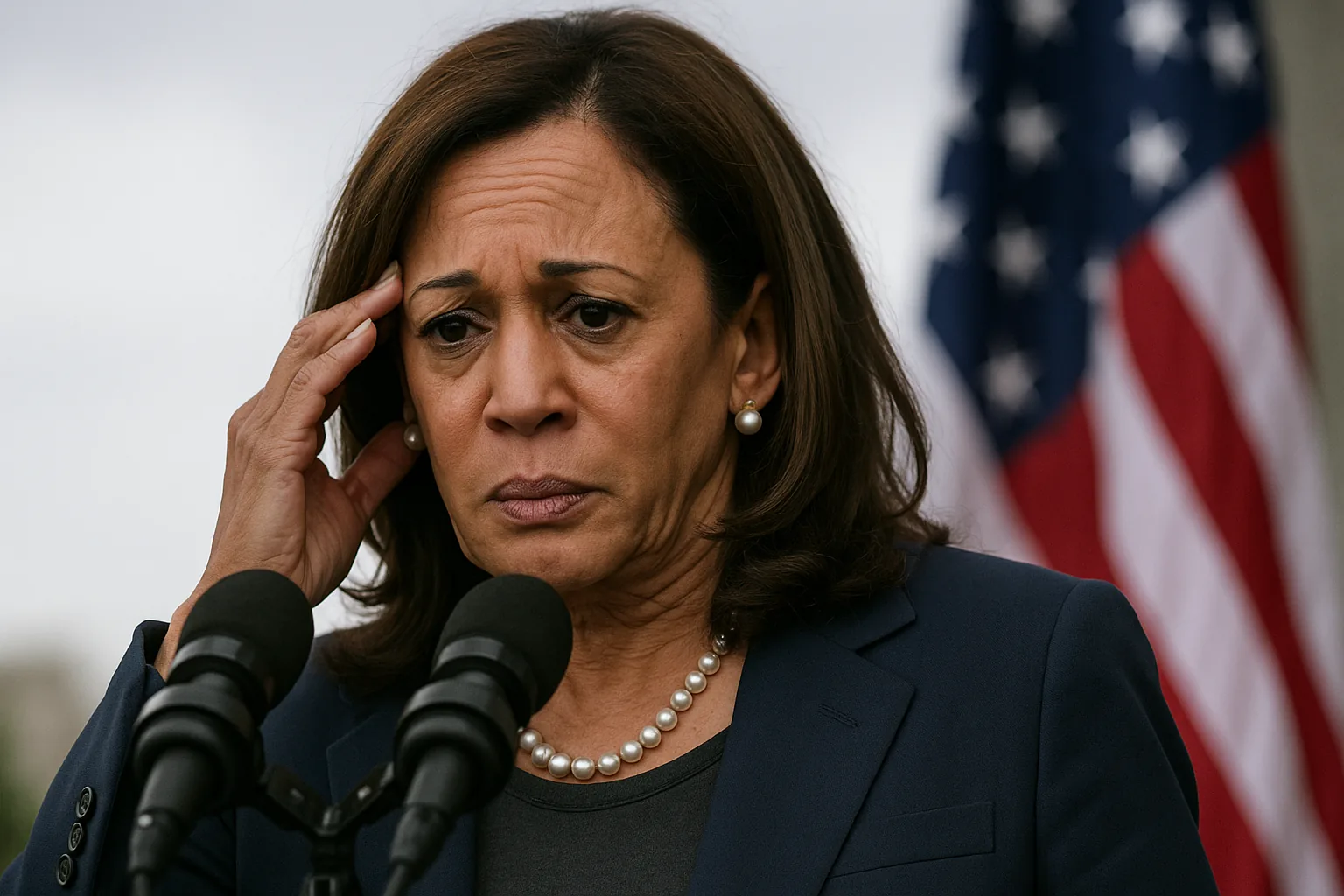
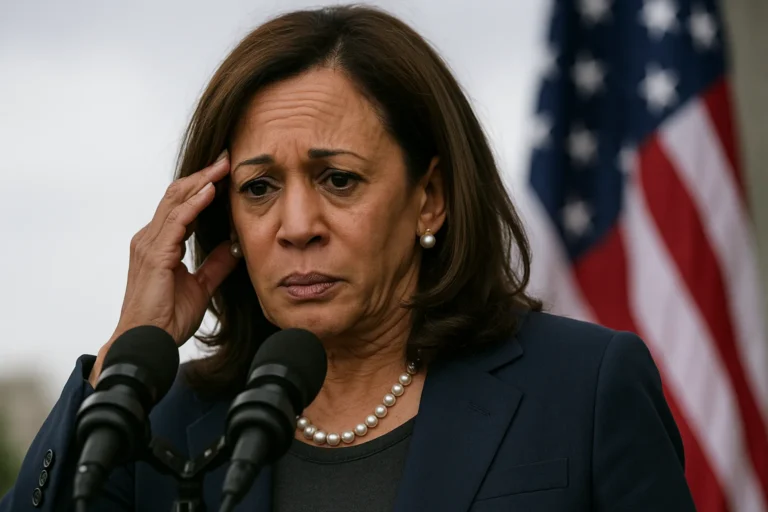
A piece of political satire claiming that Kamala Harris would be held personally responsible for her 2024 presidential campaign’s debt resurfaced on social media in 2026 and spread rapidly as though it were a genuine federal court ruling — a textbook example of how satirical content, stripped of its original context, can mutate into misinformation and travel far beyond its intended audience. Fact-checkers who examined the Kamala Harris campaign debt claim found that the story originated from a Facebook page explicitly labelled as satire, yet the framing, language, and selective sharing of the post allowed it to circulate as credible political news among users who never saw the source label.
What the Satire Actually Said
The claim originated from a post published on the ALLODSatire Facebook page. The post asserted that Harris would be held personally responsible for the $39 million her campaign allegedly owed in outstanding debt following her unsuccessful 2024 presidential run. The post’s language mimicked the tone of a legal or judicial announcement, referencing what it described as a federal bankruptcy court ruling — a detail that lent the story an air of institutional authority it did not possess.
The name of the source page — ALLODSatire — is itself a disclosure. Pages operating under the satire label on Facebook are required to identify themselves as such, and ALLODSatire has a documented history of publishing fictional political stories styled to resemble breaking news. For users who encountered the post through shares, screenshots, or reposts on other platforms, however, that identifying label was frequently absent. A screenshot of the post’s text, cropped to remove the page name, became the version that circulated most widely, according to fact-checkers who traced the claim’s spread.
This pattern — satirical content losing its source attribution as it moves through social networks — is one of the most consistently documented mechanisms through which misinformation propagates online. The post did not need to persuade every reader; it only needed to persuade enough to keep sharing.
How the Kamala Harris Campaign Debt Claim Spread as Fact
By 2026, the satire post had been shared widely on social media platforms, with users presenting it as evidence of a real legal development involving Harris. The framing adopted by those sharing the claim varied: some presented it as a news story they had seen, others as a rumour they were seeking to confirm, and others as established fact. This variation in framing is itself significant — it suggests the claim had reached a stage of circulation where it no longer needed a single authoritative-sounding source to sustain itself. Social credibility, in the form of repeated sharing, had substituted for journalistic or legal verification.
The claim’s specific allegation — that a federal bankruptcy court had issued a ruling making Harris personally liable for campaign debts — gave it a structural plausibility that pure fabrications sometimes lack. Readers unfamiliar with how campaign finance law actually works might reasonably wonder whether such a ruling was possible, and that uncertainty created space for the claim to take root. In reality, campaign organisations are legally distinct entities from the candidates who run them, and candidates are not personally liable for their campaigns’ financial obligations under US federal law. No such ruling was issued by any federal court.
Fact-checkers at Snopes and other outlets traced the viral claim directly back to the ALLODSatire Facebook post, confirming that no primary legal source — no court docket, no bankruptcy filing, no federal judicial record — supported the story. The trail ended at satire, not at any courthouse.
The Real State of Harris’s 2024 Campaign Finances
There is a kernel of factual reality embedded in the broader story, and that kernel is worth examining carefully — precisely because it is the kind of partial truth that makes misinformation more persuasive than outright fabrication.
Harris’s 2024 presidential campaign did end with outstanding debt. According to Snopes, the campaign concluded with approximately $20 million in outstanding obligations. That is a meaningful financial figure, and it reflects the compressed timeline of Harris’s late-entry campaign, which launched after President Biden withdrew from the race and required rapid, large-scale spending to build infrastructure and visibility in a short window.
The satire, however, inflated that figure to $39 million — nearly double the verified amount — and then added the entirely fictional element of personal legal liability. This is a common technique in politically motivated misinformation: take a real and verifiable fact, exaggerate the numbers to make it more alarming, and then attach a false legal or institutional consequence to give the story narrative stakes. The result is a claim that feels grounded because part of it is true, while the most consequential elements are invented.
Campaign debt of the kind Harris’s organisation carried is not unusual in American politics. Campaigns routinely end with unpaid vendor bills, outstanding loans, and deferred obligations that are settled over months or years following an election. The debt belongs to the campaign committee — a legally registered organisation — not to the candidate as an individual. Federal Election Commission rules govern how such debts are reported and resolved, and the process is administrative and financial, not criminal or judicial.
👉 Read also: Republican Campaign Ads in 2026 Senate Races: Three Fact-Checks of Misleading Claims
Why Satire Spreads as Misinformation: The Structural Problem
The ALLODSatire incident is far from unique. It illustrates a structural vulnerability in how information moves through social media platforms that researchers and journalists have documented extensively over the past decade. Understanding that structure helps explain why the Kamala Harris campaign debt story gained traction even among users who would, in other contexts, be appropriately sceptical of unverified political claims.
First, satire pages that mimic news formats exploit the visual grammar of credibility. Headlines written in the style of wire-service reporting, language that references courts, agencies, or official bodies, and the use of real names in connection with plausible-sounding events all trigger the same cognitive shortcuts that readers use to assess genuine news. When a post looks like a news story and uses the vocabulary of institutional authority, many readers process it as such before they have examined the source.
Second, the screenshot is the primary unit of social media sharing for political content, and screenshots sever content from its source. A user who sees a screenshot of the ALLODSatire post on a messaging app or a repost on a different platform has no visible indication that the content originated from a satire page. The label that Facebook requires satire pages to display is simply not present in the cropped image.
Third, political content that confirms existing beliefs about a public figure spreads faster than content that challenges those beliefs. For users who held negative views of Harris following the 2024 election, a story about her facing personal legal consequences for campaign debt was consistent with a broader narrative they found credible. Confirmation bias does not make people foolish; it makes them human. But it does mean that politically charged satire targeting figures who are already subjects of controversy has a structural advantage in propagation.
Fourth, the velocity of social media sharing outpaces the velocity of fact-checking. By the time fact-checkers at Snopes and Yahoo News published their analyses of the claim, the satire post had already completed much of its social media journey. Corrections travel more slowly than the original false claim, reach a smaller audience, and are less likely to be shared by users who encountered and believed the original story. This asymmetry is one of the most persistent challenges in digital media literacy.
How Fact-Checkers Traced and Verified the Claim
The verification process for a claim of this type follows a consistent methodology. Fact-checkers begin by identifying the earliest traceable instance of the claim — in this case, the ALLODSatire Facebook post. They then assess whether any primary sources support the factual assertions in the claim: in this instance, whether any federal court had issued a ruling of the kind described. No such ruling existed in any publicly accessible court record.
Fact-checkers also examined the actual campaign finance records to establish what Harris’s campaign debt genuinely amounted to, finding the approximately $20 million figure documented by Snopes — a number significantly lower than the $39 million cited in the satire. This discrepancy between the real figure and the inflated figure in the satire is itself a useful indicator of fabrication: misinformation frequently exaggerates real numbers to heighten emotional impact.
The source identification step — confirming that ALLODSatire is a satire page, not a news organisation — completed the verification chain. The claim was traced from its viral social media form back to a satirical Facebook post, with no intermediate legitimate news source in the chain. The verdict: the claim that Harris would be held personally responsible for her campaign’s debt, framed as a federal court ruling, was false. It originated from satire and was shared as fact.
What This Case Reveals About Political Misinformation in 2026
The Harris campaign debt story is instructive not because it is exceptional but because it is ordinary. In 2026, the spread of satirical content as genuine news remains a routine feature of the political information environment. The specific ingredients that made this story travel — a real public figure, a real financial fact, an inflated number, a fictional legal consequence, and a screenshot that stripped the source label — are ingredients that appear repeatedly across different subjects and different political contexts.
Understanding how the Kamala Harris campaign debt misinformation worked mechanically is more useful than treating it as a one-off curiosity. The same architecture — real person, real issue, exaggerated figure, false institutional framing, decontextualised screenshot — can be applied to any public figure, any financial story, and any political moment. Readers who learn to ask where did this originate?, what does the primary source actually say?, and does the number match what official records show? are better equipped to interrupt that architecture before sharing.
Fact-checkers traced this particular claim to its satirical source, published their findings, and documented the gap between the fictional $39 million figure and the verified approximately $20 million in actual campaign debt. That work matters — not because it will reach every person who saw the original post, but because it creates a permanent, searchable record that any curious reader can find. In a media environment where satire and misinformation are structurally difficult to distinguish at a glance, that record is one of the few reliable correctives available.
This article was produced with AI assistance and reviewed editorially.

Trump Claims U.S. Has ‘Best Poverty Numbers Ever’ in September 2026

Satire Article About Kamala Harris’s Campaign Debt Spread as Fact on Social Media in 2026

AI-Generated Video of Pro-Palestine UK Rally Spreads with SynthID Watermark Visible

Alleged October 1, 2026 Trucker Strike: No Evidence Found
