
Current Affairs
AI-Generated Images and Videos Spread as Real in September 2026
Learn how to detect AI-generated images and videos. September 2026 saw five synthetic media incidents circulate as real—here’s what to look for.

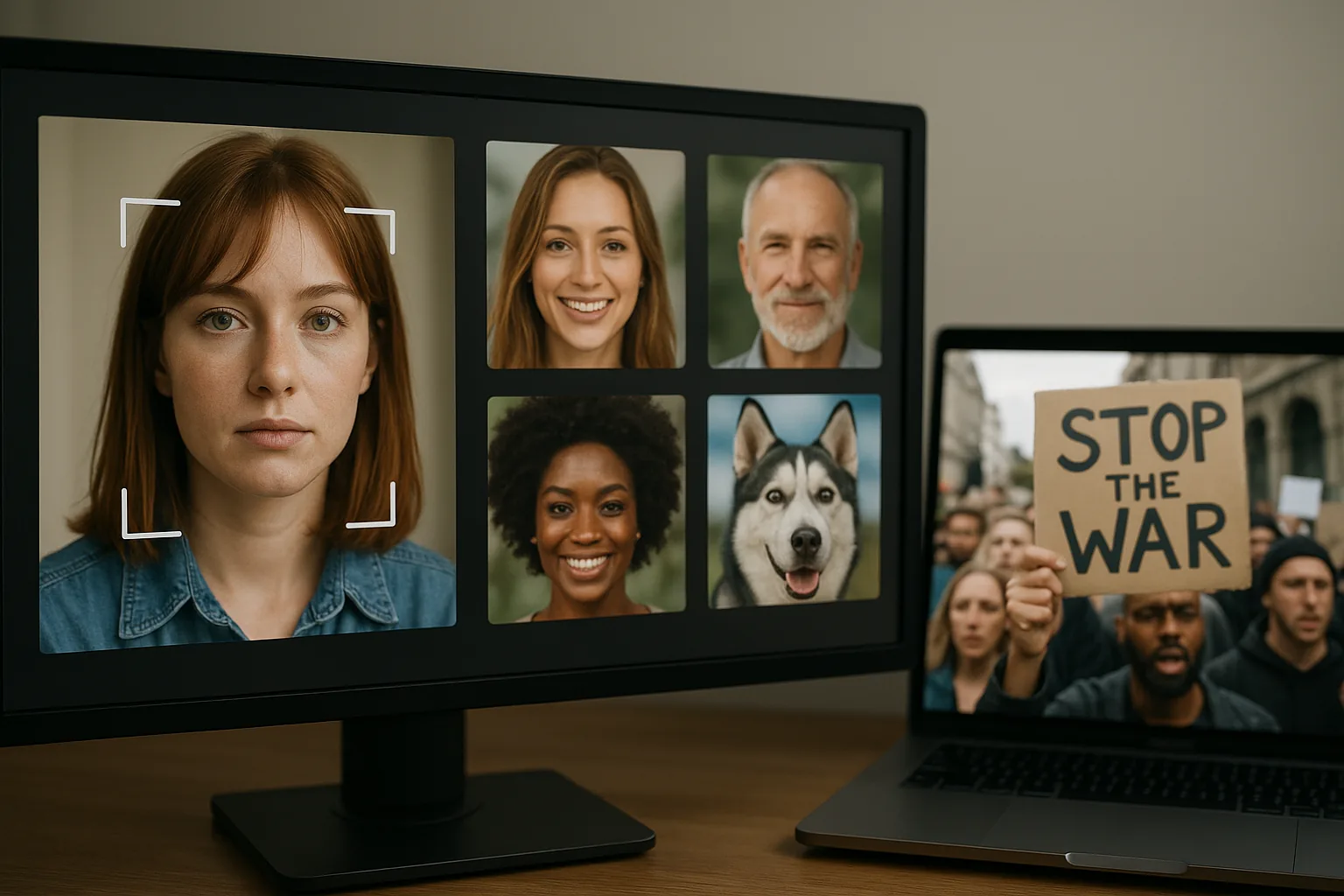
The autumn of 2026 has made one thing unmistakably clear: the gap between a fabricated image and a real one is narrowing faster than most people expected. Across September 2026, a cluster of incidents brought the challenge of ai generated images detection into sharp public focus, as synthetic or manipulated visuals circulated on social media platforms alongside genuine reporting — and, in several cases, were shared by large audiences as though they were authentic. While the specific details of each individual incident remain under active review and cannot yet be stated as verified fact, the broader pattern they represent is well-documented, technically grounded, and urgently worth understanding.
What We Know and What Remains Unverified
Before examining the mechanics of synthetic media and how to detect it, a point of editorial discipline is essential. The five specific incidents referenced in connection with September 2026 — including alleged protest footage from London and Manchester, a purported state dinner photograph, an image linked to suspects near RAF Fairford, and a fabricated image involving teachers and a pride flag — have been cited in early reporting but cannot be independently verified from primary sources available at the time of publication. The specific details, including the identities of those depicted, the exact dates beyond what is publicly confirmed, and the precise methods of fabrication, remain unverified.
What is confirmed is the broader context in which such incidents occur. Anthropic’s Threat Intelligence team identified and disrupted operations involving the malicious use of AI in September 2026, establishing that coordinated misuse of generative AI tools was an active and documented phenomenon during this period. Separately, the August 2026 Ceuta migration crisis demonstrated, in a verified and well-reported case, how old videos and AI-generated images spread online alongside genuine reporting during a fast-moving news event — a pattern that media literacy researchers consider highly relevant to any cluster of incidents that follows. This article draws on those verified foundations to explain what synthetic media looks like, how it spreads, and how detection works in practice.
The Technical Landscape Behind Synthetic Media in 2026
Generative AI image and video tools have matured substantially. Models capable of producing photorealistic faces, crowds, and architectural environments are now widely accessible, and the computational cost of generating a convincing fake has dropped to the point where individual actors — not just well-resourced organisations — can produce them. As of 2026, AI-generated images and videos have become increasingly realistic and difficult to distinguish from authentic content, a shift that has been documented by researchers, platform trust-and-safety teams, and independent fact-checkers alike.
This does not mean detection is impossible. It means detection requires deliberate method rather than casual inspection. The human visual system is poorly calibrated to catch the specific error signatures that current generative models leave behind, particularly when images are viewed quickly, on small screens, or in emotionally charged contexts. A protest video that confirms an existing belief, or a photograph that appears to show a newsworthy gathering, triggers a different cognitive response than a neutral image — and that difference is precisely what makes synthetic media politically and socially dangerous.
The errors that generative models introduce are real and consistent enough to form a practical detection checklist, but they require knowing where to look. Inconsistent lighting and irregular shadows remain among the most reliable indicators: a model generating a crowd scene may light individual faces from slightly different angles, or cast shadows that do not match the apparent position of a light source. Backgrounds often contain subtle distortions — architectural details that do not resolve correctly, text that is garbled or nonsensical, reflections in windows or glasses that do not correspond to any object in the scene.
👉 Read also: Fabricated Screenshots and Fake News Stories Impersonating Real Outlets (September 2026)
In video, additional artefacts appear over time. Temporal inconsistency — the way a model handles movement from frame to frame — can produce flickering at the edges of faces, hair that behaves unnaturally, or crowd members whose clothing subtly changes between cuts. Audio, when present, may be slightly misaligned with lip movement, or may carry a smoothed, over-processed quality that differs from ambient recording. These are not failsafe indicators on their own, but in combination they constitute a strong signal.
How AI-Generated Images Detection Works in Practice
Practical detection operates at several levels simultaneously. The first is provenance: where did the image or video originate, and what is the chain of custody from that origin to the social media post in question? Reverse image search tools can establish whether a visual has appeared before in a different context, whether it has been cropped or colour-corrected, and whether the claimed location or date matches the metadata. This step alone eliminates a significant proportion of misleading visuals, because many are not newly generated but are recycled from earlier events — sometimes years earlier — and relabelled.
The second level is technical analysis. Researchers and platform teams use a range of approaches: pixel-level noise analysis, which can reveal the characteristic patterns left by generative models; facial landmark detection, which can flag asymmetries that fall outside the range of natural human variation; and, increasingly, classifier models specifically trained to identify the output of known generative architectures. These tools are not infallible — they require updating as generative models improve — but they provide a structured basis for assessment that goes beyond visual inspection.
The third level is contextual corroboration. A video purporting to show a protest in a specific city on a specific date should be checkable against open-source reporting: local news coverage, geolocated social media posts, weather data, and witness accounts. When none of these corroborating signals exist, or when they contradict the claimed context, that absence is itself informative. In the Ceuta migration crisis of August 2026, fact-checkers were able to identify misleading visuals in part because the claimed locations did not match verifiable geographic features visible in the footage.
A fourth, increasingly important level is platform-level detection infrastructure. Major social media platforms have invested in automated systems that flag potentially synthetic content before it reaches large audiences, and several have implemented labelling requirements for AI-generated media. The effectiveness of these systems varies, and they are most reliable when content is generated by widely-used commercial tools that leave identifiable signatures. Content produced by custom or fine-tuned models, or by tools specifically designed to evade detection, remains harder to catch at scale.
Why Protest Footage and Political Events Are High-Risk Contexts
The categories of content most likely to spread as synthetic media are not random. Protest footage, political gatherings, and images involving public figures recur consistently in documented cases of synthetic media misuse, and the reasons are structural rather than coincidental. These are contexts in which audiences are already primed to believe that events are occurring — protests happen, politicians meet, suspects are photographed — and in which the emotional stakes are high enough to accelerate sharing before verification takes place.
👉 Read also: Viral Photo Claims About World Leaders: Three Fact-Checked Images
Protest footage is particularly vulnerable because authentic protest videos are themselves often chaotic, shot on mobile devices, and lacking in stable reference points that would make geographic or temporal verification straightforward. A synthetic video that mimics those qualities — handheld camera movement, ambient crowd noise, partial visibility of faces — can be difficult to distinguish from genuine footage without systematic analysis. When such footage is shared in the context of an ongoing political dispute, the audience most likely to share it is also the audience least likely to pause and verify.
Images involving named public figures carry a different but equally significant risk. A photograph purporting to show a meeting between political leaders, or between political figures and prominent business figures, carries implicit claims about relationships, alliances, and events that can shape public perception regardless of whether the image is ever formally debunked. Research into how corrections spread relative to original false claims consistently finds that the correction reaches a smaller audience, travels more slowly, and has less emotional impact than the original. This asymmetry is not a technical problem; it is a social one, and no detection tool resolves it on its own.
The Broader Ecosystem: Detection, Disruption, and Responsibility
The September 2026 incidents, whatever their final verified details, sit within a documented and growing ecosystem of AI-enabled information operations. Anthropic’s confirmed disruption of malicious AI use operations in September 2026 illustrates one part of the response architecture: AI developers monitoring how their tools are used and intervening when misuse is identified. This is a relatively new form of accountability, and its effectiveness depends on the willingness of developers to invest in threat intelligence, share findings with researchers and platforms, and act on what they find.
Platform responsibility is a second pillar. The labelling of AI-generated content, the enforcement of policies against synthetic media used to deceive, and the development of detection infrastructure all fall partly within the remit of the platforms on which this content circulates. Progress has been uneven, and the incentive structures of engagement-driven platforms do not always align with the goal of slowing the spread of compelling but false content.
Media literacy represents a third pillar, and arguably the one with the longest time horizon. Teaching audiences to pause before sharing, to ask where an image came from, to notice the specific visual artefacts that generative models leave behind — these are habits that develop slowly and require sustained investment in education. They are also, in the long run, more robust than any individual detection tool, because they do not become obsolete when a new generative model is released.
For journalists and fact-checkers specifically, the September 2026 cluster of incidents — verified in outline if not yet in every detail — reinforces a set of practices that have become standard in responsible newsrooms: never publish an image or video without establishing its provenance, treat any visual that arrives through social media as unverified until proven otherwise, and apply the same scrutiny to content that confirms a preferred narrative as to content that challenges it. The last point is the hardest, and the most important.
As generative tools continue to improve and the cost of synthetic media continues to fall, the burden on detection — technical, institutional, and individual — will only increase. The incidents of September 2026 are not an anomaly; they are a data point in a trajectory that requires sustained, methodical attention from everyone who produces, distributes, or consumes information online.
This article was produced with AI assistance and reviewed editorially.

Trump Claims U.S. Has ‘Best Poverty Numbers Ever’ in September 2026

Satire Article About Kamala Harris’s Campaign Debt Spread as Fact on Social Media in 2026

AI-Generated Video of Pro-Palestine UK Rally Spreads with SynthID Watermark Visible

Alleged October 1, 2026 Trucker Strike: No Evidence Found
