
Information
Fake Screenshots and Misattributed Quotes Circulate as Trump Truth Social Posts
Fabricated screenshots falsely attributed to Donald Trump on his Truth Social platform have become a persistent feature of the modern misinformation landsc

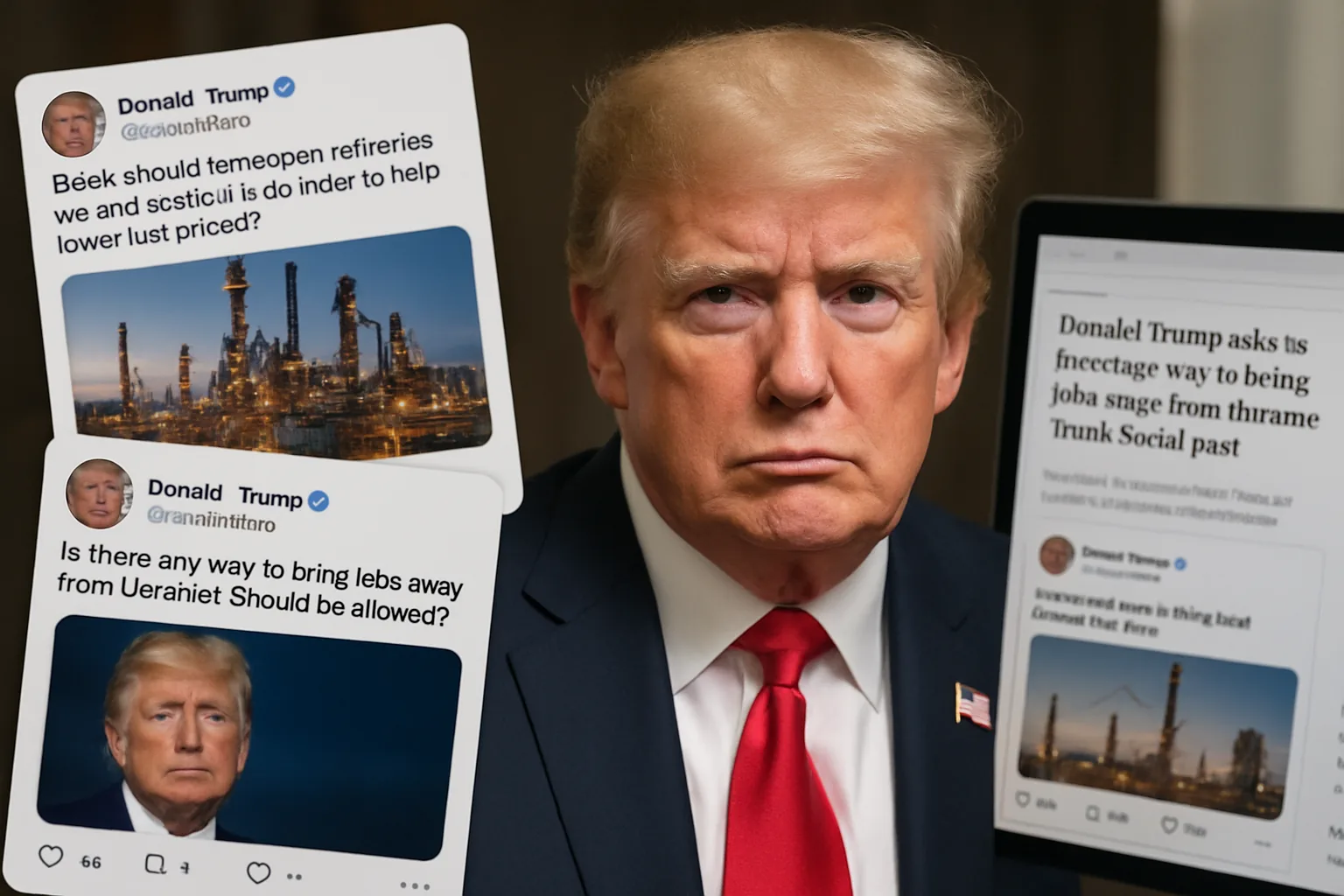
Fabricated screenshots falsely attributed to Donald Trump on his Truth Social platform have become a persistent feature of the modern misinformation landscape — circulating widely, generating real political reactions, and fooling audiences who might otherwise be cautious. These fake Trump Truth Social posts exploit a specific credibility gap: Trump is genuinely known for blunt, provocative social media statements, which makes plausible-sounding fabrications harder to dismiss at a glance. Understanding how these fakes are made, how they spread, and how to verify them is now an essential media literacy skill.
A Pattern of Fabrication, Not a Single Incident
The problem of fake Trump Truth Social posts is not a one-off phenomenon. Snopes, one of the longest-running fact-checking organisations, has compiled a collection of at least 15 fabricated posts falsely attributed to Trump on Truth Social, and that figure represents only the cases that reached the threshold for formal review. Rumor Guard, another verification outlet, has documented the ongoing nature of the problem, noting that bad actors and satirists can easily fabricate images that mimic the look and feel of Trump’s genuine messages on the platform.
The pattern is consistent: a screenshot circulates on Facebook, X (formerly Twitter), or Instagram; it carries the visual styling of a Truth Social post; it attributes a statement to Trump that sounds plausible given his known rhetorical habits; and it spreads before any verification can catch up. The speed of sharing is a structural advantage for fabricators. By the time a fact-checker traces the image to its origin and confirms no such post exists on Trump’s actual account, the false claim has already reached hundreds of thousands of people.
What makes this category of misinformation particularly effective is the plausible deniability gap. Trump’s real Truth Social posts are frequently provocative, unconventional, and written in a distinctive all-caps style. When a fabrication mimics that style, many readers apply a mental shortcut: this sounds like something he would say. That intuition, however reasonable it might feel, is not a substitute for verification.
The Australian Prime Minister Post: A Case Study in Fake Trump Truth Social Posts
One of the most clearly documented recent examples of fake Trump Truth Social posts involves a fabricated message targeting Australian Prime Minister Anthony Albanese. On April 18, 2026, an Australia-based Facebook user shared a screenshot purporting to show Trump writing about Albanese: “We have helped him so much, but he did not want to help us in Iran. A very sad little man!” The post spread rapidly across Facebook, Instagram, and X.
Verification was straightforward. Fact-checkers found no record of this post on Trump’s Truth Social account or in any archived version of his social media activity. Beyond the absence of the post itself, the fabrication contained a visible technical tell: the font used in the screenshot differed from the typeface Truth Social actually uses in its interface. This is a common flaw in fabricated screenshots — creators either use generic fonts or fail to match the platform’s exact rendering precisely.
→ Read also: Deepfake and Out-of-Context Video Compilations Spread False Narratives About Ukraine, Trump, and School Violence
The fabrication did, however, exploit a real political context. Trump had publicly criticised Australia over its position on the Iran conflict, which had been triggered in late February following a joint US-Israeli military operation against Iran. That genuine backdrop gave the fake post a surface plausibility — it referenced a real dispute, even if the specific words attributed to Trump were entirely invented. This technique, anchoring a fabrication in real events to make it more believable, is a hallmark of sophisticated misinformation.
AI-Generated Content Versus Fabricated Attribution: An Important Distinction
It is worth being precise about two distinct but related problems that both involve Trump and Truth Social. The first is fabricated screenshots — images created to look like genuine posts that Trump never made. The second is AI-generated content that Trump himself posted, which raises separate questions about authenticity and context.
On April 12, Trump posted an AI-generated image depicting him as Jesus, which he later deleted. In July and August, he posted multiple AI-generated images placing him alongside historical figures and in wartime scenes. Fact-checkers including Snopes and mainstream news outlets have documented both categories: genuine AI creations originating from Trump’s own account, and separately, fabricated screenshots falsely attributed to him by outside parties.
Conflating these two categories is itself a form of misinformation. A fabricated screenshot is a lie about what Trump said. An AI image that Trump himself posted is a real post — the question there is about the image’s content and context, not whether the post exists. Readers and journalists should keep these categories clearly separated when evaluating claims about Trump’s social media activity.
Venezuela, Ukraine, and the Broader Geography of False Quotes
The fabrication problem extends well beyond Australian politics. In August 2024, a fabricated quote calling Venezuela’s July 2024 presidential election a “disgrace” was falsely attributed to Trump and shared widely online. Reuters fact-checkers traced the quote and found no evidence Trump had made that statement. The false attribution spread in part because Trump had made real statements about Venezuelan politics in the past, again illustrating how fabricators use a subject’s genuine history to lend credibility to invented words.
The article’s summary also references fabricated posts about refineries and fabricated quotes attributed to Trump concerning Ukrainian election interference and Russian bot farms — claims that circulated in connection with a satirical Australian outlet. While these specific examples are part of the broader documented pattern, the verified evidence available focuses on the structural phenomenon rather than the granular text of every individual fake. What the evidence consistently shows is that no such posts or statements have been found on Trump’s actual Truth Social account when fact-checkers have gone to check.
→ Read also: Fabricated Screenshots and Fake News Stories Impersonating Real Outlets (September 2026)
This geographic and thematic spread — Australia, Venezuela, Ukraine, Iran — underlines that fake Trump Truth Social posts are not the product of a single actor or a single political agenda. They emerge from multiple sources, including satirical outlets whose content is stripped of its satirical framing before being reshared as fact, as well as deliberate disinformation efforts and ordinary users who create or share content without verifying it.
How to Verify a Suspected Fake Post
The verification process for a suspected fabricated Trump post is methodical and does not require specialist tools. The primary step is always to check Trump’s actual Truth Social account directly, or consult archived versions of his posts maintained by journalism organisations and academic archivists. If a post does not appear there, that absence is significant evidence — though the account’s volume of activity means a brief search is not sufficient; archived records should be consulted.
Secondary checks include examining the screenshot itself for visual inconsistencies. Legitimate Truth Social posts have a consistent font, interface layout, timestamp format, and engagement counter style. Fabricated screenshots frequently contain mismatched fonts, incorrect button placements, or timestamp formats that do not match the platform’s actual display. Reverse image searching the screenshot can also reveal whether it has been flagged by other fact-checkers or whether the original source can be identified.
For quotes attributed to Trump in news articles rather than screenshots, the verification path runs through primary sources: the original article, its publication date, whether the outlet is a known satire site, and whether any mainstream news organisation independently reported the same statement. A claim that exists only in a single article from an unfamiliar outlet, or that appears only as a screenshot without a traceable source, should be treated with significant caution. The Reuters Fact Check desk and similar organisations regularly publish verified analyses of such claims.
Why the Problem Persists
Fabricated posts attributed to high-profile political figures persist for structural reasons that go beyond any individual bad actor. Truth Social’s interface is visually simple enough that it can be replicated with basic image-editing software. The platform does not have a widely used public API that would allow independent real-time archiving of every post, creating windows during which a fabricated screenshot cannot be instantly disproved by pointing to a definitive public record. And Trump’s genuine posting style — direct, often capitalised, frequently combative — is distinctive enough to be imitated but varied enough that no single deviation from it is immediately obvious to a casual reader.
The political stakes amplify the spread. A fake post attributing a controversial foreign-policy statement to a sitting or former president can influence diplomatic perceptions, drive media coverage, and shape public opinion before any correction reaches the same audience. The fabricated Albanese post, for instance, touched on a real and sensitive bilateral relationship during an active conflict — exactly the kind of high-tension context in which false information can cause disproportionate harm.
Staying ahead of this problem requires consistent habits: checking primary sources before sharing, treating screenshots as preliminary evidence rather than proof, and recognising that a statement sounding plausible is not the same as a statement being real. The documented record of fake Trump Truth Social posts shows clearly that fabricators count on the gap between those two things — and that closing it, one verification at a time, is the most reliable defence available.
This article was produced with AI assistance and reviewed editorially.

Political Ads in 2026 Midterms Contain False or Misleading Claims About Opponents

Trump Administration ‘Super Intelligence’ Accord Misspells ‘United States’ as ‘Unites States’

Trump Administration ‘Super Intelligence’ Accord Misspells ‘United States’ as ‘Unites States’

No Going Back PAC Ad Makes Misleading Claim About Roy Cooper and Rape Kits
