
Current Affairs
Fact Check: Trump’s Statements on Renaming Geographic Features
Fact-checkers examine Trump’s geographic renamings, including the Gulf of America and Lake America, separating confirmed executive actions from speculation about renaming

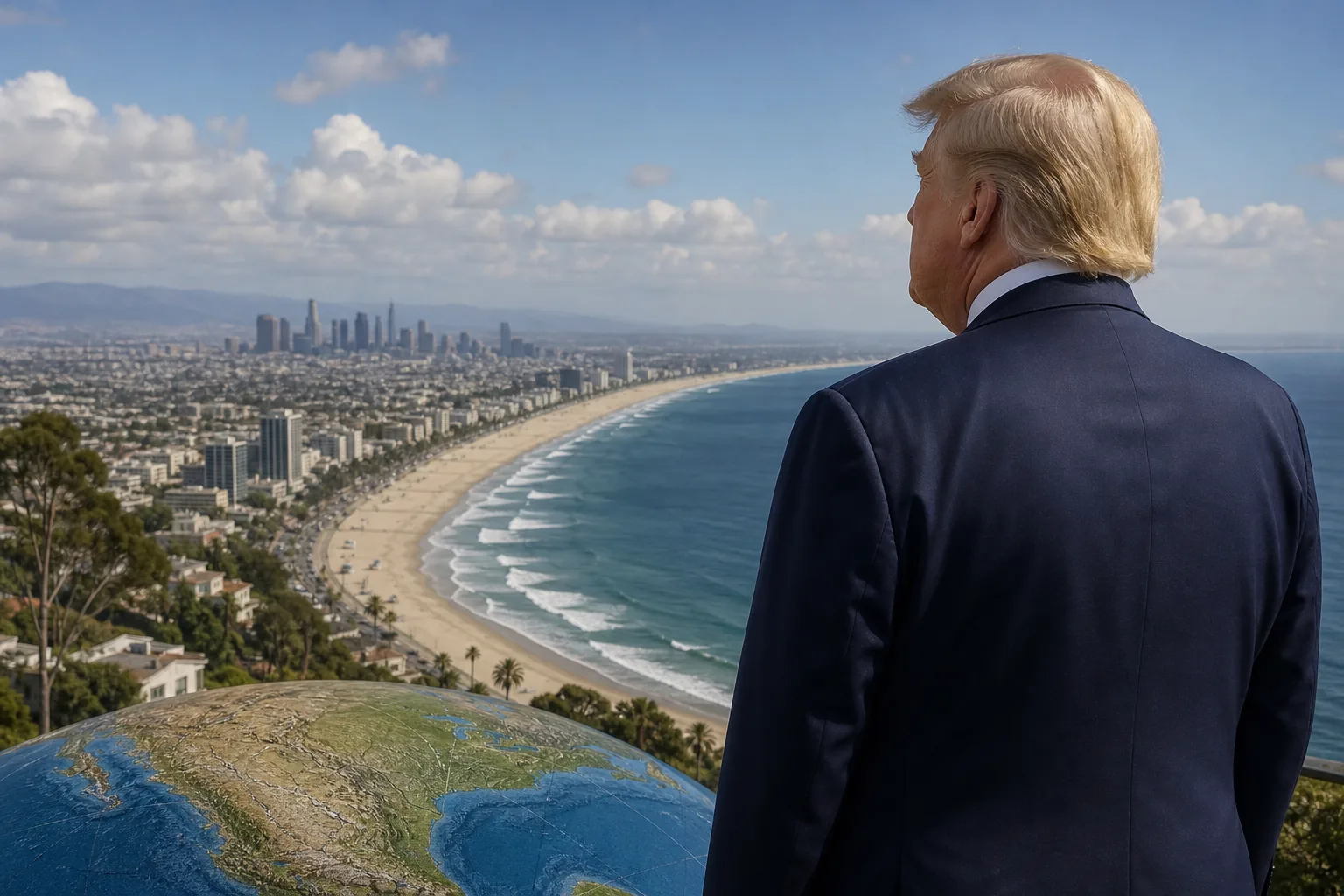
Since January 2025, President Donald Trump has made a series of executive orders and public statements proposing to rename major geographic features — moves that have drawn intense scrutiny from fact-checkers, legal analysts, and foreign governments alike. The debate over trump renaming geographic features has intensified following remarks made in October 2026, in which Trump floated the idea of renaming either the Atlantic or the Pacific Ocean. Understanding exactly what has been officially changed, what remains a proposal, and where presidential authority actually ends requires separating confirmed executive action from off-the-cuff commentary.
What Trump Has Actually Renamed: Confirmed Executive Actions
Two geographic renamings have moved beyond the realm of suggestion and into official executive action. First, Trump renamed the Gulf of Mexico as the Gulf of America, a change that took effect through an executive order issued after he returned to office. Second, in August 2026, Trump renamed Lake Ontario as Lake America — a particularly pointed move given that Lake Ontario sits on the border between the United States and Canada.
The Lake Ontario renaming did not emerge in a vacuum. According to reporting confirmed by multiple sources, Trump’s social media posts about renaming Lake Ontario came after Canadian Prime Minister Mark Carney walked away from negotiations over tariffs. The timing made the renaming appear less like a geographic reorganization and more like a diplomatic signal — though attributing specific intent to the executive action goes beyond what the documented record establishes. What is clear is the sequence of events: tariff talks collapsed, and a renaming announcement followed.
The Congressional Research Service has confirmed that since January 2025, President Trump has issued several executive orders directing the names of certain geographic features be changed. This establishes a pattern of using executive authority for geographic renaming as a recurring policy tool, not an isolated incident.
The Scope of Presidential Authority Over Geographic Names
A central question in the ongoing controversy over trump renaming geographic features is whether the president actually has the legal power to do this — and the answer, within U.S. territory and for features on federal maps, is broadly yes. The president can use executive authority to rename bodies of water and other geographic features, at least as they appear on official U.S. government documents, maps, and databases.
→ Read also: Unverified Claims About Trump Administration Actions Circulate on Social Media
The U.S. Board on Geographic Names, a federal body established to standardize geographic nomenclature across government agencies, typically governs how place names are recorded. Executive orders can direct federal agencies to adopt new names, effectively changing what appears on government-issued maps and in official communications. However, this authority has clear practical limits: it cannot compel foreign governments, international bodies, or private cartographers to adopt the same names. When Trump renamed the Gulf of Mexico as the Gulf of America, countries like Mexico and Canada continued using the original name on their own official maps, and international organizations were not bound by the U.S. order.
This distinction matters enormously when evaluating proposals that go further — such as renaming an entire ocean. The Atlantic and Pacific Oceans are international waters, governed by no single nation. Any U.S. executive order could only affect what American government maps and agencies call those bodies of water. The names Atlantic Ocean and Pacific Ocean would remain unchanged in international usage regardless of what Washington decided domestically.
Trump’s October 2026 Ocean Renaming Proposals
In October 2026, Trump publicly floated the idea of renaming either the Atlantic or the Pacific Ocean. His exact words, as reported, were: “We could call it Trump Ocean or Ocean of the Americans. Something like that … We have to. We should have before I get out.” The phrasing is notable for several reasons. Trump did not specify which ocean he was referring to, offered multiple possible names, and framed the remark with a sense of urgency tied to the timeline of his presidency.
The names proposed — Trump Ocean and Ocean of the Americas — represent two very different rhetorical registers. Trump Ocean would be a self-referential naming of the kind unprecedented in modern American political history for a body of water of that scale. Ocean of the Americas carries a more geopolitical framing, echoing the earlier Gulf of America renaming and suggesting a hemispheric branding strategy. Neither proposal has, as of the time of writing, been formalized into an executive order.
It is worth noting what Trump explicitly ruled out during the same period. He stated that he would not change the name of the Hudson River and that he would not change the name of the Mississippi River. These carve-outs suggest a degree of selectivity in the renaming agenda — though what criteria distinguish features that will be renamed from those that will not has not been formally articulated.
→ Read also: GOP Ads Strip Context From Trump's 'Take Out' Los Angeles Remarks
Claims That Cannot Be Verified From Available Evidence
Several claims circulating in connection with the topic of trump renaming geographic features are not supported by the verified documentary record. Specifically, reports that Trump made remarks about “taking out” Los Angeles and San Diego in the context of geographic renaming or other policy discussions do not appear in the confirmed source material available as of this writing. Those claims should not be treated as established fact until primary documentation is produced.
Similarly, rumors suggesting that Lake America — the renamed Lake Ontario — was itself being considered for a further renaming to New America are unconfirmed. The verified record shows that Lake Ontario was renamed Lake America in August 2026; no subsequent renaming proposal for that feature appears in available sourcing. Readers encountering these claims should treat them as unverified unless and until credible primary documentation emerges.
This kind of claim inflation is a predictable byproduct of a story that moves quickly and generates strong reactions. When a president takes an unusual action — renaming a Great Lake in apparent response to a diplomatic disagreement — the information environment around that action tends to fill with speculation and embellishment. The discipline of tracking only what is documented matters especially in this context.
Why the Pattern of Renaming Matters Beyond the Names Themselves
Taken together, the confirmed renamings — Gulf of America and Lake America — and the proposed ocean renaming represent something more than a quirky presidential preference for different place names. They reflect a deliberate use of executive authority to reshape how the United States officially refers to shared or internationally recognized geographic features, often in contexts that carry diplomatic weight.
The Lake Ontario renaming, occurring in the aftermath of collapsed tariff negotiations with Canada, illustrates how geographic renaming can function as a form of political signaling. The Gulf of Mexico renaming, affecting a body of water shared with Mexico and Cuba, had immediate diplomatic reverberations. An ocean renaming, if ever formalized, would operate on an entirely different scale — one where the gap between U.S. official usage and international usage would be at its most visible and most consequential.
Presidential authority to rename geographic features within U.S. official documentation is real and established. But the practical reach of that authority diminishes sharply at the water’s edge when the water in question belongs to no single nation. The October 2026 ocean proposals sit precisely at that boundary — legally possible in a narrow domestic sense, and essentially symbolic in any broader international context. What the documented record makes clear is that trump renaming geographic features has become a consistent and recurring element of this administration’s executive activity, one that fact-checkers and legal analysts will continue to track as proposals move — or fail to move — from public statement to formal order.
This article was produced with AI assistance and reviewed editorially.

Trump’s ’60 Minutes’ Post-Election Interview: Claims Fact-Checked

Claims About Abdul El-Sayed’s Background Check and Senate Eligibility: What the Record Shows

Voting Machine Claims After 2026 Midterms Lack Evidence of Election Fraud

AI-Generated Images Linking Trump, Epstein, and Beyoncé Circulate Online Without Verification
