
Information
Fabricated Screenshots and Fake Social Media Posts Attributed to Trump
Fabricated screenshots of Trump’s Truth Social posts spread widely online. Learn how to verify authenticity and identify fake trump screenshots circulating in 2026.

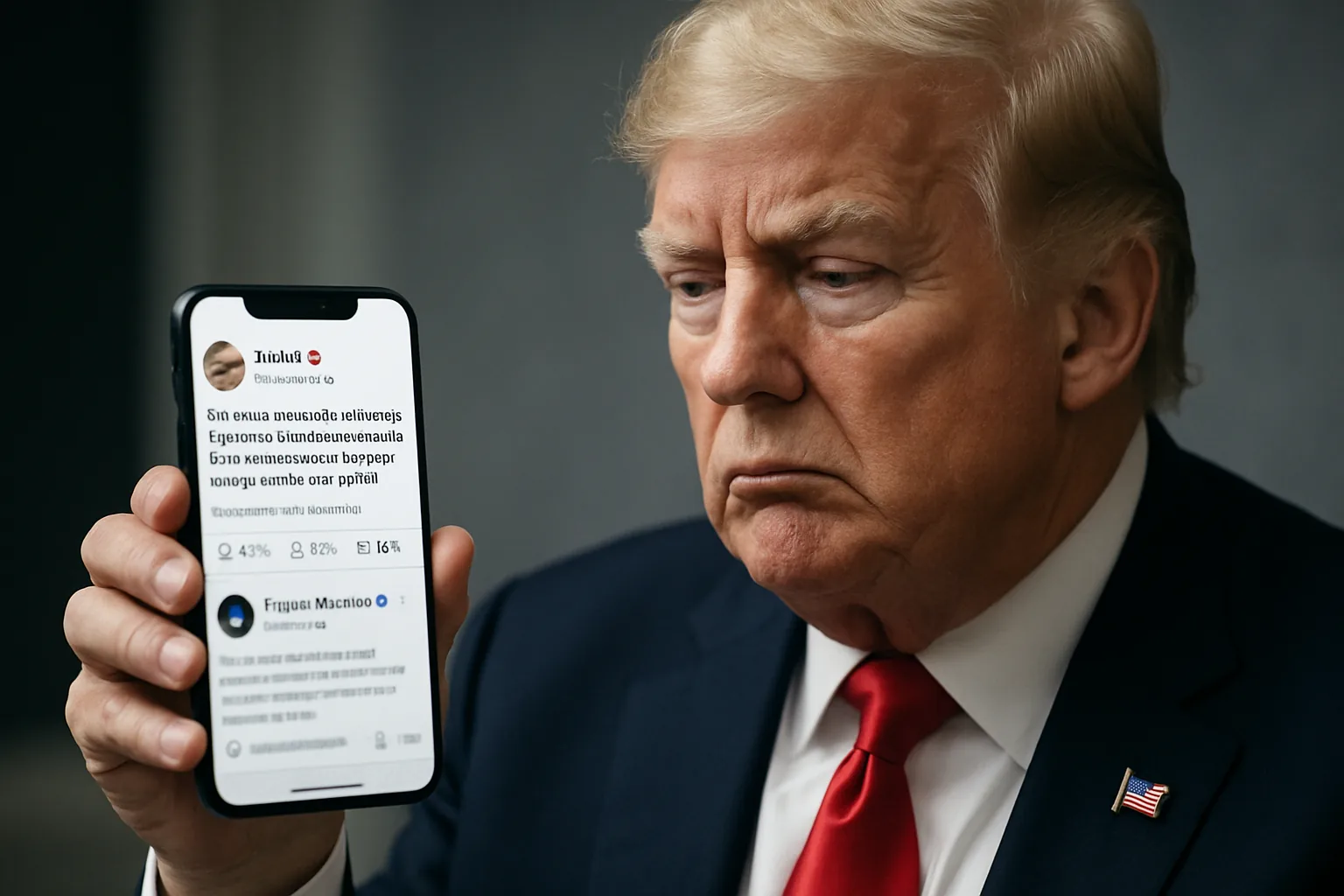
Fabricated social media posts attributed to Donald Trump have become one of the most persistent and consequential forms of digital misinformation in circulation today. Screenshots purporting to show Trump’s messages on Truth Social — or on his @realDonaldTrump X account — regularly spread across platforms at speed, often looking convincing enough to fool ordinary users and, in documented cases, professional newsrooms. Understanding how these fake trump screenshots work, why they are so effective, and how to verify any post before sharing it has never been more important for anyone who consumes or reports on political news.
Why Fabricated Trump Posts Spread So Easily
The effectiveness of a fabricated social media post depends almost entirely on how plausible it feels to the person who encounters it. Trump’s authentic communication style — capitalised phrases, blunt declarative sentences, exclamation marks, and short punchy statements — is so widely recognised and so easy to imitate that a fabricated message can pass a casual read without triggering any suspicion. Bad actors and satirists can replicate the visual interface of Truth Social with minimal technical skill, producing screenshots that mimic the platform’s fonts, icons, timestamp formats, and overall layout with a high degree of fidelity.
According to reporting by RumorGuard, fabricated Truth Social posts attributed to Trump have continued to fool people precisely because the barrier to creating them is low and the posts are distributed in contexts — group chats, comment threads, partisan social feeds — where recipients are already primed to believe them. A post that confirms what a viewer already suspects about a public figure will receive far less scrutiny than one that challenges their existing beliefs. This cognitive shortcut, sometimes called confirmation bias, is one of the primary reasons fake trump screenshots persist and circulate long after they have been debunked.
The problem is compounded by the speed of social media sharing. By the time a fact-check is published, a fabricated image may have been seen by hundreds of thousands of people who will never encounter the correction.
A Documented and Growing Pattern
Snopes, one of the longest-established fact-checking organisations, has compiled a substantial collection of fabricated posts falsely attributed to Trump across Truth Social and other platforms, documenting numerous examples over the years. The breadth of that collection alone illustrates that this is not an occasional glitch in the information ecosystem — it is a recurring, systematic problem that shows no sign of slowing down.
→ Read also: Fake Screenshots and Misattributed Quotes Circulate as Trump Truth Social Posts
Fact-checkers have consistently found, when investigating specific viral screenshots, that no corresponding post exists on Trump’s verified Truth Social profile or his official X account. The methodology is straightforward: search the platform directly for the claimed text, check the timestamp against Trump’s known posting history, and cross-reference with archived copies of his feeds. When those steps are followed, fabricated posts fail every test. The problem is that most people who encounter a screenshot do not take those steps.
Particularly striking is the finding, reported by News24‘s debunking desk, that fake Trump social media posts have fooled newsrooms — not just individual users. Journalists working under deadline pressure, operating in an environment where a Trump statement can break as news within minutes of posting, are vulnerable to the same visual and contextual tricks that catch ordinary readers. A screenshot that arrives via a tip, looks authentic, and fits a news narrative can move quickly through an editorial process that has not yet built robust screenshot-verification habits into its workflow.
What Makes a Fake Screenshot Convincing
Several specific features make fake trump screenshots particularly difficult to dismiss at first glance. Understanding these elements is the first step toward developing a more critical eye.
- Authentic-looking interface elements: Fabricators replicate the Truth Social logo, the correct font choices, the like and repost counters, and the timestamp format. A screenshot that gets all of these right will look, at a glance, indistinguishable from a genuine post.
- Plausible voice and content: The most convincing fakes use language that sounds like Trump — capitalised key words, a combative or declarative tone, references to topics he is known to engage with. A fabricated post about energy policy, trade, or a political rival will feel credible to anyone familiar with his public statements.
- Absence of a direct link: Authentic screenshots shared online rarely come with a direct link to the original post. This absence is often presented as normal — platforms crop links out of screenshots — but it removes the easiest verification route.
- Emotional charge: Posts that provoke a strong reaction — outrage, alarm, or excitement — are shared more quickly and questioned less carefully. Fabricators frequently choose topics and phrasings calculated to produce exactly that response.
- Rapid initial spread: Once a fake post gains early traction, the fact that many people are sharing it becomes its own social proof. Users assume that something so widely circulated must have been checked by someone upstream.
How to Verify Any Claimed Trump Post
The verification process for any screenshot attributed to a public figure’s social media account is not technically complex, but it requires discipline and a willingness to slow down before sharing. The following steps apply to any claimed Trump post on Truth Social or X.
Go Directly to the Source Account
The single most reliable step is to visit Trump’s verified Truth Social account or his verified X account directly and search for the text shown in the screenshot. Truth Social has a search function; so does X. If the post exists, it will be findable. If it does not appear — and if no archived version exists from a reliable web-archiving service — that absence is strong evidence that the post was fabricated. Do not rely on a screenshot alone when the original post is allegedly still live and accessible.
→ Read also: Unverified Claims About Trump Administration Actions Circulate on Social Media
Check the Timestamp Carefully
Fabricated screenshots sometimes carry timestamps that do not align with Trump’s known activity on a given day, or that show posting times inconsistent with platform behaviour. Cross-referencing a claimed timestamp against independently archived records of his feed can reveal anomalies. Archiving services such as the Internet Archive’s Wayback Machine periodically capture public social media profiles and can serve as an independent reference point.
Look for Coverage by Established Outlets
If Trump genuinely posted something newsworthy, major news organisations will have reported on it within a short window. The absence of any coverage from established outlets — when a post is being shared as explosive or significant — is a meaningful signal. Fabricated posts frequently circulate in spaces where mainstream news coverage would be expected but is conspicuously absent.
Search Fact-Checking Databases
Organisations including Snopes and RumorGuard maintain searchable archives of previously debunked fake Trump posts. Before amplifying a screenshot, a quick search of those databases can reveal whether the specific image has already been investigated and found to be fabricated.
The Real Stakes: When Fakes Reach Newsrooms and Markets
The consequences of fake trump screenshots extend well beyond individual social media users being misled. When a fabricated post attributed to a sitting or former president touches on policy areas — energy, trade, financial markets, foreign relations — the potential for real-world harm escalates sharply. A false statement attributed to Trump about a specific industry or sector could, if believed widely enough and quickly enough, influence market behaviour, public opinion, or political decision-making before the correction reaches the same audience.
The documented cases of newsrooms being fooled underscore that this is not a problem confined to low-information social media users. Experienced journalists, editors, and producers have been caught out. The lesson from those cases is structural as much as individual: verification of screenshots needs to be treated as a mandatory step in editorial workflow, not an optional one applied only when something seems suspicious. A post that seems entirely plausible is, by definition, the hardest one to question — and therefore the most dangerous one to publish without checking.
Trump uses Truth Social as a primary channel for sharing his opinions and policy proposals, which means that genuine posts from his account are genuinely newsworthy. That newsworthiness is precisely what makes fabricated versions so attractive to those who create them and so dangerous when they circulate unchecked. The antidote is not cynicism about everything attributed to him, but a consistent, methodical habit of verification applied equally to every claimed statement from every public figure — checking the original source, every time, before the share button is pressed.
This article was produced with AI assistance and reviewed editorially.

Political Ads in 2026 Midterms Contain False or Misleading Claims About Opponents

Trump Administration ‘Super Intelligence’ Accord Misspells ‘United States’ as ‘Unites States’

Trump Administration ‘Super Intelligence’ Accord Misspells ‘United States’ as ‘Unites States’

No Going Back PAC Ad Makes Misleading Claim About Roy Cooper and Rape Kits
