
Current Affairs
GOP Ads Strip Context From Trump’s ‘Take Out’ Los Angeles Remarks
Trump’s ‘take out’ remarks about Los Angeles and San Diego at an October 2026 rally sparked debate. Here’s the full context and how GOP ads presented it differently.

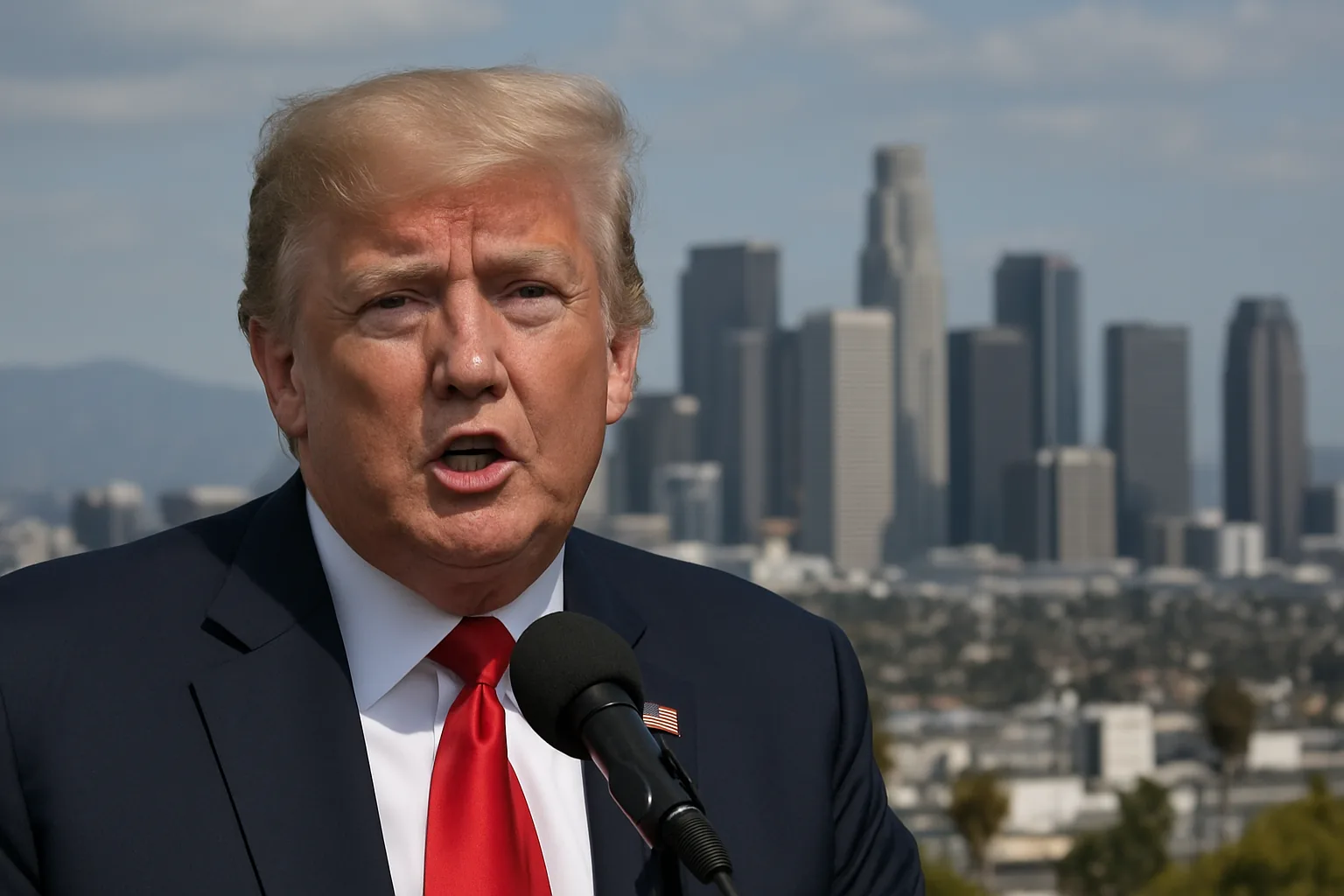
When Donald Trump told a rally crowd in Grand Island, Nebraska on October 5, 2026, that Iran could “take out” Los Angeles and San Diego, the remarks immediately ignited a political firestorm — and a genuine dispute about what the trump take out los angeles comments context actually reveals. The controversy has since split along predictable partisan lines, with Democrats, at least one Republican senator, and the White House all offering sharply different readings of the same words.
What Trump Said, Word for Word
The verified record of Trump’s statement at the Nebraska rally is specific. His exact words included: “They can take out a city. Let them take out Los Angeles. Let them take out San Diego. This is a very small price to pay.” He also stated that higher gas prices stemming from a war with Iran were “a small price to pay for keeping the world safe, keeping our country safe.”
Those two sentences are the anchors of the entire controversy. Taken together, they can plausibly be read in at least two ways: either as a callous suggestion that the destruction of two major American cities would be an acceptable outcome, or as a rhetorical device warning that Iran’s nuclear ambitions — if left unchecked — could one day threaten those cities, making the current costs of confronting Tehran worthwhile. The ambiguity in the phrasing is real, and it is at the heart of every subsequent dispute.
The White House Explanation and Its Limits
On October 6, 2026 — the day after the rally — the White House issued a formal clarification. According to that statement, Trump was warning about the threat Iran could pose to U.S. cities if Tehran were allowed to develop nuclear weapons, not suggesting he wanted Iran to attack American soil. White House Communications Director Steven Cheung went further, calling the media reaction a “media freakout” and arguing that Trump was making the point that American cities could have been threatened if Iran had not been stopped.
→ Read also: Republican Campaign Ads Misrepresent Gender-Affirming Care Facts and Democratic Stances
That clarification addresses the interpretive question but does not resolve it with certainty, because the original remarks were not phrased as a conditional warning. The phrase “let them take out Los Angeles” is grammatically permissive rather than hypothetical. Whether that reflects imprecise phrasing or a deliberate rhetorical choice is not something the public record can establish with confidence — and this article does not assert it either way.
How Critics Characterized the Comments
The political response was swift and, in some cases, went beyond what the verified text supports. Los Angeles Mayor Karen Bass stated that “the president of the United States suggested that a foreign government attack Los Angeles.” California Governor Gavin Newsom called the comments “deranged and dangerous.” Both characterizations treat the permissive reading of the remarks as the definitive one, without acknowledging the alternative interpretation the White House subsequently offered.
More notable, given the partisan dynamics, was the response from Republican Senator Jon Bramnick, who condemned the remarks and called on the entire party to do the same. Bramnick stated explicitly: “Trump said, ‘Let them take out Los Angeles or San Diego.’ All Republicans must condemn these comments.” His statement, published on InsiderNJ, represented one of the clearest intra-party rebukes of the rally remarks and added weight to the argument that even some Republicans found the phrasing indefensible regardless of intended meaning.
Where Independent Fact-Checkers Landed
Two independent assessments are directly relevant to understanding the full trump take out los angeles comments context. FactCheck.org assessed that, given the full context of the rally and Trump’s past comments on Iran’s nuclear threat, “a more plausible interpretation is that he meant the war would prevent Iran from posing a threat to U.S. cities, and higher gas prices are a small sacrifice to make.” That assessment stops short of declaring the Democratic interpretation false; it calls the alternative reading “more plausible,” which is a qualified judgment, not a definitive verdict.
CNN fact-checker Daniel Dale also weighed in, defending Trump against the most literal reading of the “let ’em take out” clip. Dale’s position aligned with the White House framing — that the remarks were a warning about Iranian nuclear capability, not an invitation to attack. The fact that two fact-checkers working from the same transcript reached similar conclusions about the more plausible reading is significant, though it does not make the question entirely closed.
→ Read also: Unverified Claims About Trump Administration Actions Circulate on Social Media
The Gap Between the Controversy and What Can Be Verified About Advertising
The article’s framing around GOP advertising requires a direct acknowledgment of what the available evidence does and does not establish. The title of this piece references GOP ads distorting the comments. The sourced record confirms that the controversy over Trump’s remarks was used in political and media contexts — and that the remarks were widely circulated in clipped or partial form. However, the specific details of which GOP organizations produced advertisements using the quote, what those ads said verbatim, and precisely how any editing was performed are not documented in the verified sources available at the time of writing.
What is documented is a broader pattern: the remarks circulated in a form that stripped out the surrounding gas-price and Iran-nuclear context, and that stripped version was the basis for the reactions from Bass, Newsom, and Bramnick. Whether that stripping occurred primarily in news coverage, social media clips, or paid political advertising — and by whom — cannot be stated as established fact here. Asserting specific ad content without sourcing it would violate the evidentiary standard this publication applies to all parties equally.
Why the Context Matters for Accurate Reporting
The dispute over the trump take out los angeles comments context illustrates a recurring challenge in political communication: ambiguous phrasing, delivered at a rally, can generate radically different headlines depending on which sentence is excerpted. Trump’s remarks bundled together a geopolitical argument about Iran, a reference to economic costs, and a rhetorical flourish about American cities — all in rapid succession. Separating those elements, as some coverage did, changes the apparent meaning materially.
FactCheck.org’s assessment and the White House clarification both point toward the same interpretive frame: the remarks were intended as a warning about what inaction on Iran could cost, not an endorsement of Iranian military action against U.S. cities. That framing is the more contextually supported reading. At the same time, the phrasing Trump chose — “let them take out Los Angeles” — was sufficiently ambiguous to generate a good-faith dispute, as evidenced by the fact that a Republican senator joined Democratic officials in condemning the comments without waiting for the White House explanation.
The honest summary of this episode is that Trump’s October 5, 2026 rally remarks in Nebraska were genuinely ambiguous, that the White House offered a clarifying interpretation the following day, that independent fact-checkers found that interpretation more plausible given the full context, and that the clipped version of the remarks — circulating without the surrounding argument about gas prices and Iranian nuclear capability — presented a materially different impression. What the record does not yet support, in granular documented detail, is a specific accounting of which political ads used the quote and how each one framed it. That question remains open pending sourced evidence.
This article was produced with AI assistance and reviewed editorially.

Political Ads in 2026 Midterms Contain False or Misleading Claims About Opponents

Trump Administration ‘Super Intelligence’ Accord Misspells ‘United States’ as ‘Unites States’

Trump Administration ‘Super Intelligence’ Accord Misspells ‘United States’ as ‘Unites States’

No Going Back PAC Ad Makes Misleading Claim About Roy Cooper and Rape Kits
