
Current Affairs
AI-Generated and Manipulated Videos Spread False Claims About UK Protests, Asylum Policy, and Disasters
AI-generated videos fake in content and captions circulated across UK social media in 2026, spreading false claims about protests, asylum policy, and disasters with coord

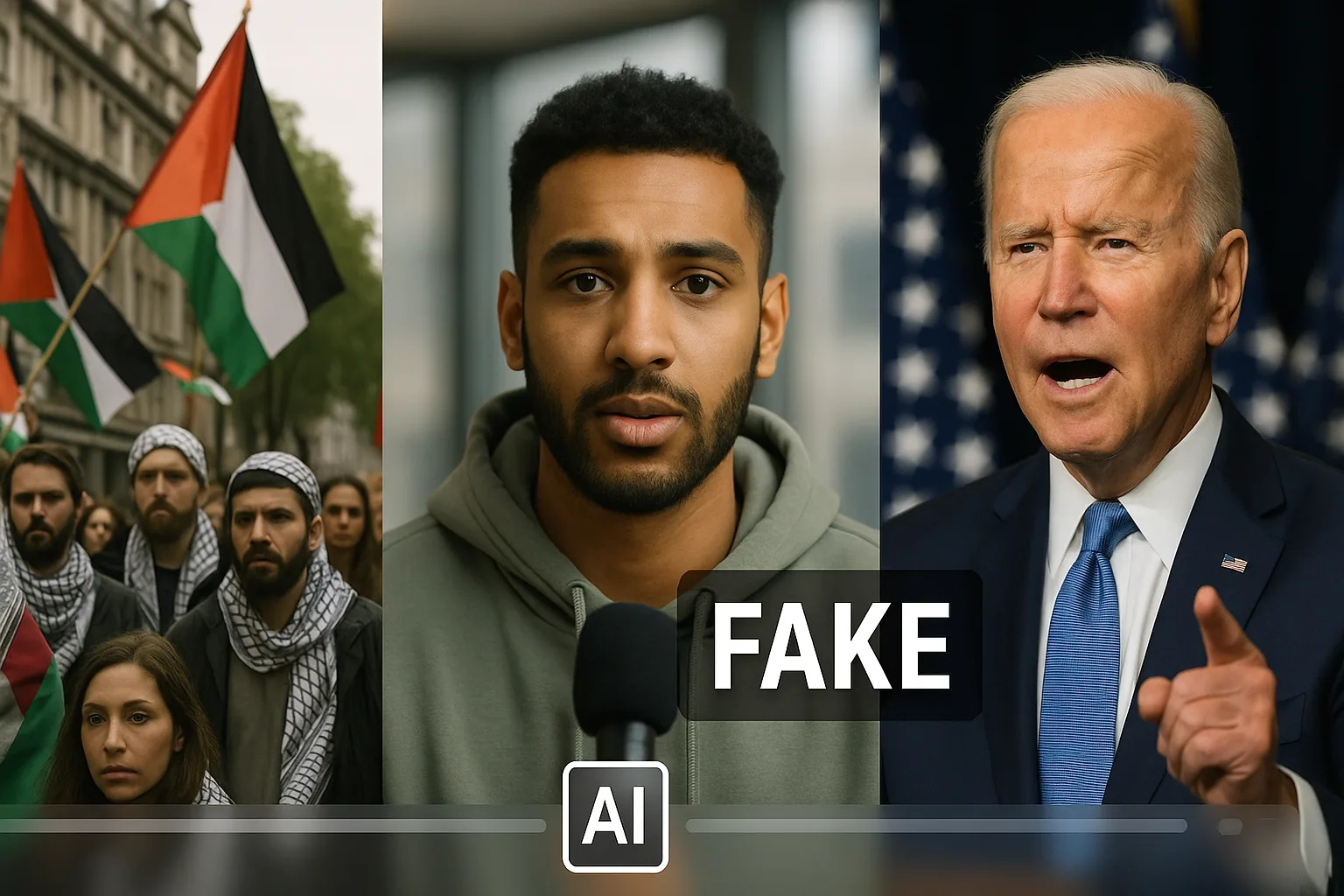
A wave of AI-generated videos fake in their captions, their subjects, and in some cases their entire visual content has swept across British social media between May and September 2026, targeting some of the most politically charged issues in the country: immigration policy, asylum seekers, and street protests. Fact-checkers, investigative journalists, and Meta’s own Oversight Board have all confirmed specific instances of fabricated footage circulating at scale, reaching millions of viewers before corrections could catch up. The pattern is consistent and troubling — and it is happening right now.
How the Fabrications Are Being Built and Spread
The videos in question are not crude edits or simple screenshot manipulations. Several have been confirmed as fully synthetic — generated by AI tools capable of producing convincing human faces, voices, and crowd scenes that never existed. Others involve deepfake technology applied to real public figures, placing fabricated words in their mouths on some of the most sensitive policy questions in contemporary British politics.
The distribution channels are familiar: Facebook, Instagram, and Threads — platforms with enormous reach and, historically, uneven enforcement of policies against synthetic media. What makes this wave distinct is the combination of technical sophistication, political targeting, and coordinated amplification. These are not isolated pranksters. BBC Panorama identified dozens of interconnected Facebook and Instagram accounts spreading AI-generated anti-immigration videos, suggesting a degree of coordination that goes well beyond individual bad actors.
The accounts doing the spreading are not always who they claim to be. The ‘Great British People’ Facebook page, which presents itself as a community rooted in Yorkshire, is actually run by someone based in Sri Lanka, according to BBC reporting. That page accumulated 1.3 million views for a video depicting an elderly white British man crying about his pension — a piece of content designed to evoke strong emotional responses around national identity and perceived neglect of British citizens. The geographic deception is significant: the page’s entire authority rested on an implied local identity that was entirely false.
Three Documented Cases That Define the Trend
Three specific incidents, each verified by independent sources, illustrate the breadth of what is happening.
The Fabricated Palestine Rally
On May 21, 2026, a Threads user operating under the handle ‘torontopost11’ uploaded a video with the caption ‘London UK Rises for Palestine — Massive Rally Fills the Streets.’ Thai PBS Verify, the fact-checking arm of Thailand’s public broadcaster, investigated the footage and found it was fabricated using AI. The video did not depict a real event. This matters in context: genuine pro-Palestine rallies have taken place in London, which is precisely what makes the fabrication effective. It borrows the credibility of real, documented events and layers false imagery on top, making it harder for audiences to immediately question what they are seeing.
The AI Asylum Seeker Interview
On August 26, 2026, a video circulated on social media showing a man complaining about his treatment by UK authorities and demanding more money, a home, and freedom — framed as a genuine interview with an asylum seeker. Reuters fact-checkers confirmed the video was entirely AI-generated. No such person made those statements; the figure on screen did not exist. The video was engineered to provoke a specific emotional and political reaction, presenting a caricature of asylum seekers as demanding and ungrateful — a framing with obvious implications for public attitudes toward UK asylum policy.
👉 Read also: AI-Generated Videos Spread False Claims About Immigration, Asylum, and Protests in September 2026
The Deepfake of a UK Politician
Perhaps the most consequential case involves a deepfake video of a UK Labour Party politician, selected for review by Meta’s Oversight Board on May 21, 2026. The fabricated video showed the politician appearing to say: ‘Refugees are welcome here, even if they rape our women, because white people do that too.’ The politician said no such thing. The Oversight Board reached its decision on September 17, 2026, ruling that the video should be removed from Facebook because it constitutes hate speech against refugees — a finding that underscores how AI-generated videos fake in their content can simultaneously defame a real person and spread dehumanising narratives about a vulnerable group. The board’s ruling is available through Meta’s Oversight Board published decision.
Why AI-Generated Videos Fake Political Reality So Effectively
There is a reason these videos cluster around immigration, asylum, and protest. These are subjects where many people hold strong prior beliefs and where the emotional stakes are high. Cognitive research has long established that emotionally charged content is shared more readily and scrutinised less carefully — and fabricators appear to understand this dynamic intuitively, whether or not they have studied it formally.
AI generation tools have also reached a threshold of quality that makes synthetic faces and voices genuinely difficult to distinguish from real ones without forensic analysis. The average viewer scrolling through a social media feed does not have access to forensic tools, does not have time to check sources, and is often encountering content within an algorithmic environment that rewards engagement over accuracy. A video of a crying pensioner or a demanding asylum seeker lands emotionally before the rational question — is this real? — has time to form.
The Oversight Board’s ruling in the politician deepfake case is particularly instructive about the layered harm these videos cause. They do not simply spread false information; they attribute that false information to real, named individuals, compounding the damage. A politician whose face and voice are used to deliver fabricated hate speech suffers reputational harm. The refugees depicted in the fabricated framing suffer a different kind of harm: the normalisation of dehumanising language attached to their name as a group.
The Real-World Consequences: From Screens to Streets
These videos are not circulating in a vacuum. AI-generated misinformation played a documented role in fuelling UK civil unrest, including the Southport riots, according to analysis published by the London School of Economics. The riots, which involved significant violence and property damage, were preceded and accompanied by a torrent of false claims online — some of them in video form — about the identity and background of those involved in the triggering incident.
This is the point at which the phenomenon ceases to be merely a media literacy problem and becomes a public safety issue. When fabricated content is capable of mobilising crowds, directing anger, and providing a false factual basis for violence, the stakes of detection and correction are no longer just about truth — they are about physical harm to real communities.
The speed of the information environment compounds this. A fabricated video can reach millions of people within hours of being posted. Corrections, fact-checks, and platform removals operate on a slower cycle. By the time a ruling like the Oversight Board’s September 17 decision is issued, the video in question may already have been downloaded, re-uploaded, and re-shared across dozens of alternative accounts and platforms beyond Facebook’s reach.
👉 Read also: AI-Generated and Manipulated Videos Spread Widely Across Social Media in September 2026
What Detection and Enforcement Currently Look Like
Detection of AI-generated videos relies on a combination of platform-level tools, independent fact-checkers, and audience reporting. The Oversight Board’s process in the politician deepfake case demonstrates what rigorous platform governance can look like at its best: a structured review, a published decision with clear reasoning, and a definitive removal order. But the Board handles a tiny fraction of the content that actually circulates.
Independent fact-checkers — including Thai PBS Verify and Reuters — are doing essential work, but they too are operating at a scale mismatch. The number of AI-generated videos being produced and distributed vastly exceeds the capacity of any existing verification infrastructure to review them in real time. Forensic analysis capable of confirming AI generation exists, but it requires expertise and time that most newsrooms and most individual users do not have readily available.
Platform policies on synthetic media and deepfakes have tightened in recent years, but enforcement remains inconsistent. The ‘Great British People’ case illustrates a gap that policy alone cannot easily close: an account that presents itself as authentically local, accumulates a large following, and then uses that audience to spread fabricated content is difficult to catch before significant damage is done. By the time the geographic deception is uncovered, the content has already been seen by over a million people.
Recognising and Responding to Fabricated Video Content
For audiences navigating this environment, a set of practical habits can reduce the risk of being misled. Reverse-image and reverse-video searches can sometimes surface the original source of footage, revealing whether a clip has been mislabelled or repurposed. Checking whether a claim is reported by multiple independent news organisations — not just social media accounts — remains one of the most reliable filters available.
Look for visual inconsistencies that AI generation still sometimes produces: unnatural blinking patterns, hair that behaves oddly at the edges, lighting that does not quite match between a face and its background, or audio that is slightly out of sync with mouth movements. These artefacts are becoming rarer as the technology improves, but they remain detectable in many current-generation videos.
Pay attention to who is running the account posting the content. The ‘Great British People’ example is a reminder that page names, profile pictures, and follower counts can all be manufactured. Checking a page’s transparency information — where available — can reveal the country of origin of its administrators, which may differ dramatically from the identity the page projects.
Finally, notice the emotional register of the content. Material specifically engineered to provoke outrage, disgust, or fear — and that arrives without a named journalist, a dateline, or any verifiable sourcing — deserves extra scrutiny precisely because it is designed to bypass that scrutiny. The fabricators behind these videos understand that strong emotion is the enemy of careful verification, and they are exploiting that dynamic deliberately.
The months between May and September 2026 have produced a documented, verified record of AI-generated videos spreading false claims about some of the most sensitive political issues in Britain. The technology enabling these fabrications is improving faster than the systems designed to catch them, and the consequences — from reputational damage to individuals, to violence on the streets — are no longer hypothetical. Staying informed about how these videos are made, how they spread, and how they are detected is no longer a specialist concern; it is a basic requirement of navigating public life in 2026.
This article was produced with AI assistance and reviewed editorially.

Political Ads in 2026 Midterms Contain False or Misleading Claims About Opponents

Trump Administration ‘Super Intelligence’ Accord Misspells ‘United States’ as ‘Unites States’

Trump Administration ‘Super Intelligence’ Accord Misspells ‘United States’ as ‘Unites States’

No Going Back PAC Ad Makes Misleading Claim About Roy Cooper and Rape Kits
