
Current Affairs
AI-Generated and Manipulated Videos Spread Widely Across Social Media in September 2026
AI-generated and manipulated videos circulated widely across social media in September 2026, targeting political speech and immigration topics. Fact-checkers identified d

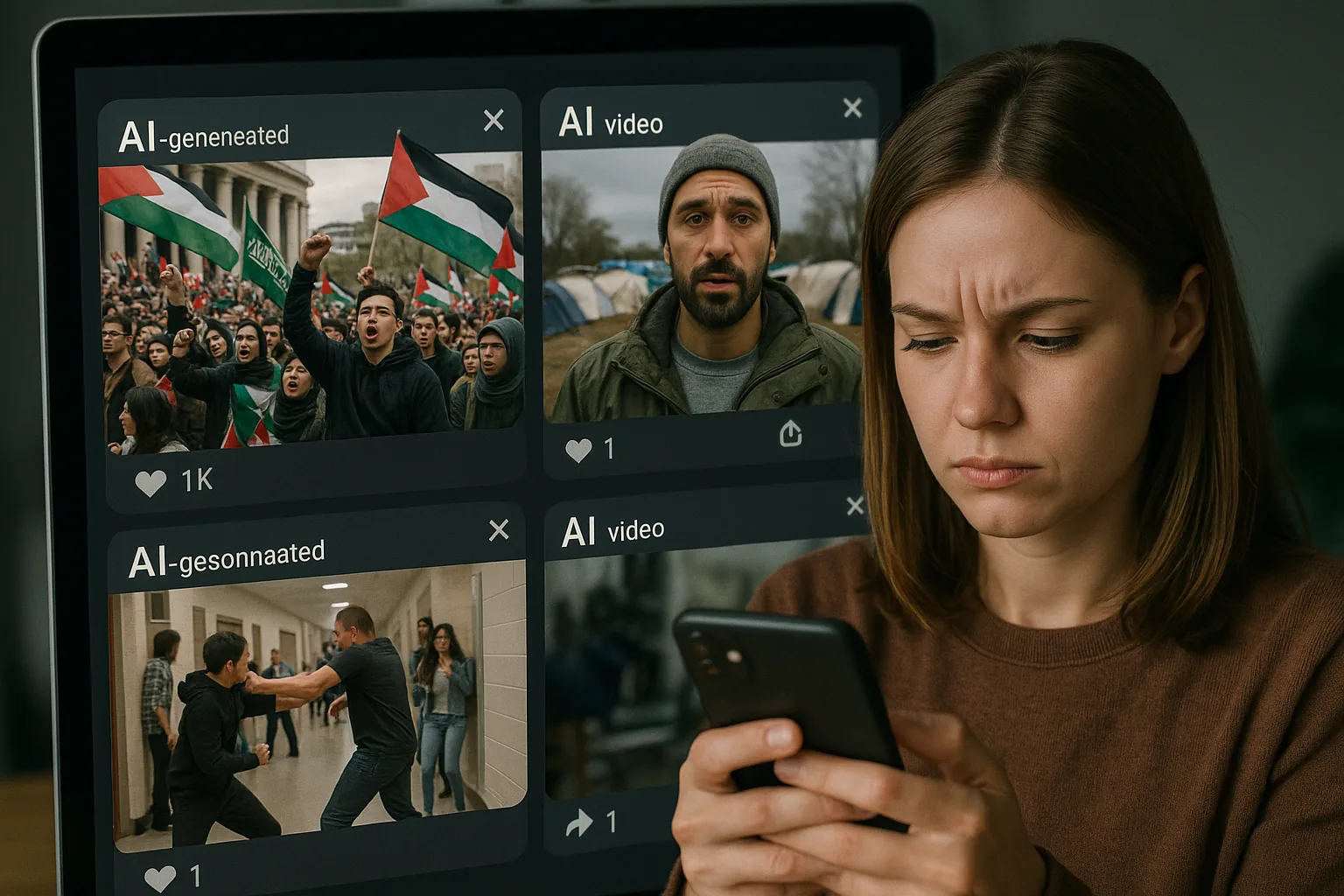
Across social media platforms in September 2026, a wave of AI generated videos moved through feeds on Facebook, TikTok, YouTube and Instagram at a pace that left fact-checkers, platform moderators and ordinary users struggling to distinguish the fabricated from the real. The phenomenon is not new, but the scale, technical sophistication and political targeting visible this month have sharpened a debate that governments, researchers and civil society organisations have been tracking for years — and have yet to resolve.
What September 2026 Revealed About the Scale of the Problem
The clearest institutional signal of how seriously AI-manipulated video is now taken came on September 17, 2026, when Meta’s Oversight Board issued a formal decision concerning a deepfake video depicting a UK local politician expressing fabricated views on immigration. The Board found that the video contained hate speech against refugees and should be removed from Facebook. Meta had initially left the content up, a decision the Board overturned. The case is significant not only for its outcome but for what it demonstrates: even when a platform has policies against manipulated media that targets individuals, enforcement is inconsistent enough that an external oversight body must intervene.
That single case sits within a much larger statistical picture. Data compiled by the European Digital Media Observatory (EDMO) and published via its network shows that in July 2026 alone, AI-created or AI-manipulated content appeared in 253 of 1,397 fact-checking articles reviewed across the network — representing 18% of all fact-checks conducted that month. One in five fact-checks, in other words, was triggered by content that had been synthetically generated or algorithmically altered. That figure, drawn from professional fact-checkers working systematically across multiple countries, almost certainly understates the volume of material that never attracted a formal review.
The Political Targeting of AI Generated Videos on Social Media
Among the categories of content most frequently manipulated, political speech — and particularly speech touching on immigration, national security and protest movements — appears disproportionately represented. The UK government has characterised AI propaganda as “an industrial-scale assault by hostile actors on the information environment,” a formulation cited in the RMIT Information Integrity Hub’s September 2026 edition of The Repost. That framing reflects a broader governmental concern: that synthetic media is no longer an occasional curiosity but a systematic tool capable of distorting public perception of real events at speed.
The Oversight Board’s UK politician deepfake decision illustrates the political dimension concretely. The fabricated video did not merely misrepresent a private individual; it attributed to an elected official views on refugees that the official did not hold, then circulated those fabricated views through a platform with billions of users. The potential for such content to influence local opinion, voter behaviour or community relations is the reason the Board’s ruling attracted attention well beyond the immediate case.
What remains difficult to establish with precision — and what responsible reporting must acknowledge — is the specific origin or intent behind any individual piece of synthetic content. Attributing a campaign to a particular state or non-state actor requires verified evidence that is rarely available at the time a video is circulating. Researchers and government bodies may assess that certain patterns of distribution are consistent with coordinated influence operations, but those assessments should be distinguished from established fact. The videos themselves can be verified as synthetic; who commissioned them and why is often a separate, harder question.
👉 Read also: AI-Generated Video of Pro-Palestine UK Rally Spreads with SynthID Watermark Visible
Technical Detection and Its Limits
Identifying AI generated videos on social media has become a specialised discipline, drawing on forensic analysis of pixel-level artefacts, inconsistencies in lighting and shadow, unnatural blinking patterns, audio-visual mismatches and, increasingly, embedded watermarks. Google’s SynthID system, for instance, embeds an imperceptible watermark into AI-generated content at the point of creation, allowing detection tools to flag material produced by Google’s own generative systems. Similar watermarking approaches have been developed by other major AI providers.
The limitation of watermarking as a detection strategy is straightforward: it only works when the generating system applies the watermark, and it can be degraded or removed through re-encoding, compression or deliberate manipulation. Content that passes through multiple re-uploads — the normal lifecycle of viral social media material — may lose or obscure watermark data. Detection, therefore, cannot rely on any single technical signal; it requires a combination of methods, and even then, sophisticated synthetic content can evade automated screening.
Platform-level responses have been uneven. TikTok has introduced labels for AI-generated content, and Meta has policies requiring disclosure of synthetic media in political advertising. But as the Oversight Board’s September ruling demonstrates, policy existence and policy enforcement are not the same thing. The speed at which content spreads — measured in hours or minutes for viral material — means that even a correct moderation decision made 48 hours after initial posting may arrive after the content has already reached millions of viewers.
Financial and Legal Dimensions
The consequences of synthetic media extend well beyond political misinformation. Deepfake fraud cost Americans an estimated $547.2 million in the first half of 2025 alone, a figure that reflects the use of synthetic audio and video to impersonate individuals in financial scams, identity fraud and business email compromise schemes. In the first half of 2026, one media-based threat dataset verified 821 attacks, at least 15,736 victims and 3.46 million synthetic files, with deepfakes appearing in one in five biometric fraud attempts. These are not fringe incidents; they represent a growing category of crime enabled directly by the same generative technology that produces political deepfakes.
The legal landscape is evolving, though unevenly. As of June 2026, the National Conference of State Legislatures counted 31 US states with laws specifically addressing election deepfakes. Of those, 28 required disclosure when AI-generated content was used in political advertising, while Maryland, Minnesota and Texas went further, prohibiting certain categories of election deepfake even when accompanied by an AI disclosure label. The existence of 31 different state-level frameworks — with varying definitions, thresholds and enforcement mechanisms — creates a patchwork that sophisticated actors can navigate by targeting jurisdictions with weaker protections or by operating across borders entirely.
Federal legislation in the United States remains incomplete, and the European Union’s AI Act, which does address synthetic media in certain contexts, is still in the process of full implementation. The gap between the pace of legislative action and the pace of technological development is, by most assessments, widening rather than narrowing.
👉 Read also: AI-Generated Fake Videos and Images Circulating in September 2026: Four Cases Identified
The Commercial Dimension: Synthetic Influencers and Brand Spending
Not all AI-generated video content is malicious, and understanding the full landscape requires acknowledging the commercial ecosystem in which synthetic media now operates. AI-generated or “virtual” influencers — computer-generated personas used in brand marketing — accounted for an estimated $1.37 billion, or approximately 4% of all brand influencer spending in 2026. This is a legitimate and growing market segment, but it also normalises the existence of synthetic human-appearing video personas in social media feeds, potentially lowering the threshold at which audiences question whether a face they are seeing is real.
The blurring of commercial synthetic content and malicious synthetic content creates a genuine detection challenge for ordinary users. A viewer who has become accustomed to AI-generated brand spokespersons may apply less scepticism to a politically motivated deepfake that uses similar production techniques. Researchers studying media literacy have noted this effect, though the precise magnitude of the influence is difficult to measure.
What Responsible Consumption Looks Like Now
For individuals navigating social media feeds in which AI generated videos circulate alongside authentic footage, a set of practical habits has emerged from media literacy research and fact-checking organisations. These are not foolproof, but they raise the friction cost of being misled.
- Check the source before sharing. Does the account posting the video have a verifiable history? Is it affiliated with a known news organisation, official body or established public figure? Anonymous or newly created accounts posting dramatic footage warrant heightened scepticism.
- Look for corroboration. If a significant event is captured on video, other witnesses, journalists or official sources should be reporting it independently. A video that exists in only one version, from only one source, is a warning sign.
- Examine the video itself. Unnatural eye movement, inconsistent lighting on faces, audio that does not quite match lip movement, and backgrounds that shift or blur unnaturally are all indicators worth noting — though none is definitive on its own.
- Use available verification tools. Several organisations and platforms now offer reverse video search and synthetic media detection tools. These are imperfect but useful as one layer of a multi-step check.
- Wait before reacting. The emotional urgency that viral content generates — outrage, fear, solidarity — is often the mechanism through which misinformation spreads. Pausing before sharing gives fact-checkers time to assess the material.
The Oversight Gap and What Comes Next
The September 2026 Oversight Board ruling on the UK politician deepfake is a useful marker of where institutional responses currently stand: reactive, case-by-case and dependent on external pressure to enforce existing rules. The Board’s authority extends to Meta’s platforms; it has no jurisdiction over TikTok, YouTube, X or the dozens of smaller platforms where synthetic content also circulates freely. A ruling that compels removal from Facebook does not prevent the same video from continuing to spread elsewhere.
What the data from EDMO, from state legislatures, from fraud researchers and from the Oversight Board collectively suggests is that AI generated videos on social media have moved from an emerging threat to an established feature of the information environment. The question is no longer whether synthetic media will be used to mislead — it is — but whether detection, regulation, platform enforcement and public media literacy can develop quickly enough to limit the damage. The evidence from September 2026 suggests the gap between the problem and the response remains substantial, and that closing it will require coordinated action across technical, legal and educational domains simultaneously.
The month’s events do not resolve that challenge, but they document it with unusual clarity. Each verified case of AI-manipulated content — the deepfake politician video, the EDMO statistics, the fraud figures — adds to a body of evidence that should inform both policy and individual behaviour. The synthetic is now woven into the social media environment; the task is learning to see it.
This article was produced with AI assistance and reviewed editorially.

Political Ads in 2026 Midterms Contain False or Misleading Claims About Opponents

Trump Administration ‘Super Intelligence’ Accord Misspells ‘United States’ as ‘Unites States’

Trump Administration ‘Super Intelligence’ Accord Misspells ‘United States’ as ‘Unites States’

No Going Back PAC Ad Makes Misleading Claim About Roy Cooper and Rape Kits
