
Information
AI-Generated and Manipulated Videos Spread as Authentic Footage
Learn how to identify deepfakes and AI-generated videos circulating online. Discover technical markers and verification methods that distinguish synthetic footage from au

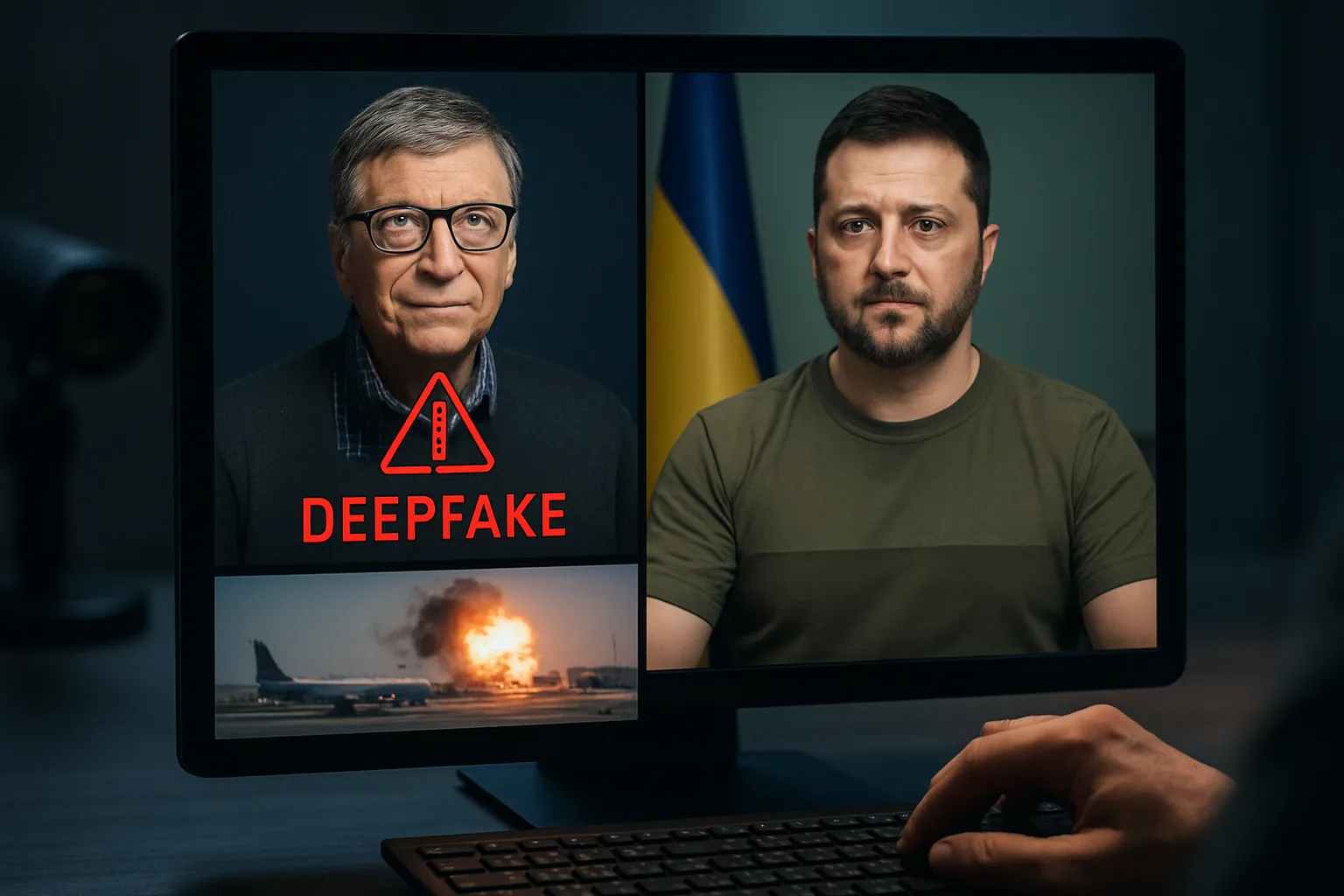

The ability to fabricate convincing video of real people saying or doing things they never said or did has moved from science-fiction premise to everyday online hazard. Deepfake detection — the practice of identifying AI-generated or algorithmically manipulated video — has become one of the most urgent media-literacy skills of the current moment, as researchers confirm that the average viewer correctly identifies synthetic footage only about 60 percent of the time, barely better than a coin toss. Understanding how these videos are made, how they spread, and what technical and contextual clues betray them is no longer the exclusive concern of forensic specialists; it is a basic requirement for anyone who consumes video online.
How Synthetic Video Has Evolved Into a Mass-Scale Problem
For most of the history of digital media, fabricating convincing footage of a real person required expensive equipment, skilled visual-effects artists, and considerable time. That barrier has collapsed. Advances in artificial intelligence — particularly in generative models trained on enormous libraries of human faces, voices, and body movements — have made it possible to produce highly realistic video that can appear to show someone doing or saying something they never did. The tools required are increasingly accessible, and the output is increasingly indistinguishable from authentic footage, even to trained eyes and existing automated detection systems.
The consequences extend well beyond individual embarrassment. Researchers have documented that deepfakes can be used to influence elections by discrediting political opponents, manipulate financial markets by fabricating statements from corporate leaders, and erode public trust in institutions by making authentic footage seem suspect. When everything can be faked, the evidentiary value of video itself comes into question — a corrosive effect that benefits bad actors even when no specific fake is involved.
One well-documented case illustrates how far the problem has spread beyond obvious political targets. A YouTube channel called True Crime Case Files used generative AI to produce and distribute hundreds of entirely fabricated true-crime documentaries, complete with AI-generated narration, imagery, and case details. One video falsely depicted a man from Littleton in a fabricated murder narrative involving a “secret gay love affair” and a killing by his stepson — a story with no basis in fact. That single 25-minute video accumulated nearly 2 million views before the fabrication was identified. Beyond the harm to the individuals named, researchers noted that content of this kind threatens to undermine public trust in the judicial system and in the credibility of real-world evidence more broadly.
The Technical Fingerprints of AI-Generated Footage
Despite the rapid improvement in generative tools, AI-produced video still leaves characteristic traces — some visible to the naked eye, others requiring closer analysis. Knowing what to look for is the first practical step in deepfake detection for any viewer.
Visual Anomalies in Faces and Bodies
Generative models are trained predominantly on faces, so face rendering is typically the most polished element of a deepfake. Even so, unnatural blinking patterns remain a reliable red flag: early deepfake models rarely blinked at all, and while newer models have corrected this, the timing and completeness of blinks can still appear slightly mechanical. Facial expressions that do not quite match the emotional content of speech — a smile that arrives a fraction of a second too late, or eyes that remain static while the mouth moves — are worth scrutinising.
→ Read also: AI-Generated and Manipulated Images Circulate as Authentic Election and Political Content
Hands and fingers remain among the hardest elements for AI to render convincingly. Models frequently produce hands with the wrong number of fingers, fused digits, or unnatural joint angles. Background elements — especially fine detail like text, foliage, or architectural features — are often distorted or internally inconsistent, with objects that shift shape between frames. A subject who appears sharply rendered but whose background looks slightly smeared or “pasted on” is a strong candidate for synthetic generation or compositing.
Audio and Synchronisation Clues
Audio manipulation introduces its own set of detectable artefacts. Cloned or synthesised voices frequently struggle with prosody — the natural rhythm, stress, and intonation of human speech. Sentences may sound metrically correct but emotionally flat, or pauses between words may fall in places a native speaker would not naturally pause. Background noise can sound unnaturally uniform, as though recorded in an acoustic environment inconsistent with the visual setting. In more crude manipulations, audio may be noticeably slowed or sped up, or words may be spliced together in ways that produce micro-glitches at edit points.
Lip-sync remains imperfect in many AI-generated videos. The mismatch between mouth movement and audible speech — particularly on consonants and vowel sounds that require distinctive lip shapes — is one of the most reliable visual tells. Watching a suspect video with the sound muted, then with the image obscured and only audio playing, can help isolate each channel for independent assessment.
Why Human Perception Alone Is Not Enough
Research findings on human ability to detect synthetic video are sobering. Across a range of experimental conditions, study participants achieved a mean accuracy of approximately 60 percent when asked to distinguish AI-generated video from authentic footage. That figure represents an aggregate; individual performance varied considerably, meaning a substantial portion of viewers performed at or below chance level. People’s ability to detect deepfakes is not uniformly distributed — it correlates with prior exposure to synthetic media, media-literacy training, and the specific generation of tools used to create the content.
Automated detection systems face their own limitations. As researchers at Columbia University’s engineering school have noted, AI-generated videos have become so realistic that both humans and existing detection systems struggle to reliably separate real from fake. This creates a dynamic sometimes described as an arms race: detection methods improve, generative tools adapt to evade them, and the cycle continues. No single tool or heuristic provides a definitive answer in all cases, which is why layered verification — combining technical analysis with source tracing and contextual reasoning — remains the most reliable approach.
Source Tracing and Contextual Verification
Technical visual analysis is only one component of effective deepfake detection. Contextual and source-based verification is equally important, and in many cases it is faster and more conclusive.
→ Read also: Viral AI-Generated and Manipulated Videos Spread False Claims About Recent Events
The first question to ask of any striking video is: where did this originate? Authentic footage of newsworthy events is typically first published by identifiable journalists, news organisations, or official accounts with verifiable histories. A video that appears fully formed in a social media feed, attributed to an anonymous or newly created account, with no corroborating coverage from established outlets, warrants immediate scepticism regardless of how convincing it looks.
Reverse image and video search tools can establish whether footage has appeared elsewhere online, when it first appeared, and in what context. A video claiming to show a recent event that reverse-search results date to months or years earlier is almost certainly mislabelled, whether or not it is AI-generated. Metadata embedded in video files — when it has not been stripped — can provide device, location, and timestamp information that either corroborates or contradicts the claimed provenance.
The impersonation of authority figures compounds the risk. AI-generated videos can falsely impersonate individuals — including public officials, law enforcement officers, and corporate executives — to lend false credibility to fabricated claims. When a video purports to show a recognisable person making a surprising or out-of-character statement, the appropriate response is to check whether that person or their verified representatives have confirmed making any such statement through established channels, before engaging with the content at all.
The Broader Stakes: Trust, Evidence, and Democratic Discourse
The damage caused by synthetic video is not limited to the specific false claims each individual deepfake carries. There is a secondary, structural harm: the generalised erosion of trust in video as evidence. When viewers become aware that footage can be convincingly fabricated, some respond by dismissing authentic footage they find uncomfortable — a phenomenon researchers sometimes call the “liar’s dividend.” Authoritarian actors and bad-faith political operators can benefit from this dynamic even without producing a single deepfake themselves, simply by invoking the possibility of fabrication.
The peer-reviewed research literature on deepfake perception and influence consistently finds that exposure to deepfakes — even when viewers are told the content is synthetic — can affect attitudes and beliefs in measurable ways. This makes the problem qualitatively different from earlier forms of media manipulation, which typically required either a credulous audience or a news ecosystem willing to amplify false claims. Synthetic video can influence people who are actively trying to be skeptical.
Practical media literacy, in this environment, means treating every striking video as a candidate for verification rather than a default source of truth. It means developing fluency with the visual and audio markers described above, using available verification tools, and maintaining the discipline to withhold judgment — and sharing — until provenance is established. The alternative is a media environment in which the most emotionally compelling content wins regardless of its relationship to reality, and that is a condition that serves no one except those who profit from confusion.
The technology generating synthetic video will continue to improve, and the gap between what is real and what is fabricated will continue to narrow at the pixel level. What will not narrow automatically is the gap between those who approach online video with structured scepticism and those who do not. Building that habit — in individuals, in institutions, and in the platforms that distribute video at scale — is the most durable response available to a problem that technical solutions alone cannot solve.
This article was produced with AI assistance and reviewed editorially.

Political Ads in 2026 Midterms Contain False or Misleading Claims About Opponents

Trump Administration ‘Super Intelligence’ Accord Misspells ‘United States’ as ‘Unites States’

Trump Administration ‘Super Intelligence’ Accord Misspells ‘United States’ as ‘Unites States’

No Going Back PAC Ad Makes Misleading Claim About Roy Cooper and Rape Kits
