
Information
Viral Videos of Whales and Ships Are AI-Generated, Not Real Encounters
Dramatic whale-ship videos circulating since September 2026 are AI-generated, not real wildlife footage. Fact-checkers confirm the pattern of fabricated marine content.

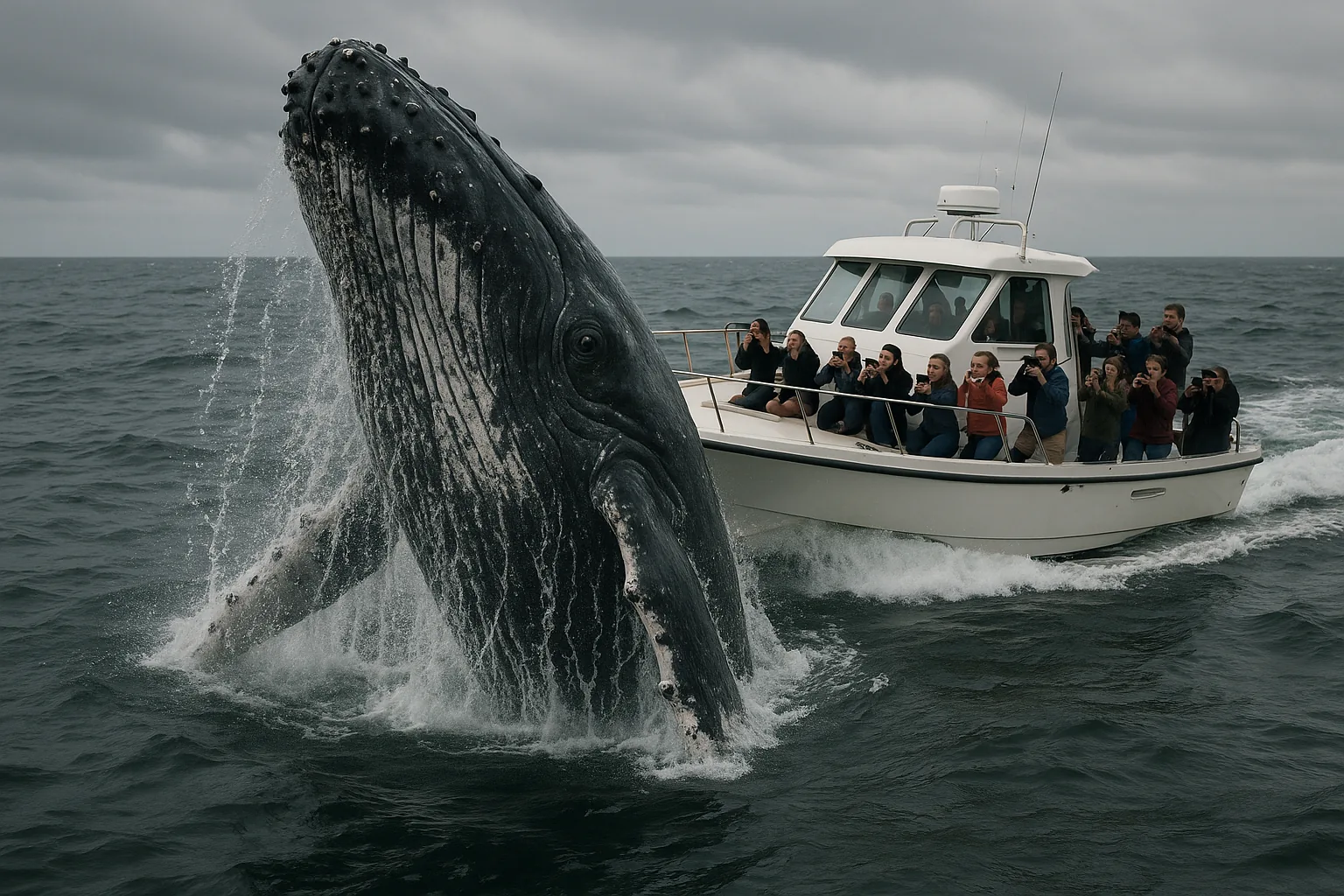
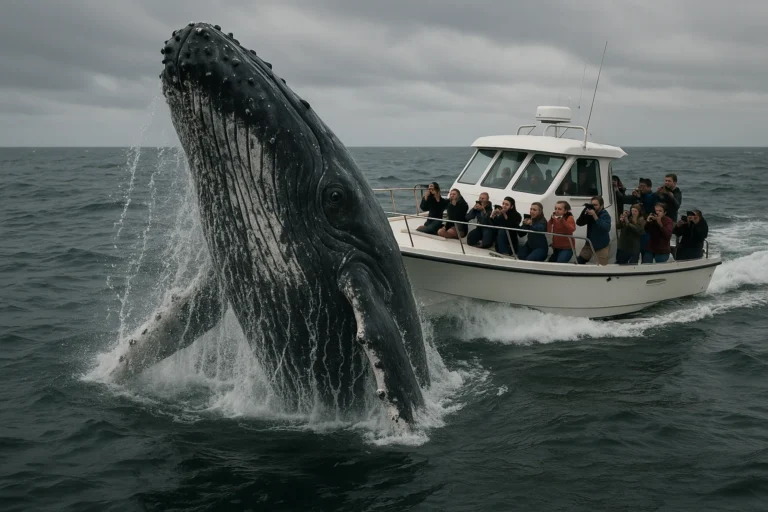
A wave of dramatic, visually striking videos has been sweeping social media feeds since at least September 2026, each one purporting to show a real encounter between a massive whale and a ship at sea. The footage looks extraordinary — because it is not real. Fact-checkers have confirmed that a notable pattern of AI generated whale videos is circulating online, falsely presented to audiences as authentic marine wildlife footage, and the trend shows no sign of slowing down.
What the Videos Actually Show
The clips follow a recognisable formula. A vessel — often a cargo ship, a fishing boat, or a small yacht — appears on open water. Then, from beneath the surface, an enormous whale emerges in a way that defies what marine biology and physics would actually permit. The animal may breach at impossible speed, dwarf the ship by an implausible margin, or behave in ways that no documented whale species has ever been recorded doing. The scale of the creature is frequently exaggerated far beyond anything observed in real marine encounters, and the movements carry an uncanny quality that experienced wildlife observers would recognise immediately as wrong.
According to Lead Stories, one of the fact-checking organisations that has examined this phenomenon closely, these viral videos frequently present whales alongside a boat for scale — a deliberate compositional choice that amplifies the sense of awe and danger. The boat acts as a reference point, making the whale appear even more impossibly large. This is not accidental framing; it is a recurring structural element across multiple videos in the pattern, suggesting that creators understand how to maximise the emotional impact of the imagery on a viewer who has no other frame of reference for what a real whale-ship encounter looks like.
How Fact-Checkers Identified the AI Generated Whale Video Pattern
The identification of this trend required careful, methodical work from multiple independent fact-checking teams. Lead Stories documented a cluster of AI generated whale videos showing ships encountering whales and determined that the footage was not authentic wildlife documentation. Separately, Vishvas News examined a specific video purporting to show a whale attack and reached the same conclusion: the footage was AI-generated, not a real event captured on camera.
The fact that two independent organisations, operating separately and examining different pieces of content, arrived at the same verdict is significant. It points not to a single rogue clip that slipped through the cracks of media literacy, but to a broader, sustained pattern of fabricated marine content being produced and distributed across platforms. The videos are not mistakes or misidentified archival footage — they are synthetic creations presented with the framing of authentic wildlife encounters.
Corroborating the pattern further, social media users and community pages have also flagged specific clips as fabricated after platform fact-check labels were applied to posts sharing the content. This community-level recognition, combined with formal fact-checker verdicts, paints a consistent picture of a coordinated or at minimum widespread phenomenon rather than isolated incidents.
Why Whale Encounters Make Such Effective Misinformation
To understand why this particular type of content spreads so effectively, it helps to consider what whales represent in the popular imagination. These are among the largest animals ever to have existed on Earth. Real footage of whales breaching, feeding, or interacting with boats is genuinely dramatic and widely shared even when completely authentic. A humpback whale breaching near a kayak, for instance, is the kind of footage that accumulates millions of views without any manipulation whatsoever.
This cultural familiarity with spectacular but real whale footage creates a ready-made audience that is already primed to believe and share dramatic cetacean content. When AI-generated material mimics that aesthetic — the spray, the scale, the sudden emergence from dark water — it slots neatly into an existing category of content that viewers have learned to trust and celebrate. Viral AI imagery of this kind exploits the credibility that genuine wildlife videography has built over decades.
The boat-for-scale element compounds this effect. Real wildlife photographers and videographers do use scale references, and audiences have absorbed this convention. When fabricated footage employs the same technique, it borrows the visual grammar of legitimate documentation. The result is content that feels authoritative even when it depicts events that could not physically occur.
The Broader Landscape of AI-Generated Marine Content
The whale-and-ship videos do not exist in isolation. They are part of a wider surge in AI-generated imagery depicting fantastical sea creatures and impossible marine scenarios. Some of this content leans into obvious fantasy — enormous serpentine creatures, luminescent deep-sea monsters, animals of sizes that no known species could approach. But the whale content occupies a more dangerous middle ground: the animals depicted are real species, the settings are plausible, and the scenarios, while extreme, are not categorically impossible to a viewer who lacks specialist knowledge.
This is what makes the current pattern particularly worth examining. Content that depicts a sea monster is easily dismissed. Content that depicts a blue whale surfacing near a container ship requires the viewer to know something specific about whale behaviour, hydrodynamics, and the physics of large animal locomotion in order to identify the tell-tale signs of fabrication. Most viewers do not have that knowledge, and the creators of this content appear to understand that gap.
The September–October 2026 circulation spike identified by fact-checkers suggests that this type of content is not merely experimental or niche. It is being produced and distributed at a scale sufficient to reach broad audiences across multiple platforms simultaneously, and it is doing so with enough visual polish to pass casual scrutiny.
→ Read also: Viral AI-Generated and Manipulated Videos Spread False Claims About Recent Events
How to Spot Fabricated Wildlife Footage
Media literacy around AI-generated video is developing rapidly, but it remains an uneven skill set across the general public. Several practical approaches can help viewers assess whether dramatic wildlife footage is authentic before sharing it.
- Check the source. Authentic wildlife footage of significant encounters is almost always traceable to a named videographer, a research organisation, or a reputable media outlet. Anonymous clips with no provenance warrant immediate scepticism.
- Look for physical inconsistencies. AI-generated video often struggles with water behaviour — the way waves interact with a large object, the turbulence a breaching whale creates, and the spray patterns are all physically complex and frequently rendered incorrectly.
- Assess the animal’s behaviour. Real whale behaviour follows documented patterns. Movements that seem too fast, too coordinated, or too cinematically convenient relative to the camera position are worth questioning.
- Search for the original. Reverse image search tools and video verification services can often locate the original source of footage or identify whether a clip has been flagged previously by fact-checkers.
- Consult established fact-checkers. Organisations such as Lead Stories and Vishvas News publish their findings publicly, and a quick search of their databases can surface prior verdicts on circulating content.
The Lead Stories fact-check on AI-generated whale-ship encounter videos provides a detailed breakdown of the specific visual and contextual signals that distinguished the fabricated footage from authentic wildlife documentation, and it is a useful reference for anyone who wants to develop a more practised eye for this category of content.
The Real Cost of Fabricated Wildlife Content
It might be tempting to treat AI generated whale videos as essentially harmless entertainment — spectacular images that give people a momentary thrill without any serious downstream consequences. That framing, however, underestimates several real costs.
First, fabricated wildlife footage displaces and dilutes authentic marine science communication. Researchers and conservation organisations work hard to document real whale behaviour, and their genuine footage competes for attention in the same information environment as synthetic spectacle. When fabricated content consistently outperforms authentic documentation in engagement metrics, it creates a distorted picture of what marine wildlife encounters actually look like and how frequently they occur.
Second, false footage can generate false impressions of risk. A video depicting a whale attacking a vessel — even one that is clearly AI-generated to a trained eye — can contribute to public misunderstanding of whale behaviour and human-wildlife interaction at sea. Whales are not reliably aggressive toward vessels, and content that depicts them as such, presented as real, has the potential to affect how people think about marine conservation, maritime safety, and the animals themselves.
Third, the normalisation of high-quality fabricated video as a content category makes it progressively harder for audiences to maintain the scepticism that media literacy requires. Each viral cycle of convincing fake footage raises the baseline threshold for what viewers consider plausible, making future fabrications easier to distribute and harder to debunk.
The pattern documented by Lead Stories and Vishvas News in this period is a reminder that the challenge of synthetic media is not confined to political deepfakes or celebrity impersonation. It extends into nature content, into the spaces where audiences feel most relaxed and least guarded — and that is precisely where the need for careful, evidence-based verification is greatest. The ocean is vast, and real encounters between whales and ships do happen; that is exactly what makes the fabricated versions so difficult to dismiss at first glance, and so important to identify clearly.
This article was produced with AI assistance and reviewed editorially.

Political Ads in 2026 Midterms Contain False or Misleading Claims About Opponents

Trump Administration ‘Super Intelligence’ Accord Misspells ‘United States’ as ‘Unites States’

Trump Administration ‘Super Intelligence’ Accord Misspells ‘United States’ as ‘Unites States’

No Going Back PAC Ad Makes Misleading Claim About Roy Cooper and Rape Kits
