
Current Affairs
Political Ads in 2026 Midterms Contain False or Misleading Claims About Opponents
Fact-checkers have documented widespread false and misleading political ads in 2026 across multiple states, with claims about taxes, healthcare, and voting records stripp

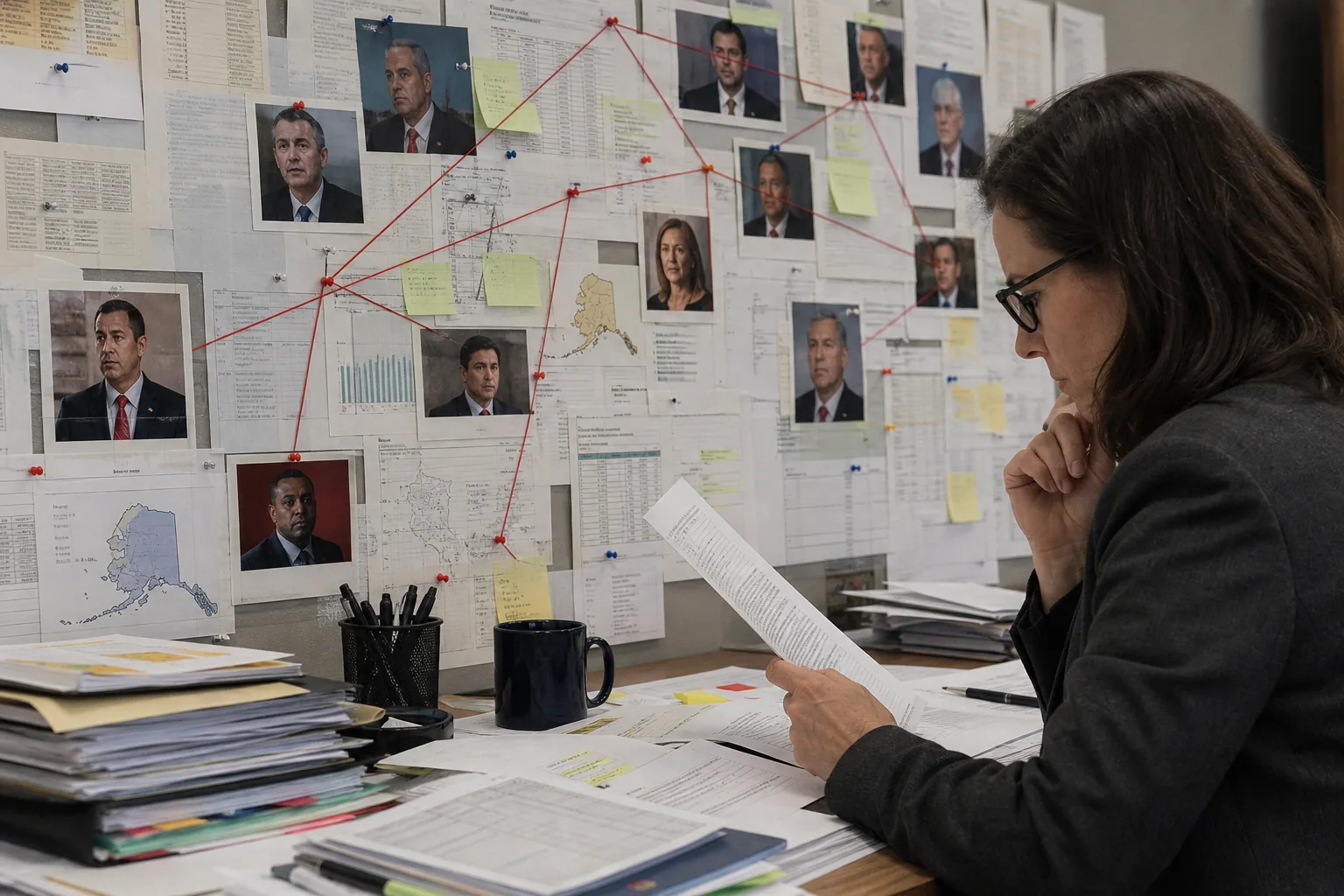

As the 2026 midterm elections enter their final stretch, political advertising has reached a scale and complexity that makes systematic fact-checking more urgent than ever. Misleading political ads in 2026 have drawn sustained scrutiny from independent fact-checkers, researchers, and media organizations, who are documenting a broad pattern of false claims, stripped context, and, increasingly, artificially generated content across multiple states and both major parties. Understanding how this misinformation operates — and how to evaluate what you see — is essential for any voter trying to make sense of the final weeks of campaigning.
The Scale of Political Ad Spending in 2026
Before examining the content of campaign advertisements, it is worth understanding the sheer volume of material in circulation. Political ad spending has already surpassed $10 billion this cycle and is projected to reach $11.6 billion by Election Day, according to tracking data — a figure that would surpass the previous midterm spending record. That volume means more advertisements are reaching voters than in any prior midterm election, and a correspondingly larger number of claims require independent scrutiny.
The scale matters because it directly affects how much misleading content can circulate before fact-checkers can respond. When hundreds of distinct ads are released in a single week across dozens of competitive races, no single organization can review all of them in real time. Voters therefore encounter many claims that have not yet been checked, rated, or contextualized by any independent body. This gap between production and verification is one of the defining features of the current information environment.
What Fact-Checkers Have Found So Far
FactCheck.org has documented a series of false and misleading claims in 2026 campaign advertisements, including at least one Alaska ad that attacks a candidate’s border policy record while omitting significant context about the votes in question. Removing context from a voting record is one of the most common techniques in negative political advertising: a legislator’s vote on an omnibus bill, a procedural motion, or an amendment can be extracted and described in terms that bear little resemblance to the actual policy outcome.
PolitiFact has rated at least 32 claims from the 2026 midterm cycle as outright false, with 12 receiving its harshest rating of “Pants on Fire” — reserved for claims that are not only inaccurate but demonstrably ridiculous on their face. These ratings span candidates and political groups across both parties, reinforcing that misleading advertising is not the exclusive practice of any single political faction. The Brennan Center for Justice has separately documented broader patterns of election misinformation in the 2026 cycle, situating individual ad claims within a wider ecosystem of false narratives that circulate across social media, email chains, and traditional broadcast channels simultaneously.
→ Read also: Political Ads Distort Medicare and Healthcare Policy Claims in 2026 Campaign
The types of claims most frequently flagged follow recognizable patterns. Cherry-picking — selecting one data point from a complex record and presenting it as the whole picture — appears regularly in ads about tax policy, healthcare votes, and spending records. False attribution, in which a candidate is credited or blamed for a policy outcome they did not solely determine, is another recurring technique. Misleading framing involves stating something technically accurate in a way that leads most viewers to a false conclusion — for instance, citing a candidate’s support for a bill without noting that the bill was substantially amended before passage.
The Rise of AI-Generated and Deepfake Advertising
The 2026 midterms have introduced a dimension of ad manipulation that did not exist at scale in prior cycles: AI-generated content, including deepfakes of real candidates and public figures. Spending on AI-based political ads this election season has exceeded $80 million, with more than 80 percent of that spending attributed to Republican campaigns and affiliated groups, according to reporting by Al Jazeera.
One documented example involves Bruce Blakeman, a Republican running for governor of New York, who released campaign advertisements featuring AI deepfakes of Zohran Mamdani and Kathy Hochul, according to reporting by U.S. News & World Report. The use of a named candidate’s likeness — generated by artificial intelligence rather than recorded from real footage — raises distinct questions from ordinary negative advertising, because viewers may not be able to distinguish fabricated media from authentic recordings without specialist tools or explicit disclosure.
State laws on AI disclosure in political advertising vary widely, and enforcement has lagged behind the technology. Several states have enacted requirements that AI-generated content in campaign ads be labeled, but compliance has been inconsistent and penalties have rarely been applied in time to affect the reach of a specific advertisement. By the time a disclosure violation is adjudicated, the ad in question may have been viewed millions of times. This enforcement gap is one reason researchers and fact-checkers treat AI-generated political content as a distinct and escalating category of concern.
The practical challenge for voters is significant. A deepfake video of a candidate saying something they never said, or appearing in a context that never occurred, is categorically different from a misleading statistic. The latter can be checked against a public record; the former requires forensic analysis of the media itself. Viewers who encounter video or audio content in political advertising during the final weeks of the 2026 cycle should treat any surprising or out-of-character statement from a candidate with particular caution, and seek confirmation from the candidate’s own official channels before treating it as authentic.
Recurring Themes in Misleading Political Ads in 2026
While the specific claims in individual advertisements vary by race and state, several thematic clusters have emerged as particularly fertile ground for misleading political ads in 2026. Healthcare policy — including Medicare, prescription drug costs, and coverage mandates — has generated a large volume of contested claims, with both parties accused by fact-checkers of overstating or understating the effects of legislation. Tax policy is another recurring area, where the complexity of the underlying law makes it relatively easy to construct technically defensible but contextually misleading statements about what a candidate’s position would mean for a given voter.
→ Read also: Republican and Democratic Campaign Ads Make False or Misleading Claims in 2026 Election Cycle
Personal history attacks — ads that question a candidate’s biography, past statements, or character — have also drawn fact-checker attention. These claims are often harder to verify than policy claims because they may depend on private records, contemporaneous accounts, or documentary evidence that is not publicly available. When primary sources are absent or contested, responsible fact-checkers assign an unverifiable rating rather than a false one, acknowledging the limits of what the available evidence can establish.
Social policy claims, particularly around healthcare access for specific populations, have appeared in ads from both parties in competitive House and Senate races. Fact-checkers have noted that these claims frequently involve either exaggeration of an opponent’s stated position or mischaracterization of existing law — two techniques that are distinct but equally capable of misleading a viewer who does not consult the underlying source material.
How Voters Can Evaluate Political Advertising
The volume and sophistication of misleading advertising in the 2026 cycle makes individual media literacy more important than in previous election years. Several practical habits can reduce the risk of being misled by a campaign advertisement, whether it originates from a candidate, a party committee, or an independent expenditure group.
- Check the source of a specific claim. If an ad cites a vote, a quote, or a statistic, that source should be publicly verifiable. Congressional voting records, legislative text, and official budget documents are all publicly available and can be checked directly.
- Look for what is omitted. A claim may be technically accurate but misleading because of what it leaves out. Ask whether the vote cited was on a final bill or a procedural motion, whether the statistic covers the full relevant period, and whether the quote is reproduced in full.
- Treat video and audio content with additional scrutiny. Given the documented use of AI-generated media in the 2026 cycle, any video or audio clip depicting a candidate saying something surprising or inflammatory should be verified through the candidate’s official channels and cross-referenced with contemporaneous news coverage before being accepted as authentic.
- Consult multiple independent fact-checkers. No single organization reviews every claim. Checking the same ad claim against findings from FactCheck.org, PolitiFact, and other independent bodies provides a more complete picture than relying on any one source.
- Note who paid for the advertisement. Disclosure requirements mean that most broadcast and digital political ads must identify their sponsor. The funding source does not determine whether a claim is true or false, but it provides useful context for understanding the ad’s purpose and potential bias.
The Broader Information Environment
Individual misleading political ads in 2026 do not circulate in isolation. They appear alongside social media posts, forwarded messages, and algorithmically amplified content that may reinforce, repeat, or extend the same false or misleading claims. The Brennan Center’s research on election misinformation in the current cycle emphasizes that false claims in paid advertising are often amplified organically through social sharing, reaching audiences far beyond those exposed to the original paid placement. A claim that appears in a 30-second television spot may reach its largest audience through clips shared on video platforms, where it is stripped of even the minimal disclosure requirements that apply to broadcast advertising.
This amplification dynamic means that the impact of a single misleading advertisement can extend well beyond its paid media budget. It also means that corrections and fact-checks, which typically reach smaller and more engaged audiences than the original false claim, face a structural disadvantage in the information environment. Researchers have documented this asymmetry across multiple election cycles, and it remains one of the most difficult problems in political communication for which no simple solution has been demonstrated to work at scale.
With Election Day now days away, the pace of new ad releases is accelerating and the window for independent verification is narrowing. The documented record from FactCheck.org, PolitiFact, and the Brennan Center makes clear that no party, candidate, or region has been immune to the spread of false and misleading claims in campaign advertising this cycle. The most reliable defense available to individual voters is the same one that has always applied: go to the primary source, read the full record, and treat any claim that cannot be independently verified with proportionate skepticism — regardless of which side of the ballot it is meant to help.
This article was produced with AI assistance and reviewed editorially.

Political Ads in 2026 Midterms Contain False or Misleading Claims About Opponents

Trump Administration ‘Super Intelligence’ Accord Misspells ‘United States’ as ‘Unites States’

Trump Administration ‘Super Intelligence’ Accord Misspells ‘United States’ as ‘Unites States’

No Going Back PAC Ad Makes Misleading Claim About Roy Cooper and Rape Kits
