
Information
Eiffel Tower Protest Videos and Images Are AI-Generated Fakes
Multiple AI-generated videos and images of the Eiffel Tower burning during October 2026 Paris protests are circulating online. Fact-checkers confirm synthetic media throu

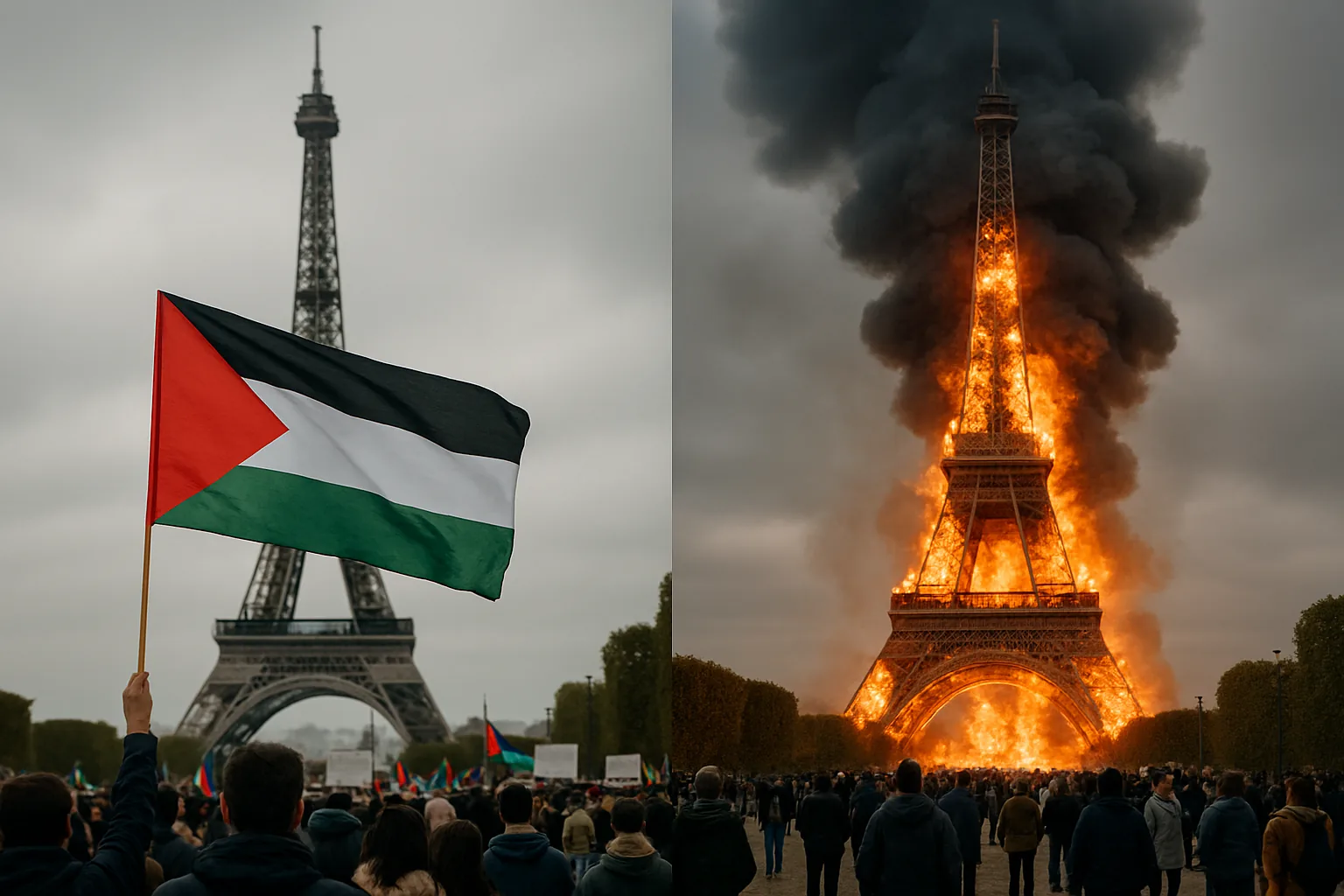
When protests erupted across France in mid-October 2026 over living costs and public services, social media platforms rapidly filled with dramatic imagery — some of it real, much of it fabricated. Among the most widely shared pieces of content were videos and images depicting the Eiffel Tower engulfed in flames and crowds of demonstrators waving Palestinian flags outside the landmark. Fact-checkers and AI detection tools have since confirmed that these are not genuine records of events: the AI generated Eiffel Tower content circulating online is a collection of sophisticated synthetic media, designed to look credible enough to deceive millions of viewers at a glance.
What Was Actually Circulating Online
The media in question fell into two broad categories. The first was video and image content showing the Eiffel Tower on fire — dramatic, high-resolution footage in which flames appear to consume the iron lattice of the tower against a smoky Paris skyline. The second category depicted enormous crowds gathered at the base of the tower, with a large Palestinian flag unfurled prominently overhead, alongside scenes of civil unrest.
This content spread rapidly across TikTok, Instagram, and X between October 17 and October 19, 2026. One particular TikTok video — which had originally circulated as early as January 2024 — accumulated staggering engagement figures: 203.1 million views, 13.4 million likes, 392,300 bookmarks, and 157,000 shares, according to verification reporting by Rappler. These numbers reflect how effectively synthetic media can anchor itself to a real news cycle and be mistaken for documentary footage.
Some versions of the Palestinian flag imagery also featured what appeared to be a Jordanian flag in place of a Palestinian one — an inconsistency that fact-checkers flagged as a signal of multiple AI-generated variants being produced and distributed, rather than a single authentic photograph shared across platforms.
How Fact-Checkers Confirmed AI Generation
The primary tool used to assess the authenticity of the Eiffel Tower fire images was an AI content detector, which rated the images as 97.42% machine-generated. This figure, reported by Rappler as part of their verification process, places the content firmly in the category of synthetic media rather than any form of manipulated or selectively edited real footage.
Beyond detector scores, fact-checkers cross-referenced the viral content with live webcam footage of the Eiffel Tower. At no point during the October 17–18 protests did any webcam feed — of which several are publicly accessible and continuously streamed — show fire, structural damage, or the scenes depicted in the viral media. The landmark remained entirely intact. This kind of real-time verification is one of the most straightforward methods available when a claim concerns a fixed, permanently monitored location like the Eiffel Tower.
→ Read also: AI-Generated Videos Spread False Claims About UK, Dublin, Palestine Protests
The brief also references SynthID, Google DeepMind’s watermarking system for AI-generated content, in connection with this case. However, the verified sources available at the time of writing do not explicitly confirm SynthID detection as part of the documented fact-checking process for this specific batch of media. That detail should therefore be treated as unconfirmed pending further sourcing.
What the verified sources do confirm is that multiple independent fact-checking organisations — including Rappler, The Quint, India Today, and Channel 8 English — reached the same conclusion through their own separate investigations: the Eiffel Tower fire and protest imagery is AI-generated and does not depict real events.
The Real Protests and Why the Fakes Gained Traction
Understanding why this content spread so quickly requires understanding what was actually happening in France during this period. Real protests did take place on October 17 and 18, 2026, driven by public anger over living costs and public service cuts. Those demonstrations did turn violent in places, resulting in arson incidents, one reported death, and hundreds of injuries among police officers. Palestinian flags were genuinely present in some of the marches, reflecting the broader political currents that have shaped French street protest movements in recent years.
This real-world context is precisely what made the AI-generated content so effective as disinformation. It did not emerge in a vacuum. It arrived at a moment when audiences were already primed to believe that something dramatic was unfolding in Paris. The synthetic footage of a burning Eiffel Tower and mass flag demonstrations did not need to be entirely plausible on close inspection — it only needed to be plausible enough for a viewer scrolling quickly through a feed to share it before pausing to verify.
There is also a relevant historical detail that lent additional surface credibility to the Palestinian flag imagery. In May 2026, activists had genuinely and physically unfurled a Palestinian flag on the Eiffel Tower’s first floor to mark Nakba Day, an action that led to arrests. That real event — widely reported at the time — created a precedent in the public memory that the October AI imagery could implicitly invoke, even though the two events are entirely separate and the October imagery is fabricated.
The Mechanics of Viral AI Disinformation
The Eiffel Tower case illustrates several patterns that have become characteristic of AI-generated disinformation campaigns in 2026. First, the content is produced at scale: multiple variants of the same basic false scene — different flags, different camera angles, different levels of fire intensity — suggest that whoever created this material generated numerous versions rather than a single image. This makes it harder to debunk with a single rebuttal, because each variant can be treated as a separate claim by those who wish to keep the narrative alive.
→ Read also: AI-Generated Fake Videos and Images Circulating in September 2026: Four Cases Identified
Second, the content is timed to attach itself to genuine breaking news. The Eiffel Tower is one of the most recognisable structures on earth, which means any imagery involving it carries an immediate emotional weight. Combining that recognisability with a real and ongoing protest event creates a powerful vector for spread.
Third, the engagement figures are extraordinary. A single TikTok video accumulating over 200 million views before fact-checkers can widely disseminate corrections means that the false impression is, in statistical terms, far more widely seen than any subsequent debunking. This asymmetry between the speed of false content and the speed of verification is one of the defining challenges of the current media environment.
For readers encountering dramatic imagery during fast-moving news events, the Eiffel Tower case offers a practical checklist. Check whether the landmark or location in question has a live webcam or official monitoring feed. Run the image through a publicly available AI detection tool. Look for small visual anomalies — text that doesn’t resolve correctly, architectural details that shift between frames, lighting that doesn’t match the time of day claimed. And, critically, look for whether multiple independent news organisations with journalists on the ground are reporting the same scene. In this case, none were, because the scene did not exist.
You can explore the full Rappler fact-check on the Eiffel Tower fire images for a detailed breakdown of the detection methodology and engagement data.
What This Means for Trust in Visual Media
The viral spread of AI generated Eiffel Tower content during the October 2026 protests is not an isolated incident. It is part of a broader and accelerating pattern in which synthetic imagery is inserted into real news cycles to amplify fear, distort political narratives, or simply generate engagement for its own sake. The specific motivations behind this particular batch of content remain unattributed — the creators are unknown, and assigning intent without evidence would be an assessment beyond what the verified facts support.
What the facts do support is this: the Eiffel Tower was not on fire. No mass Palestinian flag demonstration of the kind depicted took place at the tower during the October protests. The images and videos showing otherwise were identified as machine-generated with a high degree of confidence by AI detection tools, confirmed as false by live visual monitoring, and debunked by multiple independent fact-checking organisations across several countries. The landmark stands undamaged, and the record of what actually happened in Paris during those days deserves to be separated clearly from the fabricated imagery that briefly threatened to replace it.
This article was produced with AI assistance and reviewed editorially.

Political Ads in 2026 Midterms Contain False or Misleading Claims About Opponents

Trump Administration ‘Super Intelligence’ Accord Misspells ‘United States’ as ‘Unites States’

Trump Administration ‘Super Intelligence’ Accord Misspells ‘United States’ as ‘Unites States’

No Going Back PAC Ad Makes Misleading Claim About Roy Cooper and Rape Kits
