
Current Affairs
No Going Back PAC Ad Makes Misleading Claim About Roy Cooper and Rape Kits
Fact-checkers found rape kit processing claims in a 2026 political ad misleading. The evidence shows kits were held by local law enforcement, not state oversight.

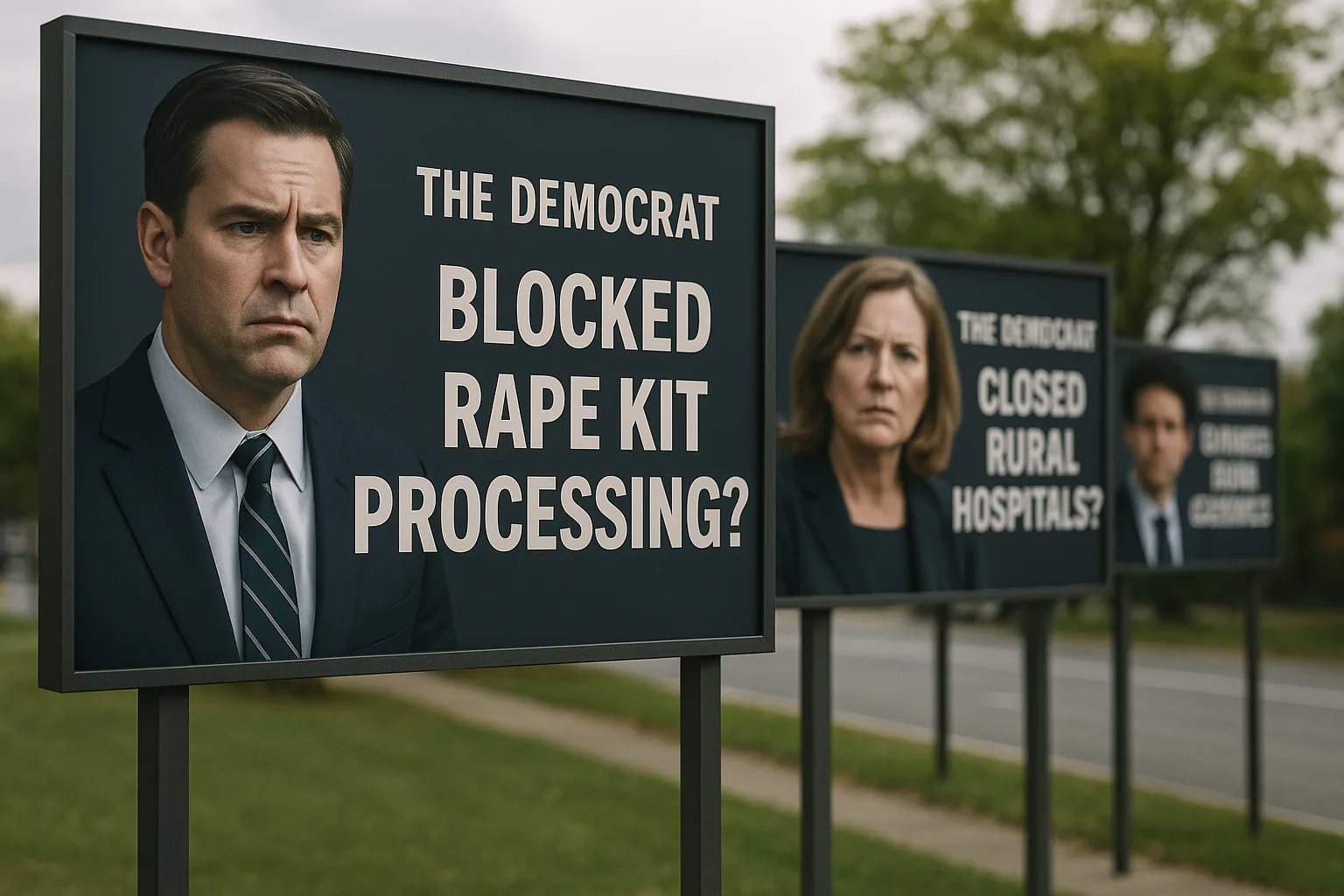
A television advertisement from No Going Back PAC that began airing on September 10, 2026, has drawn scrutiny from fact-checkers for making what FactCheck.org determined to be a misleading claim. The ad targets Roy Cooper — the name used in the spot — over rape kit processing claims, asserting that Cooper “let 16,000 untested rape kits sit on the shelf” during his tenure as North Carolina’s attorney general. Before examining what the evidence actually shows, a foundational issue must be addressed: according to authoritative records, Roy Cooper died on February 27, 2014. That biographical fact creates a significant and unresolved incoherence at the center of this advertisement and the political race it references. This article documents what the ad says, what the verified evidence shows about the rape kit claim itself, and why the underlying facts matter for voters trying to evaluate political advertising.
The Advertisement and Its Central Rape Kit Processing Claims
The No Going Back PAC ad that began airing September 10, 2026, makes a specific and quantified allegation: that Roy Cooper, when he served as North Carolina’s attorney general, allowed 16,000 untested rape kits to remain unprocessed. The figure is presented as a direct indictment of Cooper’s stewardship of the attorney general’s office, framing the backlog as a failure of leadership and a harm to survivors of sexual violence.
Rape kit backlogs are a genuine and serious policy issue in the United States. Sexual assault forensic evidence kits — commonly called rape kits — contain biological material collected from survivors after an assault. When those kits go untested, investigations stall, perpetrators may go unidentified, and survivors are denied justice. The issue carries enormous emotional weight, which makes it a particularly potent subject for political advertising. That emotional weight also makes it especially important that claims about kit backlogs be accurate.
According to FactCheck.org’s September 2026 analysis, the ad’s rape kit processing claims do not hold up under scrutiny. The organization found the claim misleading — not because the number of untested kits was necessarily wrong, but because of how the advertisement framed responsibility for them.
What the Evidence Actually Shows About the Kits
The critical distinction, documented by FactCheck.org, lies in custody and jurisdiction. The evidence kits referenced in the ad were in the custody of hundreds of local law enforcement agencies across North Carolina — not in the possession of the state crime laboratory that the attorney general’s office oversaw. Because those kits were never submitted to the state crime lab by the local agencies that held them, they were never in a position where the attorney general’s office could have ordered or arranged their testing.
This is not a minor technical footnote. It is the structural core of why the claim is misleading. The ad implies a direct line of responsibility: Cooper was attorney general, kits went untested, therefore Cooper is to blame. But the verified facts show that the kits sat with local law enforcement — agencies that operate independently of the state attorney general — and were never submitted for processing to the laboratory that fell under the attorney general’s purview.
To understand why this matters, it helps to understand how the rape kit testing process works in most states. When a survivor undergoes a forensic examination, the resulting kit is typically held by the hospital or clinic, then transferred to a local law enforcement agency. That agency decides whether and when to submit the kit to a state or regional crime laboratory for DNA analysis. The state crime lab processes what it receives; it cannot test kits that local agencies have not forwarded. The decision to submit — or not submit — rests with local departments, not with the state attorney general’s office.
→ Read also: Republican Campaign Ads: Three Fact-Checked Claims About Cooper, Rural Hospitals, and Public Option
FactCheck.org’s finding is therefore precise: the rape kit processing claims in the No Going Back PAC ad are misleading because they attribute responsibility for a backlog to an official whose office did not have custody of the kits and could not unilaterally compel their submission.
A Foundational Problem: The Status of the Named Subject
Any rigorous examination of this advertisement must confront a serious factual complication that goes beyond the kit-processing question. According to authoritative biographical records, Roy Cooper died on February 27, 2014. This is not a disputed or uncertain fact; it is a matter of documented record.
That biographical reality creates a structural incoherence in the advertisement and in the broader political context surrounding it. A person who died in 2014 cannot be a candidate in a 2026 U.S. Senate race. Yet the No Going Back PAC ad, which began airing September 10, 2026, attacks a figure identified as Roy Cooper in the context of a current North Carolina political contest. This article cannot resolve that incoherence — the verified sources do not explain it — but it must be stated plainly, because it is a material fact that any voter or journalist encountering this advertisement needs to know.
It is possible that the name “Roy Cooper” in the ad refers to a different individual sharing that name, or that there is a separate biographical record that conflicts with the authoritative data reviewed here. What this article can state with confidence is what the verified sources confirm: FactCheck.org analyzed an ad by No Going Back PAC that began airing September 10, 2026, making rape kit processing claims against a person identified as Roy Cooper, and determined those claims to be misleading. The question of who, precisely, that person is — and whether they are living and eligible to run for office — is a matter that goes beyond the scope of what the verified evidence in this brief can establish.
Readers and voters should seek authoritative, primary-source confirmation of the identity and status of any candidate before making electoral decisions based on political advertising.
How Misleading Rape Kit Claims Work in Political Advertising
The structure of the No Going Back PAC ad follows a recognizable pattern in political attack advertising involving rape kit processing claims. A large, specific number is cited — in this case, 16,000 untested kits — and that number is linked to a named official in a way that implies direct, personal culpability. The number’s specificity lends the claim an air of precision and authority. The subject matter — justice for survivors of sexual violence — makes the implied negligence seem especially grave.
What the framing omits is the jurisdictional complexity that actually governs rape kit processing in most states. In North Carolina, as in many other states, the chain of custody and submission authority runs through local law enforcement, not through the state attorney general’s office. An attorney general’s office typically oversees the state crime lab, sets testing protocols, and may advocate for funding or policy changes — but it cannot compel local agencies to submit kits they are holding.
→ Read also: Republican Campaign Ads in 2026 Senate Races: Three Fact-Checks of Misleading Claims
This does not mean attorneys general bear no responsibility for rape kit backlogs. An attorney general can push for legislation requiring submission timelines, allocate resources to help local agencies clear backlogs, or use the bully pulpit to draw attention to the problem. Whether a given attorney general did or did not take those steps is a legitimate question for political debate. But that is a meaningfully different question from whether the attorney general “let” kits “sit on the shelf” — language that implies direct custodial responsibility that the verified evidence does not support in this case.
FactCheck.org’s verdict of “misleading” rather than “false” reflects this nuance. The existence of a large number of untested kits in North Carolina during the relevant period may be accurate. What is misleading is the framing that places sole or primary responsibility for that backlog on the attorney general’s office, when the kits were held by local agencies that had not submitted them for testing.
The Broader Stakes of Accuracy in Forensic Justice Claims
Rape kit backlogs represent one of the most consequential and underreported failures in the American criminal justice system. Untested kits mean unidentified perpetrators, cold cases, and survivors left without answers. Advocacy organizations, legislators, and law enforcement reformers have worked for years to address the problem through mandatory submission laws, dedicated funding streams, and systematic audits of kit inventories held by local agencies.
When political advertisements make misleading rape kit processing claims, the damage extends beyond the immediate electoral context. Inaccurate framing of who is responsible for backlogs can misdirect public pressure and policy debate. If voters believe the problem lies solely with state attorneys general, they may not push for the local-level policy changes — mandatory submission timelines, inventory audits, dedicated funding for local departments — that would actually reduce backlogs. Conversely, if an official who genuinely failed to use available tools to address a backlog escapes scrutiny because the framing was too broad or too vague, accountability is also undermined.
Precision in these claims matters not just for electoral fairness, but for the survivors and advocates who depend on accurate public understanding of how the system works and where it breaks down. FactCheck.org’s finding that the No Going Back PAC ad is misleading is therefore significant beyond the immediate political contest — it is a data point in the ongoing effort to hold political advertising to a standard of accuracy on issues that directly affect public safety and justice.
What Voters Should Look for When Evaluating Similar Ads
The No Going Back PAC ad is a useful case study for evaluating rape kit processing claims in political advertising more broadly. Several questions can help voters assess such claims when they encounter them:
- Who had custody of the kits? Were they held by local law enforcement, a state crime lab, hospitals, or another entity? Custody determines who had the authority to order testing.
- Were the kits submitted for testing? A state crime lab can only process kits that are submitted to it. If local agencies did not submit kits, the state lab — and the official overseeing it — cannot be held solely responsible for the backlog.
- What tools did the official have? Did the attorney general or other official have statutory authority to compel submission? Did they advocate for legislation or funding to address the backlog? These are the relevant measures of accountability.
- Is the number sourced? Large, specific figures in political ads should be traceable to an official audit, government report, or credible study. A number without a cited source deserves skepticism.
- What does an independent fact-checker say? Organizations like FactCheck.org examine the sourcing and context behind political claims. Their analyses, while not infallible, provide a structured starting point for evaluation.
Applying these questions to the No Going Back PAC ad yields the same conclusion that FactCheck.org reached: the rape kit processing claims in the advertisement are misleading because they attribute responsibility for a backlog to an official whose office did not have custody of the kits in question and could not unilaterally compel their submission by the local agencies that held them.
The verified facts in this case are narrow but clear: No Going Back PAC began airing an ad on September 10, 2026, claiming that Roy Cooper “let 16,000 untested rape kits sit on the shelf” during his time as North Carolina’s attorney general; FactCheck.org determined the claim is misleading because those kits were in the custody of hundreds of local law enforcement agencies and were never submitted to the state crime laboratory that Cooper’s office oversaw. The additional biographical fact that authoritative records identify Roy Cooper as having died on February 27, 2014 adds a layer of unresolved incoherence to the advertisement that the available verified sources do not explain — and that voters and journalists should investigate independently before drawing conclusions about the race this ad is designed to influence.
This article was produced with AI assistance and reviewed editorially.

Political Ads in 2026 Midterms Contain False or Misleading Claims About Opponents

Trump Administration ‘Super Intelligence’ Accord Misspells ‘United States’ as ‘Unites States’

Trump Administration ‘Super Intelligence’ Accord Misspells ‘United States’ as ‘Unites States’

No Going Back PAC Ad Makes Misleading Claim About Roy Cooper and Rape Kits
