
Current Affairs
Flydubai Emergency Landing on September 30, 2026: Indian Pilot Prevented Potential Disaster
Flydubai Flight FZ1073 made an emergency landing in Saudi Arabia on September 30, 2026, after a dramatic cockpit incident. Indian captain Smit Machchhar prevented potenti

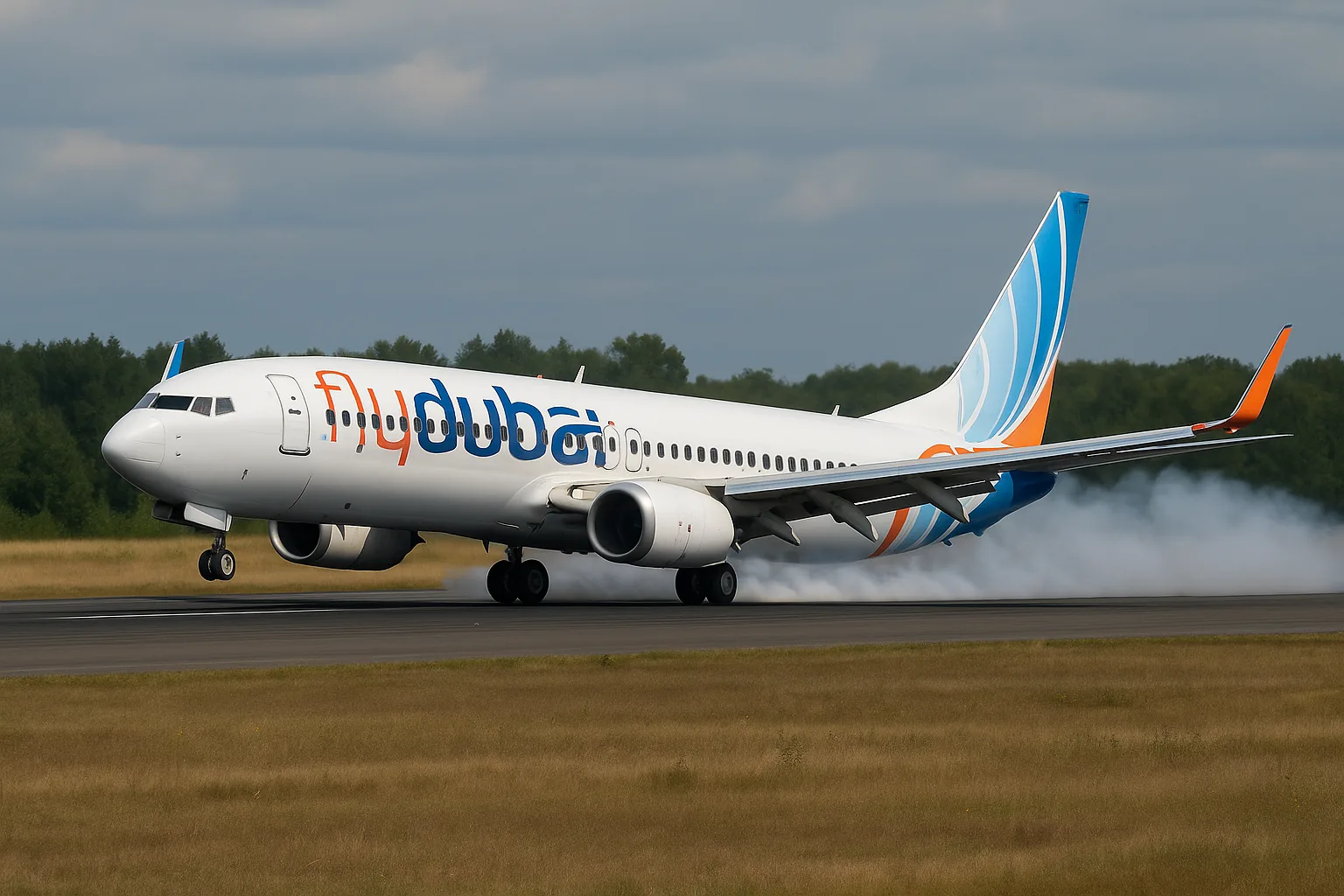

When Flydubai Flight FZ1073 departed Dubai on the evening of September 30, 2026, bound for Tel Aviv, no passenger on board could have anticipated that the aircraft would plunge nearly 17,400 feet in under two minutes, divert to a Saudi Arabian airport, and trigger an international terrorism investigation — all while a dramatic struggle unfolded in the cockpit. The incident has since generated intense media scrutiny, widespread speculation about the identities and nationalities of those involved, and a pointed statement from a sitting head of government crediting the captain with preventing a catastrophe. Separating verified fact from the wave of misinformation that followed requires careful attention to what primary sources actually confirm.
What Happened Aboard FZ1073 on September 30, 2026
Flight FZ1073 took off from Dubai heading for Tel Aviv, operating on one of Flydubai’s regular routes connecting the United Arab Emirates with Israel. At some point during the flight, an incident occurred in the cockpit that caused the aircraft to lose altitude dramatically. According to reporting by CNN, the plane plummeted 17,400 feet in less than two minutes — a descent rate so steep and rapid that it would have been immediately apparent to passengers and crew throughout the cabin.
The aircraft did not continue to Tel Aviv. Instead, it was diverted to Tabuk, Saudi Arabia, where it landed safely. All indications from verified reporting confirm that the landing itself was controlled and that the plane reached the ground without structural incident. The diversion to Tabuk, a city in northwestern Saudi Arabia, placed the aircraft well short of its intended destination and represented a significant operational deviation from the filed flight plan.
Saudi and UAE authorities, along with investigators working in coordination with Israeli officials, moved quickly to secure the aircraft and begin examining what had occurred. Flydubai, the Dubai-based low-cost carrier that operates the flight, subsequently announced the suspension of flights to and from Israel in the immediate aftermath of the incident — a decision that underscored the severity with which the airline and relevant authorities were treating what had happened.
The Pilots: Who Was Actually in the Cockpit
In the hours and days following the emergency landing, social media platforms and several lower-tier news outlets began circulating claims about the nationalities of the pilots involved. Some posts asserted that the pilots were Russian; others claimed they were Ukrainian. These claims spread rapidly, in part because the geopolitical framing — a flight bound for Israel, operated by a Gulf carrier, with crew members from countries involved in an ongoing conflict — made for a compelling and emotionally charged narrative.
The verified facts, however, tell a different story. The captain of Flight FZ1073 is identified by CNN and corroborated by multiple outlets as Captain Smit Machchhar, an Indian national. The co-pilot is confirmed to be an Omani national. Neither pilot is Russian. Neither is Ukrainian. The nationality claims circulating online have no basis in the verified record of this incident.
This is not a minor factual discrepancy. Misidentifying the nationalities of crew members in an incident under active terrorism investigation can have real consequences: it shapes public perception of motive, inflames geopolitical tensions, and can complicate the investigative process itself. The verified record is clear — an Indian captain and an Omani co-pilot were the two individuals in the cockpit of FZ1073 on September 30, 2026.
The Flydubai Emergency Landing and Netanyahu’s Statement
The flydubai emergency landing drew immediate comment from senior political figures. Among the most notable responses came from Israeli Prime Minister Benjamin Netanyahu, who issued a statement reported by CNN in which he credited Captain Smit Machchhar with having “managed to prevent a 9/11 disaster.” The comparison to the September 11, 2001 attacks in the United States — in which hijacked commercial aircraft were deliberately crashed — is significant. Netanyahu’s framing explicitly invokes the scenario of an aircraft being used as a weapon against a populated area or landmark, suggesting that Israeli authorities viewed the incident as a potential act of deliberate mass violence that was only averted by the captain’s actions.
Netanyahu’s statement is verified through CNN’s live news coverage from October 1, 2026. It is worth noting that a sitting prime minister’s public characterization of an ongoing incident reflects a political and security assessment, not a concluded investigative finding. Israeli authorities were, at the time of that statement, still working to determine the full facts of what occurred. Nonetheless, the statement itself is a matter of verified public record and illustrates the gravity with which the Israeli government treated the event.
The reference to a “9/11 disaster” also helps explain why the story generated such intense global attention. A commercial aircraft carrying passengers on a route to Israel, apparently subjected to an attempt to bring it down, resonates with some of the most traumatic episodes in modern aviation history. The emotional weight of that comparison — made by a head of government, not a tabloid — contributed significantly to the volume of subsequent online speculation and misinformation.
The Terrorism Investigation and What Remains Unconfirmed
Authorities confirmed that they are investigating whether the incident aboard FZ1073 involved possible terrorist activity. That investigation was active and ongoing as of the time of this writing. What the verified record does not yet establish — and what responsible reporting must not speculate about — includes the specific motive behind the co-pilot’s actions, any planning or coordination that may or may not have preceded the flight, and the precise sequence of events inside the cockpit.
Reports from sources including a Deutsche Welle investigation into the incident indicate that investigators are examining whether the co-pilot attempted to crash the aircraft. The dramatic altitude loss — 17,400 feet in under two minutes — is consistent with a loss of controlled flight or a deliberate input to the flight controls, but the precise cause of that descent remains a matter for the formal investigation to determine.
Passengers are reported to have intervened during the incident. The verified record confirms that the aircraft landed safely at Tabuk, which means that whatever occurred in the cockpit, the outcome was a controlled landing rather than a crash. The fact that Captain Machchhar was able to bring the aircraft to the ground safely, under conditions that Israeli leadership publicly described as potentially catastrophic, is the central established fact around which the rest of the story turns.
It would be a disservice to readers — and to the integrity of ongoing legal and investigative proceedings — to state as established fact anything about the co-pilot’s intent, the degree of premeditation involved, or the specific nature of any attack. These are precisely the questions that investigators are working to answer, and premature conclusions in either direction can prejudice that process.
How Misinformation Spread and Why Nationality Claims Were False
The false claims about the pilots being Russian or Ukrainian did not emerge in a vacuum. They reflect a broader pattern in which high-profile aviation incidents — particularly those with any connection to the Israel-Palestine conflict, the Russia-Ukraine war, or Gulf state politics — attract rapid, often geopolitically motivated misinformation. The route from Dubai to Tel Aviv touches on multiple fault lines in contemporary international relations, making it fertile ground for narratives that assign national blame or ideological motive.
In this case, the verified facts directly contradict the false nationality claims. Captain Smit Machchhar is Indian. The co-pilot is Omani. Neither nationality carries the geopolitical charge that the Russian or Ukrainian framing was apparently intended to invoke. The spread of these false claims illustrates why primary-source verification matters: wire service reports and official statements from airlines and governments are available quickly in the modern information environment, and they consistently identified the actual nationalities of the crew members involved.
The mechanism by which false nationality claims spread in incidents like this one is worth understanding. Initial breaking-news reports are often incomplete, creating an information vacuum that speculation rushes to fill. Social media posts, particularly on platforms with limited content moderation, can accumulate large engagement numbers before corrections reach the same audience. In the case of FZ1073, the emotional intensity of the story — a near-disaster on a flight to Israel, involving a dramatic physical struggle — made it especially susceptible to embellishment and fabrication.
Readers encountering claims about this incident on social media should apply a straightforward test: does the claim cite a primary source — an airline statement, a government official, a named journalist at a major outlet — or does it rely on anonymous attribution, vague sourcing, or the inherent plausibility of a geopolitical narrative? The verified facts in this case are not ambiguous. The captain is Indian. The co-pilot is Omani. The aircraft landed safely in Tabuk. The investigation is ongoing.
Flydubai’s Response and the Broader Aviation Context
The decision by Flydubai to suspend flights to and from Israel following the incident reflects standard aviation safety and security protocols when a serious in-flight incident is under active investigation. Airlines operating routes to Israel have faced heightened security scrutiny throughout 2025 and 2026 given the broader regional security environment, and the FZ1073 incident adds a new and serious dimension to those concerns.
Flydubai is a Dubai government-owned low-cost carrier that began operating flights to Tel Aviv following the normalization of relations between the UAE and Israel under the Abraham Accords in 2020. The airline’s routes to Israel have been commercially and symbolically significant as markers of that diplomatic normalization. A suspension of those routes, even temporarily, carries weight beyond the immediate operational disruption.
From a broader aviation safety perspective, the FZ1073 incident raises questions about cockpit security protocols, crew screening procedures, and the mechanisms available to pilots when a threat originates from within the flight deck itself. Commercial aviation has, since 2001, invested heavily in securing cockpits against external threats — reinforced doors, restricted access procedures, and coordination with cabin crew. An incident in which the threat comes from the co-pilot rather than a passenger or external actor presents a different set of challenges, and investigators will likely scrutinize what safeguards existed and whether they functioned as intended.
What the Verified Record Confirms and What It Does Not
To summarize the state of verified knowledge as of this writing: Flydubai Flight FZ1073 departed Dubai for Tel Aviv on September 30, 2026. The aircraft experienced a dramatic altitude loss of 17,400 feet in under two minutes. It was diverted to Tabuk, Saudi Arabia, where it landed safely. The captain, Captain Smit Machchhar, is an Indian national. The co-pilot is an Omani national. Israeli Prime Minister Netanyahu publicly credited the captain with preventing a potential mass-casualty event. Authorities are investigating the incident as a possible act of terrorism. Flydubai has suspended its Israel routes pending the outcome of that investigation.
What the verified record does not confirm includes the specific motive of the co-pilot, the precise sequence of events in the cockpit, and any planning or coordination that may or may not have preceded the flight. Claims that the pilots were Russian or Ukrainian are directly contradicted by verified reporting from CNN and other primary sources and should be treated as false.
The flydubai emergency landing of September 30, 2026, is a serious and still-developing story. The facts that are established deserve to be reported accurately and without embellishment. The facts that remain under investigation deserve the space that proper inquiry requires. And the false claims that have attached themselves to this incident — about nationalities, motives, and identities — deserve to be identified clearly for what they are: misinformation that obscures rather than illuminates one of the most significant aviation security incidents of the year.
This article was produced with AI assistance and reviewed editorially.

Political Ads in 2026 Midterms Contain False or Misleading Claims About Opponents

Trump Administration ‘Super Intelligence’ Accord Misspells ‘United States’ as ‘Unites States’

Trump Administration ‘Super Intelligence’ Accord Misspells ‘United States’ as ‘Unites States’

No Going Back PAC Ad Makes Misleading Claim About Roy Cooper and Rape Kits
