
Current Affairs
Republican Super PAC Ad Contains Misleading Claims About Rape Kits
A Republican super PAC’s 2026 ad made false claims about rape kit backlogs. Learn what the evidence actually shows about custodial responsibility and misleading political

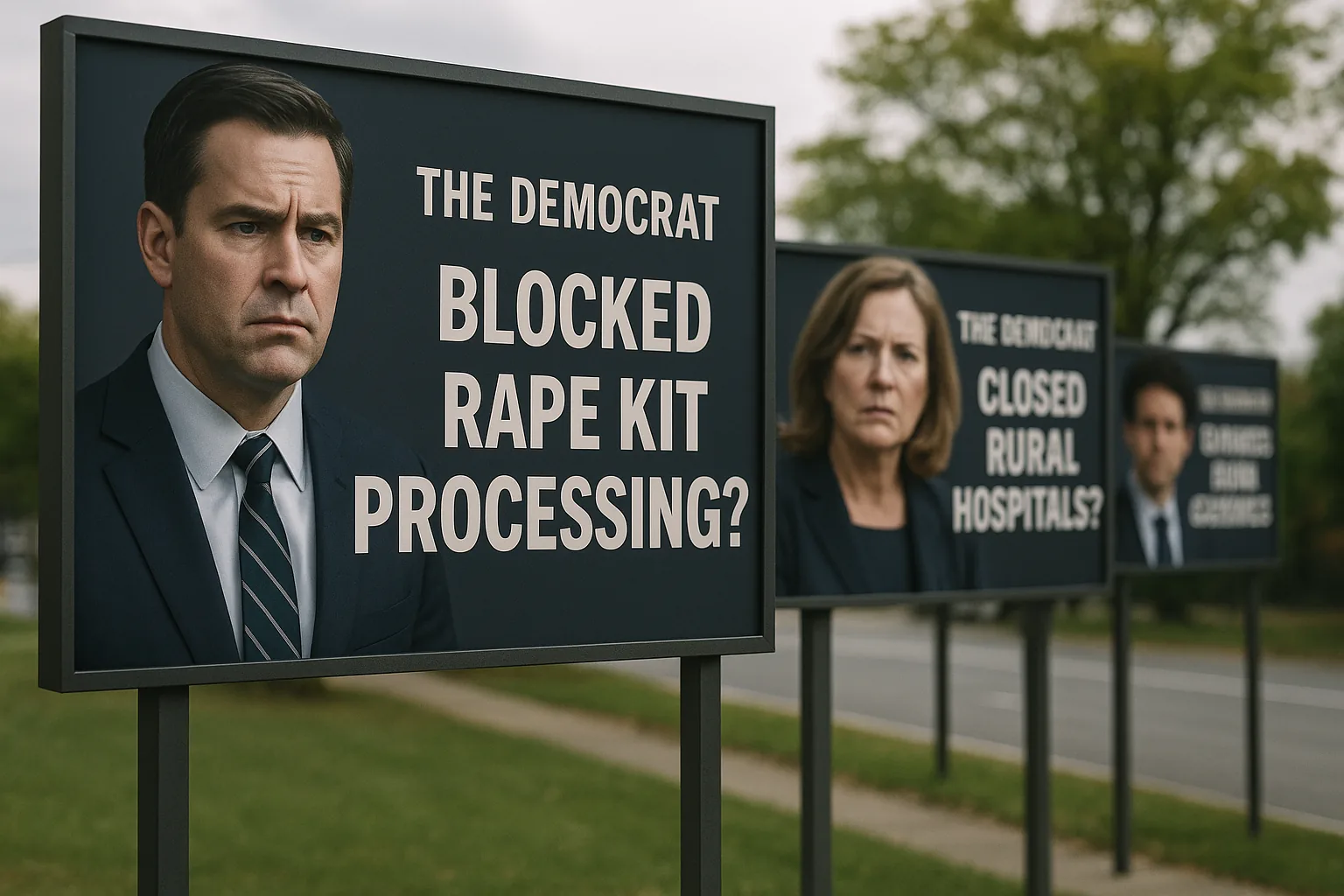
Political advertising in the 2026 election cycle has drawn renewed scrutiny from independent fact-checkers, and one case in particular illustrates how misleading political ads about rape kits can distort the public’s understanding of policy records. On September 10, 2026, the No Going Back PAC Inc began airing a television advertisement that accused a named political figure of personal failure on a deeply sensitive public-safety issue — the processing of sexual assault evidence kits. The claim was attention-grabbing, emotionally charged, and, according to a detailed review by FactCheck.org, misleading in a fundamental way. Understanding exactly what the ad said, what the evidence actually shows, and why the distinction matters requires tracing the claim carefully back to its primary sources.
What the No Going Back PAC Ad Actually Said
The advertisement produced by No Going Back PAC Inc made a stark accusation: that Roy Cooper “let 16,000 untested rape kits sit on the shelf” during his tenure as North Carolina’s attorney general. The framing was direct and personal — the language “let sit” implies deliberate inaction or negligence by the named official, suggesting that Cooper bore direct custodial responsibility for those kits and failed to act on them.
The ad began airing on September 10, 2026, according to reporting by NC Political News. It was part of a broader campaign by the super PAC, and it targeted Cooper’s record in a role he held before his later political career. The choice of the rape kit backlog as a campaign attack line is significant: few issues carry the same emotional and moral weight for voters, and the image of thousands of untested evidence kits represents, in the public mind, thousands of survivors left without justice. Any political figure credibly linked to such a failure faces serious reputational damage. That is precisely why the accuracy of the underlying claim demands careful examination.
Where the Rape Kit Backlog Actually Came From
The central problem with the No Going Back PAC’s advertisement is one of custodial responsibility. According to FactCheck.org‘s review of the claim, the roughly 16,000 untested rape kits cited in the ad were not in the possession of the state crime laboratory that Cooper oversaw as attorney general. Instead, the evidence kits were in the custody of hundreds of local law enforcement agencies across North Carolina — and those agencies had never submitted the kits to the state crime lab for testing in the first place.
This distinction is not a technicality. It is the load-bearing fact that determines whether the ad’s accusation is accurate. The attorney general’s office, through the state crime laboratory, can test kits that are submitted to it. It does not have the legal authority to compel local police departments and sheriff’s offices to submit evidence they are holding. Those local agencies operate under their own jurisdictions, with their own evidence-handling protocols and resource constraints. The backlog, in other words, existed at the local level — not at the state lab Cooper ran.
FactCheck.org determined that the Republican super PAC ad gives a misleading account of the rape kit backlog, a conclusion also reported by NC Political News. The verdict is not that the number 16,000 is fabricated — it is that the ad attributes responsibility for that backlog to an official who did not have custody of the kits and therefore could not unilaterally order their testing.
→ Read also: Republican Campaign Ads: Three Fact-Checked Claims About Cooper, Rural Hospitals, and Public Option
Why the Custodial Distinction Is Central to Understanding Misleading Political Ads About Rape Kits
The mechanism by which misleading political ads about rape kits operate is worth examining in structural terms, because the No Going Back PAC advertisement is a textbook example of a specific rhetorical technique: the omission of jurisdictional context. The ad presents a real number — 16,000 untested kits — and a real person — Roy Cooper — and places them in the same sentence with a verb of personal agency (“let sit”). What it omits is the institutional structure that determined who actually held those kits and who had the authority to act on them.
Rape kit backlogs are a genuine and serious problem across the United States. Evidence kits collected from survivors of sexual assault can sit untested for months or years, delaying or preventing the identification of perpetrators and the prosecution of crimes. The reasons for these backlogs are complex and systemic: underfunded crime laboratories, insufficient staffing at local law enforcement agencies, inconsistent evidence-submission policies, and in some cases a historical deprioritization of sexual assault cases. No single official at the state level typically controls all of these variables.
When a political advertisement compresses this complexity into a single line of personal blame — “he let 16,000 kits sit on the shelf” — it strips away the institutional architecture that actually governs how evidence moves from a local police department to a state laboratory. The result is a statement that is not straightforwardly false in every particular, but that leads viewers to a false conclusion: that the named official had direct control over those kits and chose not to act. According to the evidence reviewed by FactCheck.org, that conclusion is not supported.
The Role of Independent Fact-Checkers in the 2026 Cycle
The review of the No Going Back PAC advertisement by FactCheck.org represents the kind of primary-source accountability journalism that political advertising most requires. FactCheck.org is a nonpartisan, nonprofit project of the Annenberg Public Policy Center at the University of Pennsylvania, and its reviews are based on documentary evidence, official records, and direct engagement with the claims being made. Its finding that the ad gives a misleading account of the rape kit backlog is grounded in the specific institutional facts about custodial responsibility in North Carolina.
NC Political News also reported on the fact-check, noting both the September 10, 2026 air date of the No Going Back PAC ad and FactCheck.org’s determination that the advertisement’s account was misleading. The convergence of these two independent reporting outlets on the same conclusion — reached through examination of the same underlying evidence — strengthens the evidentiary basis for the misleading verdict.
It is worth being precise about what “misleading” means as a fact-check verdict. It does not mean the ad contains statements that are entirely fabricated. It means that the ad contains true elements — there was a backlog, and there were approximately 16,000 untested kits — but frames them in a way that leads to a false conclusion about responsibility and causation. The FactCheck.org review of the No Going Back PAC ad documents this distinction in detail.
→ Read also: Republican Campaign Ads in 2026 Senate Races: Three Fact-Checks of Misleading Claims
How Jurisdictional Complexity Gets Erased in Political Advertising
One of the most durable challenges in fact-checking political advertisements is that the most effective misleading claims are often those that exploit genuine complexity. The rape kit backlog issue in North Carolina involves hundreds of local law enforcement agencies, a state crime laboratory, a state attorney general’s office, local prosecutors, and the funding decisions of state and local legislatures. No thirty-second advertisement can explain all of that. But the choice of what to include and what to omit is not neutral.
When an ad says a specific named official “let” something happen, it asserts personal agency and personal responsibility. That assertion can be accurate — if the official did in fact have authority over the thing in question and failed to exercise it. It becomes misleading when the official did not have that authority, or when the authority was shared across dozens or hundreds of separate governmental entities. The No Going Back PAC ad, according to FactCheck.org’s review, falls into the latter category: the kits were held by local agencies, not submitted to the state lab Cooper oversaw, and the ad does not disclose that jurisdictional reality.
This pattern — attributing systemic failures to a single named official through the strategic omission of institutional context — is not unique to this advertisement, but the verified evidence in this case documents it specifically and clearly. The 16,000-kit figure appears to be drawn from real data about untested evidence kits across North Carolina. The misleading element is the attribution of custodial responsibility to Cooper’s office when the kits were, in documented fact, held by local law enforcement agencies that had not submitted them to the state.
What the Evidence Shows and What It Does Not
It is important to be precise about the limits of what the available evidence establishes. FactCheck.org determined that the ad gives a misleading account of the backlog. The verified facts are: the kits were in the custody of local law enforcement agencies; those agencies had not submitted the kits to the state crime laboratory; and that laboratory was the entity Cooper oversaw as attorney general. The evidence does not establish what, if any, actions Cooper’s office took or did not take regarding the backlog, because that question is separate from the custodial one the ad raises.
The research underlying this article does not support broader claims about multiple advertisements from multiple super PACs making similar claims, nor does it document allegations about rural hospital closures or other policy areas. The verified record concerns one advertisement, from one super PAC — No Going Back PAC Inc — airing from September 10, 2026, making one specific claim about rape kit testing that FactCheck.org found to be misleading. Responsible reporting requires staying within those verified boundaries rather than extrapolating to a wider pattern that the available sources do not document.
Why Accuracy in Political Advertising Matters for Voters
The stakes of misleading political advertising on issues like rape kit backlogs extend beyond electoral politics. When voters receive inaccurate information about which officials bear responsibility for systemic failures in the criminal justice system, they are less equipped to make informed decisions — not just about candidates, but about the underlying policy problems. If voters believe that a single state attorney general controls the testing of all evidence kits held by every local police department in the state, they may also believe that electing or defeating that official will solve the backlog. That belief, if acted upon, would not address the actual structural causes of the problem: local agency practices, laboratory funding, and evidence-submission protocols.
Fact-checking organizations like FactCheck.org perform a specific and limited function: they examine claims against evidence and report what the evidence shows. They do not determine electoral outcomes, and they do not adjudicate the broader political merits of any candidacy. What they do provide is a documented record of what was said, what the evidence shows, and where the two diverge. In the case of the No Going Back PAC advertisement about rape kits and Roy Cooper’s record as North Carolina’s attorney general, that record shows a misleading claim — one that used real numbers to support a false attribution of responsibility. Voters, journalists, and policymakers who want to engage seriously with the genuine problem of untested sexual assault evidence in North Carolina will need to start from that corrected baseline, not from the ad’s compressed and context-stripped version of events.
This article was produced with AI assistance and reviewed editorially.

Political Ads in 2026 Midterms Contain False or Misleading Claims About Opponents

Trump Administration ‘Super Intelligence’ Accord Misspells ‘United States’ as ‘Unites States’

Trump Administration ‘Super Intelligence’ Accord Misspells ‘United States’ as ‘Unites States’

No Going Back PAC Ad Makes Misleading Claim About Roy Cooper and Rape Kits
