
Current Affairs
Republican Ad Makes Misleading Claim About Roy Cooper’s Rape Kit Record
A 2026 GOP ad claims Roy Cooper allowed thousands of untested rape kits to languish, but fact-checkers found the claim misleading and stripped of institutional context.

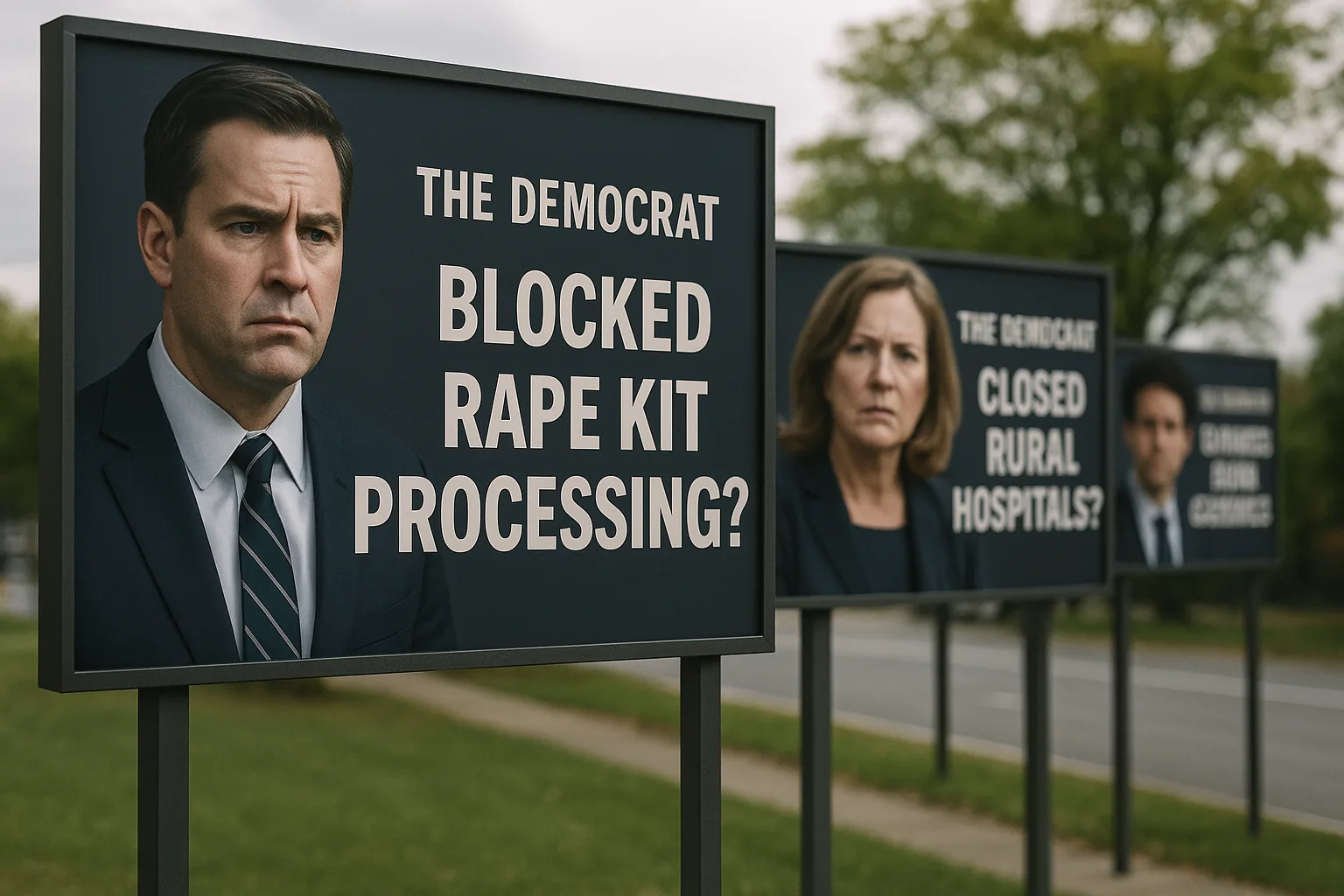
A Republican super PAC advertisement that began airing on September 10, 2026, accuses Roy Cooper of allowing thousands of untested rape kits to languish during his tenure as North Carolina’s attorney general. The ad, produced by No Going Back PAC, carries a blunt charge: that Cooper “let 16,000 untested rape kits sit on the shelf.” FactCheck.org reviewed the claim and determined it is misleading — a finding with significant implications for how voters and journalists should evaluate the use of the rape kit backlog issue in political advertising. There is, however, an additional layer of context that the ad itself cannot supply: Roy Cooper died on February 27, 2014, meaning the advertisement targets the historical record of a deceased public official, not a living candidate capable of responding to or contesting the charge.
Who Made the Ad and What It Claims
No Going Back PAC is a Republican super PAC that began airing the advertisement on September 10, 2026. The central claim in the ad is direct and numerically specific: Cooper, during his time as North Carolina’s attorney general, allowed 16,000 untested rape kits to go unprocessed. The ad does not qualify the claim with jurisdictional detail, institutional context, or a description of which agencies held custody of the kits. It presents the number as a straightforward measure of Cooper’s personal failure in office.
Numerically specific claims carry particular persuasive force in political advertising. A figure like 16,000 implies precision — that someone counted, audited, and traced accountability to a single officeholder. When that figure is stripped of the institutional context that explains how rape kit backlogs actually accumulate and who bears legal responsibility for processing them, the number becomes misleading rather than informative. That is precisely what FactCheck.org found when it examined the evidence behind the ad’s claim.
What the Evidence Actually Shows About the Rape Kit Backlog Claim
According to FactCheck.org‘s review, the evidence kits referenced in the advertisement were in the custody of hundreds of local law enforcement agencies across North Carolina — not in the custody of the state crime laboratory that Cooper oversaw as attorney general. Because the kits had never been submitted to the state crime laboratory by those local agencies, Cooper’s office had no direct authority over whether or when they were tested.
This distinction is not a technicality. It goes to the heart of how rape kit backlogs form and persist. In North Carolina, as in most states, the chain of custody for a sexual assault evidence kit begins at the hospital or medical facility where it is collected. From there, the kit passes to the law enforcement agency with jurisdiction over the reported crime — typically a municipal police department or county sheriff’s office. Those local agencies are responsible for deciding whether and when to submit a kit to a state or accredited crime laboratory for forensic analysis. The state attorney general’s office, in its oversight of the state crime laboratory, processes kits that are actually submitted to it. If local agencies do not submit kits, the state laboratory has no kit to test.
By attributing the entire backlog to Cooper personally, the No Going Back PAC ad collapses a multi-agency, multi-jurisdictional accountability structure into a single officeholder’s failure. FactCheck.org found this framing misleading because it omits the role of the hundreds of local law enforcement agencies that held the kits and never forwarded them for testing.
→ Read also: Republican Campaign Ads: Three Fact-Checked Claims About Cooper, Rural Hospitals, and Public Option
The Complicating Factor: Roy Cooper Is Deceased
Any complete account of this advertisement must address a fact the ad itself does not mention: Roy Cooper died on February 27, 2014. He is not a living candidate who can hold a press conference, release a counter-advertisement, or provide his own account of decisions made during his time as attorney general. The No Going Back PAC advertisement targets the historical record of a deceased public official.
This matters for several reasons. First, it affects how the ad should be categorized. Political advertising that attacks a living opponent’s record is a standard feature of democratic competition; the opponent can respond. An ad that attacks the record of a deceased person operates differently — there is no living subject who can contest the characterization, correct the record on their own behalf, or provide documentary evidence that might alter the framing. The public record is fixed, and the deceased person’s family, former colleagues, or estate have no formal mechanism to compel a correction from a political super PAC.
Second, it raises the question of why a 2026 Republican super PAC is airing an advertisement about the record of an official who died in 2014. The verified sources do not explain the strategic rationale behind the ad’s timing or its specific targeting of Cooper’s record. What the sources do establish is that the ad began airing on September 10, 2026, and that its central factual claim has been assessed as misleading by FactCheck.org. The reasons the PAC chose this particular claim, at this particular moment, are not established by the available evidence and are therefore not addressed here.
How FactCheck.org Reached Its Verdict
FactCheck.org‘s determination that the ad’s claim is misleading rests on a specific evidentiary finding: the 16,000 kits were held by local law enforcement agencies, not by the state crime laboratory under Cooper’s oversight as attorney general. This finding distinguishes between what is technically true — that a large number of rape kits went untested in North Carolina during a period that overlaps with Cooper’s tenure — and what the ad implies, which is that Cooper personally bore responsibility for those kits remaining unprocessed.
A claim can be misleading without being entirely false. The misleading verdict, as applied by fact-checkers including FactCheck.org, typically means that a statement contains true elements but is framed or presented in a way that leads a reasonable audience to a false conclusion. In this case, the true element is that a significant number of rape kits went untested in North Carolina. The false conclusion the ad invites is that Cooper, as attorney general, had direct custody and control over those kits and chose not to process them. The evidence does not support that conclusion.
The misleading designation is meaningful precisely because it is more nuanced than a simple false verdict. It acknowledges that the underlying phenomenon — a rape kit backlog — was real. It does not dismiss the seriousness of untested kits or suggest that no accountability questions were appropriate. What it challenges is the specific assignment of responsibility that the ad makes, which the evidence does not sustain.
→ Read also: Republican Campaign Ads in 2026 Senate Races: Three Fact-Checks of Misleading Claims
The Institutional Structure Behind Rape Kit Processing
To understand why the FactCheck.org verdict is grounded in institutional reality, it helps to examine how rape kit processing is actually structured. According to the verified facts in this case, hundreds of local law enforcement agencies in North Carolina held the kits that the ad attributes to Cooper’s inaction. Each of those agencies — municipal police departments, county sheriffs, and others — operates under its own command structure, budget, and submission policies.
A state attorney general overseeing a state crime laboratory is positioned to process kits that arrive at that laboratory. The attorney general’s office does not typically have the authority to compel local law enforcement agencies to submit kits on any particular timeline. The decision to submit — or not to submit — a rape kit for forensic analysis rests with the agency that has custody of it. This institutional division of responsibility is why the No Going Back PAC ad’s framing is assessed as misleading: it attributes to one official a failure that, according to the evidence reviewed by FactCheck.org, was distributed across hundreds of separate agencies operating outside his direct authority.
This does not mean that a state attorney general has no role in addressing a rape kit backlog. An attorney general can advocate for submission policies, work with the legislature to fund laboratory capacity, or coordinate with local agencies to encourage timely submission. Whether Cooper took or failed to take such steps is a question the verified sources do not directly address, and it would be inaccurate to assert conclusions about his advocacy or policy positions that the available evidence does not establish.
Why Misleading Claims About the Rape Kit Backlog Persist in Political Advertising
The rape kit backlog issue carries significant emotional and political weight. Untested kits represent real harm to real survivors — cases that may go unsolved, perpetrators who may go unidentified, and victims who may never receive the acknowledgment that forensic evidence could provide. That weight makes the issue a potent tool in political advertising, because it combines a concrete number with a visceral moral charge.
When political advertisers use the rape kit backlog as an attack vector, the institutional complexity of how backlogs form and who bears responsibility for clearing them is rarely included in the advertisement. A thirty-second ad is not designed to explain the jurisdictional boundaries between a state attorney general’s office and hundreds of local law enforcement agencies. It is designed to associate a name with a number and a moral failure. The result, as FactCheck.org found in reviewing the No Going Back PAC ad, can be a claim that is technically anchored in a real phenomenon but misleadingly attributed to a single official.
Voters and journalists evaluating such claims benefit from asking several questions: Who had legal custody of the kits in question? Which agency or agencies had the authority to submit them for testing? What actions, if any, did the targeted official take to address the backlog within their actual jurisdiction? The answers to those questions, rather than the number alone, determine whether an attribution of responsibility is accurate or misleading. In the case of the No Going Back PAC advertisement targeting Roy Cooper‘s record, FactCheck.org‘s review found that those answers do not support the ad’s central claim.
The episode illustrates a durable pattern in political fact-checking: the most effective misleading claims are not outright fabrications but selective presentations of real data, stripped of the context that would allow an audience to evaluate them accurately. The verified finding that 16,000 kits sat untested in North Carolina may well be accurate as a count; what the No Going Back PAC ad does not establish — and what the evidence reviewed by FactCheck.org does not support — is that Roy Cooper, overseeing a state crime laboratory that never received those kits from local agencies, bore personal responsibility for their remaining unprocessed. That gap between a real number and a misleading attribution is precisely what makes the claim misleading rather than simply false, and it is a distinction worth preserving in any honest account of what the ad actually says and what the evidence actually shows.
This article was produced with AI assistance and reviewed editorially.

Political Ads in 2026 Midterms Contain False or Misleading Claims About Opponents

Trump Administration ‘Super Intelligence’ Accord Misspells ‘United States’ as ‘Unites States’

Trump Administration ‘Super Intelligence’ Accord Misspells ‘United States’ as ‘Unites States’

No Going Back PAC Ad Makes Misleading Claim About Roy Cooper and Rape Kits
