
Current Affairs
Misleading Videos Misrepresent September 30 Flydubai Flight FZ1073 Incident and Spread False Conspiracy Theories
Multiple misleading videos and AI deepfakes spread false claims about the September 30 Flydubai Flight FZ1073 incident, including fabricated BBC reports and recycled foot

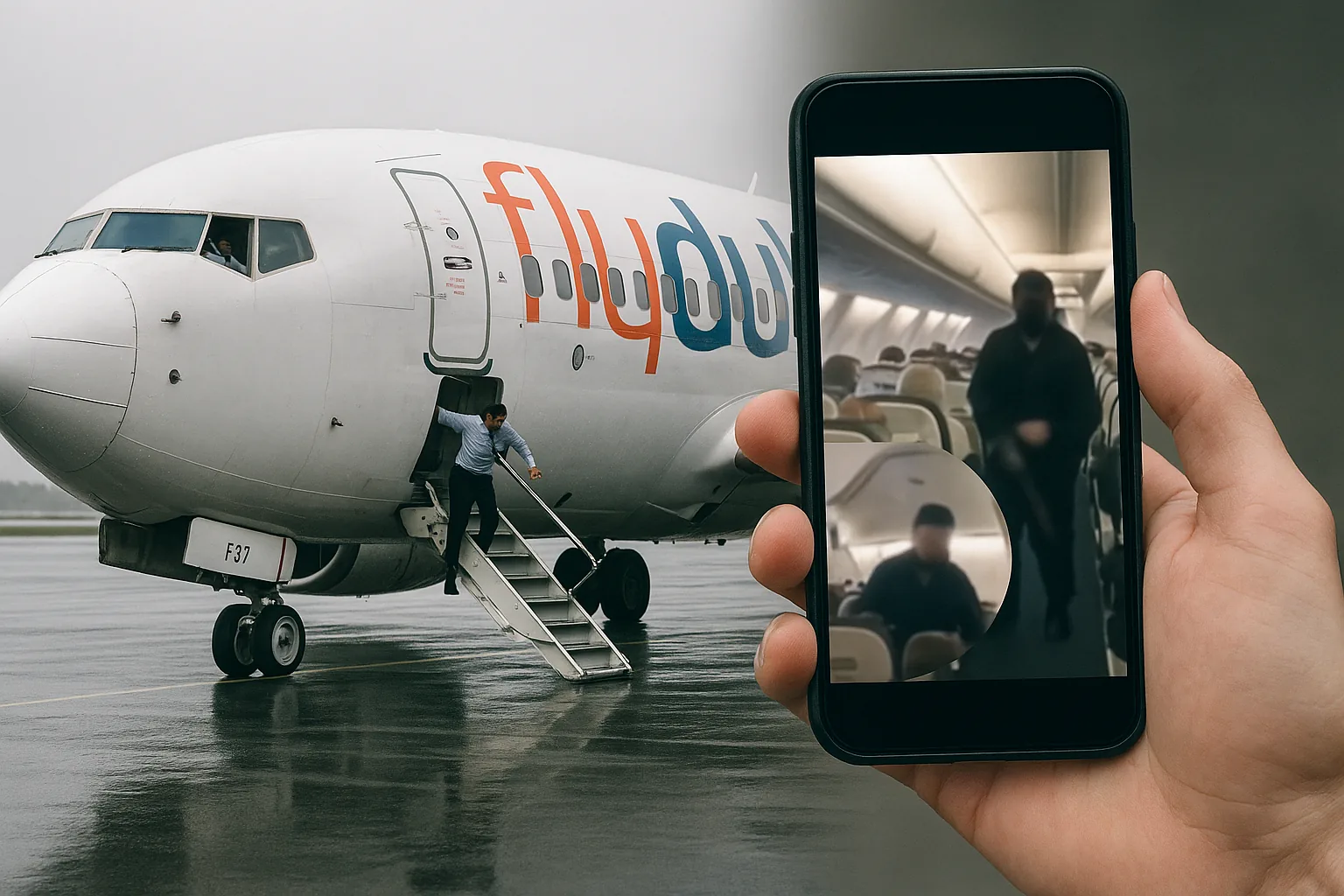
In the hours and days after the September 30, 2026 attempted hijacking of Flydubai Flight FZ1073, a wave of false and misleading videos spread rapidly across social media platforms, demonstrating how quickly fabricated content can distort public understanding of a breaking security incident. False videos, AI-generated deepfakes, and coordinated conspiracy theories combined to create a significant information disorder event — one that fact-checkers, researchers, and platform monitors are still working to untangle as of this writing. The scale and speed of the false claims make this case a critical example of how flydubai flight misinformation can take hold before verified facts reach the public.
What Actually Happened on Flight FZ1073
Flydubai Flight FZ1073 was traveling from Dubai to Tel Aviv on September 30, 2026, when an attempted hijacking took place aboard the aircraft. The plane was a Boeing 737 MAX 8 carrying 174 passengers. According to reporting by The Jerusalem Post, the aircraft made an emergency landing in Saudi Arabia. Yaniv Hayun was identified by The South African Jewish Report as one of the individuals who helped physically incapacitate the attacker during the incident. These are the core verified facts of the event itself — and they matter precisely because the misinformation ecosystem that formed around them was built on distorting or replacing these facts entirely.
What is notable, and deeply troubling, is that conspiracy theories began circulating online within one hour of the attempted hijacking, according to The Jerusalem Post. That timeline — false claims spreading before any official account had been issued — is a recurring feature of modern information crises and helps explain why so many people encountered fabricated versions of events before they had access to verified reporting.
The Fake BBC Report: An AI-Generated Deepfake
Among the most damaging pieces of false content to emerge was a fabricated broadcast that mimicked the visual style and branding of BBC News. According to France 24, this was an AI-generated deepfake — the BBC never produced or broadcast it. The fake report falsely claimed that an Indian passenger was responsible for the hijacking attempt and linked him by name to pilot Smit Machchhar. Neither claim has been verified by any credible source, and France 24‘s fact-checkers confirmed the report was entirely fabricated.
The use of a recognizable news brand like the BBC is a deliberate feature of this type of forgery. Audiences who see familiar logos, fonts, and on-screen graphics are more likely to accept the content as legitimate, particularly when sharing is happening faster than verification. The fake report is a clear example of altered media — not merely a false claim, but a fabricated artifact designed to appear authoritative. Naming real individuals — a passenger and a pilot — in the context of a serious criminal act, even in a debunking article, carries republication risk. It is worth stating clearly: France 24 identified the report as false, and no verified source has established any wrongdoing by the individuals named within it.
→ Read also: Viral Videos About FlyDubai September 30, 2026 Incident Contain AI-Generated and Mislabeled Footage
Misrepresented Videos and Recycled Audio
Beyond the deepfake BBC broadcast, at least two additional videos circulated with false or misleading claims about the flight. France 24 reported that one video combined footage from a completely different flight with audio recorded during a 2022 turbulence incident. The clip was presented online as though it showed footage from or related to Flight FZ1073 on September 30, 2026 — it did not.
A second misrepresented video, also flagged by France 24, was filmed on the ground in Dubai and had no connection to the airspace or location where the incident occurred. It was nevertheless shared widely with captions implying it documented events from the hijacking attempt. The Quint‘s fact-check team separately identified an old video being shared with false claims that it showed the allegedly hijacked Flydubai aircraft, further illustrating how unrelated archival footage gets recycled and mislabeled during high-profile breaking events.
These cases reflect a well-documented pattern: when a dramatic incident occurs and official information is scarce, social media users — sometimes acting in good faith, sometimes not — fill the vacuum with whatever visual content appears superficially relevant. The result is that flydubai flight misinformation spread not just through deliberate fabrication but also through the misidentification and mislabeling of unrelated footage.
The Scale of Conspiracy Theory Spread: 25,000 Posts in 48 Hours
The volume of conspiratorial content generated around this incident was substantial and measurable. The Anti-Defamation League (ADL) reported that within 48 hours of the Flydubai incident, at least 25,000 posts on X pushed conspiracy theories related to the event. That figure, documented at the ADL’s dedicated resource page, provides a concrete measure of the information environment that passengers, journalists, and policymakers were navigating in the immediate aftermath.
The conspiracy theories took several forms, but a dominant strand falsely claimed that Israeli Prime Minister Benjamin Netanyahu and Mossad had staged the incident. The Jerusalem Post confirmed that these claims circulated widely and identified them as false. The New Arab and The Jewish Telegraphic Agency (JTA) both reported on the specific framing used in these posts, including the coinage of the term Bibiwood — a portmanteau that, as The New Arab explained, was used to allege that Netanyahu had orchestrated the incident as a kind of staged political theater. The term combined “Bibi,” Netanyahu’s widely used nickname, with “Hollywood,” implying fabricated spectacle. The New Arab and JTA traced how this framing spread and contextualized it within broader patterns of antisemitic conspiracy theory.
The rapid emergence and spread of these theories — falsely implicating a sitting head of government and a national intelligence agency in the staging of a terrorist incident — represents a significant escalation in the type of flydubai flight misinformation that circulated. Such claims carry real-world consequences: they can inflame geopolitical tensions, endanger individuals falsely named, and undermine the credibility of legitimate investigations.
→ Read also: Flydubai September 2026 Incident Spawns Wave of Fabricated Videos and Deepfakes
Why This Incident Became a Misinformation Target
Several features of the September 30 incident made it particularly susceptible to the rapid spread of false content. The flight’s route — Dubai to Tel Aviv — placed it at the intersection of multiple geopolitical fault lines. Any incident involving Israeli-linked travel is likely to attract conspiratorial attention, particularly in online environments already primed by ongoing regional conflicts and long-standing antisemitic tropes. The emergency landing in Saudi Arabia added another layer of geopolitical complexity that conspiracy theorists were quick to exploit.
The involvement of a real hero — Yaniv Hayun, identified as one of those who helped subdue the attacker — was itself subjected to conspiratorial reframing. In the Bibiwood narrative, as reported by The South African Jewish Report and JTA, the heroism of passengers was recast as evidence of staging: the argument being that the incident was too conveniently resolved. This inversion of evidence — where the presence of a positive outcome becomes proof of fabrication — is a hallmark of unfalsifiable conspiracy thinking.
The speed of the information environment also played a role. Conspiracy theories began within one hour of the incident, according to The Jerusalem Post, meaning that false narratives had hours to embed themselves in public discourse before verified reporting could catch up. By the time fact-checkers at France 24, The Quint, and the ADL had published their analyses, many users had already encountered and shared multiple false versions of events.
Identifying and Countering False Content
The verification work done by multiple organizations in the days following the incident provides a useful model for how false content can be systematically identified and addressed. France 24 traced the origins of the fake BBC broadcast, confirmed its AI-generated nature, and identified the specific false claims it made about named individuals. The Quint reverse-searched video clips to establish that they predated or were unconnected to the September 30 flight. The ADL quantified the scale of conspiratorial posting on X, giving researchers and platform moderators a baseline for understanding the scope of the problem.
These methods — provenance tracing, reverse image and video search, platform-level monitoring, and cross-referencing with primary sources — are the standard toolkit of digital verification. What the Flydubai case illustrates is that even when these tools are applied effectively, the volume and speed of false content can outpace correction. The 25,000 posts documented by the ADL within 48 hours represent only the portion of conspiratorial content that was captured and counted; the actual reach of individual false videos, shared across messaging apps and private groups, is likely far greater and far harder to measure.
The misinformation that followed Flydubai Flight FZ1073 is not an isolated phenomenon but a concentrated example of dynamics that now accompany virtually every high-profile breaking event. Fabricated media, recycled footage, false attribution to recognizable news brands, and coordinated conspiracy theory campaigns all activated within minutes of a real security incident — before facts were established, before officials had spoken, and before most passengers had even landed. The documented record left by fact-checkers, the ADL, and investigative reporters provides an important corrective, but it also underscores a structural challenge: in an environment where false content travels faster than verification, the burden on audiences to distinguish fabricated from real has never been heavier, and the consequences of getting it wrong have rarely been more serious.
This article was produced with AI assistance and reviewed editorially.

Political Ads in 2026 Midterms Contain False or Misleading Claims About Opponents

Trump Administration ‘Super Intelligence’ Accord Misspells ‘United States’ as ‘Unites States’

Trump Administration ‘Super Intelligence’ Accord Misspells ‘United States’ as ‘Unites States’

No Going Back PAC Ad Makes Misleading Claim About Roy Cooper and Rape Kits
