
Current Affairs
Flydubai September 2026 Incident Spawns Wave of Fabricated Videos and Deepfakes
Fabricated videos and AI-generated deepfakes spread rapidly after the September 30, 2026 Flydubai flight FZ1073 incident, including fake BBC news and misidentified aircra

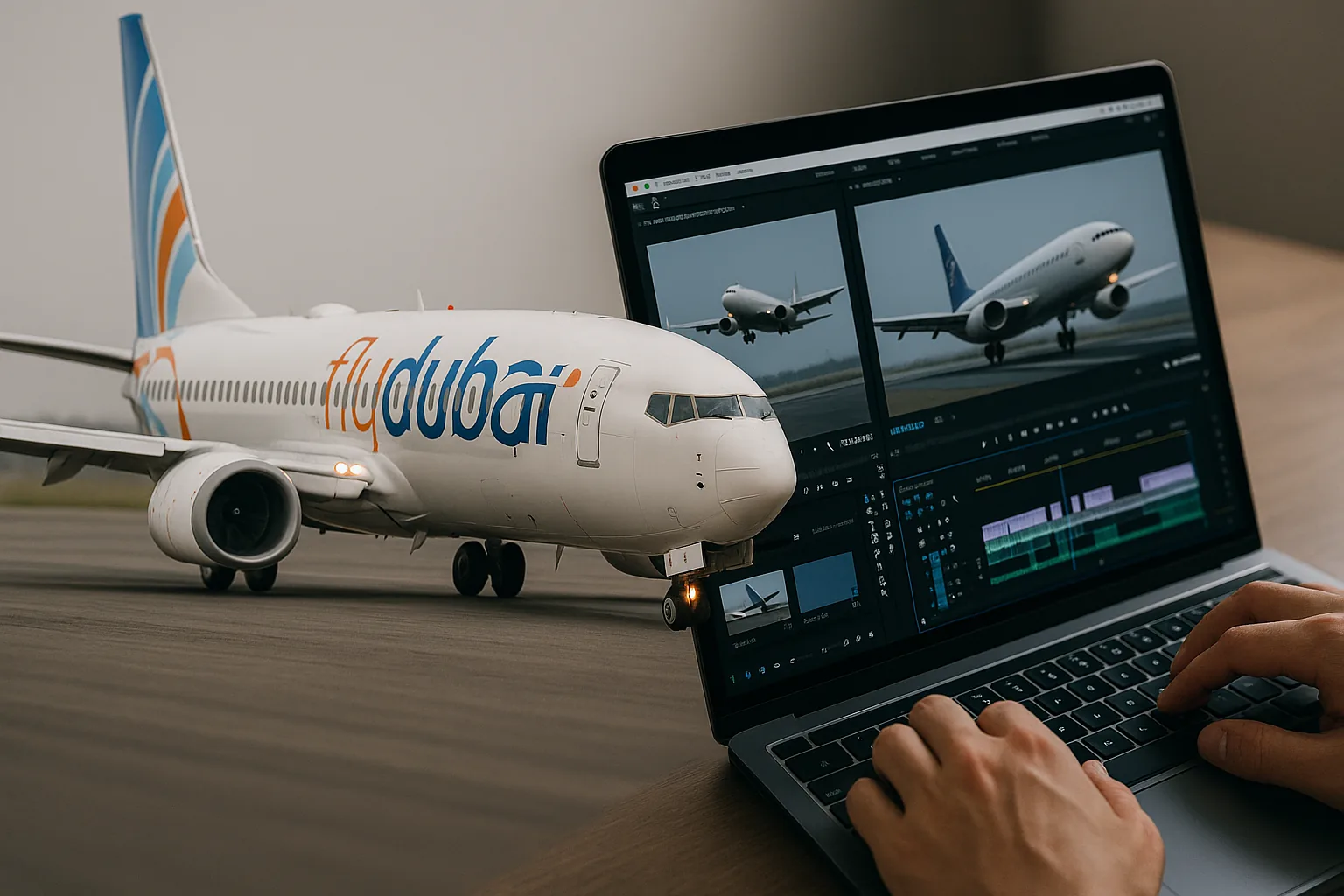
When a genuine security emergency unfolds at 35,000 feet, the information vacuum that follows is almost always filled — and filled fast. The Flydubai flight FZ1073 incident on September 30, 2026 is a textbook illustration of that dynamic. Within hours of the emergency landing, a torrent of fabricated footage, AI-generated news segments, and outright false claims had flooded social media platforms, making it genuinely difficult for the public to separate what actually happened from what had been manufactured. The spread of flydubai deepfakes misinformation in the days that followed represents one of the most rapid and multi-layered manipulated-media campaigns to emerge from a single aviation security event in recent memory — and it carries lessons that extend well beyond this one flight.
What Actually Happened on Flight FZ1073
The verified facts begin with a flight operating between Dubai and Tel Aviv on September 30, 2026. At some point during that journey, one pilot attacked the other in the cockpit in what investigators have described as an apparent attempt to crash the aircraft. The pilot who was attacked has been formally identified as Captain Smit Machchhar. The suspected attacker was subsequently identified by Israeli authorities as an Omani national. The plane did not crash. Instead, the flight was diverted to Saudi Arabia, where it landed safely, allowing passengers, crew, and investigators to disembark.
Those are the core verified facts, confirmed by CNN’s live news coverage of the event and corroborated by reporting from Time, France 24, and the UK-based fact-checking organization Full Fact. The incident was real, the emergency was real, and the diversion was real. What was not real — and what spread almost as quickly as the genuine news — was a cascade of fabricated media designed to exploit the confusion surrounding the event.
The nature of the attack itself — a pilot stabbing a fellow pilot inside a locked cockpit — was inherently dramatic and difficult for ordinary observers to contextualize. Aviation security incidents of this specific type are extraordinarily rare. That rarity, combined with the geopolitical sensitivity of a Dubai-to-Tel Aviv route, created precisely the kind of high-tension information environment in which fabricated content thrives. People were searching urgently for footage, for context, for confirmation of what they had heard. Fabricators were ready to supply all three — falsely.
The Fake BBC News Deepfake and What It Claimed
The most technically sophisticated piece of misinformation to emerge from the FZ1073 incident was a fabricated video purporting to show a BBC News presenter reporting on the attack. The video was a deepfake — AI-generated or AI-manipulated content designed to mimic the visual and audio style of a genuine BBC broadcast. Its central claim was false: it alleged that an Indian passenger had been involved in the attack on the cockpit.
The BBC confirmed that the video is fake. That confirmation, reported by Full Fact, is unambiguous. No BBC presenter delivered the report shown in the video. The editorial content — the claim about an Indian passenger’s involvement — is contradicted by the verified identification of the suspected attacker as an Omani national, not an Indian national or passenger of any other nationality.
The significance of this deepfake extends beyond the single false claim it made. A fabricated BBC News broadcast carries an implicit authority that a random social media post does not. The BBC brand is globally recognized as a marker of credibility. When that visual language — the studio backdrop, the presenter’s delivery, the on-screen graphics — is replicated convincingly by AI tools, it creates a false impression of institutional verification. Viewers who encountered the clip without already knowing it was fake had no obvious visual cue to prompt skepticism. This is the core danger of high-quality broadcast deepfakes: they borrow legitimacy they have not earned.
France 24‘s reporting on the fake BBC video added further detail: the fabricated report falsely implicated not only a passenger but also mischaracterized the identity and role of the pilot involved. This layering of false claims within a single piece of fabricated media is a pattern worth noting. Rather than making one false assertion, the video wove together multiple inaccuracies, each of which would require separate verification effort to untangle. That complexity is not accidental — it increases the cognitive load on anyone attempting to fact-check the content in real time.
Footage Filmed in Dubai, Not Over the Incident Location
A separate category of false content involved video footage that was real — in the sense that it was genuine, unmanipulated video — but was misrepresented as showing the FZ1073 incident. According to France 24‘s reporting, one such video showed footage filmed in Dubai rather than over the location where the actual incident occurred mid-flight. The footage was repurposed and recontextualized to make it appear relevant to the emergency landing, when in fact it had no direct connection to the events on board flight FZ1073.
👉 Read also: Flydubai Emergency Landing on September 30, 2026: Indian Pilot Prevented Potential Disaster
This technique — sometimes called cheap fake or context manipulation — does not require sophisticated AI tools. It requires only a willingness to strip a piece of genuine footage from its original context and attach a new, false narrative to it. The video itself is not fabricated; the story told about it is. This makes context manipulation in some ways harder to detect than outright deepfakes, because reverse-image searches and video authentication tools may confirm that the footage is real without revealing that it has been mislabeled.
The Dubai-filmed footage circulated alongside the more sophisticated deepfake content, creating a layered misinformation ecosystem around the FZ1073 incident. Some viewers encountered the deepfake BBC video. Others encountered the misrepresented genuine footage. Still others saw both, along with text-based claims making additional false assertions. The cumulative effect was a fragmented and distorted picture of the event that required significant effort to correct.
Why Flydubai Deepfakes Misinformation Spread So Quickly
Understanding why flydubai deepfakes misinformation proliferated so rapidly in the hours after the incident requires examining the structural conditions that enable fast-moving false narratives. Several factors converged on September 30 and October 1–2, 2026 to accelerate the spread.
First, the geopolitical context of the route. A flight between Dubai and Tel Aviv carries inherent political salience. The normalization of air travel between the UAE and Israel remains a relatively recent development, and any security incident on such a route attracts heightened attention from audiences with strong existing views about the region. That attention creates a large, engaged audience — exactly the conditions under which fabricated content achieves maximum reach.
Second, the information gap in the immediate aftermath. The plane was diverted to Saudi Arabia, and official statements from Flydubai, Israeli authorities, and UAE officials took time to emerge and be verified. In the hours between the incident and the publication of confirmed facts, social media platforms were filled with speculation, rumor, and — critically — fabricated content that presented itself as filling the information gap with authoritative reporting.
Third, the emotional intensity of the subject matter. A pilot attacking another pilot in a cockpit, apparently attempting to crash a commercial aircraft, is an event that triggers immediate fear and urgency. Research on misinformation spread consistently finds that high-arousal emotional content — content that provokes fear, anger, or shock — travels faster and further than neutral information. The FZ1073 incident provided exactly that kind of emotional fuel.
Fourth, the availability of AI tools capable of producing convincing fake broadcasts. The fake BBC video did not require a professional production team or significant financial resources. The tools needed to generate a convincing deepfake of a news presenter are widely available in 2026. The barrier to creating sophisticated fabricated media has dropped dramatically, which means that any high-profile event can now attract multiple independent fabricators producing content within hours of the original incident.
The Nationality Misidentification and Its Consequences
One of the most consequential false claims to circulate after the FZ1073 incident involved the nationality of the individuals involved. The fake BBC deepfake falsely claimed that an Indian passenger was involved in the attack. This is directly contradicted by the verified identification of the suspected attacker as an Omani national, confirmed by Israeli authorities and reported by Full Fact.
The practical consequences of nationality misidentification in a security context are significant. False claims attributing an attack to individuals of a particular nationality or ethnic background can provoke discrimination, harassment, and in extreme cases, violence against members of that community. They can also damage diplomatic relationships, generate hostile public sentiment toward entire national groups, and complicate the work of investigators who must contend with a public narrative that does not match the evidence.
👉 Read also: AI-Generated and Manipulated Videos Spread Widely Across Social Media in September 2026
In this case, the false claim specifically targeted Indian nationals — a community with no verified connection to the attack whatsoever. The fact that the claim was embedded in a fabricated BBC broadcast gave it a veneer of institutional credibility that made it more likely to be believed and shared before corrections could reach the same audiences. By the time France 24 and Full Fact published their debunking reports on October 1–2, 2026, the false claim had already reached a substantial audience.
This pattern — false nationality claims embedded in fabricated authoritative-looking media — is not unique to this incident. It has appeared in the aftermath of other security events globally. What distinguishes the FZ1073 case is the speed and technical quality of the fabrication, which suggests either a well-resourced operation or the maturation of widely available AI tools to the point where high-quality fabrication is accessible to a broad range of actors.
How Fact-Checkers and News Organizations Responded
The response to the FZ1073 misinformation campaign from established fact-checking organizations was notably swift. Full Fact published a detailed analysis of the fake BBC video, including the BBC’s own confirmation that the broadcast was fabricated. France 24 reported on both the fake BBC video and the misrepresented footage filmed in Dubai. These responses appeared within the October 1–2, 2026 window — a relatively fast turnaround for institutional fact-checking, though still operating behind the initial spread of the false content.
The BBC’s direct confirmation that the video was fake is particularly significant from a methodological standpoint. When the organization whose identity has been appropriated by a deepfake issues an explicit denial, that denial carries a weight that secondary fact-checkers cannot replicate. It also demonstrates one of the practical responses available to institutions targeted by deepfakes: rapid, public, unambiguous disavowal of fabricated content bearing their name or visual identity.
The challenge, of course, is reach. A fact-check published on Full Fact’s website or a correction issued by the BBC reaches audiences who are already inclined to seek out authoritative sources. The audiences who encountered the deepfake on social media platforms may never see the correction. This asymmetry between the reach of false content and the reach of corrections remains one of the central unresolved problems in the fight against fabricated media.
Platform-level responses — the labeling, downranking, or removal of identified deepfake content — represent another layer of the response ecosystem. However, the speed at which the FZ1073 fabrications spread in the hours immediately following the incident suggests that platform interventions, even when they occur, operate on a timeline that allows significant exposure before any corrective action takes effect.
What This Case Reveals About Aviation Security and Media Fabrication
The FZ1073 incident and the fabricated media campaign that followed it illuminate a broader pattern: aviation security events are particularly vulnerable to rapid misinformation spread. They involve high-stakes outcomes, limited immediate transparency, emotionally engaged audiences, and a subject matter — aircraft in distress — that is inherently visual and dramatic. All of these characteristics make aviation incidents fertile ground for fabricators.
The specific combination of a genuine security event with a fabricated media response also creates a particular verification challenge. Because the underlying event is real, audiences cannot dismiss all circulating content as entirely invented. Some of it is real. The task of distinguishing verified footage and confirmed facts from fabricated supplements requires active, effortful engagement — the kind of engagement that most social media users, encountering content in a fast-moving feed, are not positioned to undertake in real time.
The flydubai deepfakes misinformation campaign around flight FZ1073 is, in this sense, a case study in what fabricated-media ecosystems look like when they are built on a foundation of genuine events. The real incident — the pilot stabbing, the diversion to Saudi Arabia, the emergency response — provided the scaffolding onto which false content was attached. Removing the false content without disrupting understanding of the real event required careful, source-by-source verification of the kind that Full Fact and France 24 performed.
Captain Smit Machchhar survived the attack. The plane landed safely. The suspected Omani national attacker was taken into custody. Those are the facts that matter most, and they were available within hours of the incident from verified reporting. The fabricated videos, the fake BBC broadcast, and the misrepresented footage added nothing to genuine understanding of what happened — they subtracted from it, replacing verified facts with false narratives that required significant institutional effort to correct. That effort, and the need for it, is itself a measure of how seriously the problem of aviation-incident misinformation now demands to be taken.
This article was produced with AI assistance and reviewed editorially.

Political Ads in 2026 Midterms Contain False or Misleading Claims About Opponents

Trump Administration ‘Super Intelligence’ Accord Misspells ‘United States’ as ‘Unites States’

Trump Administration ‘Super Intelligence’ Accord Misspells ‘United States’ as ‘Unites States’

No Going Back PAC Ad Makes Misleading Claim About Roy Cooper and Rape Kits
