
Current Affairs
FlyDubai Flight FZ1073 Emergency Landing in Saudi Arabia Spawns Multiple False Videos and Misidentified Footage
FlyDubai flight FZ1073 made an emergency landing in Saudi Arabia on September 30, 2026. Fact-checkers reveal fabricated BBC deepfakes, misidentified footage, and false cl

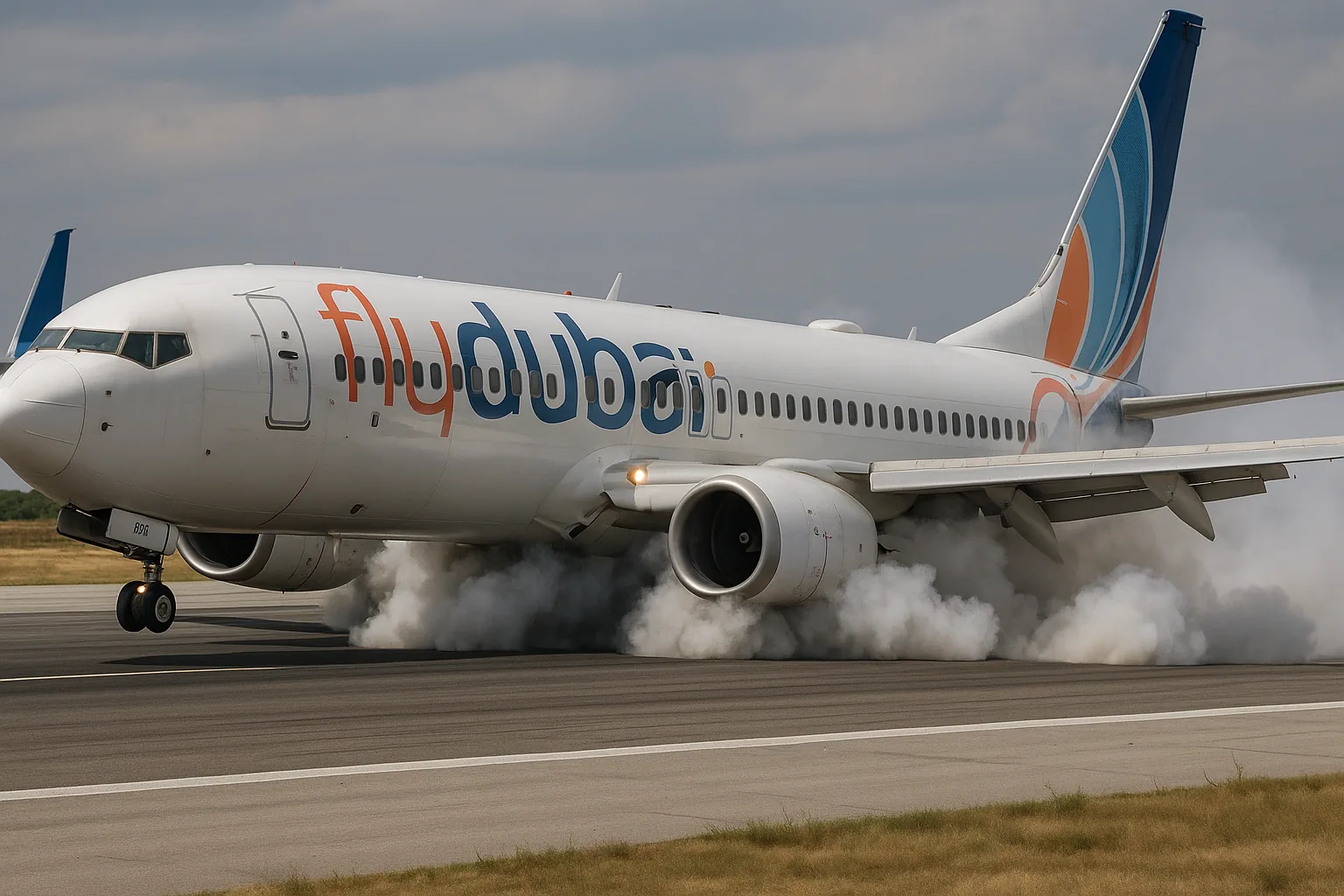
When FlyDubai flight FZ1073 made an unscheduled emergency landing in Tabuk, Saudi Arabia, on September 30, 2026, the aircraft was en route from Dubai to Tel Aviv with approximately 150 passengers on board, the majority of them Israeli. Within hours, the incident had become one of the most actively misrepresented aviation events of the year, generating a cascade of fabricated reports, manipulated audio, and recycled footage from entirely unrelated events. The speed and sophistication of that misinformation wave — and the specific techniques used to spread it — make this flydubai emergency landing a case study in how real crises are immediately exploited to circulate false narratives at scale.
What Actually Happened Aboard FZ1073
The verified account of the incident, drawn from reporting by CNN and confirmed by other outlets, is alarming enough without embellishment. The co-pilot, identified as Hamam al-Hammami, is alleged to have attempted a hijacking during the flight. The captain, Smit Machchhar, was stabbed during the incident — a detail confirmed by France 24 in its own investigation into the misinformation that followed. The alleged hijacker was ultimately stopped by the captain and several passengers who physically restrained him, preventing the situation from escalating further.
According to CNN’s reporting published on October 5, 2026, investigators believe al-Hammami likely intended to target Israel’s Ben Gurion Airport — the aircraft’s scheduled destination. The plane diverted and landed in Tabuk, Saudi Arabia, where authorities took control of the situation. The majority of the roughly 150 passengers were Israeli nationals, a fact that would later be used to frame several pieces of false content circulating online.
It is important to establish what is known before examining what is not, because the misinformation ecosystem surrounding this event deliberately blurred that line. The core facts — a co-pilot suspect, a stabbed captain, a diverted aircraft, a Saudi landing — are verified. Many of the dramatic visual “confirmations” that spread across social media in the days that followed are not.
The Fabricated BBC Report and AI-Generated Deepfake
Among the first and most damaging pieces of false content to circulate was a fake BBC news report. According to France 24’s fact-checking team, this fabricated report falsely claimed that an Indian passenger was responsible for the incident, directly implicating both the unnamed passenger and pilot Smit Machchhar in the hijacking attempt. France 24 identified the report as an AI-generated deepfake — not a clumsy edit of real BBC footage, but a synthetically produced piece of content designed to mimic the BBC’s visual identity and journalistic authority.
The choice of a fake BBC report as the vehicle for this false claim is deliberate and instructive. The BBC carries enormous institutional credibility globally, and a fabricated version of its branding is far more likely to be shared without question than an unattributed social media post. The deepfake format — using AI-generated visuals or voice to impersonate a recognizable broadcaster — represents a significant escalation from simple screenshot manipulation. Readers encountering this content were given no visual cues that it was fabricated, because the production quality was designed to eliminate them.
The false report’s targeting of an Indian passenger also introduced a specific ethnic and national dimension to the misinformation. France 24 noted that the claim had no evidentiary basis whatsoever. The verified record identifies co-pilot Hamam al-Hammami as the suspect; no Indian passenger has been identified by any credible authority as involved in the incident. The fake BBC report was, in France 24’s assessment, an AI-generated fabrication from start to finish.
Misidentified Footage: How Unrelated Videos Were Repackaged
Alongside the fabricated BBC report, a separate category of misinformation involved real video footage that was stripped of its original context and relabeled as showing the FlyDubai emergency landing. This technique — sometimes called context manipulation — does not require any technical skill to produce. It requires only that an audience be unfamiliar with the original source of the footage, and that the clip be plausible enough to pass a casual inspection.
👉 Read also: Flydubai September 2026 Incident Spawns Wave of Fabricated Videos and Deepfakes
UK-based fact-checking organization Full Fact investigated one widely shared video that purported to show the FlyDubai plane descending in distress, with visible panic and screaming audible on the soundtrack. Full Fact’s analysis established two separate problems with this clip. First, the visual footage did not show flight FZ1073 or its emergency landing in Tabuk. It showed a different FlyDubai aircraft flying over Dubai — an entirely routine flight captured from the ground. The FlyDubai livery made the footage superficially plausible, but the location and circumstances were entirely different.
Second, the audio accompanying the footage was not original to the video at all. Full Fact determined that the screaming and panic sounds had been taken from a separate turbulence incident recorded in 2022 — four years before the FZ1073 incident — and dubbed over the unrelated Dubai footage. The combination created a clip that appeared to show passengers in genuine terror aboard a FlyDubai aircraft, when in reality it was a composite of two unrelated pieces of content stitched together to manufacture a false impression of the event.
This particular technique — overlaying distressing audio from one incident onto innocuous footage from another — is especially effective because human emotional response is heavily influenced by sound. Viewers who hear screaming and panic instinctively interpret the accompanying visuals through that emotional lens. The audio manipulation was, in effect, doing the interpretive work that the footage alone could not do.
Why Misinformation Spreads So Rapidly After Aviation Incidents
The flydubai emergency landing illustrates a pattern that fact-checkers and media researchers have documented repeatedly: aviation incidents are among the fastest-moving misinformation events in the news cycle. Several structural factors explain why.
First, genuine aviation emergencies generate intense public interest almost immediately. The combination of mass casualties risk, geopolitical dimensions (in this case, a flight to Tel Aviv with majority-Israeli passengers), and the inherent drama of an in-flight confrontation creates a large, anxious audience hungry for information before verified facts are available. That gap between public demand and confirmed reporting is precisely where false content finds its audience.
Second, aviation footage is inherently difficult for general audiences to verify. Most people cannot identify a specific aircraft type, route, or location from visual cues alone. A plane with FlyDubai livery, filmed from any angle, can be presented as any FlyDubai flight without triggering immediate skepticism. The same is true of interior cabin footage: without visible flight information screens, seat configuration details, or other identifying markers, cabin video from any flight can be relabeled as any other.
Third, the geopolitical context of this particular incident — a flight to Israel, a suspected hijacking, a co-pilot as the alleged perpetrator — made it a natural target for actors seeking to amplify existing tensions. The fake BBC report’s false attribution to an Indian passenger, and the framing of the incident as something other than what the verified record shows, both fit patterns of narrative injection: inserting a preferred storyline into the information vacuum created by a breaking news event.
The Role of Deepfakes in Aviation Misinformation
The AI-generated fake BBC report associated with the FZ1073 incident is not the first deepfake to target an aviation emergency, but it represents a notable example of how synthetic media is being deployed in real-time crisis misinformation. Traditional fabricated news content — edited screenshots, misleading headlines, out-of-context clips — requires relatively little technical sophistication and has been a feature of online misinformation for years. Deepfake video and audio content, by contrast, requires more production capability and, when done well, is substantially harder for non-expert audiences to detect.
👉 Read also: Viral Videos About FlyDubai September 30, 2026 Incident Contain AI-Generated and Mislabeled Footage
France 24’s identification of the fake BBC report as AI-generated is significant. It means that the content was not simply a manipulated version of a real BBC broadcast; it was synthesized from scratch to impersonate the BBC’s format, visual identity, and authority. This distinction matters for how audiences and platforms should approach content verification. A manipulated clip of a real broadcast will often contain detectable artifacts — mismatched fonts, inconsistent audio quality, visible editing seams. A fully AI-generated production may have none of these tells, particularly if the generating model is sophisticated and the output is reviewed before distribution.
The broader implication is that brand impersonation via AI-generated media is becoming a primary vector for high-credibility misinformation. When false content appears to come from the BBC, CNN, or another globally trusted outlet, the audience’s default skepticism is suppressed. Fact-checkers and media literacy educators have long advised audiences to check the source of information; that advice becomes more difficult to follow when the source itself has been convincingly faked.
How Fact-Checkers Identified and Traced the False Content
The verification work done by Full Fact and France 24 in the days following the September 30, 2026 incident demonstrates the methodologies available to professional fact-checkers, even when misinformation is moving quickly. For the manipulated video, Full Fact used a combination of reverse image search, geolocation analysis, and audio comparison to establish that the footage did not originate from the FZ1073 incident. Identifying that the audio came from a 2022 turbulence event required cross-referencing the sound file against archived footage from that earlier incident.
For the fake BBC report, France 24’s team examined the visual metadata of the clip, assessed the AI-generation artifacts present in the footage, and compared the content against the BBC’s verified reporting on the incident. The BBC itself had published no such report. The false attribution to an Indian passenger was directly contradicted by every verified primary source describing the incident — none of which named any passenger as a suspect.
Both organizations published their findings between October 1 and October 5, 2026, meaning the false content had a window of several days to circulate before formal debunking was widely available. This lag is unavoidable in practice — verification takes time that fabrication does not — but it underscores the importance of audiences applying skepticism to dramatic aviation footage and attributed news reports before sharing them, particularly in the hours immediately following a breaking incident.
What Audiences Can Do When an Aviation Incident Breaks
The FZ1073 misinformation wave offers several practical lessons for news consumers. When a major aviation incident breaks, the first videos to circulate are statistically more likely to be misidentified or manipulated than to be genuine footage of the event. This is not a counsel of paralysis — it is a prompt to apply a brief checklist before sharing or treating content as confirmed.
Key questions include: Does the footage come with a verifiable source, timestamp, and location? Does the visual content actually show what the caption claims? Has the audio been verified as original to the footage, or could it have been overlaid from another event? If the content purports to come from a named news organization, can that organization’s own verified channels confirm the report exists?
For the FZ1073 incident specifically, the Full Fact investigation provides a detailed, sourced account of how the manipulated video was identified and what the actual footage showed. It is a useful model for the kind of verification that distinguishes confirmed reporting from viral misinformation.
The verified facts about flight FZ1073 are serious enough: a co-pilot alleged to have attempted a hijacking, a captain stabbed mid-flight, roughly 150 passengers brought safely to the ground in Tabuk after an emergency diversion, and investigators pointing to Ben Gurion Airport as the likely intended target. That account, sourced and documented, requires no embellishment. The fabricated BBC report, the audio-manipulated video, and the misidentified footage that spread alongside it did not add information — they subtracted clarity, replacing a verifiable and serious incident with noise designed to mislead. Recognizing that substitution, and refusing to amplify it, is the most effective response available to anyone who encounters similar content in the future.
This article was produced with AI assistance and reviewed editorially.

Political Ads in 2026 Midterms Contain False or Misleading Claims About Opponents

Trump Administration ‘Super Intelligence’ Accord Misspells ‘United States’ as ‘Unites States’

Trump Administration ‘Super Intelligence’ Accord Misspells ‘United States’ as ‘Unites States’

No Going Back PAC Ad Makes Misleading Claim About Roy Cooper and Rape Kits
