
Current Affairs
AI-Generated and Manipulated Videos Spread False Claims About Political Events and Figures
The spread of deepfakes political videos has become one of the most consequential challenges facing democratic societies in 2026. Fabricated footage of pol

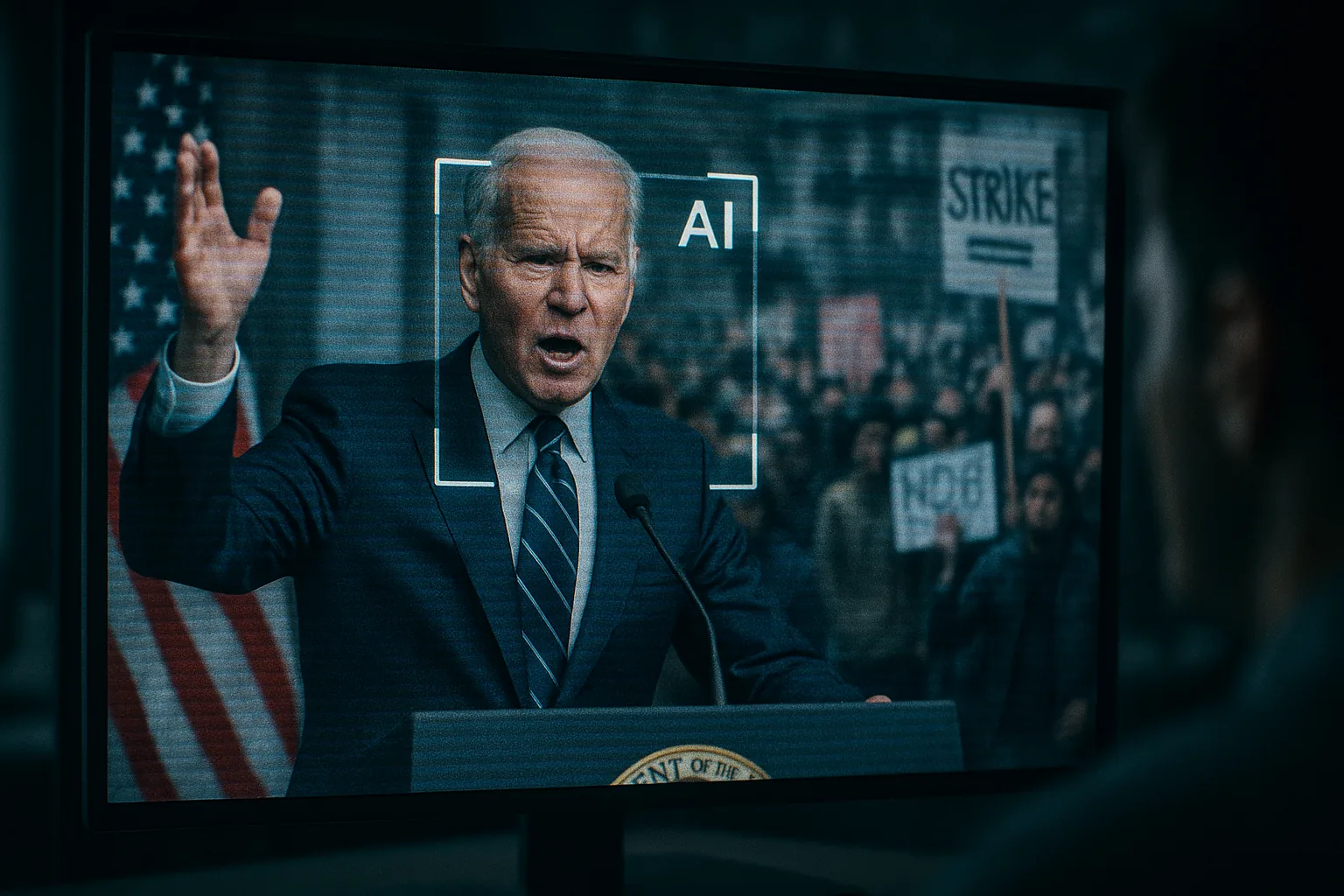
The spread of deepfakes political videos has become one of the most consequential challenges facing democratic societies in 2026. Fabricated footage of politicians, protest crowds, military alliances, and civil unrest can circulate to millions of viewers within hours of being posted, often long before any correction reaches the same audience. Understanding how these videos are made, why they are so difficult to detect, what legal frameworks exist to address them, and how ordinary viewers can protect themselves is no longer a niche concern for technologists — it is a civic literacy requirement for anyone who consumes news online.
What Makes AI-Generated Political Video So Convincing
The technical gap between genuine footage and fabricated footage has narrowed dramatically over the past several years. Early deepfakes were relatively easy to spot: faces flickered at the edges, blinking was unnatural, and lip movements failed to sync precisely with speech. Contemporary tools trained on large video datasets can produce output that passes casual inspection and, in some cases, scrutiny by trained observers.
Audio is often the decisive factor. Research published in peer-reviewed literature has found that deepfakes with audio produced by state-of-the-art text-to-speech algorithms are harder to discern than deepfakes using voice actor audio. This is a significant finding because it inverts the intuition many people hold: they assume a human impersonator would be more convincing than a machine. In practice, the machine’s output is more consistent, avoids the micro-hesitations of a live performer trying to stay in character, and can be tuned to match a target speaker’s pitch, cadence, and regional accent with a precision that a human actor rarely achieves. When a viewer hears a familiar voice delivering unfamiliar words, the brain’s pattern-matching instinct frequently accepts the familiar voice as authentic and processes the unfamiliar content as new information rather than as a red flag.
Visual synthesis has kept pace. Face-swapping models can now be run on consumer hardware, meaning the barrier to production is not primarily technical but motivational. A person with a moderate laptop, freely available software, and a few hours of time can produce footage that would have required a professional visual-effects studio a decade ago. When that footage is compressed and re-uploaded through social media platforms — each re-encoding step degrading quality in ways that also degrade forensic signals — even automated detection tools can struggle to return a confident verdict.
The Political Targeting Problem
Political content is disproportionately attractive to creators of manipulated media for several reasons. Political figures have large archives of genuine audio and video available online, providing rich training data for voice and face models. Political events — rallies, votes, protests, diplomatic meetings — carry inherent emotional weight, meaning fabricated versions of those events generate strong engagement signals on algorithmic platforms. And political claims are often difficult for a lay viewer to verify independently, because the underlying reality (what happened inside a closed negotiation, what a protest crowd’s mood actually was) is not something most people witnessed firsthand.
Deepfakes political videos targeting elections, alliances, and civil unrest share a common structural logic: they do not need to be believed by everyone to be effective. If a fabricated video causes even a fraction of its audience to doubt an official account, to share the content as a question rather than a claim, or simply to feel uncertain about what is real, it has achieved a measurable effect on the information environment. Researchers refer to this as the liar’s dividend — the benefit that accrues to bad actors not only from successful deception but from the general erosion of trust that deepfake awareness itself produces. Once people know that video can be fabricated, genuine footage becomes easier to dismiss as potentially fake, and the evidentiary value of authentic documentation declines.
👉 Read also: AI-Generated and Manipulated Videos Spread False Claims About UK Protests, Asylum Policy, and Disasters
Public Concern and the Gap Between Awareness and Detection Skill
Public anxiety about AI-generated content in political contexts is measurable and substantial. Eighty-five percent of Americans surveyed by YouGov in August 2023 said they are “very concerned” or “somewhat concerned” about potential consequences from artificial intelligence, according to analysis published by the Brennan Center for Justice. That level of concern is striking, but concern does not automatically translate into detection skill. Being worried about a threat and being equipped to identify specific instances of it are different cognitive tasks.
The gap matters because awareness without skill can paradoxically increase vulnerability. A viewer who knows deepfakes exist but has no reliable method for identifying them may apply suspicion unevenly — dismissing genuine footage that contradicts their prior beliefs while accepting fabricated footage that confirms them. This is not a failure of intelligence; it is a predictable outcome of motivated reasoning under conditions of uncertainty. The practical implication is that public education campaigns need to go beyond raising alarm and must teach concrete, repeatable verification habits.
Those habits include checking whether a video has been reported on by multiple independent news organisations, looking for the original upload source rather than a re-shared copy, examining metadata where available, and consulting dedicated fact-checking platforms before sharing. None of these steps is foolproof, but together they raise the cost of being deceived and slow the rate at which unverified content spreads through a social network.
Legal Frameworks: Disclosure, Watermarking, and the Limits of Regulation
Legislators in multiple jurisdictions have attempted to address the deepfake problem through disclosure requirements. The general approach is to mandate that AI-generated or AI-manipulated political content carry a label or disclaimer informing viewers of its synthetic origin. In many US states, a warning telling viewers that content was generated or manipulated using AI can satisfy a government’s disclosure requirement, according to reporting on legislative developments in this area. The practical effect of such laws depends heavily on enforcement: a label requirement is only meaningful if platforms and distributors actually apply it, and if the penalty for non-compliance is sufficient to deter evasion.
Watermarking presents a complementary technical approach. The idea is to embed a signal — either visible or invisible — into AI-generated content at the point of creation, so that downstream detection tools can identify its origin. Invisible watermarks are technically promising but face a fundamental challenge: they can be removed or degraded by re-encoding the video, precisely the process that happens when content is uploaded and downloaded repeatedly across platforms. Visible watermarks, meanwhile, can simply be cropped out. Neither approach is a complete solution in isolation.
There is also a constitutional dimension in the United States context. Political speech receives strong First Amendment protection, and laws targeting the content of speech — including false political speech — face significant legal scrutiny. Disclosure requirements are generally on firmer constitutional ground than outright bans, because they regulate the manner of speech rather than its content. But even disclosure laws have been challenged, and the legal landscape remains unsettled. The result is a patchwork of state-level rules that vary in scope, enforcement mechanism, and the specific definitions they apply to terms like “materially deceptive” and “artificial intelligence.”
👉 Read also: AI-Generated and Mislabeled Videos Spread False Claims About Protests, Arrests, and Public Events
Platform Responsibility and the Amplification Question
Social media platforms occupy a pivotal position in the deepfake ecosystem. They are the primary distribution channel through which deepfakes political videos reach mass audiences, and they possess technical capabilities — algorithmic demotion, content labelling, account suspension — that governments and civil society organisations largely do not. At the same time, platforms operate under business models that reward engagement, and fabricated political content tends to generate high engagement precisely because it is provocative and emotionally resonant.
Major platforms have announced policies requiring disclosure of AI-generated content in political advertising, and some have deployed automated detection tools. The effectiveness of these measures is genuinely difficult to assess from outside the platforms, because the relevant data — how much synthetic content is uploaded, what fraction is detected, what happens after detection — is not fully public. Independent researchers who study platform behaviour consistently note that policy announcements and actual enforcement outcomes are not always aligned, and that the speed of content removal rarely matches the speed of initial spread.
The virality asymmetry problem is structural: false or manipulative content often spreads faster than corrections, because it is frequently more emotionally engaging. A fabricated video of a political figure appearing to make a shocking statement will outperform, in raw engagement terms, a calm explanatory article explaining why the video is fake. Platforms can attempt to algorithmically suppress the original after it has been flagged, but by that point the content may already have been downloaded, re-uploaded to other platforms, and shared in private messaging groups where platform moderation has limited reach.
Practical Verification: A Viewer’s Toolkit
Against this backdrop, individual viewers are not powerless, but they need to approach political video content with a structured scepticism rather than a passive one. The first question to ask of any politically charged video is: where did this originate? A clip shared by an anonymous account with no verifiable history deserves more scrutiny than the same clip appearing on the official channel of a news organisation with editorial standards and a correction policy.
Reverse video search tools allow users to check whether a clip has appeared elsewhere online, in what context, and whether earlier versions exist. If a video purports to show a recent event but reverse search reveals it was uploaded weeks or months earlier in a different context, that is a strong signal of manipulation or mislabelling. Similarly, checking the audio track in isolation — listening for the subtle uniformity that characterises text-to-speech synthesis, the absence of breath sounds, or the uncanny consistency of vocal tone — can surface anomalies that visual inspection misses.
Consulting established fact-checking organisations remains one of the most reliable shortcuts available to non-specialist viewers. These organisations have access to forensic tools, institutional contacts, and verification methodologies that go beyond what an individual can replicate quickly. The limitation is latency: fact-checks take time to produce, and the most damaging period for a piece of false content is usually the first hours after it appears, before any correction exists. This is why the default behaviour of pausing before sharing — rather than pausing before believing — is the most impactful habit an individual can cultivate. Sharing is the mechanism of spread; reducing the rate of unreflective sharing reduces the reach of fabricated content regardless of whether the individual viewer has reached a definitive verdict on its authenticity.
The challenge posed by deepfakes political videos is not going to be resolved by any single intervention — not by law, not by platform policy, not by detection technology, and not by media literacy education alone. Each of these approaches addresses a real part of the problem and each has real limitations. What the evidence consistently supports is the value of layered defences: technical tools combined with legal accountability, platform enforcement combined with independent oversight, and public awareness combined with concrete, practised verification skills. The information environment that citizens navigate in 2026 is more technically complex than it has ever been, but the underlying questions — who made this, why, and what does the evidence actually show — are the same questions that critical thinking has always required.
This article was produced with AI assistance and reviewed editorially.

Political Ads in 2026 Midterms Contain False or Misleading Claims About Opponents

Trump Administration ‘Super Intelligence’ Accord Misspells ‘United States’ as ‘Unites States’

Trump Administration ‘Super Intelligence’ Accord Misspells ‘United States’ as ‘Unites States’

No Going Back PAC Ad Makes Misleading Claim About Roy Cooper and Rape Kits
