
Current Affairs
Republican Campaign Ads Make Misleading Claims About Cooper’s Rape Kit Record and Ossoff’s Tax Vote
A fact check of misleading campaign ads from 2026 Senate races reveals how Republican super PACs distort candidates’ records on rape kits and tax votes.

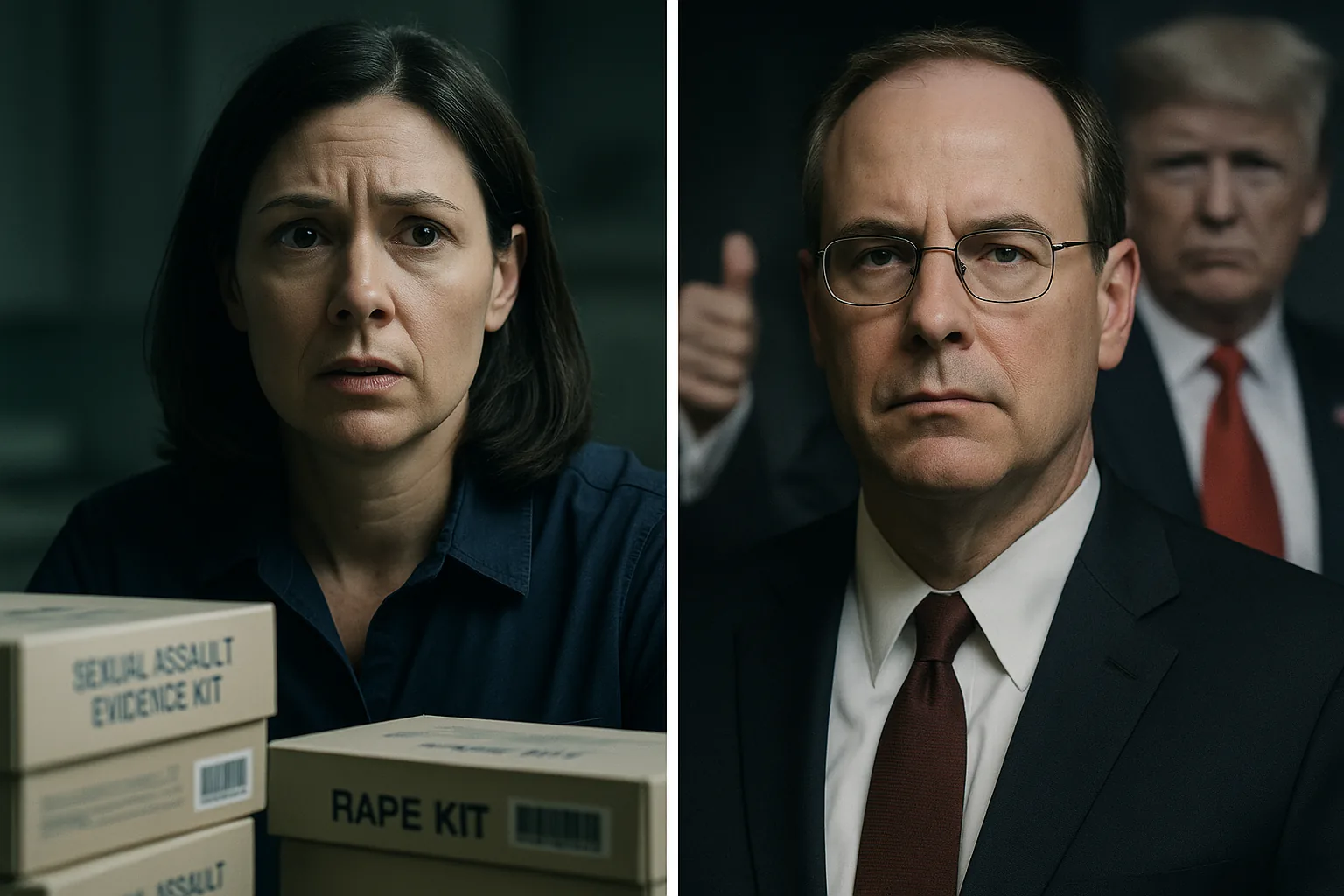
As the 2026 midterm cycle enters its most heated stretch, political advertising is flooding airwaves across competitive Senate battlegrounds — and a misleading campaign ads fact check of two recent Republican super PAC spots reveals how distortion can travel far when it goes unchallenged. One ad, aired by the No Going Back PAC beginning September 10, 2026, targets North Carolina Senate candidate Roy Cooper with a claim about untested rape kits during his tenure as state attorney general. A separate ad, funded by the One Nation super PAC, attacks Georgia Senator Jon Ossoff over his vote against the One Big Beautiful Bill Act — framing a party-line legislative vote as evidence that Ossoff “doesn’t care about people like us.” Both ads have been reviewed by FactCheck.org, which characterizes each as misleading. Understanding precisely why they mislead requires a careful look at the underlying policy record, the institutional structure of law enforcement in North Carolina, and the legislative history of a sweeping 2025 budget reconciliation law.
The Cooper Rape Kit Ad: What the Claim Actually Says
The No Going Back PAC ad makes a stark accusation: that Roy Cooper, during his long tenure as North Carolina’s attorney general, “let 16,000 untested rape kits sit on the shelf.” The image the ad projects is of a negligent official who turned his back on survivors of sexual violence — a charge designed to be emotionally devastating and politically damaging heading into a competitive Senate race.
On its surface, the figure of 16,000 untested kits sounds damning. Rape kit backlogs are a genuine, documented crisis across the United States. Thousands of kits collected from survivors have, in many jurisdictions, gone unprocessed for years or even decades — a failure with real consequences for justice, for survivors, and for public safety. The problem is real, widespread, and serious. That context, however, is precisely what makes the ad’s framing so consequential to examine.
The critical question is not whether a backlog existed, but who bore institutional responsibility for it. And on that question, the ad’s claim does not hold up to scrutiny.
Custody, Jurisdiction, and the Misleading Campaign Ads Fact Check on Cooper
According to FactCheck.org‘s review of the Cooper ad, the untested rape kits in question were not in the custody of the state crime laboratory that Cooper oversaw as attorney general. Instead, those kits were held by hundreds of local law enforcement agencies across North Carolina — city police departments, county sheriff’s offices, and other municipal bodies that operate independently of the state attorney general’s office.
This distinction is not a technicality. It goes to the heart of how law enforcement is structured in the United States. A state attorney general does not have supervisory control over every local police department’s evidence room. The state crime lab, which falls under the attorney general’s authority, processes evidence that is submitted to it. If local agencies choose not to submit kits — for any number of reasons, including resource constraints, case prioritization, or administrative failures at the local level — the state lab has no automatic mechanism to compel submission or even to know the full scope of what sits unsubmitted in local custody.
The ad conflates two entirely different institutional actors: the local agencies that held the kits and did not submit them, and the state-level office that Cooper ran. By saying Cooper “let” those kits sit, the ad implies he had direct authority over them and chose inaction. FactCheck.org characterizes this framing as misleading for exactly that reason — the evidence kits were never in the custody of the state crime laboratory Cooper oversaw, and therefore the decision not to test them was not his to make unilaterally.
This pattern — attributing responsibility to an official for actions that fall outside their institutional jurisdiction — is one of the most common structural moves in attack advertising. It exploits the fact that most voters are not expected to know the precise division of authority between a state attorney general and local law enforcement. The emotional weight of the subject matter (sexual violence, survivors seeking justice) makes it even harder for audiences to pause and ask the structural question: whose job was this, actually?
👉 Read also: Republican Campaign Ads Contain Misleading Claims on Rape Kits and Rural Hospitals in 2026 Election
Broader Context: Rape Kit Backlogs as a National Policy Issue
To evaluate the Cooper ad fairly, it also helps to understand the broader landscape of rape kit reform. Across the country, addressing untested kit backlogs has required sustained legislative action, dedicated federal funding streams, and coordinated efforts between state and local governments. Progress has generally come not from a single official’s decision but from multi-agency initiatives, grant programs, and statutory mandates requiring local agencies to submit kits within defined timeframes.
Several states have enacted laws specifically requiring local law enforcement to submit sexual assault evidence kits to state labs within set windows — precisely because the default system, which relies on local discretion, had produced widespread backlogs. The existence of such reform efforts nationwide underscores that the backlog problem was systemic and structural, not the product of a single official’s negligence. Attributing the entirety of North Carolina’s local-agency backlog to the state attorney general’s office strips away that structural context entirely.
None of this means rape kit policy should be exempt from political scrutiny. Candidates running for office can and should be asked what they did — or did not do — to advocate for reform, to push for legislative solutions, or to use the bully pulpit of a statewide office to pressure local agencies. Those are fair lines of inquiry. But the ad does not make that nuanced argument. It makes a blunt causal claim — that Cooper let 16,000 kits sit — that misrepresents the institutional reality of who controlled those kits.
The Ossoff Ad: Framing a Party-Line Vote as Personal Indifference
The second ad under examination comes from One Nation, a Republican-aligned super PAC, and targets Georgia Senator Jon Ossoff over his vote against the One Big Beautiful Bill Act (OBBBA), a sweeping budget reconciliation law. Ossoff cast his vote against the bill on July 1, 2025 (roll call vote #372). The One Nation ad characterizes this vote as evidence that Ossoff “doesn’t care about people like us.”
The first and most basic fact to establish: the One Big Beautiful Bill Act received zero Democratic votes in either the House or the Senate. Ossoff’s vote against it was not an outlier, an act of personal indifference, or a departure from constituent interests. It was a unanimous Democratic position — a party-line vote on a partisan budget reconciliation measure. Framing his “no” vote as a character failing unique to Ossoff, rather than as a predictable and universal Democratic response to a Republican legislative priority, is itself a form of misleading presentation.
Budget reconciliation bills are inherently complex legislative instruments. They bundle together a wide range of tax, spending, and policy provisions under a single procedural vehicle, allowing passage with a simple Senate majority rather than the 60 votes typically needed to overcome a filibuster. Because they contain so many distinct provisions, they are particularly vulnerable to selective quotation in political advertising — a practice commonly called cherry-picking.
FactCheck.org characterizes the One Nation ad as doing exactly that: cherry-picking specific provisions of the OBBBA to overstate the bill’s benefits or to distort what Ossoff’s vote actually meant in practice. The ad’s claim that Ossoff “doesn’t care about people like us” is a rhetorical assertion dressed up as a factual conclusion, derived from a selectively framed account of a complex piece of legislation.
How Cherry-Picking Distorts Legislative Voting Records
The cherry-picking technique deserves closer examination because it is among the most structurally sophisticated forms of misleading campaign advertising — and one of the hardest for ordinary viewers to detect without extensive background knowledge.
👉 Read also: Deepfake and Out-of-Context Video Compilations Spread False Narratives About Ukraine, Trump, and School Violence
When an ad attacks a legislator’s vote on an omnibus or reconciliation bill, it typically highlights the most popular or sympathetic provisions of that bill while ignoring the provisions the opposing legislator actually objected to. A senator might vote against a reconciliation bill because of its effects on Medicaid, its deficit impact, its changes to tax credits for lower-income households, or any number of other provisions — while fully supporting other elements of the same bill in isolation. The attack ad, however, presents the vote as a wholesale rejection of the bill’s most appealing features, without acknowledging the provisions that drove the opposition.
This approach is effective because it is technically anchored in real votes and real legislation. The bill existed. The vote happened. The provisions highlighted in the ad are genuinely part of the law. What the ad omits is the context that would allow a viewer to form an accurate picture of why the senator voted as they did — and what the full legislative package actually contained. That omission is the mechanism of distortion.
In the Ossoff case, the ad’s tagline — that he “doesn’t care about people like us” — compounds the misleading framing by converting a legislative disagreement into a character judgment. Attributing intent or indifference to a legislator based on a party-line vote on a complex bill is an assessment, not a fact. The vote is a fact. What it reveals about Ossoff’s values or motivations is an interpretation — and one that the ad presents as settled truth.
What These Two Ads Have in Common
Though they target different candidates in different states on different policy subjects, the Cooper and Ossoff ads share a common structural logic. Both take real phenomena — a genuine national problem with rape kit backlogs; a real Senate vote on a real piece of legislation — and strip away the context that would allow viewers to evaluate the claims accurately. Both rely on the audience’s limited familiarity with institutional structure (attorney general jurisdiction vs. local law enforcement custody; the mechanics of reconciliation bills and party-line voting) to make incomplete pictures look like complete ones.
Both ads are also funded by organized Republican super PACs with clear electoral interests in the outcomes of these Senate races. That does not automatically make their claims false — political motivation and factual accuracy are separate questions. But it does mean that the ads are constructed to persuade, not to inform, and that scrutiny of their factual underpinnings is warranted and necessary.
The misleading campaign ads fact check process serves a function that goes beyond adjudicating individual disputes. It models for audiences the questions they should be asking of any political advertisement: Who had institutional authority here? What is the full legislative context? What is being omitted? Is the conclusion presented as fact actually an inference or an assessment? These are not partisan questions. They apply with equal force to ads from any party, in any race, on any subject.
Why Fact-Checking Political Ads Matters in Competitive Races
Senate races in states like North Carolina and Georgia are among the most expensive and consequential in any election cycle. The volume of political advertising in these markets is enormous, and the speed at which ads circulate — across television, digital platforms, and social media — means that misleading claims can reach millions of voters before any correction has a chance to catch up. Research consistently shows that initial impressions formed by political advertising are difficult to dislodge even when corrections are available.
This dynamic places a premium on rapid, rigorous, and publicly accessible fact-checking. Organizations that examine the evidentiary basis of specific ad claims — tracing figures to their sources, checking jurisdictional authority, reviewing voting records in full — provide a public service that is distinct from partisan commentary. The goal is not to declare winners and losers in a political argument, but to establish what the underlying facts actually are so that voters can make judgments on accurate information.
In both the Cooper and Ossoff cases, the underlying facts are accessible and verifiable. The institutional structure of North Carolina law enforcement is a matter of public record. The roll call vote on the One Big Beautiful Bill Act is documented. The unanimous Democratic opposition to the OBBBA is a straightforward historical fact. What the ads do is build a narrative structure around those facts that leads viewers toward conclusions the facts themselves do not support — and that, precisely, is what makes them misleading rather than simply partisan. Voters in competitive Senate races deserve to know the difference, and the work of verifying those claims — methodically, without drama, and from primary sources — remains as important in 2026 as it has ever been.
This article was produced with AI assistance and reviewed editorially.

Political Ads in 2026 Midterms Contain False or Misleading Claims About Opponents

Trump Administration ‘Super Intelligence’ Accord Misspells ‘United States’ as ‘Unites States’

Trump Administration ‘Super Intelligence’ Accord Misspells ‘United States’ as ‘Unites States’

No Going Back PAC Ad Makes Misleading Claim About Roy Cooper and Rape Kits
