
Current Affairs
Political Ads Mislead on Senate Candidates: Collins-Epstein, Cooper Rape Kits Claims Fact-Checked
Democratic and Republican super PACs ran false claims in 2026 Senate ads. Fact-checkers debunked Collins-Epstein links and Cooper rape kit attacks.

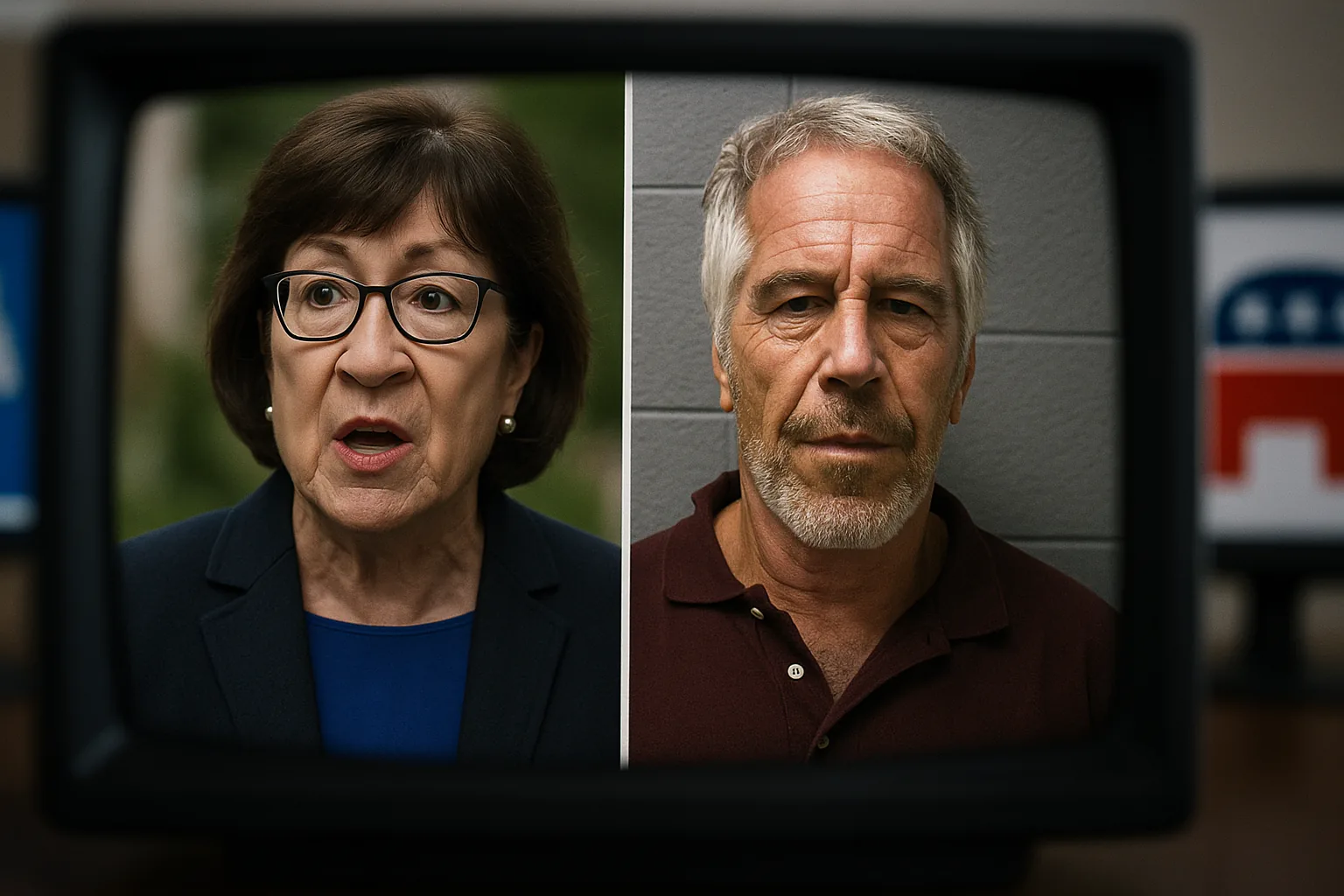
As the 2026 Senate campaign season enters its final stretch, voters across the country are being bombarded with political advertisements from outside spending groups — and not all of those ads tell the full story. Two recent examples, one targeting Republican incumbent Susan Collins of Maine and another targeting Democratic candidate Roy Cooper of North Carolina, illustrate how misleading political ads Senate campaigns attract can distort candidates’ records in ways that are technically rooted in real events but stripped of essential context. Both advertisements have been reviewed by independent fact-checkers, and both have been found to mislead.
The Collins-Epstein Advertisement: What the Ad Claims and What the Evidence Shows
In October 2026, a Democratic super PAC began running advertisements in Maine that drew a connection between Senator Collins and the late convicted sex offender Jeffrey Epstein. The nature of political advertising means that even a tenuous association, when presented without context, can leave voters with a substantially false impression — and that appears to be precisely what happened here.
FactCheck.org reviewed the advertisement and concluded that it misleadingly connects Collins to Epstein. According to FactCheck.org’s analysis, the ad lacks credible evidence to support the implied association it draws between the senator and Epstein. The advertisement appears to exploit public interest in the so-called Epstein files — documents and records related to the federal investigation into Epstein’s trafficking network — to suggest a connection that the available record does not bear out.
Separately, PolitiFact examined the advertisement and found that it cherry-picks Collins’s voting record on matters related to the Epstein files. PolitiFact also found no evidence to support the claim that Stephen Schwarzman — a prominent financier whose name appeared in the ad’s narrative — was Epstein’s business partner. That finding is significant: if the advertisement’s implied chain of association depends on a factual link between Schwarzman and Epstein that does not exist, the entire framing of the ad collapses under scrutiny.
It is worth being precise about what the fact-checkers did and did not establish. The reviews confirm that the advertisement is misleading in its framing and that at least one specific factual claim within it — the Schwarzman-Epstein business partnership — lacks evidentiary support. What remains less clear from the public record is the full scope of every assertion the ad makes, including any specific financial claims about donations to Collins-aligned committees. Voters encountering the advertisement should be aware that its central premise has not held up to independent review.
How Cherry-Picking Voting Records Creates a False Picture
The technique PolitiFact identified — cherry-picking a vote — is one of the most common mechanisms behind misleading political ads in Senate races. A senator casts hundreds of votes during a term. Selecting one vote, presenting it without the surrounding legislative context, and then connecting it to an unrelated and emotionally charged subject is a reliable way to create an impression that the full record would not support.
In Collins’s case, the advertisement appears to have taken a vote related to Epstein-connected materials and presented it as evidence of something the vote itself does not establish. A vote against a particular procedural measure, for instance, can be reframed as a vote for concealment — even when the senator’s actual reasoning, the procedural posture of the legislation, or the substance of what was being voted on tells a different story entirely.
👉 Read also: Republican Campaign Ads in 2026 Senate Races: Three Fact-Checks of Misleading Claims
This pattern is not unique to one party or one election cycle. What makes the current moment distinctive is the volume and speed at which such advertisements can reach voters through digital platforms, often without the kind of editorial scrutiny that traditional broadcast advertising sometimes receives. By the time a fact-check is published, an ad may have already reached millions of impressions.
The Roy Cooper Rape Kit Advertisement: Jurisdiction and Responsibility
The second advertisement under examination targets Roy Cooper, who served as North Carolina’s attorney general before becoming the state’s governor, and who is now a candidate in the 2026 Senate race. The No Going Back PAC, a Republican super PAC, began airing an advertisement on September 10, 2026, that accused Cooper of having “let 16,000 untested rape kits sit on the shelf” during his tenure as attorney general.
The claim is emotionally powerful. Untested rape kits represent a genuine and serious problem in American law enforcement — thousands of survivors of sexual assault have waited years, sometimes decades, for the evidence collected from their bodies to be processed. Any politician who contributed to such a backlog would face legitimate scrutiny. The problem with this advertisement, according to FactCheck.org and reporting by NC Political News, is that it fundamentally misrepresents how rape kit testing jurisdiction works in North Carolina.
According to FactCheck.org’s review, the rape kits referenced in the advertisement were in the custody of hundreds of local law enforcement agencies across North Carolina — not the state attorney general’s office. Those agencies are responsible for submitting evidence to the state crime laboratory for testing. The state crime laboratory, which Cooper oversaw as attorney general, tests kits that are submitted to it. It does not have independent authority to compel local agencies to submit evidence, and it does not warehouse rape kits that have not been sent to it.
In other words, the advertisement attributes responsibility for a backlog that existed at the local law enforcement level to a state official whose office had no direct custody of that evidence. FactCheck.org found the advertisement gives a misleading account of the rape kit situation during Cooper’s tenure. NC Political News similarly reported that independent fact-checkers found the ad’s framing to be misleading.
Why Jurisdictional Nuance Matters in Political Fact-Checking
The Cooper rape kit example illustrates a specific and recurring problem in political advertising: the strategic blurring of jurisdictional lines. Government in the United States is divided across federal, state, and local levels, and within each level, responsibilities are further divided among agencies, offices, and officials. When an advertisement holds a state official accountable for a local agency’s failure — or a federal official accountable for a state outcome — it exploits the fact that most voters do not have the time or resources to trace precisely who was responsible for what.
This is not a trivial distinction. Accountability in a democracy depends on voters being able to assign credit and blame accurately. If a senator is blamed for a policy outcome that was actually the result of a local government decision, or if an attorney general is blamed for evidence that never entered his office’s custody, voters cannot make informed judgments about whether that official deserves to continue in public life.
👉 Read also: Republican Campaign Ads Contain Misleading Claims on Rape Kits and Rural Hospitals in 2026 Election
The rape kit issue is particularly sensitive because it involves real survivors of sexual violence. Using their experiences as the basis for a misleading political attack compounds the original harm by subordinating a genuine public-health and justice crisis to short-term electoral strategy. That observation applies regardless of which party runs such an advertisement.
The Broader Pattern: Outside Groups and the 2026 Senate Cycle
Both of the advertisements examined here were produced and aired not by the candidates’ own campaigns but by outside spending groups — super PACs operating independently under campaign finance rules that permit them to raise and spend unlimited sums on political advertising, provided they do not formally coordinate with the candidates they support or oppose. This structure creates a specific accountability gap: when an advertisement is found to be misleading, the candidate who benefits from it can disclaim responsibility, while the super PAC faces no meaningful legal consequence for the inaccuracy.
The 2026 Senate cycle has been particularly active for outside spending groups, with competitive races in multiple states drawing significant investment from organizations on both sides of the partisan divide. Misleading political ads in Senate races are not a new phenomenon, but the scale and sophistication of current campaigns — including micro-targeted digital advertising, rapid production cycles, and the use of real documentary footage stripped of context — have made the problem more acute.
Voters who want to evaluate political advertisements critically have access to resources that did not exist in earlier election cycles. Organizations such as FactCheck.org, a nonpartisan project of the Annenberg Public Policy Center, review specific claims made in political advertising and publish their findings with sourcing. Neither the Collins nor the Cooper advertisement survived independent fact-checking intact.
What Voters Can Do When Encountering Political Advertising
The two cases examined here share a common structure: a true or partially true underlying fact — Collins did cast votes related to Epstein-related legislation; North Carolina did have a rape kit backlog — is presented in a way that implies a conclusion the full evidence does not support. Recognizing this pattern is the first step toward evaluating political advertising more accurately.
Several practical questions can help voters assess an advertisement’s reliability. First, who paid for the ad? Disclosures at the end of political advertisements identify the sponsoring organization. Super PAC names rarely reveal their actual funders or ideological orientation, but the name itself is a starting point for further research. Second, what specific claim is being made? Vague associations — a candidate is “connected to” a controversial figure, or “let” a problem persist — are harder to verify than concrete factual assertions, and that vagueness is often intentional. Third, has the claim been fact-checked? A search of the candidate’s name alongside the claim’s subject will often surface independent reviews within days of an advertisement’s release.
Neither Susan Collins nor Roy Cooper is the subject of verified wrongdoing based on the advertisements examined here. What the fact-checking record establishes is that the advertisements targeting them contain misleading elements — elements that, if accepted at face value, would give voters a distorted picture of each candidate’s record. In a competitive Senate environment where outside groups are spending heavily to shape perceptions, that distortion is precisely the point. Understanding how it works is the most reliable defense against it.
The Collins and Cooper cases are unlikely to be the last examples of misleading political ads in Senate contests this cycle. As Election Day approaches, the volume of outside spending typically increases, and the scrutiny applied to individual advertisements rarely keeps pace with the rate at which new ones are produced. Independent fact-checking organizations will continue to review specific claims, but the gap between an advertisement’s reach and a fact-check’s audience remains wide. Closing that gap depends, in large part, on voters actively seeking out verification rather than waiting for it to find them.
This article was produced with AI assistance and reviewed editorially.

Political Ads in 2026 Midterms Contain False or Misleading Claims About Opponents

Trump Administration ‘Super Intelligence’ Accord Misspells ‘United States’ as ‘Unites States’

Trump Administration ‘Super Intelligence’ Accord Misspells ‘United States’ as ‘Unites States’

No Going Back PAC Ad Makes Misleading Claim About Roy Cooper and Rape Kits
