
Information
Viral Videos Misidentify Unrelated Footage as Recent Events
The spread of viral videos false claims has accelerated to a pace that challenges even experienced news consumers in the autumn of 2026. Footage filmed mon

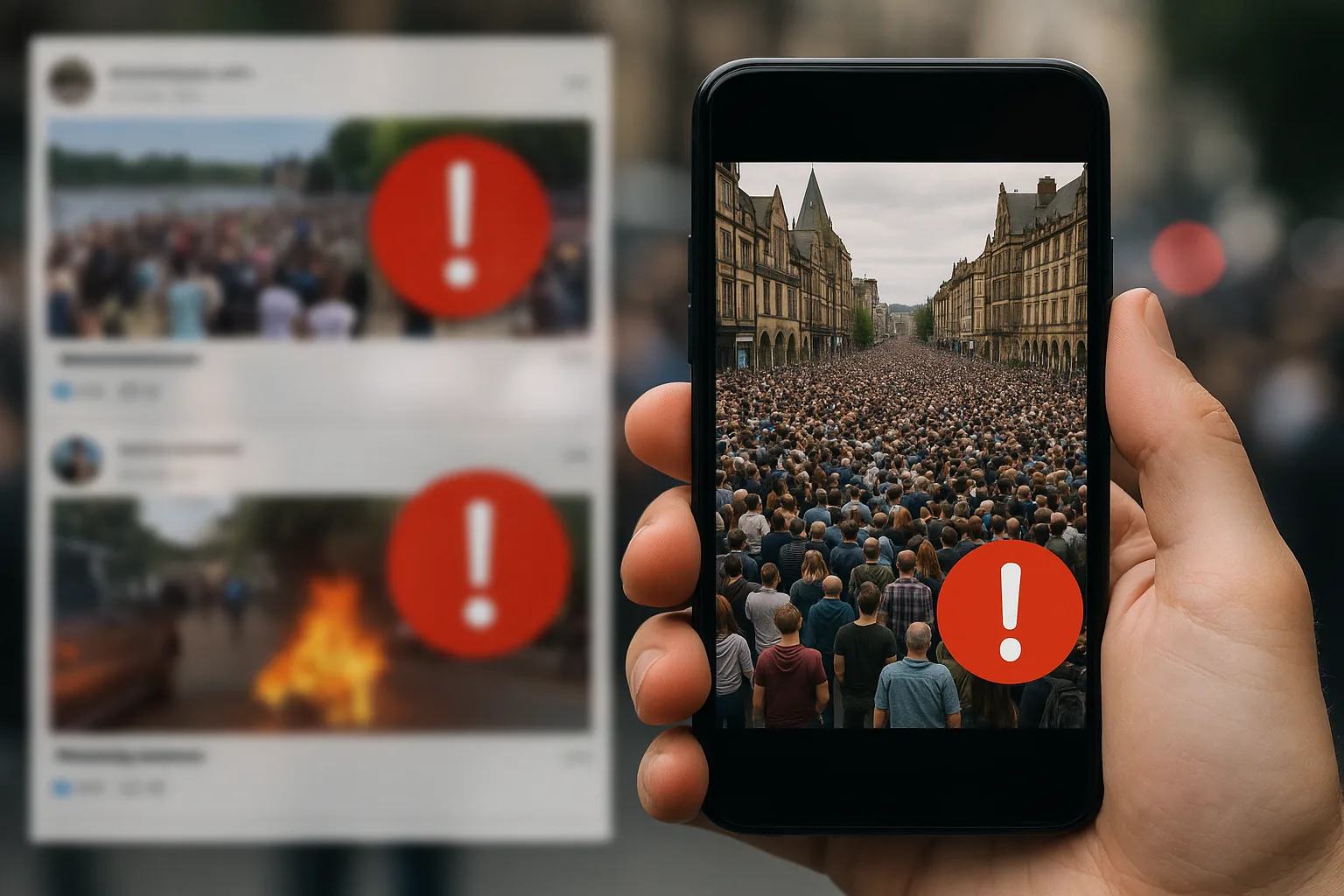
The spread of viral videos false claims has accelerated to a pace that challenges even experienced news consumers in the autumn of 2026. Footage filmed months or years earlier is being stripped of its original context, relabeled with urgent captions, and pushed across social media platforms where it accumulates millions of views before any correction reaches the same audience. The pattern is not new, but its scale, sophistication, and real-world consequences are growing in ways that demand a clear-eyed understanding of how the deception works and what can be done about it.
How Old Footage Gets Repackaged as Breaking News
The mechanics of video misidentification follow a recognizable template. A clip — sometimes genuinely dramatic, sometimes mundane — is recorded and uploaded to a platform. It may circulate modestly in its original context, then fade. Months or years later, a news event occurs that the footage superficially resembles: a crowd disturbance, an explosion, a protest, a natural disaster. Someone reposts the old clip with a new caption asserting it shows the current event. The claim spreads fastest in the first few hours, precisely when verification infrastructure is slowest to respond.
What makes the phenomenon particularly effective is the emotional register of the content. Videos that provoke strong reactions — fear, anger, solidarity, outrage — travel further and faster than neutral content. A clip of people running, of smoke rising over a city skyline, or of a large crowd behaving chaotically carries an implicit urgency that bypasses the viewer’s critical instinct. By the time a fact-checker publishes a correction, the original post may have been shared tens of thousands of times, and the correction reaches only a fraction of that audience.
Compilation videos add another layer of complexity. Rather than a single misidentified clip, these packages stitch together multiple pieces of footage — some authentic, some fabricated, some AI-generated — to construct a coherent-seeming visual narrative. Verified fact-checkers documented exactly this technique when a viral compilation inaccurately depicted recent U.S. strikes in Iran using repurposed and AI-generated clips. The mixture of real and synthetic material is deliberate in its effect: the authentic footage lends credibility to the fabricated segments, and the fabricated segments fill gaps that real footage cannot supply.
Documented Cases of Viral Videos False Claims in 2026
Several specific, verified examples from the current period illustrate how diverse the targets and techniques can be.
Manufactured Crisis Footage
The Iran strike compilation is among the clearest documented cases. Fact-checkers established that the video package combined clips from unrelated events with AI-generated imagery to create the impression of a coherent, recent military engagement. Viewers encountering the compilation had no obvious visual cue to distinguish authentic archival footage from synthetic material. The AI-generated segments, in particular, were polished enough to pass casual scrutiny, underscoring how rapidly the technical barrier to fabricating convincing video has dropped.
Misrepresenting Police and Civil-Order Actions
A separate, verified case involved footage and reporting around police activity near a British port. Reuters fact-checkers established that officers had issued dispersal orders to a group of individuals protesting about irregular cross-Channel migration — a targeted, legally specific action. Online posts transformed this into claims that an entire town had been placed under lockdown. The distinction matters enormously: a dispersal order affecting a small group of protesters is legally and practically different from a town-wide lockdown, yet the video and accompanying claims were framed to suggest the latter. The emotional resonance of “lockdown” — a word freighted with pandemic-era associations — amplified the post’s reach.
👉 Read also: Mislabeled and Recycled Videos Spread Online as Recent Events in September 2026
Symbols, Flags, and Invented Bans
Not all viral video misidentification involves dramatic footage. Reuters also documented a case in which a British city council’s application for a legal order — specifically, an order to deter people from attaching flags to street furniture — was reframed online as a blanket ban on England flags in public spaces. No video of a flag removal or a confrontation was necessary; the misrepresentation operated through selective quotation and decontextualization of a procedural document. The claim circulated widely because it tapped into existing anxieties about national identity and perceived cultural suppression.
Out-of-Date Footage Presented as Current
Audio manipulation represents another documented variant. In one verified case, screaming audio was added to an unrelated video filmed on a plane, and the composite was posted with false captions implying a real in-flight emergency. The technique is simple and requires no sophisticated tools: a video editing application available on any smartphone can overlay audio tracks. The result is a clip that sounds alarming even when the underlying imagery is innocuous. Viewers who turn the sound off see nothing frightening; viewers who watch with audio are primed to interpret the images as dangerous.
A further documented example concerned Hurricane Milton in October 2024. A video compilation was misrepresented as showing scenes from that storm, when in fact the footage came from unrelated events. Natural disasters are a recurring target for this kind of misidentification: the chaos and destruction associated with major weather events makes it easy to present almost any dramatic outdoor footage as consistent with the claimed event.
The Role of AI-Generated Media in Amplifying the Problem
Artificial intelligence has changed the landscape of viral videos false claims in two distinct ways. First, it has lowered the cost of producing synthetic footage that is visually convincing at normal viewing speeds. Second, it has made it harder for non-specialist viewers to identify fabricated material by inspection alone. Older deepfakes often contained telltale artifacts — unnatural blinking, distorted backgrounds, inconsistent lighting — that a careful viewer could spot. Current AI video generation has reduced many of these artifacts to the point where they are detectable only with specialized forensic tools.
The Iran strike compilation illustrates the practical consequence: when real archival footage is mixed with AI-generated material in a single package, the authenticity of the real clips tends to validate the synthetic ones in the viewer’s perception. This halo effect is one of the most significant challenges facing media literacy efforts, because it means that the presence of some genuine footage is no longer a reliable signal that the rest of the content is authentic.
Platforms have invested in detection systems, but the arms-race dynamic is unfavorable: generating convincing synthetic video is cheaper and faster than detecting it at scale. The result is an environment in which the burden of verification has effectively shifted to the viewer — a burden that most viewers are not equipped to carry without institutional support.
Why Corrections Fail to Catch Up
Understanding why corrections underperform is as important as understanding how false claims spread. Several structural factors are at work.
👉 Read also: Viral Videos Claiming to Show Recent Events Are AI-Generated or Mislabeled Footage
- Asymmetric speed: A false video can be posted, shared, and viewed millions of times within hours. A rigorous fact-check requires source verification, expert consultation, and editorial review — processes that take at minimum several hours and often longer.
- Algorithmic amplification: Engagement-driven recommendation systems reward content that provokes strong emotional responses. False or misleading videos frequently outperform corrections on this metric, because corrections are by nature measured and qualified.
- Confirmation bias: Viewers are more likely to share content that confirms existing beliefs and less likely to engage with corrections that challenge those beliefs. A false video that aligns with a viewer’s worldview faces a lower credibility threshold than a correction that contradicts it.
- Correction reach: Even when a platform applies a label or a fact-check appends a note to a post, the correction typically reaches only users who encounter the original post after the label is applied. Users who shared the post before labeling, and the audiences of those shares, may never see the correction.
Practical Verification Steps for Everyday Viewers
While institutional fact-checking remains essential, individual viewers can apply a set of practical checks before sharing video content that makes dramatic claims about current events.
Reverse Video Search
Several tools allow users to extract a frame from a video and search for earlier appearances of that image online. If a clip claiming to show a 2026 event returns results from 2023 or 2024, the date discrepancy is a strong indicator of misidentification. This technique is not foolproof — AI-generated footage will not return earlier results — but it catches a large proportion of recycled archival material.
Check the Audio Independently
As the plane-audio case demonstrates, the visual and audio components of a video can originate from entirely different events. Watching a clip with the sound muted and then listening with eyes closed can help separate the two streams of information and identify inconsistencies — for example, crowd noise that does not match the number of people visible, or sound effects that seem disproportionate to the action shown.
Look for Corroboration from Multiple Independent Sources
A genuine major event — a large-scale military strike, a natural disaster, a significant civil disturbance — will be covered by multiple news organizations working independently. If a dramatic video is circulating but no established news outlet has published corroborating reporting, that absence is informative. It does not prove the video is false, but it justifies withholding judgment until corroboration appears.
Read the Claim Precisely
The flags case is a reminder that misrepresentation often operates through imprecision rather than outright fabrication. A council applying for an order about street furniture is not the same as a government banning national symbols. Training yourself to read official documents and news reports precisely — noting what is actually claimed versus what is implied — is one of the most durable defenses against viral videos false claims and the text-based misrepresentation that accompanies them.
The Broader Information Environment
The verified cases from September and October 2026 sit within a broader pattern that researchers and journalists have tracked for several years. What distinguishes the current moment is the convergence of three factors: the maturation of AI video generation, the global reach of social media distribution, and a news cycle characterized by genuine geopolitical volatility. When real events are dramatic and rapidly evolving, the conditions for misidentification are optimal — audiences are primed to believe that dramatic footage is plausible, and the pace of events outstrips the capacity of verification systems.
The UEFA screenshot case documented by Reuters adds a further dimension: static images, not just videos, are subject to the same decontextualization. A photograph of a public figure delivering a speech five years earlier can be presented as evidence of a current statement or position, with the date stripped away. The visual grammar of a screenshot — the apparent immediacy of a captured moment — lends it a false currency that the underlying content does not possess.
None of this means that all dramatic footage is suspect, or that skepticism should harden into reflexive disbelief. The goal of media literacy is calibrated judgment, not paralysis. Verified, genuine footage of real events continues to serve a vital function in public understanding of the world. The discipline required is to distinguish between footage that has been verified and footage that has merely been shared widely — a distinction that platforms, educators, and individual viewers all have a role in maintaining. The documented cases of viral videos false claims in 2026 are a reminder that this discipline is not optional; it is a practical necessity for anyone navigating the contemporary information environment.
This article was produced with AI assistance and reviewed editorially.

Political Ads in 2026 Midterms Contain False or Misleading Claims About Opponents

Trump Administration ‘Super Intelligence’ Accord Misspells ‘United States’ as ‘Unites States’

Trump Administration ‘Super Intelligence’ Accord Misspells ‘United States’ as ‘Unites States’

No Going Back PAC Ad Makes Misleading Claim About Roy Cooper and Rape Kits
