
Current Affairs
Fabricated Missile and Attack Videos
Across social media platforms in 2026, a wave of fake missile attack videos has demonstrated with alarming clarity how quickly fabricated footage can outru

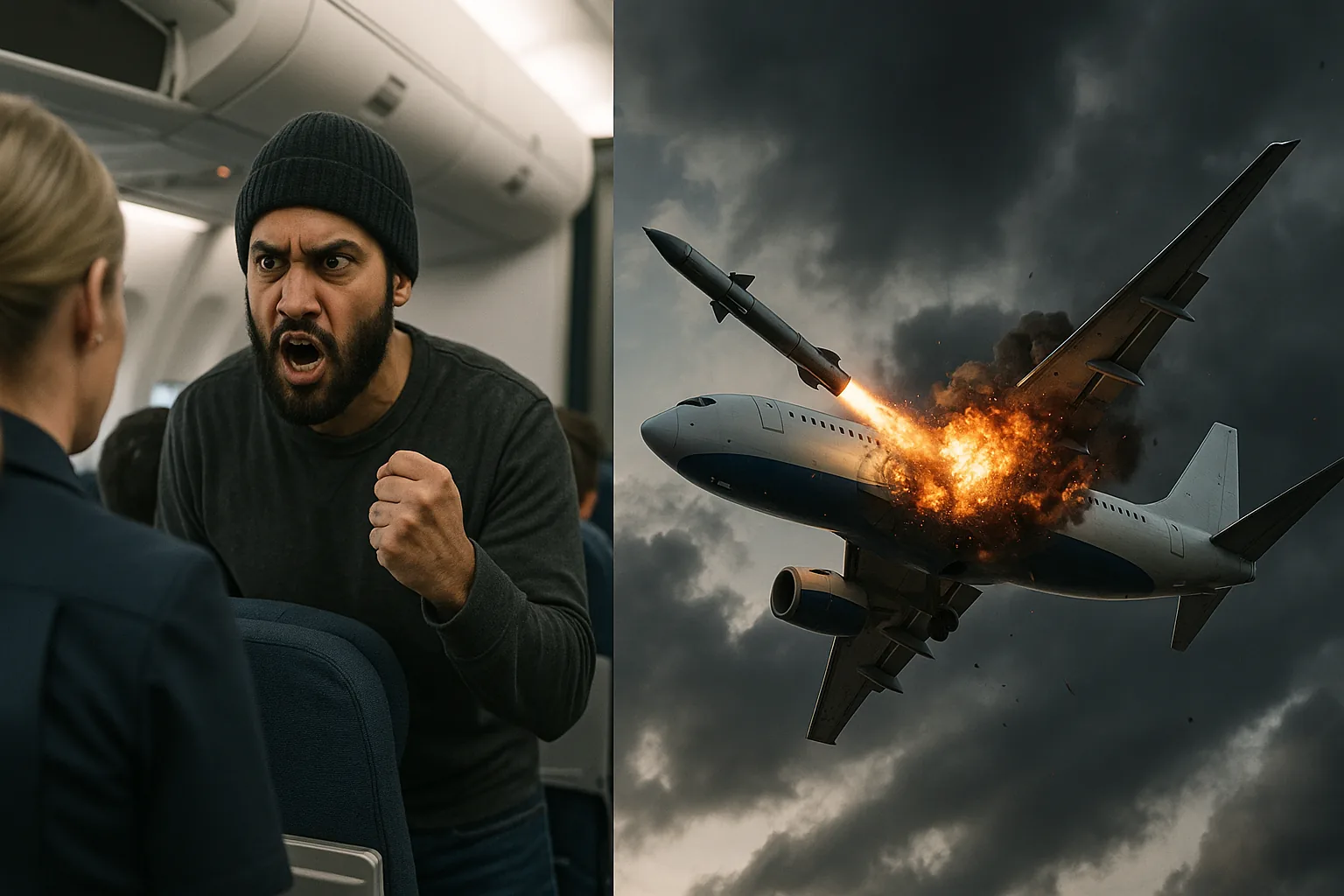
Across social media platforms in 2026, a wave of fake missile attack videos has demonstrated with alarming clarity how quickly fabricated footage can outrun the truth. Clips purporting to show missiles destroying civilian aircraft, reducing city skylines to rubble, and threatening passengers aboard commercial flights have collectively accumulated tens of millions of views — often before a single fact-checker has had the chance to examine a single frame. Understanding how these videos are made, how they spread, and how to distinguish them from genuine documentation is no longer an optional skill for the digitally literate; it is a baseline requirement for anyone who consumes news online.
The Saudia Airliner Video: A Case Study in Fabricated Aviation Footage
One of the most widely circulated examples involves a video that falsely depicts a missile striking a Saudia airliner at an airport in Riyadh. The clip was shared across multiple platforms with captions asserting it showed a real, ongoing attack on Saudi civil aviation infrastructure. Viewers who encountered it in their feeds — often without accompanying context — had little immediate reason to doubt what they were seeing: the footage appeared to show a large commercial aircraft, airport surroundings recognizable to anyone familiar with major Gulf hubs, and the kind of dramatic explosion that dominates breaking-news imagery.
What made this video particularly deceptive was the availability of real aftermath photographs from the same location. Fact-checkers who compared the fabricated footage against verified ground-level images found significant discrepancies: structural details that did not match, lighting conditions inconsistent with the claimed time of day, and — crucially — no corroborating evidence from airport authorities, aviation regulators, or independent journalists on the ground. The real aftermath photos showed a very different scene from what the video depicted, and no credible news organization reported an attack matching the video’s claims.
This comparison method — placing fabricated footage directly alongside verified photographic evidence — is one of the most effective tools available to fact-checkers. When a video makes a claim about a specific, identifiable location, open-source investigators can cross-reference satellite imagery, architectural details, and official incident reports to test whether the footage is consistent with reality. In the Saudia airliner case, that cross-referencing revealed the video to be fabricated. The specific date of the alleged attack was not confirmed in available sources, which is itself a red flag: genuine aviation incidents generate immediate, dateable records from civil aviation authorities, airline spokespeople, and airport management.
AI-Generated Footage and the Iran-Israel Conflict
The most prolific category of fake missile attack videos documented in 2026 relates to the ongoing tensions between Iran and Israel. Multiple distinct fabricated clips emerged in this context, each making dramatic claims that proved, on examination, to be entirely without foundation.
In March 2026, footage described as showing Iranian missiles striking Tel Aviv circulated widely on social media. Reuters reported that three independent experts assessed the footage as likely AI-generated, identifying telltale signs of synthetic video production. Around the same period, a separate clip falsely claimed to show Iran destroying Tel Aviv’s Ben Gurion Airport in a missile strike. That video was examined and flagged as AI-generated by researchers at CyberPeace, an organization that tracks digital misinformation. A third clip purported to show an Iranian missile attack filmed from the cockpit of a Kuwaiti pilot’s aircraft — a framing that lent the footage an air of firsthand authenticity. CyberPeace also identified this video as AI-generated and falsely shared.
👉 Read also: Flydubai September 2026 Incident Spawns Wave of Fabricated Videos and Deepfakes
Taken together, these clips formed a coordinated visual narrative about a large-scale Iranian attack on Israeli civilian and military infrastructure that, according to available verified records, did not occur in the form depicted. CBS News documented AI-generated videos purporting to show high-rise buildings reduced to rubble in Tel Aviv and a downed Israeli military aircraft — imagery designed to convey the scale of a catastrophic strike. One viral video appearing to show missiles fired at planes during a nighttime attack was viewed 22 million times before its AI origins were widely reported.
The sheer reach of that single clip illustrates the core asymmetry of the problem. A fabricated video can be produced, uploaded, and shared millions of times within hours. The fact-checking process — which requires sourcing independent experts, cross-referencing open-source data, contacting official bodies, and writing up findings — takes considerably longer. By the time a verdict is published, the false impression has already been formed in the minds of a large audience, many of whom will never encounter the correction.
How AI Video Generation Creates Convincing Fake Footage
The technical landscape underlying fake missile attack videos has shifted dramatically in recent years. Early fabricated conflict footage tended to rely on repurposed clips from video games, older conflicts, or unrelated events mislabeled with new captions. Those techniques, while still in use, are now supplemented by generative AI tools capable of producing entirely synthetic video from text prompts.
Modern AI video generation can produce footage of explosions, aircraft, missile trails, and urban destruction that is visually plausible at the resolution most users encounter on a smartphone screen. The outputs are not perfect — experts examining footage frame by frame can identify artifacts, unnatural motion blur, inconsistent light sourcing, and physics that do not behave as they would in the real world. Buildings may collapse in ways that contradict how structures actually fail under blast pressure. Smoke plumes may move against the wind direction implied by other environmental cues. Reflections and shadows may be internally inconsistent.
However, these artifacts are difficult to detect when a video is watched casually, at compressed social-media quality, on a small screen, and without the expectation of scrutiny. The emotional impact of dramatic imagery — a fireball, a falling aircraft, a cityscape in flames — can override the analytical impulse that would otherwise prompt a viewer to pause and question what they are seeing. This is not a failure of individual intelligence; it is a documented feature of how human attention and emotion interact with visual media.
Several specific technical markers help analysts identify AI-generated conflict footage. Temporal inconsistencies — moments where the video appears to skip or loop — are common in early-generation AI outputs. Edge artifacts around moving objects, particularly aircraft and projectiles against sky backgrounds, often betray synthetic origin. Metadata analysis of video files can reveal encoding patterns inconsistent with the camera hardware that would have been used to capture genuine footage in the field. And reverse image and video search can establish whether footage has appeared in a different context before being recaptioned and recirculated.
The Anatomy of a Viral Fake: Why These Videos Spread
Understanding the spread of fabricated conflict footage requires looking beyond the technical production of the videos themselves. The social dynamics that amplify fake missile attack videos are at least as important as the tools used to create them.
👉 Read also: AI-Generated and Manipulated Videos Spread Misinformation on Flydubai Attack
Conflict-related footage occupies a privileged position in social media engagement hierarchies. Platforms tend to amplify content that generates rapid, intense interaction — and few categories of content produce faster or more intense reactions than apparent footage of military strikes on civilian targets. A video appearing to show a missile hitting a passenger aircraft at a major international airport triggers fear, outrage, and the impulse to share — both to warn others and to participate in what feels like a significant moment of collective witness.
This dynamic is compounded by the context collapse inherent in social media sharing. A video uploaded with a specific caption on one platform may be downloaded and re-uploaded on another with a different caption, different timestamps, and different implied context. By the third or fourth generation of sharing, the video may have shed all of its original metadata and be circulating with claims that bear no relationship to whatever the original uploader intended. Tracking a piece of fabricated footage back to its origin is painstaking work, and the trail often goes cold.
Platform design also plays a role. Autoplay features mean that users may watch several seconds of a fabricated video before they have consciously chosen to engage with it. Algorithmic recommendation systems may surface conflict footage to users who have previously engaged with geopolitical content, regardless of whether that footage has been verified. Warning labels and fact-check overlays, where they exist, are often applied after a video has already achieved significant reach.
Verification Techniques Anyone Can Apply
While professional fact-checkers have access to specialized tools and expert networks, there are practical verification steps that any reader can apply before sharing content that appears to show a missile attack or aviation security incident.
- Search for corroborating news coverage. A genuine missile strike on a commercial airliner at a major international airport would generate immediate, extensive coverage from multiple independent news organizations. If a video is circulating but no established outlet is reporting the event it claims to show, that absence is significant.
- Check the official sources. Civil aviation authorities, airport management bodies, and airline communications teams issue statements rapidly when incidents occur. If none of these bodies have acknowledged an event, the video’s claims deserve serious skepticism.
- Use reverse video search. Tools that allow users to search by video frame can reveal whether footage has appeared previously in a different context — for example, as footage from a video game, an older conflict, or an unrelated industrial accident.
- Look for physical inconsistencies. Does the lighting match the claimed time of day? Does the geography match the claimed location? Do the aircraft livery and airport infrastructure match what is known about the claimed site?
- Examine the account sharing the content. Accounts with short histories, no profile photographs, and patterns of sharing only inflammatory content are common vectors for fabricated footage. This does not prove a video is fake, but it is a reason to apply additional scrutiny.
- Check the metadata where possible. On some platforms, video upload dates and encoding information are accessible and can contradict claims about when and where footage was captured.
The Real-World Stakes of Fabricated Conflict Footage
The consequences of fake missile attack videos circulating at scale are not abstract. When millions of people believe they have witnessed an attack that did not occur, or that occurred in a substantially different form, the effects ripple outward in concrete ways. Public pressure on governments to respond to events that did not happen can be significant. Financial markets can react to false reports of attacks on critical infrastructure. Diplomatic relationships can be strained by the viral spread of footage that attributes violence to a specific actor without evidence.
At the individual level, passengers who encounter fabricated videos about aviation threats may experience genuine fear about travel. Communities near the locations depicted in fake footage may face unnecessary alarm. And the cumulative effect of repeated exposure to fabricated crisis imagery — even when individual pieces of footage are later debunked — can erode trust in legitimate documentation of real events. When everything looks potentially fake, genuine footage of real incidents faces a higher burden of proof in the public mind.
This erosion of epistemic trust is perhaps the most durable harm caused by the proliferation of AI-generated and manipulated conflict footage. The goal of media literacy in this environment is not simply to catch individual fakes, but to build the habits of verification that allow people to engage with visual information critically without becoming so skeptical that they dismiss genuine evidence of real events. That balance — between appropriate skepticism and continued openness to documented reality — is what fabricated footage, at its most corrosive, works to undermine. Maintaining it requires ongoing vigilance, reliable institutional fact-checking, and a public that understands the tools being used against its capacity to know what is true.
This article was produced with AI assistance and reviewed editorially.

Political Ads in 2026 Midterms Contain False or Misleading Claims About Opponents

Trump Administration ‘Super Intelligence’ Accord Misspells ‘United States’ as ‘Unites States’

Trump Administration ‘Super Intelligence’ Accord Misspells ‘United States’ as ‘Unites States’

No Going Back PAC Ad Makes Misleading Claim About Roy Cooper and Rape Kits
