
Current Affairs
Viral Quotes Attributed to Trump, Denzel Washington, and Buzz Aldrin Are Unverified or Fabricated
Fabricated quotes attributed to celebrities and politicians spread rapidly online without credible sources. Denzel Washington, Matthew McConaughey, and Buzz Aldrin quotes

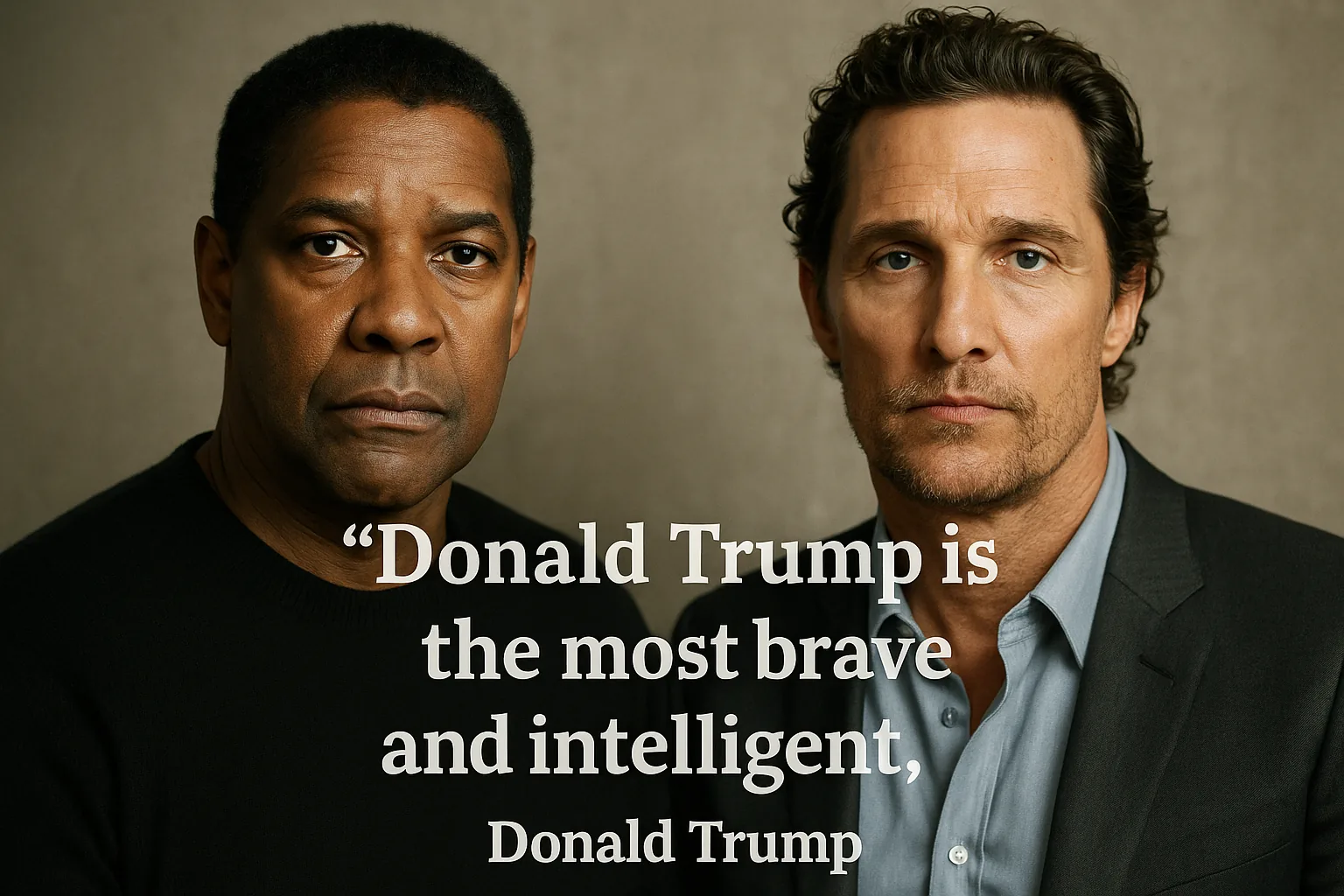
Fabricated and misattributed quotations have become one of the most persistent forms of misinformation circulating across social media platforms in the mid-2020s. The problem of viral quotes fake attribution is not new, but the speed at which a single invented sentence can be shared millions of times — attached to a famous face and accepted without scrutiny — has grown dramatically. In October 2026, several distinct cases illustrate the phenomenon with unusual clarity: a quote praising Donald Trump’s character has been attached to at least two different celebrities in different versions of the same post, an astronaut’s name has been pressed into service to amplify a conspiracy theory, and a running collection of fabricated statements attributed to Trump himself continues to expand. Understanding how these attributions spread, and why they are so difficult to correct, matters for anyone who consumes news or shares content online.
How False Attribution Works — and Why It Sticks
A misattributed quote typically follows a recognisable pattern. Someone writes or repurposes a statement — sometimes flattering, sometimes alarming — and pairs it with the name of a trusted or famous person. The logic is straightforward: a claim gains authority from the person it is attached to. If a decorated actor, a celebrated musician, or a pioneering astronaut supposedly said something, the implied endorsement carries weight that the same words, spoken by an anonymous internet user, never would.
The mechanism is reinforced by the visual design of social media. A quote card — bold text on a coloured background, often accompanied by a photograph of the named person — mimics the aesthetic of legitimate journalism or official statements. Readers scrolling quickly may register the image and the name without pausing to ask whether the quotation has a verifiable source. No interview transcript, no video clip, no contemporaneous news report is required for the post to spread. The visual shorthand does the work.
Psychologists and media researchers have long noted that illusory truth — the tendency to believe repeated information more readily than novel information — compounds the problem. Once a quote has circulated widely, correcting it requires not just presenting accurate information but actively displacing a belief that may already feel familiar. Fact-checkers face an uphill task even when the evidence against a fabricated quote is unambiguous.
The Denzel Washington–Trump Quote: A Case of Migrating Attribution
One of the clearest current examples of viral quotes fake attribution involves a statement praising Donald Trump’s bravery and intelligence. The quote has been shared online with the claim that Denzel Washington said it — a claim that Snopes fact-checked in an article published on October 10, 2026, titled “Did Denzel Washington say he’s never met anyone braver, smarter than Trump?”
What makes this case particularly instructive is that the same or a closely related quote has also been attributed to Matthew McConaughey. This kind of migrating attribution — where the invented statement stays essentially the same but the named celebrity changes — is a hallmark of fabricated quote campaigns. The quote itself appears to be the primary product; the celebrity name is interchangeable, chosen for maximum persuasive effect in a given audience or moment.
Neither Washington nor McConaughey has been shown to have made such a statement in any verifiable public forum. No interview, press conference, social media post, or contemporaneous news report has been produced to substantiate the claim. The absence of a primary source is, in cases like these, itself meaningful evidence. Both men are public figures with decades of documented public statements; a genuine endorsement of this kind would be extensively covered by entertainment and political media alike.
👉 Read also: Viral Photo Claims About World Leaders: Three Fact-Checked Images
The pattern also raises a question about intent — though intent, as a matter of epistemic discipline, cannot be established without direct evidence. What can be said is that the effect of attaching a politically charged compliment to a Black Hollywood star is to suggest a cross-partisan or cross-demographic endorsement that, if real, would carry significant cultural weight. Whether by design or opportunism, the attribution exploits the credibility of a named individual to amplify a political message.
Why Celebrities Are Chosen as Proxies
The selection of Denzel Washington and Matthew McConaughey is not arbitrary. Both are among the most consistently popular and respected actors in American public life, with broad appeal across political and demographic lines. Attaching a strongly worded political endorsement to either name is a way of signalling that the sentiment transcends ordinary partisan boundaries.
This is a well-documented strategy in the wider ecosystem of fabricated quotes. The named celebrity does not need to be a known political ally of the subject — in fact, a surprising or counterintuitive attribution often travels further precisely because it seems unexpected. Readers who might dismiss a quote from an obvious partisan source find the same words more credible when they appear to come from someone they would not have predicted.
Snopes maintains a dedicated collection titled “9 times we’ve debunked fake Trump quotes,” published on September 28, 2026, which documents the recurring nature of this problem. The collection demonstrates that fabricated statements attributed to Trump — or attributed to others in praise or condemnation of Trump — are not isolated incidents but a sustained pattern. The Denzel Washington case fits squarely within that pattern.
For readers encountering a celebrity quote online, the most reliable first step is to search for the original source: a specific interview, a dated video clip, or a contemporaneous news report. If none exists, or if the only sources are other social media posts and content farms, the quote should be treated as unverified regardless of how many times it has been shared.
Buzz Aldrin and the Antarctica Conspiracy
A separate but related example involves Buzz Aldrin, one of the first two humans to walk on the moon during the Apollo 11 mission. Aldrin’s name and image have been used in connection with a conspiracy theory claiming that he discovered something described as “evil” in Antarctica. According to AAP FactCheck, this conspiracy has resurfaced online in the current period, attaching dramatic claims to Aldrin’s name and reputation.
Aldrin did visit Antarctica — he travelled there as part of a tourist and scientific expedition — and he did experience a medical episode during that trip that required evacuation. Those facts are documented and uncontested. What is not documented is any statement from Aldrin describing a sinister or extraordinary discovery. The conspiracy theory appears to take a genuine event (the Antarctic visit and medical evacuation) and layer fabricated or unverifiable claims on top of it, using Aldrin’s credibility as an Apollo astronaut to lend the story an air of authority.
This is a slightly different mechanism from the outright fabricated celebrity quote, but it belongs to the same family of misinformation. Rather than inventing a statement wholesale, it takes a real event and attaches an invented interpretation or invented quotation to it. The real event acts as an anchor, making the fabricated elements harder to dismiss. Readers who can verify that Aldrin was indeed in Antarctica may be more likely to accept unverified claims about what he supposedly said or found there.
👉 Read also: Netanyahu's UN Speech Statements Misquoted and Misrepresented Online
The broader pattern of viral quotes fake attribution involving Aldrin reflects a wider tendency to conscript the names of scientists, astronauts, and explorers — figures associated with discovery and authority — into conspiracy narratives. The implied logic is that someone with Aldrin’s credentials would not make such a claim unless it were true. In reality, the claim cannot be traced to any verifiable statement by Aldrin himself.
The Structural Problem: Platforms, Speed, and Verification Gaps
Understanding why fabricated quotes spread so effectively requires looking at the structural features of the platforms on which they circulate. Social media algorithms generally reward engagement — shares, comments, reactions — rather than accuracy. A quote that provokes a strong emotional response, whether admiration, outrage, or surprise, is more likely to be shared than a carefully sourced and hedged factual statement. Fabricated quotes are often engineered, consciously or not, to hit emotional targets precisely.
The speed of sharing also outpaces the speed of verification. A fabricated quote can reach millions of users within hours of being posted. Fact-checking organisations, which must research, verify, and write before publishing, typically take at least several hours and often longer to produce a reliable assessment. By the time a debunking article appears, the original claim may already be deeply embedded in the information environment.
Platform design compounds this asymmetry. Corrections and fact-check labels, where they exist at all, typically reach a fraction of the audience that saw the original claim. Studies of misinformation correction consistently find that retractions and debunkings are shared far less widely than the original false content. This is not a failure unique to any one platform — it reflects a structural feature of how information spreads in networked environments.
What Readers Can Do to Identify Fake Attribution
Several practical steps can help readers assess whether a viral quote is genuine before sharing it.
- Search for the primary source. A real quote from a public figure will almost always be traceable to a specific interview, speech, press release, or documented public appearance. If a search returns only other social media posts and no original source, treat the quote as unverified.
- Check established fact-checking organisations. Sites such as Snopes’s quotes section maintain searchable archives of checked and debunked quotations. The Denzel Washington–Trump quote, for example, is documented there.
- Note the absence of a date and context. Genuine quotes are usually attached to a specific occasion — an interview date, a film premiere, a congressional hearing. A quote that floats free of any specific context is a warning sign.
- Be sceptical of surprising attributions. If a quote seems surprising because of who supposedly said it, that surprise should prompt extra scrutiny, not less. Fabricated quotes often derive their persuasive power from being counterintuitive.
- Look for corroboration from multiple independent outlets. A genuine statement from a major public figure will be reported by multiple news organisations independently. If only one source — or no traditional news source — has covered a quote, that absence matters.
- Consider the emotional effect. Fabricated quotes are frequently designed to produce a strong emotional reaction. Noticing that a quote is making you feel strongly is a useful prompt to pause and verify before sharing.
The Cumulative Effect on Public Discourse
The individual cases — Washington, McConaughey, Aldrin, and the broader pattern of fabricated Trump quotes documented by Snopes — matter not just as isolated errors but as symptoms of a wider epistemic problem. When fabricated statements circulate at scale, they do not merely mislead people about what a specific individual said. They erode the shared factual baseline on which public argument depends.
If a significant portion of the public believes that a respected actor endorsed a political figure in terms he never actually used, political conversation is distorted. If conspiracy theories about what an astronaut supposedly discovered gain traction by borrowing his name and reputation, public understanding of science and exploration is undermined. The damage is diffuse and cumulative rather than dramatic and sudden, which makes it harder to perceive and harder to address.
Fact-checking organisations play an important role in documenting and correcting specific false attributions, and the work that Snopes and AAP FactCheck have done on the cases described here is genuinely useful. But correction after the fact is inherently limited. The more durable solution lies in building habits of verification — pausing before sharing, tracing quotes to their origins, and treating the absence of a primary source as meaningful — that operate before false claims have time to spread. The problem of viral quotes fake attribution is unlikely to disappear, but it is possible to become a more resistant reader, and that resistance, practised widely, changes what misinformation can accomplish.
This article was produced with AI assistance and reviewed editorially.

Political Ads in 2026 Midterms Contain False or Misleading Claims About Opponents

Trump Administration ‘Super Intelligence’ Accord Misspells ‘United States’ as ‘Unites States’

Trump Administration ‘Super Intelligence’ Accord Misspells ‘United States’ as ‘Unites States’

No Going Back PAC Ad Makes Misleading Claim About Roy Cooper and Rape Kits
