
Current Affairs
Secretary Hegseth Creates Pentagon Office of Religious Affairs; Names Musk, Gingrich to ‘Project Meridian’
Defense Secretary Hegseth announced Project Meridian Pentagon in 2026, naming Elon Musk and Newt Gingrich to co-lead a future-warfare research initiative alongside Palmer

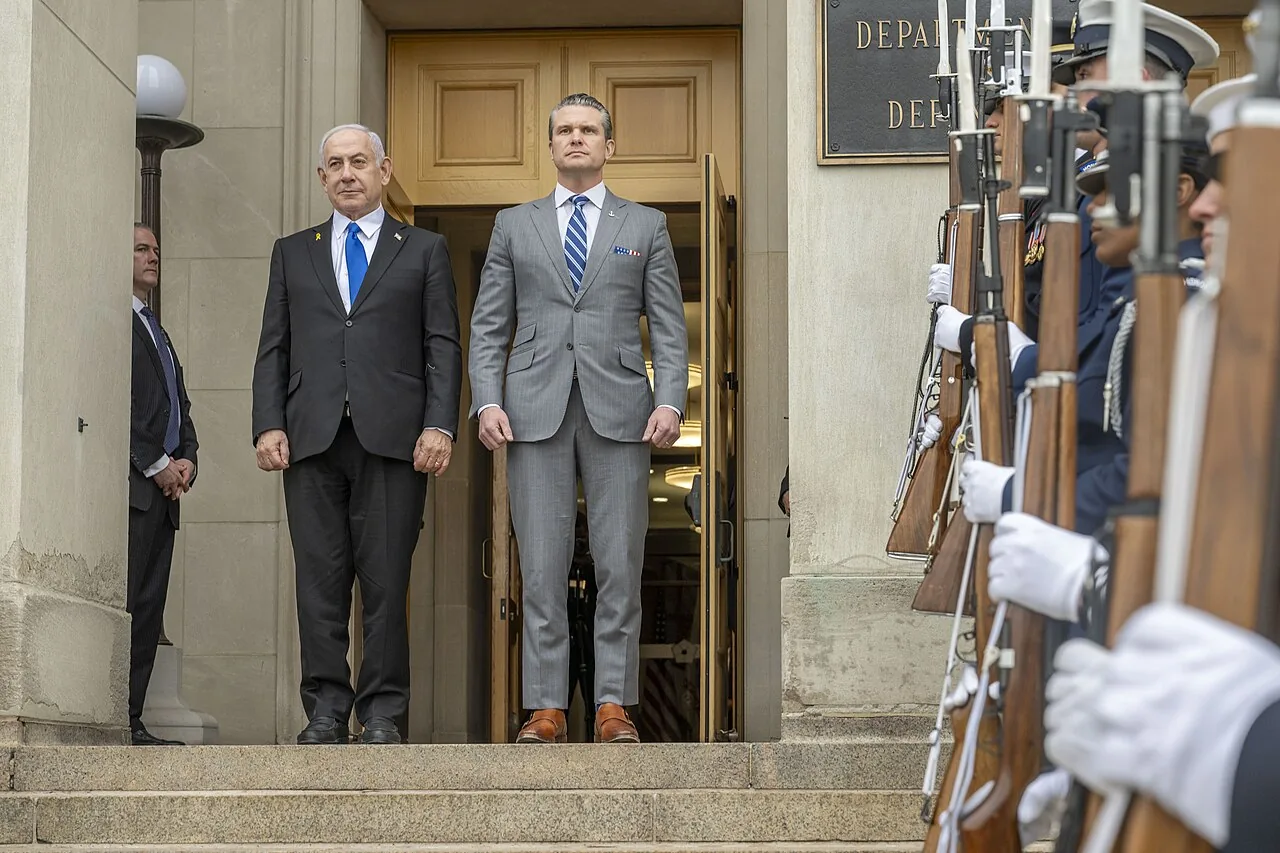

On September 30, 2026, Defense Secretary Pete Hegseth stood before an audience at Marine Corps Base Quantico, Virginia, and delivered what his department billed as the first State of the Force address of his tenure — an address that immediately generated significant attention across defense, technology, and religious-freedom circles. In a single speech, Hegseth announced two structurally distinct initiatives: a new Pentagon Office of Religious Affairs that reports directly to him, and a sweeping future-warfare research effort called Project Meridian, co-led by Elon Musk, Palmer Luckey, and Newt Gingrich. The combination of those names, that institutional architecture, and the breadth of the stated ambitions has raised immediate questions about scope, oversight, and precedent — questions this article examines against the verified record.
What Hegseth Said: The State of the Force Address in Full Context
The State of the Force format is itself notable. No previous Defense Secretary had used that specific framing — borrowed, consciously or otherwise, from the presidential State of the Union tradition — to address the armed forces and the public simultaneously. By choosing Marine Corps Base Quantico, a symbolically loaded venue associated with officer training and the FBI Academy, Hegseth signaled that the address was meant to carry weight beyond a routine departmental announcement.
The address covered a range of defense priorities, but the two announcements that attracted the most immediate scrutiny were the creation of the Office of Religious Affairs and the launch of the Project Meridian Pentagon initiative. Both were framed by Hegseth as structural reforms rather than temporary task forces — meaning they are intended to persist as institutional features of the Department of Defense, not dissolve after a single study cycle.
Hegseth described Project Meridian explicitly as “an effort led by America’s best minds to study the future of warfare.” That language — aspirational, broad, and deliberately vague on specifics — is consistent with how large-horizon defense research programs are typically introduced. The details that followed, however, were anything but vague: three named co-leaders with significant public profiles, a reporting structure anchored to the department’s Chief Technology Officer, and a stated purpose that reaches across generations.
Project Meridian Pentagon: Leadership, Structure, and Stated Mission
The three co-leaders named for the Project Meridian Pentagon initiative represent strikingly different domains. Elon Musk needs little introduction in the defense-technology conversation: his companies have supplied satellite communications infrastructure used in active conflict zones, and his public statements on autonomous systems and artificial intelligence have made him a recurring figure in debates about the future of warfare. Palmer Luckey, the co-founder of Anduril Industries, has built one of the most prominent defense-technology startups in the United States, with Anduril’s autonomous drone and sensor systems already fielded by U.S. military and border-security agencies. Newt Gingrich, the former Speaker of the House, brings a different profile — one rooted in strategic and political history rather than engineering or entrepreneurship. Gingrich has written and spoken extensively about military transformation, technology, and what he has called the need for a new American military doctrine suited to the twenty-first century.
The combination is unusual. Defense research panels and advisory boards typically draw from retired flag officers, think-tank scholars, and industry representatives operating within established procurement frameworks. Placing Musk and Luckey — both active executives of companies with existing or potential Pentagon contracts — in leadership roles on a study of future warfare raises structural questions about conflicts of interest that the department has not yet publicly addressed. Gingrich’s presence adds a political-historical dimension that is equally unconventional for a technical research effort.
Oversight of Project Meridian falls to Emil Michael, who holds the dual title of the department’s Chief Technology Officer and Undersecretary of Defense for Research and Engineering. That placement is significant: the Undersecretary for Research and Engineering is the principal advisor to the Secretary of Defense on all matters relating to research, development, and technological innovation within the department. Routing Project Meridian through that office gives it formal institutional standing rather than treating it as an external advisory exercise.
Hegseth’s own words on the initiative’s purpose are the clearest guide to its intended scope. He described Project Meridian as focused on “discovering, developing, and fielding the weapons and systems that our children and our grandchildren will need in their lifetimes.” That framing explicitly extends the time horizon beyond any single administration or budget cycle, positioning the effort as a generational undertaking. Whether the institutional structures announced on September 30, 2026, will survive changes in administration or departmental leadership is a question the verified record cannot yet answer.
The Pentagon Office of Religious Affairs: What Is Known and What Remains Unclear
The second major announcement from the State of the Force address was the creation of a Pentagon Office of Religious Affairs. The most structurally significant detail verified by primary sources is that this office reports directly to the Secretary of Defense — not to a deputy secretary, a service branch chief, or an existing chaplaincy infrastructure. That direct-report relationship places the new office at a level of institutional proximity to the Secretary that is uncommon for offices dealing with religious or spiritual matters within the military.
The Department of Defense already maintains an extensive Military Chaplaincy system, with chaplains embedded across all service branches, responsible for providing religious support, counseling, and moral guidance to service members regardless of faith tradition. The relationship between the new Office of Religious Affairs and the existing chaplaincy structure has not been clarified in the verified public record. It is not confirmed whether the new office is intended to coordinate with, oversee, supplement, or operate independently of the chaplaincy corps.
What is verified is that Hegseth announced the office during the same address in which he announced Project Meridian, and that both were presented as deliberate structural choices rather than interim measures. The PBS NewsHour confirmed the direct-report structure in its coverage of the address. Beyond that structural detail, the specific mandate, staffing, budget, and operational scope of the office remain unverified in the public record as of the time of writing.
The announcement has drawn attention from religious-freedom advocates, civil-liberties organizations, and military-affairs scholars, each of whom are approaching the development from different angles. Some observers have noted that a Secretary-level office for religious affairs could serve to elevate the institutional role of faith within the armed forces in ways that go beyond the pastoral function of the existing chaplaincy. Others have raised questions about how such an office would navigate the constitutional requirements of the First Amendment’s Establishment Clause, which prohibits the government from favoring one religion over another. These are assessments and concerns — not established facts — and the verified record does not yet contain the office’s governing charter or legal framework.
Why These Announcements Are Being Scrutinized Together
Part of what makes the State of the Force address significant as a news event is the pairing of these two announcements. On their face, a future-warfare research initiative and an office for religious affairs address entirely different domains of military life. But both share a structural feature: they concentrate new institutional authority in offices that report either directly to the Secretary or through a high-level technology official, rather than being distributed through existing departmental bureaucracies.
For Project Meridian, that means a future-warfare study led by three high-profile civilians — two of whom run active defense-technology companies — operating under the CTO/Undersecretary for Research and Engineering, rather than through the established defense acquisition or joint-staff processes. For the Office of Religious Affairs, it means a direct line to the Secretary’s office for a function that has historically been managed at the service-branch level through the chaplaincy system.
Critics of both moves have argued that concentrating these functions at the Secretary level bypasses the institutional checks built into the department’s existing structure. Supporters have argued that precisely that kind of centralization is necessary to drive change in an institution known for bureaucratic inertia. Neither position is a factual claim that can be verified or refuted — they are policy assessments, and they are noted here as such.
What can be stated as fact is that the Project Meridian Pentagon initiative and the Office of Religious Affairs were both announced on September 30, 2026, both carry the personal imprimatur of Secretary Pete Hegseth, and both represent departures from how the Department of Defense has previously structured these functions. The full implications of those departures will depend on decisions — about staffing, budget, legal authority, and interagency coordination — that have not yet been made public.
Palmer Luckey and the Anduril Connection
Among the three co-leaders of Project Meridian, Palmer Luckey may be the least familiar to general audiences but is arguably the most directly relevant to the initiative’s stated purpose. Anduril Industries, the company Luckey co-founded, has positioned itself explicitly as a defense-technology company built to move at commercial speed rather than traditional defense-procurement timelines. Anduril’s products include autonomous surveillance towers, drone systems, and integrated command software, several of which are already in use by U.S. military and federal agencies.
Luckey’s inclusion in a panel studying the future of warfare is therefore not surprising on its merits — he runs a company whose entire business model is predicated on a particular vision of what future warfare will look like. What is notable is that his participation is framed as a leadership role in a government-convened study, rather than as a contractor or vendor relationship. The line between those two roles — and how the department intends to manage it — is a question the verified record does not yet answer.
Elon Musk’s position is similarly complex. His companies have supplied technology used by military and government clients, and his public commentary on defense and geopolitics has been extensive. His formal role as a co-leader of a Pentagon-affiliated initiative studying future warfare is, however, a new institutional step — one that places him inside a formal departmental structure in a way that his previous relationships with the government did not.
What the Verified Record Establishes — and What It Does Not
The core facts of the September 30, 2026, address are well-sourced and consistent across multiple independent outlets. Pete Hegseth delivered the State of the Force address at Marine Corps Base Quantico. He announced Project Meridian, naming Elon Musk, Palmer Luckey, and Newt Gingrich as co-leaders, under the oversight of Emil Michael. He announced the Pentagon Office of Religious Affairs, which reports directly to him. The initiative’s stated purpose — to study and field the weapons and systems future generations will need — is quoted directly from verified sources.
What the verified record does not yet establish includes: the specific legal authority under which either office operates; the budget allocated to either initiative; the timeline for Project Meridian’s deliverables; the relationship between the new Office of Religious Affairs and the existing military chaplaincy; and the precise scope of any potential conflicts of interest arising from the co-leaders’ private-sector roles. Those are not gaps in this article’s reporting — they are genuine gaps in the public record, and stating them plainly is part of accurate coverage.
The State of the Force address of September 30, 2026, will almost certainly be revisited as more details emerge about how both initiatives are implemented, staffed, and funded. For now, what is established is that Secretary Hegseth used a high-profile, nationally broadcast address to announce two significant structural additions to the Department of Defense — and that the names attached to the Project Meridian Pentagon initiative ensure that scrutiny of both will remain intense in the months ahead.
This article was produced with AI assistance and reviewed editorially.

Political Ads in 2026 Midterms Contain False or Misleading Claims About Opponents

Trump Administration ‘Super Intelligence’ Accord Misspells ‘United States’ as ‘Unites States’

Trump Administration ‘Super Intelligence’ Accord Misspells ‘United States’ as ‘Unites States’

No Going Back PAC Ad Makes Misleading Claim About Roy Cooper and Rape Kits
