
Current Affairs
Rotherham Explosion Death Not Linked to Terror Attack Despite Online Claims
South Yorkshire Police confirm the Rotherham explosion on 29 September 2026 was a household accident, not terror-related, despite false social media claims.

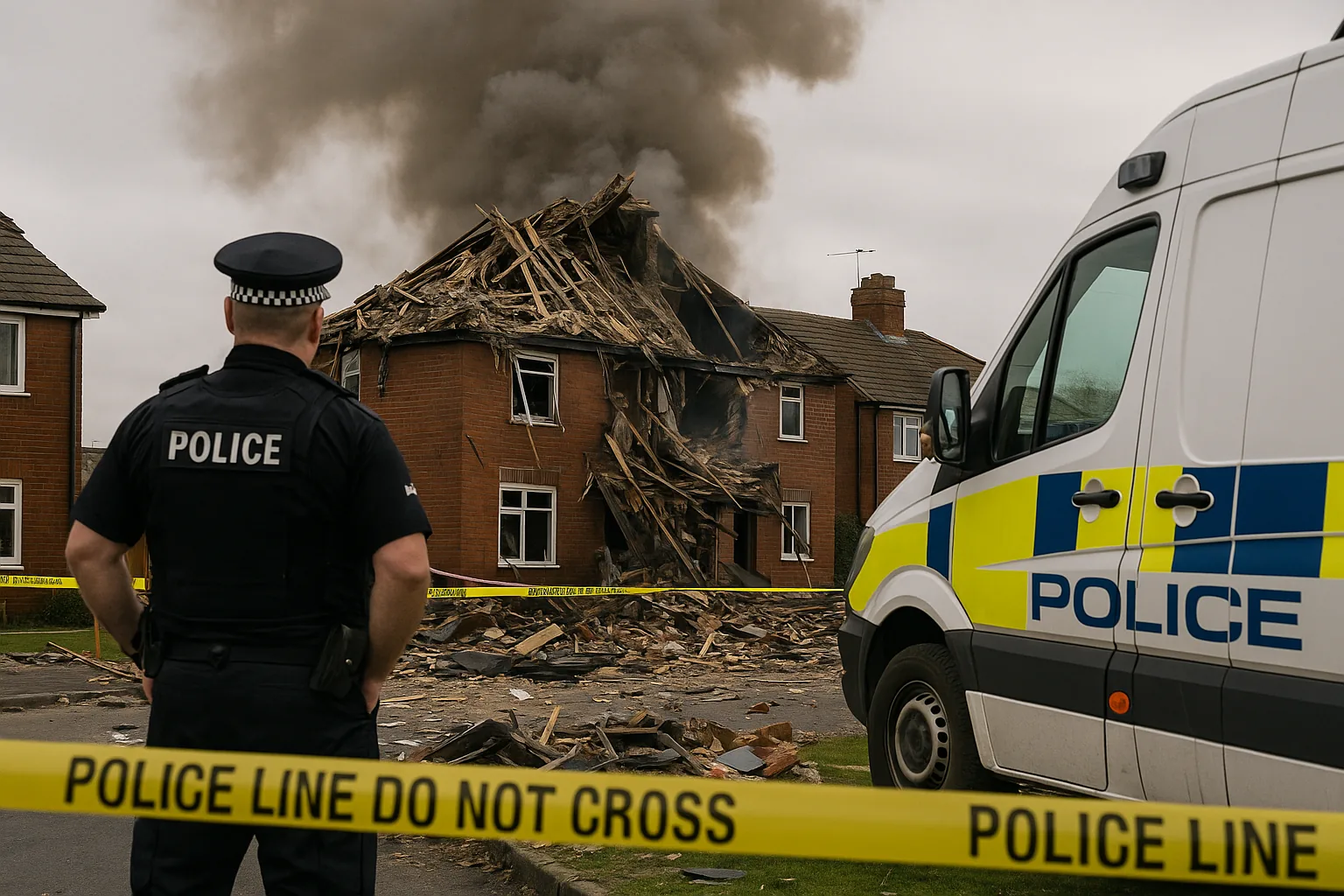
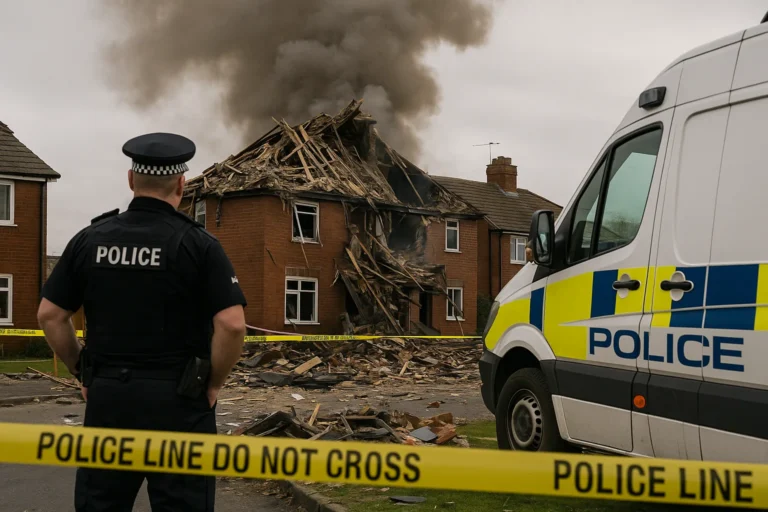
When a fatal house explosion tore through a residential street in Rotherham on 29 September 2026, the immediate response from emergency services was swift and measured. Within hours, however, a very different kind of reaction was spreading online — one that had nothing to do with the facts on the ground. Social media posts began circulating claims that the Rotherham explosion was connected to a terror attack, a narrative that South Yorkshire Police have since firmly and clearly contradicted. Understanding how that false linkage formed, why it spread, and what the verified evidence actually shows is essential at a moment when misinformation about violent incidents can inflame community tensions within minutes of an event occurring.
What Happened at Clifton Mount on 29 September 2026
Emergency services were called to Clifton Mount in Rotherham at 13:18 BST on Tuesday, 29 September 2026, following reports of a house explosion. The incident was serious: one man died as a result of the blast. He was subsequently named by police as Rory Costello, 60, also known as Rory Conway. The explosion was significant enough to prompt an evacuation of local residents while emergency services — including South Yorkshire Police, fire crews, and ambulance personnel — attended the scene.
The physical scale of a house explosion in a residential street is inherently dramatic. Buildings sustain structural damage, nearby residents are displaced, and the visual impact of emergency vehicles and cordons creates an atmosphere of urgency that is easily captured on a smartphone and shared online. That combination — a visually striking event in a densely populated area, occurring in daylight hours — creates exactly the kind of raw material that misinformation ecosystems exploit. Before official statements had been issued, speculation was already circulating across multiple platforms.
South Yorkshire Police moved relatively quickly to establish the investigative picture. Their assessment, confirmed publicly, was that the explosion was believed to have been caused by a ‘household accident’. That framing is significant: it places the incident firmly within the category of domestic tragedy rather than criminal or politically motivated violence. Investigations into the precise cause were still ongoing as of early October 2026, but the direction of the inquiry was clearly not pointing toward any external actor or deliberate act.
The False Terror Claim: What Was Said and Where
Despite the early indications from police, social media posts began asserting that the Rotherham explosion was connected to an attempted terror attack. These claims circulated across platforms including X (formerly Twitter) and Facebook, with some posts framing the explosion as an act of politically or religiously motivated violence. The posts varied in their specific assertions — some implied a direct terror plot, others used more hedged language designed to plant doubt — but they shared a common thread: the suggestion that authorities were either unaware of a terrorist dimension or were actively concealing it.
This pattern is not unique to this incident. Fact-checkers and researchers who study online misinformation have documented a recurring phenomenon in which any sudden, violent or unexplained event in a location with pre-existing social tensions becomes a canvas onto which users project pre-formed narratives. Rotherham, as a town, carries a particular weight in certain online communities due to its association with a high-profile child sexual exploitation scandal that dominated national headlines over a decade ago. That historical context means the town’s name alone can function as a trigger for certain audiences, activating existing grievances and making them more receptive to claims that frame new incidents through the lens of those older events.
👉 Read also: Old Sheffield Street Video Reshared as Recent Event
The mechanism by which these claims spread is well understood. A post with a provocative claim gains early engagement — likes, shares, quote-posts — before any official statement is available to contradict it. By the time police issue a formal response, the original claim has already reached tens or hundreds of thousands of people. Corrections and clarifications, by contrast, typically reach a far smaller audience. The asymmetry between the speed of false claims and the speed of verified information is one of the defining challenges of contemporary information environments.
South Yorkshire Police: No Crime, No Counter-Terrorism Involvement
The authoritative response to the terror claims came from South Yorkshire Police, who addressed the online speculation directly. The force confirmed two critical points. First, police found no evidence of any crime related to the explosion at Clifton Mount. Second, and equally important, counter-terrorism police are not involved in the investigation. Both statements are unambiguous and leave no interpretive space for the claims circulating online.
The significance of the counter-terrorism confirmation deserves emphasis. In the United Kingdom, counter-terrorism policing operates through specialist units that are activated whenever there is a credible indication that an incident may have a terrorist dimension. The Counter Terrorism Policing network has clear protocols for when it takes over or supports a local investigation. The fact that South Yorkshire Police confirmed these units are not involved is not a bureaucratic detail: it is a substantive statement about the nature of the inquiry. If there were any credible evidence pointing toward terrorism, counter-terrorism police would be involved. They are not.
This kind of explicit institutional confirmation is precisely what responsible reporting on such incidents requires. It is not enough to note that no terror link has been proven; the positive confirmation from the relevant authority — that the specialist units whose job it is to investigate terrorism are not engaged — is the strongest available rebuttal to the claims circulating online. South Yorkshire Police’s statement, as reported by Full Fact and corroborated by BBC News, provides exactly that confirmation.
The Gas Network Confirmation and What It Tells Us
One additional piece of verified information adds important context to the picture of what the explosion was and was not. The gas distributor confirmed that the explosion at Clifton Mount was not related to their network. This statement, reported by LBC, rules out a gas main or supply network failure as the cause, narrowing the field of possible explanations to those within the property itself rather than external infrastructure.
This detail matters in two ways. First, it provides some factual scaffolding around the police’s assessment of a ‘household accident’: if the explosion was not caused by the gas distribution network, the most likely sources involve something within the domestic environment of the property — gas appliances, stored materials, or other household sources. Second, it further undercuts the terror narrative. A terror attack using explosive materials would not typically be described by a gas distributor as unrelated to their network; the confirmation is relevant because it speaks to the physical cause of the blast, not its political character.
The investigation into the precise cause of the explosion was still ongoing as of the Full Fact article published on 6 October 2026. That ongoing status should not be misread as uncertainty about the terror claim: the absence of a final technical report on the cause of a domestic explosion is entirely normal and says nothing about whether terrorism was involved. South Yorkshire Police’s statements on that specific question are clear and unqualified.
👉 Read also: Viral Videos Misidentify Crowds and Events Through Mislabeling and Old Footage
Why Misinformation About Explosions Spreads So Rapidly
The Rotherham explosion is a case study in a broader phenomenon that has become increasingly well-documented since the rise of social media as a primary news source. Explosions, fires, and other sudden violent events share characteristics that make them particularly vulnerable to rapid misinformation: they are visually dramatic, they occur without warning, official information is slow to emerge in the immediate aftermath, and they can be easily stripped of context when shared as short video clips or photographs.
Research into how false narratives attach themselves to real events has identified several consistent patterns. One is post-hoc pattern-matching: users who already hold a particular belief about a community, location, or type of actor will look for incidents that appear to confirm that belief, and will frame ambiguous events as confirmation even when the evidence does not support it. Another is the exploitation of the information vacuum that exists in the first hours after an incident, before official statements are available. A third is the role of pre-existing community grievances — in this case, Rotherham’s particular history — in making audiences more receptive to certain framings.
The speed of online sharing also means that corrections face a structural disadvantage. When a false claim is posted and gains traction in the first hour after an incident, it reaches an audience that is actively seeking information and has not yet formed a settled view. When the correction arrives — often hours later, in the form of a police statement or a fact-check article — much of that audience has already moved on, and many have already formed an impression based on the false claim. Changing a formed impression is significantly harder than preventing it from forming in the first place, which is why early, clear communication from official sources matters so much.
The Responsibility of Platforms and Audiences
The circulation of false terror claims following the Rotherham explosion raises questions that extend beyond this single incident. Social media platforms have faced sustained criticism for their handling of misinformation about violent events, particularly when that misinformation has the potential to incite community tension or direct hostility toward specific groups. The claims circulating about the Rotherham explosion — by invoking the language of terrorism in a town with a charged history — carried exactly that potential.
Platform-level responses to this kind of content vary considerably. Some platforms have introduced labels or reduced the algorithmic amplification of posts that contain unverified claims about ongoing incidents. Others rely primarily on user reporting and third-party fact-checkers. The effectiveness of these measures is contested, and the speed at which false claims spread consistently outpaces the speed at which they are moderated or labelled. The gap between claim and correction remains one of the most significant structural problems in the contemporary information environment.
For individual users, the Rotherham explosion case offers a clear illustration of why it is worth pausing before sharing content about breaking incidents. The claims that circulated were not merely inaccurate — they were directly contradicted by the authority best placed to know: the police force investigating the incident on the ground. The absence of counter-terrorism involvement, the finding of no evidence of crime, and the assessment of a household accident are not tentative or preliminary conclusions offered to manage public anxiety. They are substantive investigative findings from the relevant authority, and they leave no credible foundation for the terror narrative that spread online.
The death of Rory Costello at Clifton Mount on 29 September 2026 was a genuine tragedy — a man lost his life in what police believe was a household accident. The false claims that attached themselves to that tragedy within hours of it occurring did not serve his memory, inform the public, or contribute anything of value to public understanding. What they did was demonstrate, once again, how quickly a real event can be distorted into a vehicle for pre-existing narratives, and why the work of checking claims against verified evidence remains as necessary as ever.
This article was produced with AI assistance and reviewed editorially.

Political Ads in 2026 Midterms Contain False or Misleading Claims About Opponents

Trump Administration ‘Super Intelligence’ Accord Misspells ‘United States’ as ‘Unites States’

Trump Administration ‘Super Intelligence’ Accord Misspells ‘United States’ as ‘Unites States’

No Going Back PAC Ad Makes Misleading Claim About Roy Cooper and Rape Kits
