
Current Affairs
Cornell University ‘Gang Rape’ Lawsuit: Seven Students Accused in October 2024 Incident
A woman filed a civil lawsuit against Cornell University and seven male students, alleging she was drugged and gang-raped in October 2024 at a fraternity house.

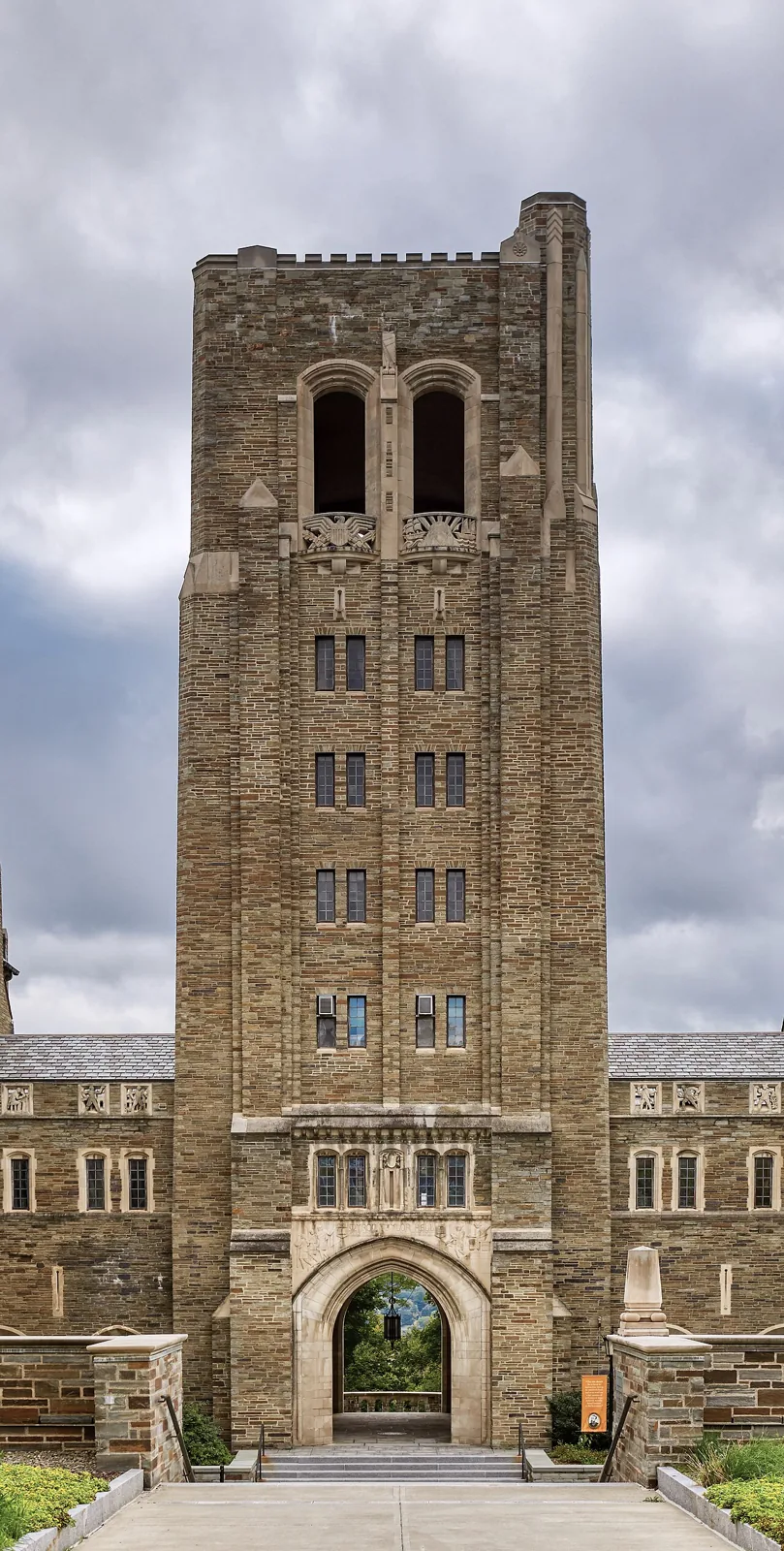
A civil lawsuit filed in September 2026 has placed Cornell University and seven of its male students at the center of one of the most closely watched campus sexual assault cases in recent American memory. The plaintiff, identified in court documents as Jane Doe, alleges she was drugged and gang-raped in October 2024 at the Chi Phi fraternity house on Cornell’s Ithaca, New York campus. The Cornell University rape lawsuit has since prompted a reopened criminal investigation, the appointment of a special prosecutor, and intense public debate about how elite universities handle allegations of sexual violence — while also generating a wave of viral misinformation that deserves careful, evidence-based scrutiny.
What the Lawsuit Actually Alleges
The civil complaint, filed in September 2026, names Cornell University and seven male students as defendants. Jane Doe, who was 20 years old at the time of the alleged assault, states that she was drugged and raped during an incident that took place in October 2024 at the Chi Phi fraternity house. The defendants are identified collectively but their individual names have not been disclosed in the sources reviewed for this article.
The lawsuit is a civil action, meaning it seeks financial damages and potentially other remedies from the named defendants, and it runs on a separate legal track from any criminal proceedings. Civil suits in sexual assault cases are not uncommon even when criminal charges have not been filed, because the standards of proof differ: a civil case requires a preponderance of the evidence — meaning it is more likely than not that the alleged events occurred — while a criminal conviction requires proof beyond a reasonable doubt.
The seven accused men have denied wrongdoing. Through their representatives, they have stated that the sexual activity in question was consensual. That denial is a central point of legal contention and will ultimately be tested in court. It is important to note that a denial of wrongdoing is not a finding of innocence, just as a civil complaint is not a finding of guilt. Both sides of the dispute will have the opportunity to present evidence before any legal conclusions are reached.
The University’s Initial Response and Its Disciplinary Outcome
Before the civil lawsuit was filed, Cornell conducted its own internal investigation into the October 2024 allegations. The outcome of that process was, by any measure, limited: only two of the seven accused students were expelled, and no one was arrested in the immediate aftermath of the alleged assault.
That result drew sharp criticism from advocates for sexual assault survivors and from legal observers who questioned whether the university’s disciplinary mechanisms were adequate to address allegations of this severity. Campus disciplinary proceedings at American universities operate under Title IX regulations, which require institutions receiving federal funding to investigate and adjudicate reports of sexual misconduct. However, those proceedings are administrative in nature and cannot result in criminal penalties such as imprisonment. Critics have long argued that internal university processes are structurally ill-suited to handle what may constitute serious violent crimes, because they lack subpoena power, forensic investigative capacity, and the procedural safeguards of the criminal justice system.
Cornell’s decision to expel only two of the seven men, while taking no further disciplinary action against the remaining five, left Jane Doe’s legal team and supporters questioning the thoroughness and impartiality of the university’s review. The civil lawsuit against Cornell University itself — not just the individual students — suggests the plaintiff’s attorneys believe the institution bears institutional responsibility for the alleged harm, potentially through failures of oversight, inadequate response, or negligence in managing the fraternity environment on campus.
The Criminal Investigation: Closed, Then Reopened
One of the most consequential developments in this Cornell University rape lawsuit has been the trajectory of the parallel criminal investigation. The Tompkins County District Attorney initially declined to bring charges against any of the seven men following the October 2024 incident. That decision effectively closed the criminal track of the case — a closure that Jane Doe’s legal team has contested.
According to PBS NewsHour, Jane Doe’s lawyer has stated that the accuser was misled about the criminal investigation — a claim that, if substantiated, would raise serious questions about the conduct of the initial prosecutorial review. The specifics of what the plaintiff was allegedly told, and by whom, remain a matter of legal dispute.
The picture changed significantly on September 28, 2026, when New York prosecutors reopened the criminal investigation. That decision coincided with the filing of the civil lawsuit and reflected renewed institutional attention to the case. Shortly after the investigation was reopened, New York Governor Kathy Hochul took the additional step of appointing Attorney General Letitia James as a special prosecutor in the matter. The appointment of a state attorney general as special prosecutor is an unusual measure that signals the seriousness with which state authorities are now treating the allegations.
The Tompkins County District Attorney, who had previously declined to pursue charges, has since indicated that he plans to pursue charges against the seven men. The case is also expected to be presented to a grand jury, which would evaluate whether there is sufficient evidence to formally indict any of the accused. A grand jury indictment does not constitute a conviction; it means the jury found probable cause to believe a crime was committed and that the named individuals may have committed it.
Understanding the Legal Landscape: Civil and Criminal Proceedings Running Simultaneously
A key point of public confusion surrounding high-profile campus assault cases is the relationship between civil and criminal proceedings. In the Cornell University rape lawsuit, both tracks are now active simultaneously, and they serve distinct purposes with distinct outcomes.
The civil lawsuit filed by Jane Doe seeks accountability from Cornell University and the seven individual defendants in the form of legal damages. Civil proceedings can move forward regardless of whether criminal charges are ever filed or whether a criminal conviction is obtained. A defendant can be found liable in civil court even if acquitted in criminal court — the most famous American illustration of this dynamic is the O.J. Simpson case, in which Simpson was acquitted of criminal charges but subsequently found liable in a civil wrongful death suit.
The criminal proceedings now being pursued by the state of New York, with Attorney General Letitia James serving as special prosecutor, aim to determine whether the accused committed crimes under New York law and, if so, to impose criminal penalties. The involvement of the attorney general’s office, rather than the local district attorney alone, reflects the scale of state-level attention the case has attracted.
For Jane Doe and her legal team, having both tracks active represents a significant shift from the initial period following the alleged assault, when the criminal investigation was closed and only two of the seven accused faced any institutional consequences at all. The reopening of the criminal case, the appointment of a special prosecutor, and the civil lawsuit together represent a substantially more robust legal response than what existed in the months immediately following October 2024.
Viral Misinformation Surrounding the Case
As with many high-profile institutional scandals, the Cornell University rape lawsuit has generated a significant volume of viral misinformation on social media platforms. Among the claims circulating online is the assertion that Cornell University was “dropped” from the Ivy League as a consequence of the investigation or the public controversy surrounding it.
This claim is not supported by any verified source reviewed for this article. The Ivy League is an athletic conference comprising eight private universities in the northeastern United States — Brown, Columbia, Cornell, Dartmouth, Harvard, Penn, Princeton, and Yale — and membership is not contingent on the outcome of individual disciplinary or legal cases at member institutions. There is no verified reporting from any credible news organization indicating that Cornell has been removed from, or is under review for removal from, the Ivy League in connection with this case or for any other reason.
The viral claim appears to conflate public outrage over the university’s handling of the allegations with an institutional sanction that does not exist. This is a pattern common to high-profile campus misconduct stories: the intensity of public reaction is real, but it can generate secondary misinformation that overstates or fabricates formal consequences. Readers encountering claims about Cornell’s Ivy League status in the context of this lawsuit should treat those claims with significant skepticism unless they are sourced to primary institutional statements or verified reporting from established news organizations.
Similarly, some social media posts have made specific claims about the content of internal communications among the accused — including references to a fraternity group chat. The existence and content of any such communications have not been independently verified in the sources reviewed for this article, and those claims are therefore not reported here as established fact.
Broader Context: Campus Sexual Violence and Institutional Accountability
The Cornell University rape lawsuit sits within a long and painful national conversation about sexual violence on college campuses and the adequacy of institutional responses. For decades, universities have faced criticism — and in many cases federal investigations — for mishandling reports of sexual assault, prioritizing institutional reputation over survivor safety, and operating disciplinary systems that inadequately protect complainants.
Federal Title IX regulations, which prohibit sex-based discrimination at institutions receiving federal funding, require universities to respond promptly and equitably to reports of sexual misconduct. The regulations have been revised multiple times over the past decade, with significant changes introduced under both the Obama and Trump administrations, and further adjustments proposed and contested during subsequent administrations. The regulatory landscape governing how universities must handle cases like Jane Doe’s is therefore both legally complex and politically contested.
The decision by Governor Kathy Hochul to appoint Attorney General Letitia James as special prosecutor reflects a broader trend of state-level intervention in campus sexual assault cases where local prosecutorial responses have been perceived as insufficient. Several states have enacted legislation in recent years aimed at improving coordination between campus disciplinary processes and law enforcement, requiring mandatory reporting to police in certain circumstances, and strengthening protections for complainants throughout the investigative process.
For Cornell specifically, the case presents a test of institutional credibility at a moment when public trust in elite university administration is already strained by controversies across multiple campuses. The university’s initial disciplinary outcome — two expulsions, no arrests, a closed criminal investigation — will be scrutinized against whatever the civil and criminal proceedings ultimately reveal. Jane Doe’s lawsuit against the university itself means that Cornell’s internal processes, communications, and decision-making will likely be subject to discovery, potentially bringing internal records into the public record in ways that the university cannot control.
The case will continue to develop on multiple legal fronts throughout 2026 and beyond. The grand jury process, the civil litigation, and the special prosecutor’s investigation each operate on their own timelines, and the outcomes are not predetermined. What is clear is that a 20-year-old woman has made serious allegations, that those allegations are now the subject of active criminal and civil proceedings at the state level, and that the institutions involved — both the university and the criminal justice system — are facing significant accountability pressure. The facts established so far warrant careful attention; the misinformation surrounding them warrants equal vigilance.
This article was produced with AI assistance and reviewed editorially.

Political Ads in 2026 Midterms Contain False or Misleading Claims About Opponents

Trump Administration ‘Super Intelligence’ Accord Misspells ‘United States’ as ‘Unites States’

Trump Administration ‘Super Intelligence’ Accord Misspells ‘United States’ as ‘Unites States’

No Going Back PAC Ad Makes Misleading Claim About Roy Cooper and Rape Kits
