
Current Affairs
Christa Pike Execution: Tennessee Declines to Disclose Whether All-Female Team Carried Out Lethal Injection
Following Christa Pike’s failed lethal injection execution in September 2026, Tennessee has declined to confirm details about the execution team, raising transparency con

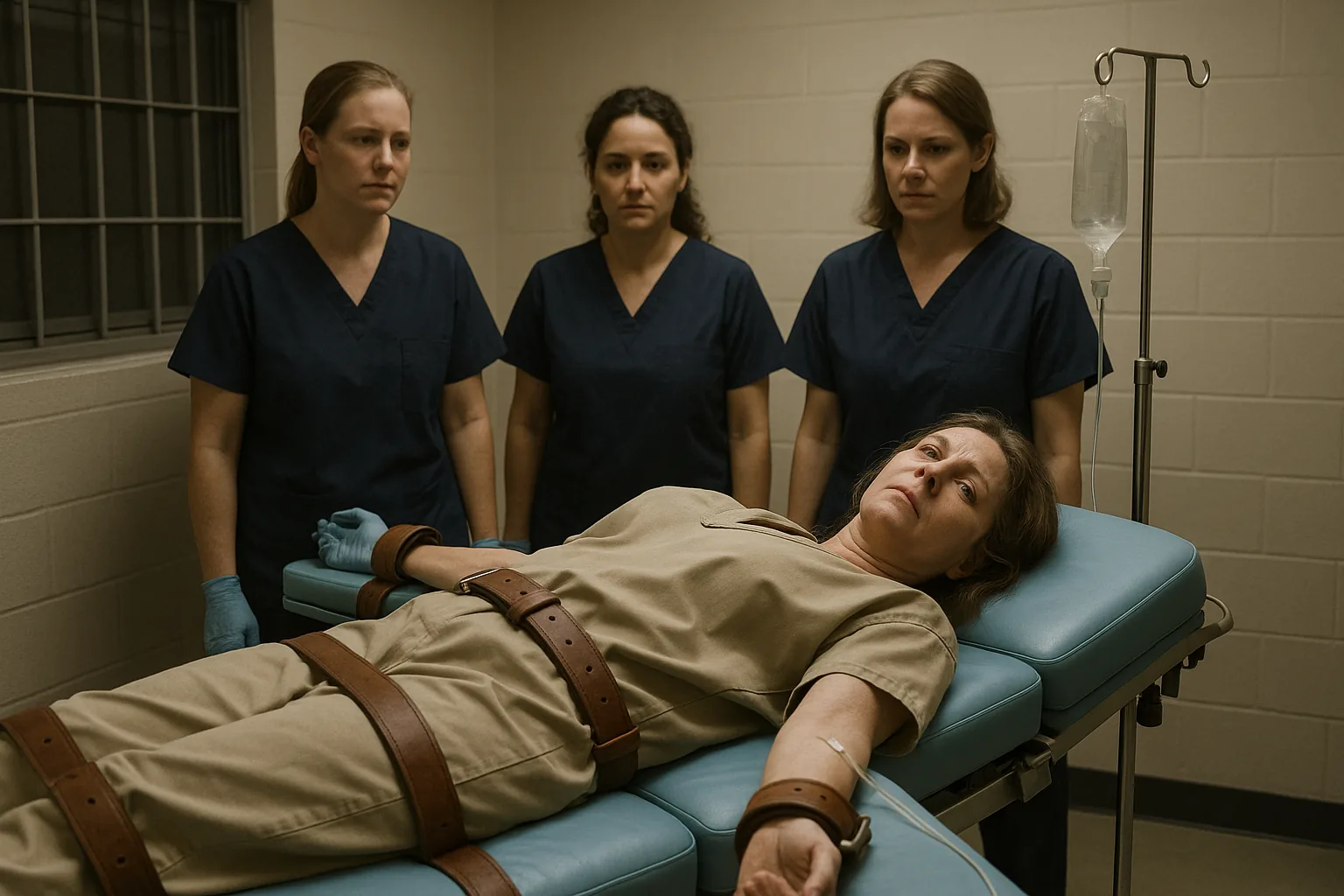
The failed execution of Christa Pike on the night of September 30, 2026, has thrust Tennessee’s capital punishment procedures into sharp public scrutiny. Pike, now 50 years old, survived what was intended to be a lethal injection execution — an outcome that prompted Governor Bill Lee to pause all remaining executions in the state for the rest of the year and left attorneys, advocates, and legal observers demanding answers about what went wrong and why. The circumstances surrounding the Christa Pike execution attempt raise difficult, unresolved questions about medical competency, institutional transparency, and the administration of the death penalty in the United States.
A Conviction Rooted in a 1995 Murder
To understand the weight of what happened on September 30, it is necessary to return to the crime that placed Christa Pike on death row in the first place. In 1995, Pike participated in the murder of Colleen Slemmer, who was 19 years old at the time of her death. Pike was 18 years old when the attack took place and was 20 years old when she was sentenced to death in 1996. That sentencing made her the youngest woman sent to death row in the country’s modern capital punishment era — a distinction that has followed her through three decades of legal proceedings, appeals, and public attention.
The case attracted significant national interest from the outset, partly because of Pike’s age and partly because of the nature of the crime itself. For nearly thirty years, Pike remained on Tennessee’s death row as her legal team pursued appeals and as public debate over capital punishment evolved around her. By the time her execution date was finally scheduled, she was set to become the first woman executed in Tennessee in 200 years — a historical marker that added another layer of public and legal scrutiny to an already closely watched case.
What Happened During the Execution Attempt
The execution attempt on the night of September 30, 2026, did not proceed as state officials had planned. According to verified reporting, the execution team spent approximately one hour attempting to establish an intravenous line before the administration of any drug. During that effort, at least seven needles were used in Pike’s left arm alone. The difficulty in establishing IV access is a documented and recurring challenge in lethal injection executions, particularly in cases where the condemned individual has a history of intravenous drug use, though the specific medical history relevant to Pike’s case has not been detailed in verified sources.
After the IV line was finally established, Pike received two doses of pentobarbital, the lethal drug Tennessee uses in its execution protocol. Despite receiving two doses of the drug, Pike survived the execution attempt. She was subsequently transported to a hospital, where she was reported to be in critical condition receiving life-saving care. Her attorneys described her as being on a ventilator and unconscious in the immediate aftermath — a medical situation that, by any measure, represented a profound failure of the execution procedure to achieve its intended outcome.
The verified facts do not extend to a detailed clinical explanation of why two doses of pentobarbital failed to cause death. What is established is the sequence: prolonged difficulty with IV access, administration of the drug in two doses, survival, and emergency hospitalization. The gap between what is documented and what remains unexplained is itself a significant part of the ongoing controversy.
Tennessee’s Second Failed Execution in Five Months
The Pike execution attempt was not an isolated incident within Tennessee’s recent history of capital punishment administration. Verified sources confirm that this was Tennessee’s second failed execution in five months. That fact alone places the September 30 events in a broader context of systemic concern rather than isolated operational error. When a state’s execution machinery fails twice within a short window, questions naturally arise about training, protocol, medical oversight, and the competency of those tasked with carrying out court-ordered sentences.
The Death Penalty Information Center, which tracks executions and related legal developments across the United States, documented both events. The pattern is significant because it suggests something beyond bad luck or a one-time procedural failure. Critics of lethal injection as a method of execution have long argued that the procedure’s apparent clinical simplicity masks serious practical difficulties — including the challenge of reliably establishing IV access and the variability in how different individuals respond to pentobarbital and other drugs used in execution protocols.
Proponents of capital punishment, meanwhile, have tended to focus on the legal validity of the sentences themselves rather than the mechanical details of their administration. But two failures in five months makes that position increasingly difficult to sustain without addressing the procedural questions directly. Governor Bill Lee’s decision to pause executions for the remainder of the year signals that even within the state government, there is an acknowledgment that something requires review and correction before further executions proceed.
The Governor’s Pause and Its Implications
Following the failed execution, Governor Bill Lee announced a pause on all remaining executions in Tennessee for the rest of the year. The decision was significant for several reasons. First, it represented an implicit acknowledgment that the execution process as currently administered is not functioning reliably. Second, it created a period during which the state must grapple with what went wrong and how to address it before resuming executions. Third, it placed Tennessee in the company of other states that have been forced to revisit their lethal injection protocols following high-profile failures or legal challenges.
The pause does not represent an abolition of the death penalty in Tennessee, nor does it commute any existing death sentences. It is a procedural suspension, not a policy reversal. But its timing — coming immediately after the Pike execution attempt — makes clear that the governor viewed the situation as serious enough to require a halt rather than a continuation. What the review process will entail, who will conduct it, and what standards will govern a return to executions are questions that remain open as of the time of writing.
Legal observers have noted that courts may also weigh in on the Pike situation specifically. Attorneys for Pike have sought to preserve evidence related to the failed execution, a step that suggests potential litigation over what happened and whether it constituted cruel and unusual punishment under the Eighth Amendment to the United States Constitution. The NBC News reporting confirmed that courts were engaged on the question of evidence preservation in the days immediately following the execution attempt.
Transparency and What Remains Unknown
One of the most significant dimensions of the aftermath of the Christa Pike execution attempt is what has not been disclosed. The research brief underlying this article categorizes as unverified the specific claim that the Tennessee Department of Correction refused to confirm or deny whether the execution team consisted entirely of women. That claim, which has circulated in some reporting, is not confirmed by the primary verified sources available — including reporting from CBS News, BBC, CNN, PBS NewsHour, NBC News, The New York Times, and Al Jazeera. Responsible journalism requires that this distinction be made clearly: the gender composition of the execution team, and any state response to questions about it, cannot be stated as established fact on the basis of the verified record available.
What can be said with confidence is that Tennessee, like many states, does not routinely disclose granular details about the composition of execution teams. Across the United States, states have varied widely in how much information they make public about who carries out executions, what medical or professional credentials those individuals hold, and how they are selected and trained. This opacity has been the subject of ongoing legal challenges, with courts in various jurisdictions reaching different conclusions about what the public and condemned individuals have a right to know.
The Death Penalty Information Center’s coverage of Christa Pike provides a useful reference point for tracking verified developments in this case as they continue to emerge. The organization tracks execution-related data and legal proceedings with a level of specificity that makes it a reliable primary resource for journalists, advocates, and legal professionals following capital punishment cases.
In the Pike case specifically, the lack of transparency about what went wrong during the execution attempt is compounded by the severity of the outcome. Pike survived two doses of a drug that was supposed to cause death. She was placed on a ventilator. She was in critical condition. These are not minor procedural irregularities — they represent a fundamental failure of the execution process, and the public record of what caused that failure remains incomplete.
Lethal Injection Under Ongoing Legal and Ethical Scrutiny
The Pike execution attempt did not occur in a vacuum. Lethal injection has faced sustained legal and ethical scrutiny for years, with challenges focused on the drugs used, the qualifications of those administering them, and the potential for the procedure to cause pain and suffering that the Eighth Amendment prohibits. The Supreme Court of the United States has addressed lethal injection challenges in several landmark cases, generally upholding the method while leaving room for challenges to specific protocols.
In practice, states have struggled to obtain the drugs used in lethal injection protocols as pharmaceutical manufacturers have increasingly refused to supply them for execution purposes. Pentobarbital, the drug used in Pike’s execution attempt, has been at the center of this supply controversy. Some states have turned to compounding pharmacies or alternative drug combinations, each of which carries its own set of legal and medical questions. The fact that two doses of pentobarbital failed to cause death in Pike’s case will inevitably add to the body of evidence that critics cite when arguing that lethal injection cannot be reliably administered in a way that is both humane and effective.
Prior to the scheduled execution, reporting indicated that Pike had sought to be executed by firing squad rather than lethal injection — a request that was not granted. The firing squad, while deeply counterintuitive to modern sensibilities about clinical execution, has been argued by some legal scholars to be more reliably lethal than drug-based methods, precisely because its mechanism is mechanical rather than pharmacological. Whether that argument gains traction in the wake of the Pike case remains to be seen.
What the events of September 30, 2026, have demonstrated with clarity is that the administration of capital punishment in Tennessee — and by extension in the broader American context — involves a set of practical, medical, and institutional challenges that official procedures do not always resolve. Christa Pike remains alive, hospitalized, and at the center of a legal and political situation that is still unfolding. The governor has paused executions. Courts are engaged. Attorneys are fighting to preserve evidence. And a set of fundamental questions about what happened, why it happened, and who bears responsibility for the outcome remain, as of this writing, without definitive public answers.
This article was produced with AI assistance and reviewed editorially.

Political Ads in 2026 Midterms Contain False or Misleading Claims About Opponents

Trump Administration ‘Super Intelligence’ Accord Misspells ‘United States’ as ‘Unites States’

Trump Administration ‘Super Intelligence’ Accord Misspells ‘United States’ as ‘Unites States’

No Going Back PAC Ad Makes Misleading Claim About Roy Cooper and Rape Kits
