
Current Affairs
Trump Administration Bans CNN, MS NOW, and Politico from White House; Scope Exceeds Obama and Biden Precedents
The Trump administration banned CNN, MS NOW, and Politico from White House briefings in September 2026, a restriction fact-checkers say exceeds prior Obama and Biden acti

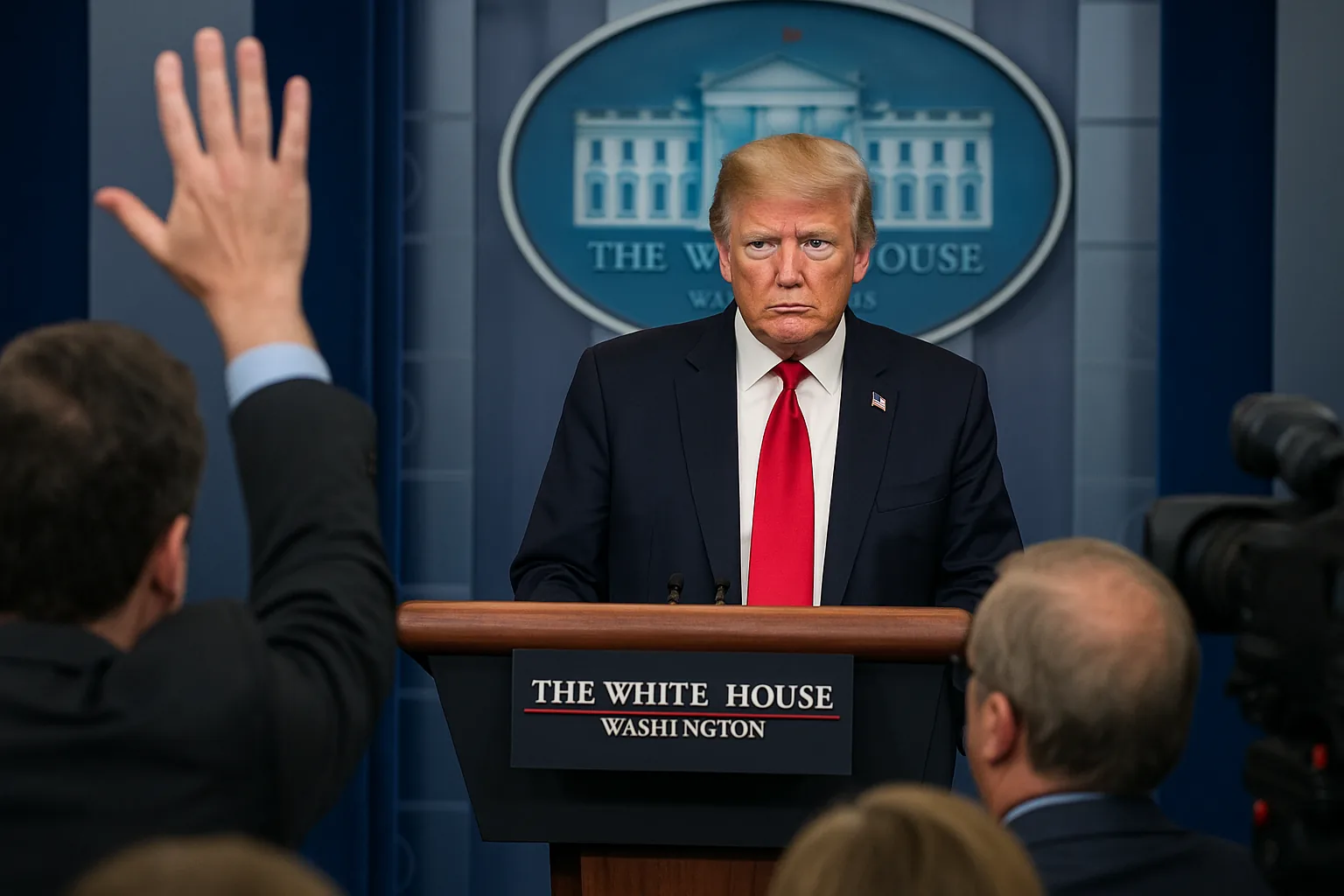
When the Trump administration announced in September 2026 that it was banning CNN, MS NOW, and Politico from White House briefings and grounds, the move landed with immediate force across the American press corps. The white house press ban drew swift condemnation from First Amendment experts and press freedom organizations, and fact-checkers quickly established that the action exceeded comparable restrictions taken by the Obama and Biden administrations in both scope and the number of outlets affected. Understanding what exactly happened, how it compares to past precedents, and why it matters requires a careful look at the verified record.
What the White House Press Ban Actually Involves
The ban, confirmed by Reuters reporting from September 18, 2026, restricts journalists from three named outlets — CNN, MS NOW, and Politico — from accessing White House grounds and attending press conferences and briefings. This is not a soft exclusion from a single event or a temporary logistical shuffle. According to reporting by NBC News, journalists from the banned outlets were physically denied access to White House grounds and conferences, meaning the restriction operates as a categorical bar rather than a case-by-case credentialing decision.
The practical implications of that distinction are significant. A credentialing dispute over a single reporter is a relatively narrow matter, one that can be resolved through administrative channels or negotiated adjustments. A blanket ban on an entire outlet — barring all of its journalists from the physical space where the executive branch conducts its daily communications with the public — is a structurally different kind of action. It removes an organization’s ability to cover the presidency in real time, ask questions at briefings, witness announcements firsthand, and build the sourcing relationships that come from daily proximity to the White House press operation.
For each of the three outlets, the consequences are concrete. CNN is one of the largest cable news networks in the United States, with a White House correspondent team that has covered multiple administrations. Politico is widely regarded as one of the most influential outlets covering Washington policy and politics, with a readership that includes lawmakers, lobbyists, and senior government officials across both parties. MS NOW, the third named outlet, had its journalists denied access following the Trump administration’s announcement of the ban. All three now face the same structural barrier: their reporters cannot enter the building where the presidency operates its daily press function.
How This White House Press Ban Compares to Obama and Biden Actions
Any serious analysis of the September 2026 white house press ban must grapple with the historical record, because the Trump administration and its supporters have pointed to prior administrations as precedents. That argument deserves scrutiny. FactCheck.org, in its September 2026 analysis, found that while both the Obama and Biden administrations took actions that restricted or complicated press access in specific circumstances, the Trump administration’s ban goes beyond those prior actions in scope and in the number of outlets affected.
This is a factual finding, not a political judgment. The Obama administration had a notably contentious relationship with certain outlets at specific moments. It faced criticism from press freedom groups for its aggressive use of the Espionage Act to pursue leakers, which had a chilling effect on national security reporting. There were also episodes in which Fox News was excluded from certain interview rounds or pool arrangements, drawing sharp criticism at the time. But those episodes involved specific, bounded situations — a single interview pool, a particular briefing — rather than a categorical, multi-outlet ban from White House grounds as a whole.
The Biden administration similarly had friction with certain outlets and correspondents, and its press operation made choices that critics characterized as overly managed or selective. But again, the verified record does not show the Biden White House banning multiple named outlets categorically from its grounds and briefings simultaneously.
The Trump administration’s September 2026 action is therefore distinguishable on two dimensions that FactCheck.org identified: scope — meaning the breadth of the restriction applied to each outlet — and number of outlets affected simultaneously. Banning three outlets at once, with a categorical bar on physical access, represents a more expansive use of executive control over press access than the documented actions of the two preceding administrations. That does not mean prior administrations were without fault in their press relations; it means the specific action taken in September 2026 exceeds what they did by the available evidence.
The First Amendment and Press Access: What the Law Says
The legal framework surrounding White House press access is more complicated than many people assume, and understanding it is essential context for evaluating the ban. The White House is not a public forum in the constitutional sense; it is a secure government facility, and the executive branch has broad authority to determine who enters. Courts have generally held that there is no absolute First Amendment right to a White House press credential. The government can set criteria for access, and individual reporters have sometimes been denied credentials without courts finding a constitutional violation.
However, the legal picture becomes more complicated when restrictions appear to be viewpoint-based — that is, when the government excludes outlets specifically because of the content or perspective of their coverage rather than for neutral, content-independent reasons. Several federal courts have addressed related questions in prior years, and the principle that emerged is that while the government can manage access to its facilities, it cannot do so in a manner that discriminates on the basis of viewpoint. Press groups and First Amendment experts condemned the ban, according to NBC News reporting, and the legal arguments being raised center on precisely this question of whether the exclusions are viewpoint-discriminatory.
The distinction matters practically. If the ban is upheld as a legitimate exercise of the executive branch’s facility-management authority, the three outlets remain excluded indefinitely unless the administration reverses course. If courts find that the ban violates First Amendment principles by discriminating on the basis of viewpoint, the administration would face legal pressure to restore access. As of the time of this writing, the verified record does not include confirmed outcomes of any legal challenges, and that dimension of the story remains open.
Press Freedom Organizations and the Broader Significance
The condemnation from press groups and First Amendment experts documented by NBC News reflects a consensus view within the journalism and civil liberties communities: categorical exclusions of news organizations from the White House press operation represent a threat to the public’s access to information about its government. That view is not simply a professional grievance from journalists protecting their turf. It rests on a structural argument about how democratic accountability works.
The White House briefing room and the broader press access system it represents exist because the executive branch is the most powerful single institution in American government, and the public has a legitimate interest in knowing what it is doing. The press corps that covers the White House serves as a conduit for that information, asking questions that citizens cannot ask themselves, witnessing events that would otherwise go unrecorded, and pressing officials for answers on behalf of a broad public. When an outlet is banned from that system, the people who relied on that outlet’s coverage lose a channel of information about their government.
For outlets as large and established as CNN and Politico, the ban does not eliminate their coverage of the administration — both organizations have substantial resources and can continue reporting through other means, including Freedom of Information Act requests, congressional sources, and interviews with officials outside the White House grounds. But it does remove them from the daily rhythm of the briefing room, where questions are asked and answered in real time, where body language and tone carry information that transcripts cannot fully capture, and where the press corps as a collective institution exercises its most visible accountability function.
The white house press ban also sends a signal that extends beyond the three named outlets. When an administration demonstrates willingness to exclude major organizations from press access, every outlet in the briefing room is aware of the implicit message. Critics of the ban have argued that this dynamic can produce a chilling effect on coverage, as reporters and editors weigh the risk of aggressive coverage against the possibility of losing access. Whether that effect materializes in measurable ways is an empirical question that will unfold over time; what is established is that press freedom advocates regard the risk as real and serious.
What Distinguishes This Moment from Past Press Conflicts
Tensions between American presidents and the press are not new. Franklin Roosevelt had reporters he despised. Richard Nixon maintained an enemies list that included journalists. Every modern administration has had confrontations with specific outlets or correspondents. What makes the September 2026 action distinctive, according to the verified factual record, is the combination of its formal character — a declared, named ban on specific organizations — and its scope, exceeding what the two most recent prior administrations did.
Informal friction, public criticism of outlets, and even selective availability to certain reporters are all within the range of behavior that prior administrations have exhibited. A formal, categorical ban on multiple named organizations from White House grounds and briefings simultaneously is a different kind of action. It converts what has historically been an informal, negotiated, and fluid relationship between the executive branch and the press into something more structured and exclusionary. The white house press ban of September 2026 is therefore not simply another episode in a long history of presidential press antagonism; it is, on the available evidence, a step beyond what its immediate predecessors did.
The three outlets named — CNN, MS NOW, and Politico — continue to cover the administration through the channels available to them. Press freedom organizations continue to press for restored access. First Amendment experts continue to analyze the legal exposure. And the White House press corps continues its daily work in a briefing room that now operates with a smaller roster of credentialed organizations than it had before September 2026. The full consequences of this ban — legal, political, and journalistic — will take time to become clear, but the factual foundation of what happened and how it compares to prior precedents is now established in the verified record.
This article was produced with AI assistance and reviewed editorially.

Political Ads in 2026 Midterms Contain False or Misleading Claims About Opponents

Trump Administration ‘Super Intelligence’ Accord Misspells ‘United States’ as ‘Unites States’

Trump Administration ‘Super Intelligence’ Accord Misspells ‘United States’ as ‘Unites States’

No Going Back PAC Ad Makes Misleading Claim About Roy Cooper and Rape Kits
