
Current Affairs
Trump Administration Bans CNN, MS NOW, Politico from White House; Judge Blocks Ban as Likely Unconstitutional
The Trump administration revoked White House press credentials for CNN, MS NOW, and Politico in September 2026, but a federal judge blocked the ban as likely unconstituti

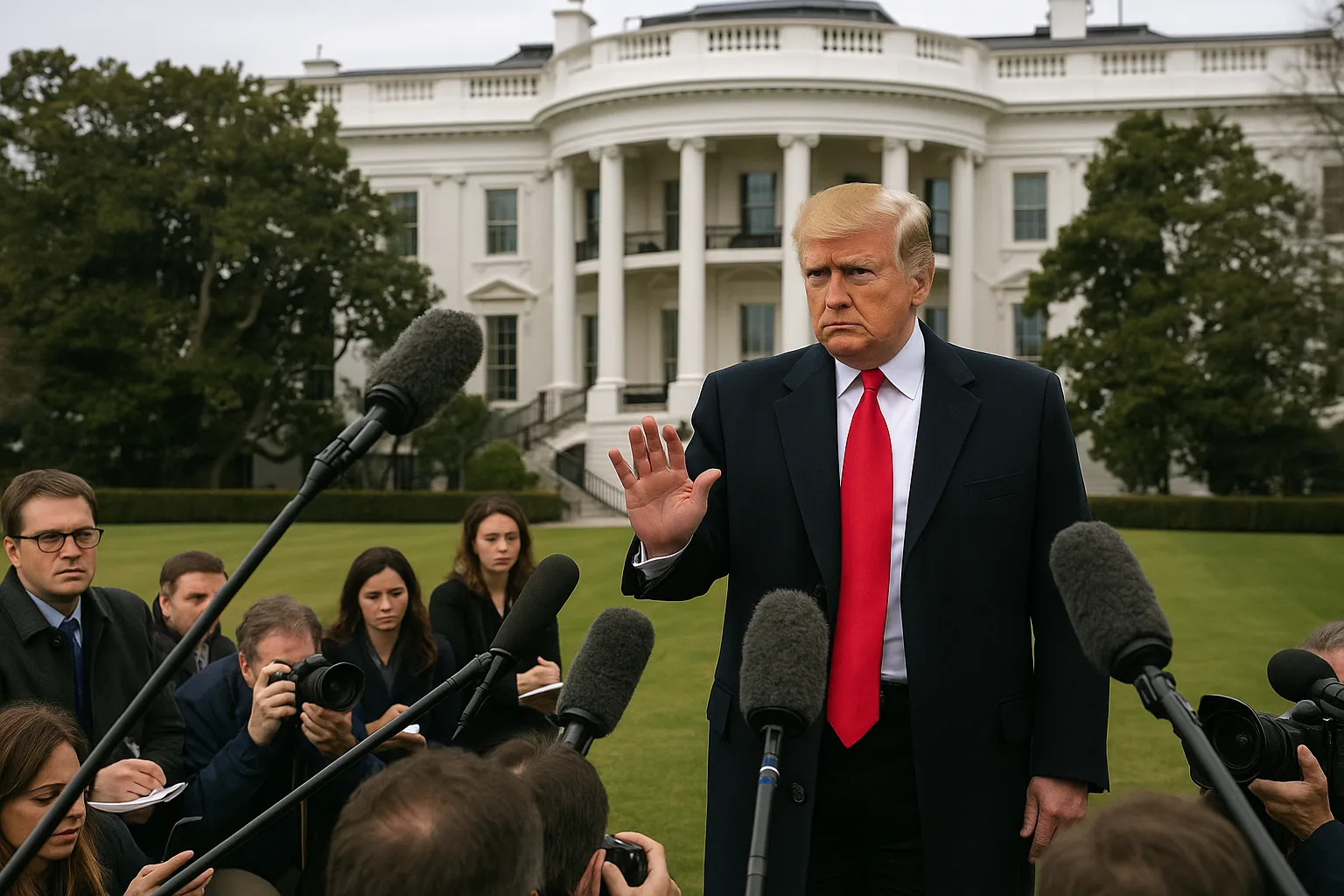
When the Trump administration announced on September 18, 2026 that it was revoking White House press access for CNN, MS NOW, and Politico, the move immediately ignited a legal and constitutional firestorm. The episode — which saw a federal judge block the ban within six days on grounds that it was likely unconstitutional — illustrates how the Trump media ban at the White House has tested the boundaries of executive authority over press access in ways that, according to fact-checkers, exceed anything attempted by the Obama or Biden administrations. The case raises durable questions about the First Amendment, the role of the press in a democracy, and the limits of presidential power over who is permitted to cover the executive branch.
What the Administration Did and Why
On September 18, 2026, President Donald Trump announced that CNN, MS NOW, and Politico would be banned from the White House. The stated rationale, offered by Trump himself, was that these outlets produced what he characterized as “fake news” and unfavorable coverage of his administration. The ban was not framed as a temporary suspension pending review; it was presented as a direct consequence of editorial decisions the administration found objectionable.
The practical effect was immediate and visible. Workspaces inside the White House assigned to the affected outlets sat empty, their reporters physically excluded from the building where they had previously operated as credentialed members of the press corps. Press groups and First Amendment experts condemned the ban, according to NBC News reporting from the period. The image of vacant desks in the White House press area became a symbol of the confrontation between the executive branch and the news media.
Trump’s justification — that the coverage was unfair or false — did not, in legal terms, constitute the kind of content-neutral, viewpoint-blind rationale that courts have historically required when the government restricts access to public forums or government-controlled spaces. That distinction would prove central to the judicial response that followed within days.
The Court Steps In: Judge Kelly’s Ruling
On September 24, 2026, just six days after the ban was announced, US District Judge Tim Kelly issued an order requiring the Trump administration to restore White House access for journalists from all three affected outlets. Judge Kelly’s ruling was a preliminary injunction — a legal mechanism used when a court finds that a party is likely to succeed on the merits of a constitutional claim and that irreparable harm would result from allowing the challenged action to continue.
Judge Kelly stated plainly that the ban was likely unconstitutional. That phrasing — “likely unconstitutional” — carries specific legal weight. At the preliminary injunction stage, a court is not making a final determination on the merits, but it is making a considered judgment that the plaintiff’s constitutional arguments are more likely to prevail than not. For a federal judge to reach that threshold finding on a First Amendment challenge to a presidential action is a significant legal event.
Equally significant was what Judge Kelly rejected. The government had argued that the ban was motivated by national security concerns. Judge Kelly explicitly rejected that assertion. The court’s refusal to accept the national security rationale matters because national security is among the most deferential categories in constitutional law — courts routinely give the executive branch wide latitude when it invokes genuine national security justifications. The fact that the judge declined to credit that rationale in this case signals that the court found the government’s stated reasoning unconvincing as a legal matter.
The ruling did not resolve the underlying constitutional litigation permanently. A preliminary injunction is, by definition, a temporary measure. But it restored access for CNN, MS NOW, and Politico journalists while the legal process continued, and it put the administration on notice that its legal position faced serious constitutional headwinds.
How the Trump Media Ban at the White House Compares to Prior Administrations
One of the most significant factual questions surrounding this episode is whether it represents a departure from historical norms or a continuation of practices by previous administrations. The answer, based on verified fact-checking, is that it represents a meaningful departure.
FactCheck.org, in a September 2026 analysis, concluded that Trump’s ban of news organizations goes beyond restrictions imposed by the Obama and Biden administrations. This is a factually important distinction. Both the Obama and Biden administrations had their own conflicts with the press — moments of tension, selective access, and disputes over coverage — but neither administration implemented a policy of formally revoking the press credentials of major news organizations on the basis of editorial content.
The distinction matters because it directly addresses a comparison that has circulated in public debate. The argument that prior presidents engaged in equivalent behavior is not supported by the verified record. FactCheck.org’s analysis specifically examined whether the Obama and Biden administrations imposed comparable organizational bans and found that they did not reach the same scope as the Trump administration’s September 2026 action.
This is not to say that the relationship between the executive branch and the press has historically been frictionless. Presidential administrations across party lines have managed press access strategically, limited certain briefings, or expressed displeasure with specific reporters or outlets. But revoking organizational credentials for named outlets on the explicit basis that their coverage is unfavorable is a qualitatively different category of action. The Trump media ban at the White House crossed a threshold that prior administrations, whatever their tensions with the press, did not cross in the same manner.
The Constitutional Framework at Stake
To understand why Judge Kelly’s ruling landed the way it did, it helps to understand the constitutional framework governing press access to government facilities. The First Amendment does not guarantee reporters an absolute right of access to any government location. The government can impose reasonable, content-neutral restrictions on time, place, and manner of access. What the government cannot do, under established constitutional doctrine, is restrict access based on the viewpoint expressed by the speaker — or in this case, the news organization.
When Trump stated that the ban was a response to “fake news” and unfavorable coverage, he was, in effect, publicly articulating a viewpoint-based rationale. That is precisely the kind of government action that the First Amendment is designed to prohibit. The government cannot punish speech — or restrict access to information-gathering opportunities — because it disagrees with the editorial perspective of the speaker.
The national security argument the administration subsequently offered in court appeared designed to provide a content-neutral justification that could survive constitutional scrutiny. Judge Kelly’s rejection of that rationale suggests the court found it insufficiently supported by evidence, or that the publicly stated rationale — viewpoint-based exclusion — was too clearly on the record to be displaced by a post-hoc security argument.
Legal scholars and press freedom advocates have long argued that the right to gather news is a necessary corollary to the right to publish it. If the government can selectively exclude reporters from official spaces on the basis of editorial content, the practical effect is to condition press access on favorable coverage — a form of leverage over editorial independence that the First Amendment was designed to prevent. Judge Kelly’s preliminary ruling reflects that framework.
The Broader Context of Press Access and Executive Power
The September 2026 episode did not occur in a vacuum. The Trump administration’s relationship with major news organizations has been a recurring source of conflict across both of Trump’s terms in office. The characterization of certain outlets as producers of “fake news” has been a consistent feature of Trump’s public communications strategy since his first campaign. What changed in September 2026 was the translation of that rhetoric into a formal, institutional action — the revocation of access credentials — that had direct operational consequences for the affected newsrooms.
The fact that press groups and First Amendment experts condemned the ban reflects a broad consensus within the journalism community and among legal scholars that organizational credential revocations based on editorial content cross a constitutional line. The empty workspaces inside the White House were not merely a symbolic image; they represented a disruption to the functioning of news organizations whose reporters had built beats, sources, and institutional knowledge around covering the executive branch.
For CNN, MS NOW, and Politico, the practical consequences of even a brief exclusion are significant. White House reporters depend on physical presence — pool rotations, briefing room access, hallway conversations, and proximity to officials — to do their jobs effectively. A ban, even one that lasts only days before being judicially reversed, disrupts those workflows and sends a signal to sources inside the administration about which outlets the president views as adversarial.
The speed of the judicial response — a court order within six days — suggests that the legal challenge was well-prepared and that the constitutional issues were sufficiently clear-cut for a court to act on a preliminary basis without extensive additional briefing. That speed also limited the duration of the access disruption, though the underlying litigation remained active beyond the September 24 order.
What the Evidence Shows About the Ban’s Stated Justifications
The Trump administration offered two distinct justifications for the ban at different stages of the episode. The first, stated publicly by Trump at the time of the announcement, was editorial: the outlets were excluded because of their coverage, characterized as “fake news” and unfavorable to the administration. The second, offered in court, was national security.
Judge Kelly rejected the national security rationale. The court’s rejection of that argument, combined with the publicly stated editorial rationale, left the administration in a legally difficult position: the stated reason for the ban was viewpoint-based, and the alternative legal justification offered in court was not credited by the judge.
The FactCheck.org analysis further contextualized the ban by comparing it to prior administrations and finding it exceeded their practices in scope. Together, these verified facts establish that the Trump media ban at the White House was both legally contested and historically anomalous relative to recent presidential practice.
As of the court order on September 24, 2026, access had been restored for journalists from the three affected outlets. The legal case remained in process, with the preliminary injunction in place but the constitutional questions not yet finally resolved. The episode stands as a documented instance in which the executive branch attempted to exclude named news organizations from White House access on editorial grounds, and in which a federal court intervened within days to block that exclusion as likely unconstitutional — a sequence of events that will almost certainly figure in future legal and policy debates about the relationship between presidential power and press freedom in the United States.
This article was produced with AI assistance and reviewed editorially.

Political Ads in 2026 Midterms Contain False or Misleading Claims About Opponents

Trump Administration ‘Super Intelligence’ Accord Misspells ‘United States’ as ‘Unites States’

Trump Administration ‘Super Intelligence’ Accord Misspells ‘United States’ as ‘Unites States’

No Going Back PAC Ad Makes Misleading Claim About Roy Cooper and Rape Kits
