
Current Affairs
Viral Claim of October 1 Truck Driver Strike Lacks Evidence; Advocacy Groups Deny Knowledge
Social media claimed a truck driver strike began October 1, 2026, but major trucking advocacy groups deny knowledge of any organized nationwide action.

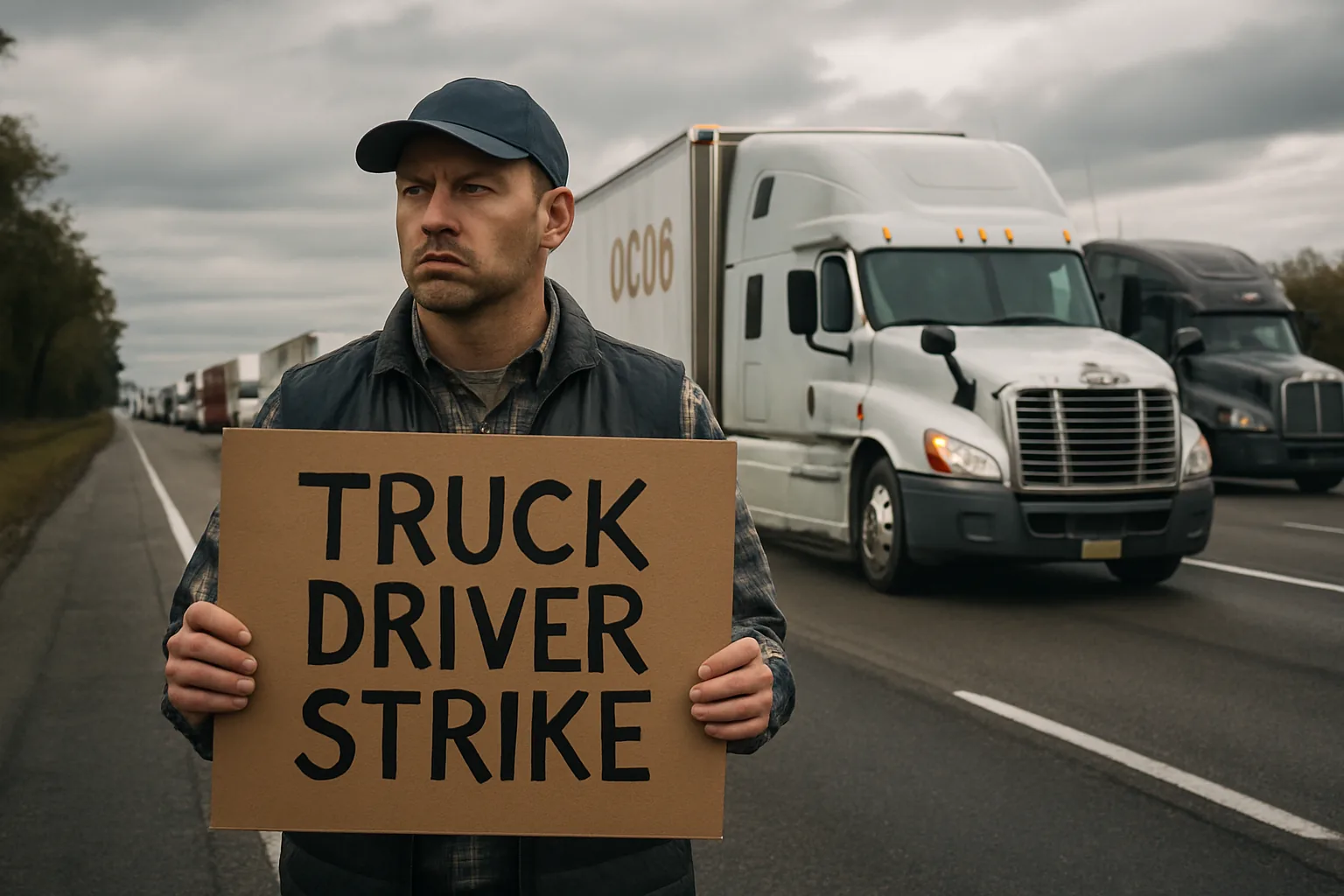
A wave of social media posts circulated in September 2026 claiming that truck drivers across the United States were preparing to launch a truck driver strike on October 1, 2026, motivated by record diesel fuel prices. The posts spread rapidly across platforms, prompting widespread concern about potential supply chain disruptions — but when major trucking organizations were consulted, none could confirm that any formally organized, industry-backed walkout was underway or planned.
What the Viral Claim Said
Beginning in September 2026, social media users shared posts asserting that a nationwide truck driver strike would commence on October 1, 2026. The posts appeared across Facebook, Instagram, and YouTube, and were framed as urgent warnings about imminent shortages of goods. Several posts cited high diesel fuel costs as the central grievance driving the alleged action, with some specifically referencing record prices at the pump as the breaking point for drivers operating on thin margins.
The claims gained enough traction to prompt community discussion forums — including local groups such as the Huntington Beach Community Forum on Facebook — to circulate the warnings as though a confirmed strike was imminent. The framing in many posts was declarative: drivers were striking, not that they might strike. That distinction matters, because it shaped public perception of a concrete, coordinated labor action that the evidence does not support.
What the Evidence Shows About the October 1 Truck Driver Strike
As of September 17, 2026, no confirmation of an officially organized nationwide October 1 strike had been found from major trucking organizations or federal transportation authorities. This is a significant data point: major industry associations are typically the first to either endorse or distance themselves from labor actions of this scale, and their silence — or outright denial — is meaningful.
Most directly, the Owner-Operator Independent Drivers Association (OOIDA) stated that it did not support a nationwide strike. OOIDA represents a substantial portion of the independent trucking community in the United States, and its position carries weight precisely because independent owner-operators would be among the most likely participants in any fuel-cost-driven work stoppage. The association’s denial directly undermines the claim that this was a formally organized, industry-sanctioned action.
👉 Read also: Alleged October 1, 2026 Trucker Strike: No Evidence Found
The rumor also lacked backing from other major industry associations. No statement from any recognized national trucking body endorsing or organizing the alleged October 1 action has been verified. The viral claim of a nationwide trucker strike in October 2026 was never a formally organized national strike, according to available evidence.
The Real Fuel Cost Context
The grievance at the heart of the claim was not fabricated. The national average price of on-highway diesel reached approximately $6.29 per gallon for the week of September 14, 2026 — a sharp increase from earlier in the year. For owner-operators who purchase fuel out of pocket and whose earnings depend on the spread between freight rates and operating costs, a diesel price at that level genuinely compresses or eliminates profit on many loads.
This economic pressure is real and well-documented within the trucking industry. It provides a plausible backdrop for driver frustration and gives the viral claim a kernel of credibility that helps explain its spread. When people share content that resonates with a genuine underlying condition — in this case, unsustainable fuel costs — they are less likely to scrutinize whether the specific action described is actually occurring.
The U.S. Department of Transportation did respond to the fuel supply situation, announcing temporary changes to hours-of-service rules for drivers transporting gasoline and diesel, including a 90-day waiver. That regulatory action confirms that federal authorities recognized the severity of the fuel logistics situation — but it also represents a government response to supply conditions, not to any organized driver strike.
What Actually Happened on October 1
Some independent drivers did report parking their rigs on or around October 1, 2026, citing diesel costs that made certain loads financially difficult or impossible to justify. This is a meaningful distinction from a coordinated strike. Individual drivers making independent economic decisions — choosing not to accept loads that would result in a loss — is a normal market response to cost pressure, not a collective labor action with leadership, demands, or a defined endpoint.
There is no verified evidence of a centrally coordinated walkout, a unified set of demands issued to carriers or government, or any organizing body that called for and managed a strike beginning on that date. The Overdrive trucking publication examined what drivers themselves were saying about the situation, and the picture that emerged was one of individual frustration rather than collective action. Some drivers expressed sympathy with the idea of a work stoppage; others were skeptical that it would be effective or broadly observed.
👉 Read also: Viral Videos Misidentify Unrelated Footage as Recent Events
The pattern here is familiar in the trucking industry. Similar viral claims of nationwide trucker strikes have circulated during previous periods of high diesel prices and regulatory tension, and in most cases the outcome has been the same: scattered individual decisions to park, no unified action, and no measurable disruption to national freight movement attributable to a coordinated strike.
Why This Kind of Claim Spreads
Understanding why the truck driver strike October 2026 claim gained such rapid traction requires looking at both the information environment and the underlying conditions. Truckers occupy a unique cultural position in American public life — they are simultaneously essential workers, symbols of economic independence, and a community that has historically been skeptical of institutional representation. Claims about truckers “taking a stand” resonate broadly, across political lines, in ways that claims about other labor groups might not.
Social media algorithms amplify content that generates strong emotional responses, and the prospect of a nationwide freight shutdown — with implied consequences for grocery store shelves and gas stations — is precisely the kind of scenario that drives shares and comments. The posts did not need to be accurate to be effective at spreading; they needed only to be plausible and emotionally resonant.
The Work Truck Online publication addressed the rumor directly, urging readers not to chase unverified claims, and noted the absence of any organizing infrastructure behind the alleged strike. That kind of industry-level pushback is valuable, but it rarely travels as fast as the original viral claim.
For readers evaluating similar claims in the future, the most reliable indicators of a genuine organized labor action are: a named organizing body, a published list of demands, a defined timeline with stated conditions for ending the action, and acknowledgment from at least one major industry association — whether in support or opposition. The October 1, 2026 claim met none of these criteria. The Owner-Operator Independent Drivers Association remains the most authoritative voice on independent trucker labor positions, and its explicit denial of support for this action is the clearest single piece of evidence against the viral narrative.
The frustration driving the posts was real — diesel at $6.29 per gallon is a genuine hardship for independent operators — but frustration and a formally organized strike are different things, and conflating them does a disservice both to the public trying to understand what is happening and to the drivers whose economic concerns deserve accurate coverage rather than viral amplification of unverified claims.
This article was produced with AI assistance and reviewed editorially.

Political Ads in 2026 Midterms Contain False or Misleading Claims About Opponents

Trump Administration ‘Super Intelligence’ Accord Misspells ‘United States’ as ‘Unites States’

Trump Administration ‘Super Intelligence’ Accord Misspells ‘United States’ as ‘Unites States’

No Going Back PAC Ad Makes Misleading Claim About Roy Cooper and Rape Kits
