
Current Affairs
Video of FlyDubai Flight FZ1073 Emergency Landing Misidentified as Post-Hijacking Celebration
A viral video falsely claimed to show FlyDubai Flight FZ1073 passengers celebrating after a September 2026 hijacking attempt, but actually showed an Israeli basketball te

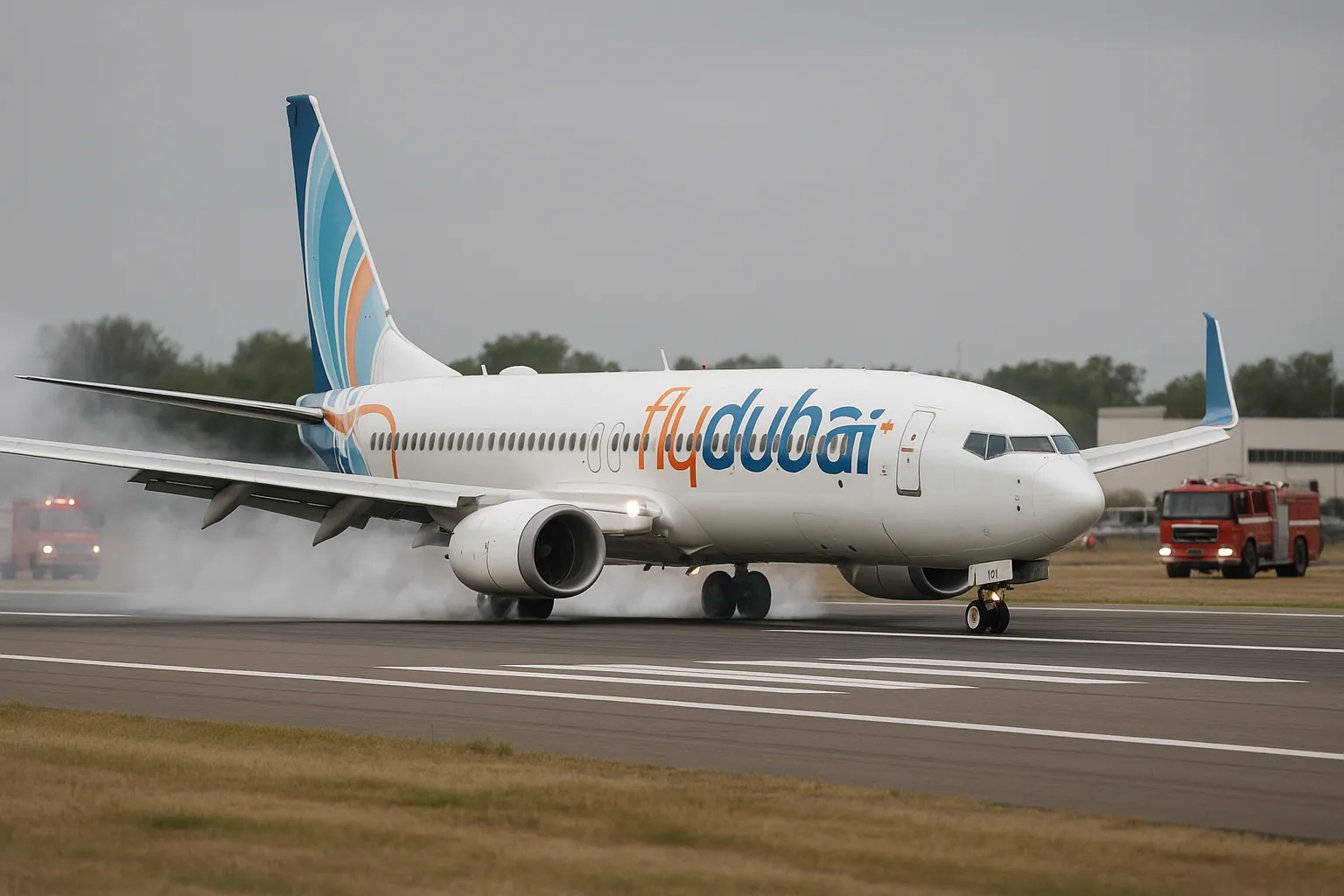
A violent mid-air incident aboard a commercial airliner bound for Tel Aviv on September 30, 2026, triggered not only a dramatic emergency landing but a rapid wave of online misinformation — including at least one viral video falsely presented as footage of passengers celebrating in the aftermath of the flydubai flight FZ1073 emergency landing. The video was misidentified, according to reporting by France 24, and the false content spread widely before corrections began to circulate.
What Happened Aboard FlyDubai Flight FZ1073
FlyDubai Flight FZ1073 departed Dubai en route to Tel Aviv on September 30, 2026, carrying between 172 and 174 passengers, including 27 children, along with its crew. The flight was operated on a Boeing 737 Max 8. Somewhere over the region, a violent altercation broke out in the cockpit — an incident that would push the aircraft into one of the most alarming rapid descents in recent commercial aviation history.
Flight data recorded a plunge of nearly 14,000 feet in less than 30 seconds — one source places the figure at 17,000 feet in under two minutes. Regardless of the precise measurement, the descent was catastrophic in its speed and represented an immediate, life-threatening emergency for everyone aboard. The aircraft transmitted squawk code 7700, the internationally recognised signal for a general emergency, alerting air traffic control to the unfolding crisis.
The plane was ultimately brought under control and directed to Tabuk, Saudi Arabia, where it made an emergency landing. All passengers were safely evacuated. Captain Smit Machchhar, an Indian pilot, sustained serious injuries during the cockpit altercation. The co-pilot, believed to be Omani, was involved in the violent incident. The precise motive behind the attack remains under investigation as of the time of writing.
Passengers Who Intervened and the Aftermath
The emergency landing at Tabuk was not only the result of the crew’s efforts. According to verified reporting, four Israeli passengers played a direct role in subduing the co-pilot during the incident and subsequently received heroism awards for their actions. Their intervention is understood to have been a contributing factor in preventing a worse outcome.
→ Read also: FlyDubai Flight FZ1073 Emergency Landing: Misleading Videos Spread Online After Cockpit Stabbing
In the days following the incident, the aviation consequences were swift and significant. FlyDubai halted its flights to Israel following the event, and Emirates suspended its FlyDubai codeshare operations to and from Tel Aviv. The suspension of codeshare arrangements between the two carriers — which share a close operational relationship — underscored the seriousness with which aviation authorities and airlines treated the incident.
The Misidentified Video and the Spread of Misinformation
Within hours of the flydubai flight FZ1073 emergency landing becoming international news, false and misleading content began to circulate on social media platforms. France 24 documented at least two distinct categories of misinformation that emerged in the incident’s wake.
The first involved a fake BBC report that falsely implicated an Indian passenger — and separately, the Indian pilot — in the hijacking attempt. This fabricated report carried the visual branding of a major international broadcaster to lend it false credibility. France 24 identified it as false content.
The second category involved a viral video that was presented online as showing passengers celebrating after surviving the ordeal aboard FZ1073. According to France 24, this video was misidentified — it did not show what it was claimed to show. The brief confirms the video was misidentified but does not provide verified details about the video’s actual origin or subject matter. What is established is that the footage was not a genuine record of events connected to the FZ1073 incident, and its circulation contributed to a distorted public understanding of what had occurred.
The pattern here is familiar in the context of high-profile aviation emergencies: when an incident generates intense public interest quickly, the information environment becomes vulnerable to content that is recycled, mislabeled, or outright fabricated. The FZ1073 incident, involving multiple nationalities, a dramatic altitude loss, and geopolitical sensitivities around the Dubai–Tel Aviv route, created precisely the conditions under which false content tends to proliferate.
Why Misidentified Footage Spreads So Quickly
The circulation of misidentified video in the aftermath of the flydubai flight FZ1073 emergency landing illustrates a broader dynamic in online information ecosystems. When a major event occurs — particularly one involving aviation safety, which carries inherent public anxiety — audiences seek visual confirmation of what they have read or heard. This demand for imagery creates an opening for content that appears relevant to be shared rapidly, often before any verification has taken place.
→ Read also: FlyDubai Flight FZ1073 Emergency Landing in Saudi Arabia Spawns Multiple False Videos and Misidentified Footage
In this case, the misidentified video was presented with a specific, emotionally resonant framing: passengers celebrating survival. That framing is psychologically compelling. It offers resolution and relief after a frightening event, which makes it highly shareable. The problem is that the footage, according to France 24‘s reporting, did not depict what the accompanying claims asserted.
The fake BBC report followed a different but equally well-documented pattern: using the visual identity of a trusted news organisation to confer false legitimacy on fabricated content. The BBC brand, applied to a false document or video, functions as a shortcut past skepticism for many viewers. Neither piece of misinformation required sophisticated production — the power of both lay in the emotional and institutional framing applied to them, not in their technical quality.
What Remains Unresolved
As of October 18, 2026, several significant questions about the FZ1073 incident remain open. The motive behind the cockpit altercation has not been publicly established — authorities have confirmed an investigation is ongoing, but no findings have been released. The specific identity and background of the co-pilot have not been confirmed in verified reporting, beyond the detail that he was believed to be Omani.
The precise sequence of events inside the cockpit — how the altercation began, what exactly occurred during the roughly 30-second descent, and what role passengers may have played in real time — has been reported in broad outline but not confirmed in granular detail by primary sources. AP News published a detailed timeline of the flight data and altitude changes, which remains one of the most authoritative reconstructions available.
These gaps matter for two reasons. First, they are the legitimate subject of ongoing investigation, and premature conclusions could prejudice that process. Second, they represent precisely the spaces that misinformation tends to fill — the unanswered questions that false content rushes to answer with invented detail. The verified facts of the flydubai flight FZ1073 emergency landing are dramatic enough on their own terms: a near-catastrophic descent, a seriously injured captain, passengers who intervened at personal risk, and a safe evacuation of everyone aboard. The subsequent spread of misidentified footage and fabricated reports added a second layer of harm — not to the passengers, who survived, but to the public’s ability to understand what actually happened.
The FZ1073 incident and the misinformation that followed it serve as a reminder that verifying the source of any video or document before sharing it is not a passive act of caution — it is an active contribution to the accuracy of the information environment that everyone, including journalists, policymakers, and aviation investigators, depends upon to make sense of events as consequential as this one.
This article was produced with AI assistance and reviewed editorially.

Political Ads in 2026 Midterms Contain False or Misleading Claims About Opponents

Trump Administration ‘Super Intelligence’ Accord Misspells ‘United States’ as ‘Unites States’

Trump Administration ‘Super Intelligence’ Accord Misspells ‘United States’ as ‘Unites States’

No Going Back PAC Ad Makes Misleading Claim About Roy Cooper and Rape Kits
