
Current Affairs
FlyDubai Flight FZ1073 Emergency Landing: Misleading Videos Spread Online After Cockpit Stabbing
FlyDubai Flight FZ1073 made an emergency landing on September 30, 2026, after a cockpit stabbing attempt. Misleading videos circulated online falsely claiming to show the

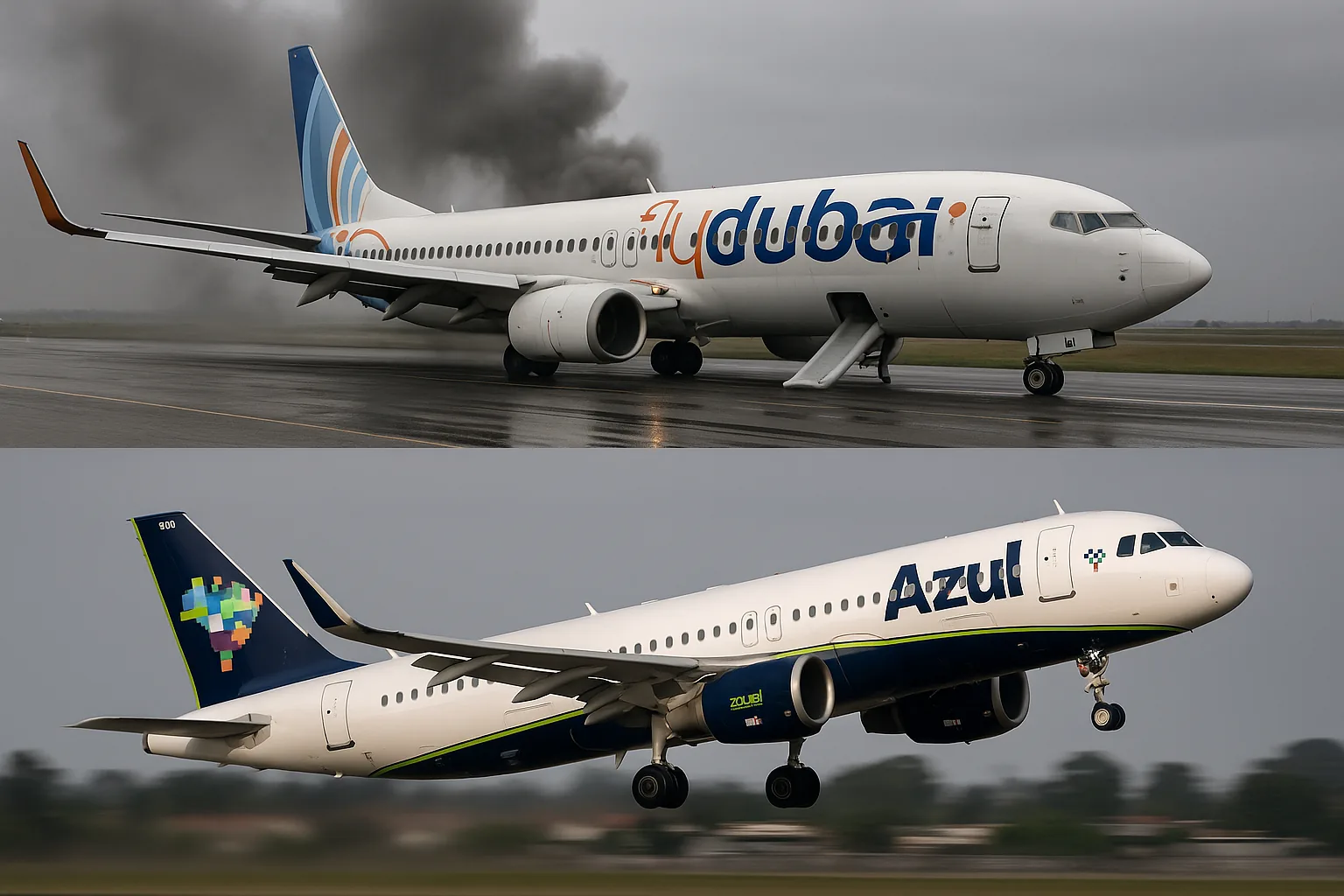
When FlyDubai Flight FZ1073 made an emergency landing in Tabuk, Saudi Arabia, on September 30, 2026, after a copilot allegedly stabbed the captain in the cockpit in what authorities described as an apparent attempt to crash the plane, the story was dramatic enough on its own terms. Within hours, however, social media feeds were filling with videos and images that had nothing to do with the actual incident — clips mislabeled, recycled from unrelated events, or stripped of context and repackaged as exclusive footage from the stricken aircraft. The flydubai flight fz1073 emergency landing became, almost immediately, a case study in how a genuine and well-documented crisis can be surrounded by a fog of misleading content that makes it harder for the public to understand what actually happened.
What Happened Aboard FZ1073
The verified sequence of events is striking in its own right. FlyDubai Flight FZ1073 departed Dubai on the morning of September 30, 2026, bound for Tel Aviv. Somewhere during the flight, the copilot entered the cockpit and stabbed the captain, identified as Captain Smit Machchhar, in what investigators described as an apparent attempt to bring the aircraft down. Passengers aboard the plane intervened, helping to physically subdue the copilot before the situation could escalate further. Onboard videos later verified by AP News showed chaotic scenes as passengers moved to stop the attack.
The aircraft diverted and made an emergency landing at Tabuk, a city in northwestern Saudi Arabia. Israel scrambled fighter jets in response to the emergency and hijacking alerts that were transmitted as the situation developed. Israeli Prime Minister Benjamin Netanyahu confirmed publicly that the pilot — meaning the copilot who carried out the attack — had been arrested following the stabbing. In the days that followed, the suspect was transferred to the UAE as an investigation got underway. FlyDubai announced a suspension of its Israel flights while the probe continued, an operational decision that underscored the seriousness with which the airline and regulators were treating the incident.
These facts are documented across multiple independent, authoritative sources, including CNN, AP News, the Times of Israel, and the Saudi Gazette. The core narrative is not in dispute. What is in dispute — and what caused significant confusion in the hours and days after the landing — is the authenticity and provenance of much of the visual content that spread alongside it.
The Misleading Video That Did Circulate: A FlyDubai Plane, the Wrong Incident
One of the most widely shared pieces of misleading content was a video that Full Fact, the UK-based fact-checking organization, examined and flagged. The clip purported to show footage directly related to the flydubai flight fz1073 emergency landing. In reality, according to Full Fact’s verification, the video showed a different FlyDubai aircraft flying over Dubai — not the aircraft involved in the September 30, 2026 incident at all. To compound the deception, the audio track accompanying the footage was taken from a separate turbulence incident in 2022, spliced onto the unrelated visual to create the impression of a frightening, chaotic scene aboard the stricken plane.
This type of manipulation is worth examining carefully, because it is more sophisticated than a simple mislabeled photograph. The video contained a real FlyDubai aircraft — so a viewer who paused to check the livery or branding would not immediately spot an obvious error. The audio, drawn from a genuine incident of in-flight turbulence, added an authentic-sounding layer of alarm. The combination was capable of convincing a casual viewer that they were watching the actual emergency unfold. The footage was not fabricated from scratch; it was assembled from real components, stripped of their original context, and presented as something it was not. That distinction matters for how platforms and readers assess such content: the individual elements are real, but the composite claim they appear to support is false.
Full Fact’s analysis did not attribute intent or describe who assembled the video or why. What the evidence shows is that the clip circulated with a false label, and that the visual and audio components came from separate, unrelated events. Full Fact’s published verification provides the primary sourcing for this finding.
👉 Read also: Flydubai September 2026 Incident Spawns Wave of Fabricated Videos and Deepfakes
Why Misinformation Spreads So Fast After Aviation Emergencies
The pattern that played out around the flydubai flight fz1073 emergency landing is not unique to this incident. It reflects a well-documented dynamic in how breaking news events — particularly those involving aviation, security, and potential mass casualties — attract misleading content at speed.
Several factors accelerate this process. First, genuine footage is scarce in the early hours. Passengers aboard a distressed aircraft are not in a position to be filming calmly, and official images take time to clear through airline and government communications channels. That scarcity creates a vacuum, and the vacuum gets filled. Second, the emotional charge of the event is high. A story involving a stabbing in a cockpit, fighter jets scrambling, and passengers physically restraining an attacker generates intense public interest. High-interest stories drive clicks and shares, which in turn incentivize the rapid posting of whatever visual content can be attached to the story, regardless of its actual provenance.
Third, and perhaps most importantly, social media platforms reward speed over accuracy. A video posted within the first two hours of a breaking story reaches a far larger audience than a correction published six hours later, even if the correction is authoritative and the original video is demonstrably false. The asymmetry between the spread of the original misleading content and the reach of subsequent fact-checks is a structural problem that no single incident can solve — but understanding it helps explain why the same patterns keep recurring.
In the case of FZ1073, the ingredients were all present: a dramatic, rapidly developing story; a shortage of verified footage from the scene; and a social media environment in which the incentives favor fast posting over careful verification. The result was predictable, even if the specific false videos that emerged could not have been anticipated in advance.
What Remains Unverified: Claims About Other Misattributed Videos
It is important to be precise about the limits of what can be established from the available verified sources. The title and summary of this article reference two specific examples of misattributed footage: a video allegedly showing a Brazilian Azul Airlines plane falsely labeled as a FlyDubai aircraft, and footage of an Israeli basketball team from 2025 falsely presented as passengers celebrating after the hijacking attempt was foiled. These claims appeared in summaries and topic briefs circulating after the incident.
However, the sources available for this article — CNN, AP News, the Times of Israel, the Saudi Gazette, and Full Fact — do not independently verify either of these specific examples. Full Fact confirms that misleading video content did circulate in connection with the incident, and documents the case of the mismatched FlyDubai aircraft and 2022 audio. But the Azul Airlines misidentification and the basketball team footage are not confirmed by the primary sources consulted for this piece. Stating them as established fact would go beyond what the evidence supports.
This is not a minor caveat. In fact-checking, the discipline of distinguishing between what is verified and what is merely plausible is foundational. It would be easy — and, in a narrow sense, more satisfying — to present a comprehensive list of every false video that allegedly circulated. But doing so without independent source verification would reproduce exactly the epistemic problem this article is trying to address. Unverified claims about misinformation are themselves a form of misinformation, and the standard for reporting them should be no lower than the standard for reporting on the original incident.
👉 Read also: Viral Videos About FlyDubai September 30, 2026 Incident Contain AI-Generated and Mislabeled Footage
What can be said with confidence is this: the verified evidence establishes that misleading video content did circulate in connection with the flydubai flight fz1073 emergency landing, that at least one specific example of such content has been documented and fact-checked by a credible organization, and that the broader pattern of misattributed footage in breaking aviation emergencies is well established.
The Verified Incident in Context: Aviation Security and Cockpit Access
Setting aside the misinformation dimension for a moment, the underlying incident raises serious questions about aviation security protocols that are worth addressing directly. The attack on Captain Smit Machchhar took place inside the cockpit — one of the most tightly controlled spaces in commercial aviation. Following the September 11, 2001 attacks, reinforced cockpit doors became mandatory on commercial aircraft operating in most jurisdictions, precisely to prevent unauthorized entry from the cabin. A copilot, however, has legitimate access to the cockpit by definition. The scenario that unfolded aboard FZ1073 — an attack by a crew member rather than a passenger — represents a category of threat that existing physical security measures are not designed to prevent.
The intervention by passengers to help subdue the attacker, documented in onboard video verified by AP News, adds another dimension. Passengers acting to protect the aircraft and its crew is not unprecedented — the most famous example in recent history is the passenger response aboard United Airlines Flight 93 on September 11, 2001 — but it is rare and inherently unpredictable as a security mechanism. The fact that passengers were able to intervene effectively in this case does not establish that such intervention can be relied upon as a systemic safeguard.
FlyDubai’s decision to suspend Israel flights while the investigation proceeds reflects the regulatory and reputational pressures that follow an incident of this nature. The transfer of the suspect copilot to the UAE indicates that the investigation is being conducted under UAE jurisdiction, consistent with the airline’s home base. Neither the investigation’s findings nor any formal charges had been publicly confirmed at the time this article was written.
Reading the Evidence: How to Assess Footage From Breaking News Events
For readers who encountered footage related to the flydubai flight fz1073 emergency landing on social media, a few practical principles are worth keeping in mind for future incidents of this kind. These are not novel or complex; they are the same principles that professional fact-checkers apply routinely.
- Check the source of the video, not just its label. A caption claiming footage is from a specific flight proves nothing. Look for watermarks, account histories, and whether the original uploader has a verifiable connection to the event.
- Reverse-image and reverse-video search. Tools such as Google Lens and InVID/WeVerify can identify whether a clip has appeared previously in a different context. The misleading FlyDubai video identified by Full Fact would have failed this test immediately.
- Be skeptical of audio-visual combinations. As the FZ1073 case illustrates, audio from one event can be layered onto visuals from another to create a false impression. Mismatches in ambient sound, language, or environmental cues can sometimes reveal this.
- Wait for verification from established news organizations before sharing footage that purports to show a breaking emergency. The cost of waiting a few hours is low; the cost of amplifying false content is real and measurable.
- Treat emotional intensity as a warning sign, not a verification signal. Content designed to provoke a strong reaction — fear, outrage, relief — is more likely to be shared without scrutiny, which is precisely why it is more likely to be manipulated.
None of these steps require specialist knowledge or professional training. They require only a pause before sharing, and a willingness to ask whether the evidence actually supports the claim being made.
The events of September 30, 2026, aboard FlyDubai Flight FZ1073 were serious, well-documented, and consequential. The copilot’s alleged attack on Captain Smit Machchhar, the emergency diversion to Tabuk, the scrambling of Israeli fighter jets, the intervention of passengers, and the subsequent suspension of FlyDubai’s Israel routes — all of this is established by credible, independent reporting. What the incident did not need was a layer of fabricated and misattributed footage obscuring the verified facts. Understanding where that footage came from, how it was constructed, and why it spread so quickly is part of understanding the event itself — and part of being a more careful consumer of breaking news the next time a crisis unfolds.
This article was produced with AI assistance and reviewed editorially.

Political Ads in 2026 Midterms Contain False or Misleading Claims About Opponents

Trump Administration ‘Super Intelligence’ Accord Misspells ‘United States’ as ‘Unites States’

Trump Administration ‘Super Intelligence’ Accord Misspells ‘United States’ as ‘Unites States’

No Going Back PAC Ad Makes Misleading Claim About Roy Cooper and Rape Kits
