
Current Affairs
Fact-Check: Claims About UK Energy Policy and Civil Defense
Explore how UK political misinformation on energy policy spreads through campaign materials. This article debunks false claims about energy levies and policy attribution

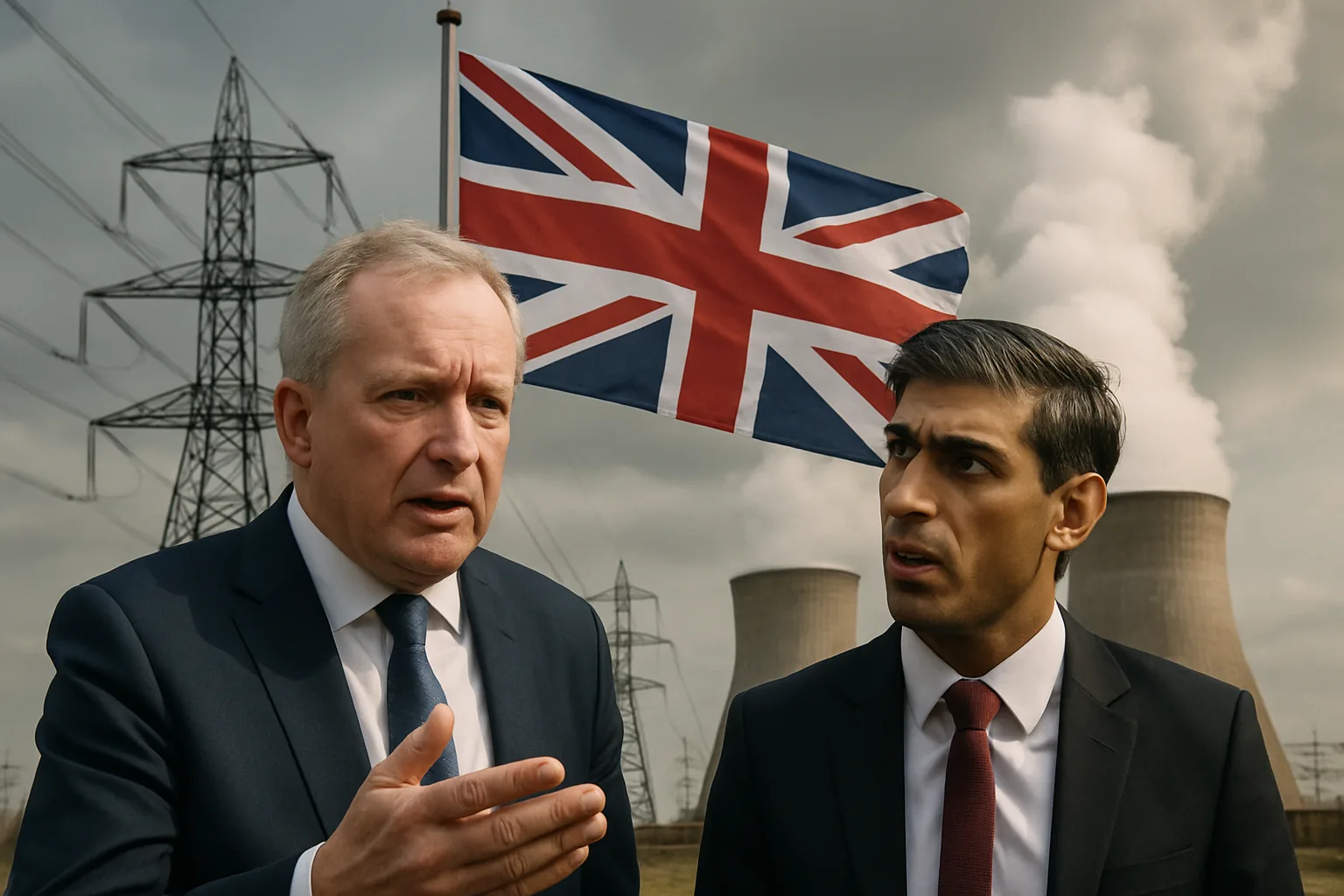
The United Kingdom’s political information environment is under sustained pressure. Across party lines, claims about energy taxation, civil preparedness, and government spending continue to circulate on social media and in campaign literature — sometimes long after the underlying facts have shifted. UK political misinformation on energy policy is not a fringe problem: it sits at the intersection of partisan advantage and genuine public confusion, making accurate, source-grounded scrutiny more important than ever. Understanding how these patterns emerge, how they spread, and what standards apply when evaluating them is essential for any engaged citizen navigating the current political cycle.
Why Energy Policy Is Especially Vulnerable to Misattribution
Energy policy in the UK has changed hands, changed shape, and changed name with unusual frequency over the past several years. Levies are introduced, extended, amended, and sometimes quietly reversed — often across different administrations. This creates a structural opportunity for misattribution: when a policy outlasts the government that created it, the successor government can be blamed for decisions it inherited rather than made.
This dynamic is not unique to any one party. Policy continuity across electoral cycles is a normal feature of governance, but it becomes a vector for misinformation when politicians, campaign teams, or commentators describe inherited policies as if they were innovations of the current administration. The confusion is sometimes deliberate, sometimes careless, and sometimes the result of campaign materials being produced under deadline pressure without adequate fact-checking.
Energy levies are particularly prone to this problem because they involve sunset clauses — built-in expiry dates that can be extended by subsequent governments. When an extension is made, the question of political ownership becomes genuinely complicated. Did the party that created the levy also create the extension? Or does the extension belong to whichever government was in office when it was enacted? These are not merely rhetorical questions: they have direct consequences for how voters assign responsibility and how parties frame their records.
According to Full Fact’s 2026 annual report on misinformation in the UK, policy attribution errors are among the most persistent categories of political misinformation the organisation encounters. The report notes that such errors are difficult to correct precisely because they contain a kernel of truth — the policy in question usually does exist — while misrepresenting who is responsible for it.
The Mechanics of Policy Attribution Errors in Campaign Material
Campaign documents, party booklets, and social media posts are produced at scale and at speed. Fact-checking infrastructure within political parties varies enormously, and the incentive structure often rewards a compelling attack line over a scrupulous one. The result is that specific, verifiable errors — such as attributing a policy extension to the wrong government — can enter the public record through official-looking materials and prove difficult to dislodge.
The pattern typically unfolds in stages. A claim appears in a party document or a politician’s speech. It is then amplified by supporters on social media, sometimes stripped of its original context. By the time a correction is issued — if one is issued at all — the original claim has already reached a far larger audience than the correction will. This asymmetry is well-documented in misinformation research and is not specific to any party or ideology.
→ Read also: False Claims About Migrants, Refugees, and UK Border Policy Fact-Checked
What makes energy policy particularly susceptible is the technical complexity of the underlying legislation. Most voters do not track the precise dates on which a levy was introduced, extended, or modified. They rely on politicians and media to provide that context accurately. When that context is wrong, the error can persist for months or years because there is no obvious moment at which an ordinary person would encounter a correction.
The distinction between proposed and enacted policy compounds the problem further. A proposal that never became law — whether from the Liberal Democrats, the Conservatives, Labour, or any other party — can be misrepresented as government action. Civil defence proposals, for example, may be discussed in policy documents, debated in Parliament, or floated in consultation without ever reaching the statute book. Treating a proposal as if it were enacted policy is a category error that can generate significant public alarm, particularly when the subject matter touches on military or emergency registration.
Civil Defence Claims and the Distinction Between Proposal and Law
Claims about civilian military registration or emergency civil defence schemes have a particular potency in the current political climate. Concerns about European security, the conflict in Ukraine, and shifting NATO commitments have made the public more receptive to — and more anxious about — stories involving compulsory registration or service. This creates fertile ground for misinformation that conflates a party’s policy proposal with actual government action.
The key journalistic and fact-checking discipline here is straightforward but demanding: every claim about government action must be traced to a primary source. That means the relevant Act of Parliament, the statutory instrument, or the official government announcement — not a news report, a party press release, or a social media post. A proposal debated in a policy document is not the same as a law on the statute book. A pilot scheme is not the same as a national rollout. A party’s manifesto commitment is not the same as enacted legislation.
When evaluating claims about civil defence registration in the UK context, the relevant primary sources include parliamentary records (Hansard), official government publications, and the legislation.gov.uk database. If a claim cannot be traced to one of these sources, it cannot be stated as fact. This applies regardless of which party is making or responding to the claim.
Misinformation and disinformation are formally recognised as part of the UK’s chronic risk landscape, as documented in research published by the Greater London Authority’s City Intelligence unit in early 2026. That analysis notes that politically charged topics — including defence, immigration, and energy — are disproportionately targeted by both domestic and foreign information operations, making independent verification by credible organisations essential.
UK Political Misinformation on Energy Policy: What Responsible Scrutiny Looks Like
Responsible fact-checking of UK political misinformation on energy policy requires a consistent methodology regardless of which party is under scrutiny. The starting point is always the specific claim: who said it, when, in what context, and in what form. A claim made in a party booklet carries different evidentiary weight than one made in a parliamentary speech, but both must be checked against primary sources.
→ Read also: Small boat Channel crossings predate Brexit referendum, contrary to Liberal Democrat claim
For energy levy claims, the primary sources are the Finance Acts and Autumn Statements in which levies are introduced or extended, supplemented by HM Treasury documentation and parliamentary debate records. These are publicly available and searchable. Any claim about when a levy was introduced, when it was extended, and which government was responsible for each decision can be verified against these records — and should be, before the claim is reported or amplified.
The same discipline applies to claims about the fiscal impact of energy policies, their effect on household bills, or their relationship to net-zero targets. Reform UK, led by Nigel Farage, has been documented by Carbon Brief as having made numerous false or misleading claims about climate and energy policy — a finding that illustrates how energy misinformation is not confined to the major parties. Reform UK’s deputy leader Richard Tice has been among the most prominent critics of net-zero policy, and Carbon Brief’s analysis found that many of the specific claims made in that context did not withstand scrutiny against primary data sources.
The broader point is that UK political misinformation on energy policy is a cross-party phenomenon. It is not the exclusive property of any one faction, and treating it as such is itself a form of selective reporting. Rigorous fact-checking applies the same standard to every claim, from every source, and publishes corrections regardless of which party benefits or suffers.
The Role of Institutional Fact-Checkers and Their Limits
Organisations like Full Fact provide an essential public service by systematically tracking and correcting political misinformation. Their annual reports offer a structured overview of the claims that have circulated in a given year, the corrections issued, and the patterns that emerge across different policy areas. The 2026 report notes continued growth in the volume of claims requiring verification, alongside persistent challenges in reaching the audiences most exposed to misinformation.
But institutional fact-checkers have limits. They cannot check every claim, they do not always have access to the original documents in which errors appear, and their corrections — however accurate — face the same asymmetry problem as any other correction: the original claim has usually spread further and faster. This is why media literacy, source discipline, and a habit of tracing claims to primary documents matter at the individual level, not just the institutional one.
When a specific claim about energy policy or civil defence cannot be verified against a primary source — because the source documents are unavailable, because the claim is ambiguous, or because the evidence is genuinely contested — the appropriate verdict is unverifiable, and that uncertainty must be stated plainly. Presenting a claim as debunked when the evidence to debunk it has not been assembled is not fact-checking: it is a different kind of misinformation. The credibility of the fact-checking enterprise depends entirely on the rigour of the method, and that rigour must be applied even when — especially when — the claim in question is politically convenient to dismiss.
Political misinformation about energy and civil defence will not disappear from the UK’s information environment. The pressures that generate it — electoral competition, technical complexity, the speed of social media, and the genuine difficulty of tracking policy across administrations — are structural, not accidental. What can change is the standard of scrutiny applied by journalists, fact-checkers, and citizens alike: a consistent demand for primary sources, a clear distinction between proposal and enacted law, and an honest acknowledgement of what has and has not been verified. That standard, applied without fear or favour, is the most reliable defence available.
This article was produced with AI assistance and reviewed editorially.

Political Ads in 2026 Midterms Contain False or Misleading Claims About Opponents

Trump Administration ‘Super Intelligence’ Accord Misspells ‘United States’ as ‘Unites States’

Trump Administration ‘Super Intelligence’ Accord Misspells ‘United States’ as ‘Unites States’

No Going Back PAC Ad Makes Misleading Claim About Roy Cooper and Rape Kits
