
Current Affairs
Zelenskyy Platform Shoes Photo and Trump-Xi Dinner Image Examined for AI Generation
Two viral AI generated fake images—Zelenskyy in platform shoes and Trump dining with Xi, Musk, Bezos—have been debunked by fact-checkers. Learn how to spot synthetic medi

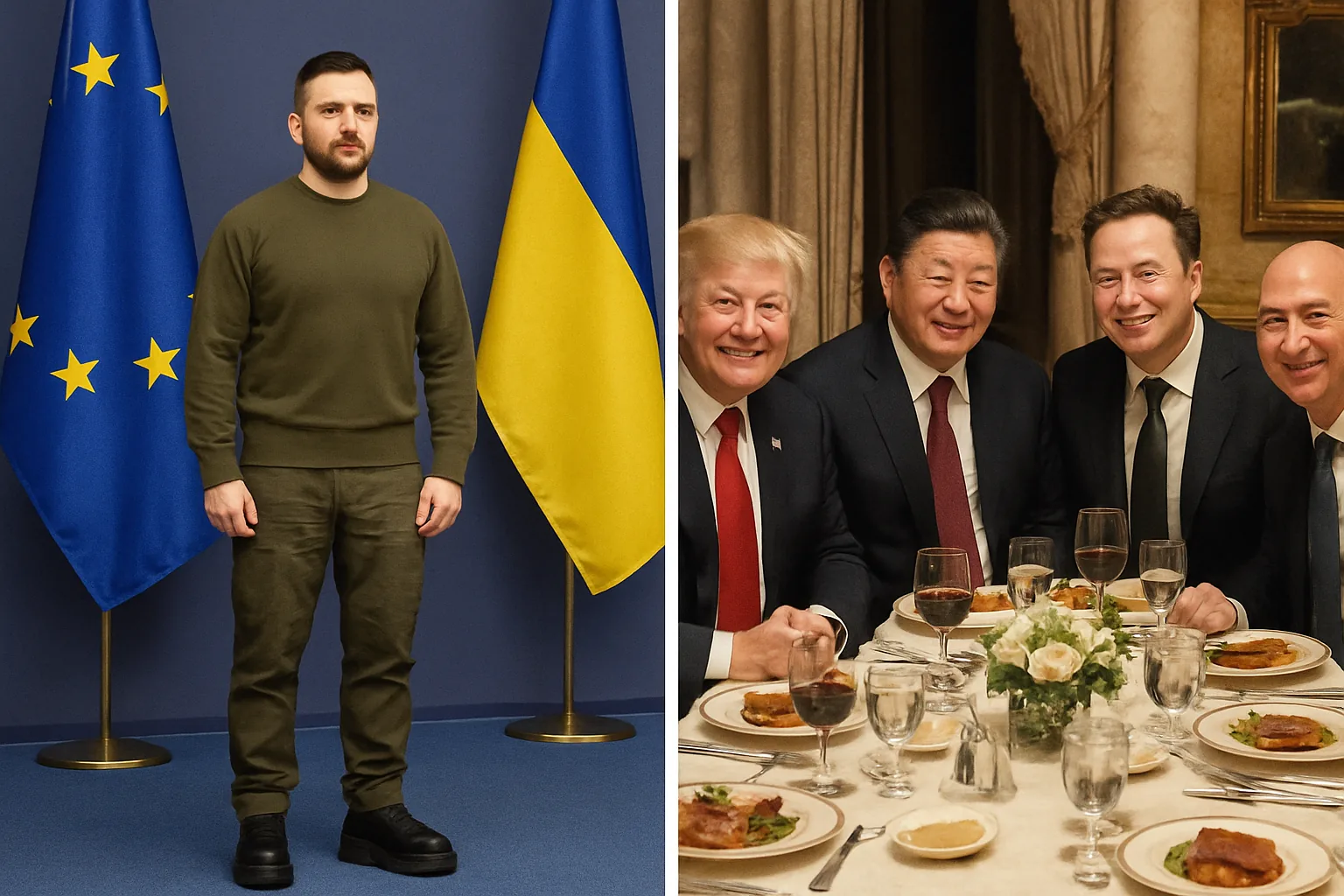
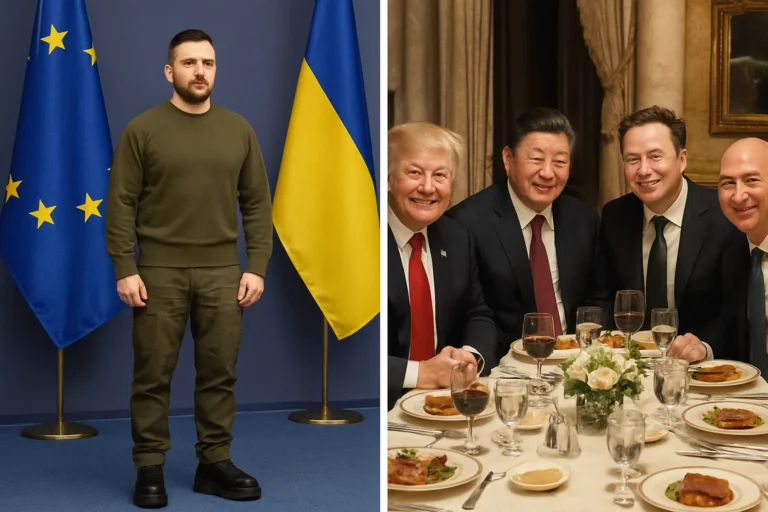
Two images have circulated widely across social media in recent months, each purporting to show a world leader in a compromising or politically charged moment. One depicts Ukrainian President Volodymyr Zelenskyy wearing exaggerated platform shoes at a European Council summit. The other shows Donald Trump seated at a formal state dinner alongside Xi Jinping, Elon Musk, and Jeff Bezos. Both images are ai generated fake images — fabrications with no basis in documented reality — and both have been independently debunked by multiple fact-checking organisations. Understanding how these fakes were identified, and why they were constructed, matters for anyone trying to navigate an information environment increasingly saturated with synthetic media.
The Zelenskyy Platform Shoes Image: What Circulated and Why It Matters
The image of Zelenskyy in platform shoes spread across X, Telegram, Facebook, and TikTok, accompanied by captions implying the Ukrainian president secretly wears height-enhancing footwear to appear taller in public — a claim designed to mock and undermine his credibility. The image was tied to a European Council summit, a high-profile setting that lent the fabrication a veneer of plausibility.
Fact-checkers at Ukrinform and Mythdetector examined the image against official video footage and verified photographs from the same event. The comparison was straightforward: in authentic summit footage, Zelenskyy’s footwear is entirely ordinary. The AI-generated version, by contrast, contains the hallmarks typical of synthetic imagery — unnatural shoe geometry, inconsistent shadows beneath the soles, and a slight blurring at the boundary between the figure’s legs and the fabricated footwear. These are visual artefacts that arise when generative image models attempt to render complex three-dimensional objects like shoes in a contextually convincing way and fall short.
Ukrinform’s fact-check attributed the image’s origin and amplification to Russian propaganda channels, describing it as part of a broader pattern of attempts to discredit Zelenskyy through personal mockery. This attribution is an assessment by the Ukrainian outlet, not an independently verified finding by this publication. What is established as fact is that the image is fabricated, that it spread on multiple major platforms, and that official summit records contradict its central claim entirely.
The strategic logic behind such a fake is not difficult to understand. Platform shoe imagery carries a specific cultural shorthand — it implies vanity, insecurity, and deception — none of which requires a viewer to engage with policy or geopolitics. It is the kind of content engineered to travel quickly on social media precisely because it provokes an emotional response rather than demanding critical evaluation.
→ Read also: AI-Generated and Manipulated Images Circulate as Real Photos: Zelenskyy, Trump State Dinner, RAF Fairford Suspects
The Trump-Xi State Dinner Image: A Different Kind of Fabrication
The second image in this fact-check is more elaborate in its construction and more politically loaded in its implications. It purports to show Donald Trump and Xi Jinping at a formal black-tie dinner, with Elon Musk and Jeff Bezos also present and visibly toasting. The image circulated on Truth Social and spread from there to other platforms following a diplomatic summit.
Fact-checkers at Yahoo News and the team behind the WhatTheFact platform investigated the image in detail. Their findings were clear: the image was labelled as AI-generated in its original context, yet it continued to circulate without that label once it was extracted and reshared. Crucially, Jeff Bezos was not present at the actual head table of any verified dinner associated with the summit — a detail the fabricated image invented wholesale. Digital forensics experts flagged multiple visual inconsistencies suggesting AI alteration, including irregular reflections in glassware, imprecise hand rendering near the table setting, and facial geometry that, under close inspection, does not hold up to scrutiny.
A video posted by WION examined the image further, noting that the photograph had been shared on Truth Social in the days following the summit and that it attracted significant engagement before fact-checkers intervened. The speed with which the image spread — and the credibility it borrowed from the real diplomatic context of a Trump-Xi meeting — illustrates a core challenge with ai generated fake images in a high-stakes political environment: they do not need to be perfect to be effective. They need only to be plausible enough, and to arrive early enough, to shape initial impressions.
How Fact-Checkers Identify AI-Generated Fake Images
Both cases in this article were debunked through a combination of methods that are now standard practice among professional verification teams. It is worth explaining these approaches clearly, because they are tools any informed reader can apply.
- Comparison with official footage: The most reliable method remains the simplest. If an image claims to depict a documented public event, official video or accredited press photographs from the same event serve as a direct reference. In the Zelenskyy case, summit footage showed his actual footwear clearly and immediately.
- Visual anomaly analysis: Generative AI models frequently produce errors in specific areas — hands, feet, reflective surfaces, background text, and the edges of objects. Examining these zones closely often reveals inconsistencies invisible in a quick scroll but obvious under scrutiny.
- Metadata and provenance tracing: Authentic photographs carry metadata — camera model, timestamp, GPS data — that can be cross-referenced. AI-generated images typically lack this metadata or carry generic placeholder data. Reverse image searches can also establish when an image first appeared online and in what context.
- Contextual verification: Checking whether the people depicted were actually present at the claimed location, at the claimed time, using credible schedules, official statements, or wire-service reports, is often decisive. In the Trump-Xi dinner image, the presence of Bezos at the head table was directly contradicted by available records of the event.
Organisations including AFP Fact Check and BBC Verify have developed structured workflows around these methods, and their published findings on related cases — including a separately debunked image falsely depicting European leaders outside the Oval Office — demonstrate that the same visual inconsistency patterns appear repeatedly across different fabrications. The AFP Fact Check report on the European leaders image provides a useful reference for readers who want to examine the documented visual evidence in a comparable case.
→ Read also: AI-Generated Fake Videos and Images Circulating on Social Media in September 2026
Why These Fakes Keep Spreading Despite Debunking
A persistent and uncomfortable truth about ai generated fake images is that debunking them, however thorough, does not neutralise their reach. By the time a fact-check is published, an image may already have been seen by millions of people, many of whom will never encounter the correction. Platform algorithms tend to amplify content that generates strong engagement — and fabricated images designed around mockery or scandal are precisely engineered to do that.
The Zelenskyy platform shoes image and the Trump-Xi dinner photo share a structural feature common to effective political disinformation: they are built around a kernel of real context. Zelenskyy did attend a European Council summit. Trump and Xi did meet diplomatically. The fabrications do not invent events from nothing — they distort events that actually occurred, attaching false details to a true frame. This makes them harder to dismiss at a glance and easier to misremember as real after the fact.
There is also the question of motivated reasoning. Audiences already inclined to distrust a particular leader are more likely to accept an image that confirms their existing view without pausing to verify it. Fabricators of political imagery understand this dynamic, and they exploit it deliberately — though attributing specific intent to any particular actor requires verified evidence that goes beyond the images themselves.
What Platforms and Users Can Do
The responsibility for containing the spread of ai generated fake images does not rest solely with fact-checkers. Platform operators have implemented — with varying degrees of consistency — labelling systems for synthetic content, content moderation policies targeting demonstrably false imagery, and partnerships with third-party verification organisations. In the case of the Trump-Xi dinner image, the original post on Truth Social reportedly included an AI label, but that label was lost as the image was screenshotted and reshared — a common failure mode that labelling systems alone cannot solve.
For individual users, the practical guidance is straightforward: pause before sharing any image that depicts a public figure in an unusual or scandalous situation, particularly if it arrives without a clear, traceable source. Check whether accredited news organisations or official accounts have published the same image. Look closely at hands, feet, and background text. If something looks slightly wrong, it probably is. The visual tells are learnable, and familiarity with them is now a basic component of media literacy in an era when synthetic imagery is cheap to produce and easy to distribute at scale.
Both the Zelenskyy platform shoes image and the Trump-Xi dinner photo are, in the end, straightforward cases once the evidence is examined. Official footage and verified records contradict both images completely. What makes them significant is not their sophistication — neither is technically flawless — but the speed and reach of their distribution, and the real-world political friction they were capable of generating before the record was set straight. That gap between fabrication and correction is where the genuine harm of synthetic disinformation lives, and closing it requires vigilance from platforms, journalists, and ordinary readers alike.
This article was produced with AI assistance and reviewed editorially.

Political Ads in 2026 Midterms Contain False or Misleading Claims About Opponents

Trump Administration ‘Super Intelligence’ Accord Misspells ‘United States’ as ‘Unites States’

Trump Administration ‘Super Intelligence’ Accord Misspells ‘United States’ as ‘Unites States’

No Going Back PAC Ad Makes Misleading Claim About Roy Cooper and Rape Kits
